
Loading dispatches...
← Return to NewsroomEconomy
Apple gives developers new keys to its AI future
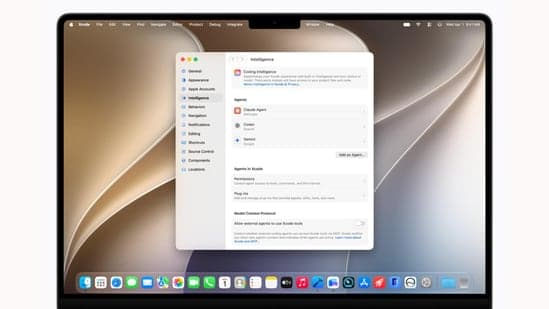
While the world usually tunes into Apple’s Worldwide Developers Conference (WWDC) keynote to know what’s new with the operating systems and underlying architecture that’ll define their iPhones, iPads and other Apple devices, the scope of the developer conversation goes much beyond. This year, Apple unveiled the next generation of Apple Intelligence with a new Siri AI, weaved artificial intelligence (AI) into common everyday tasks, and new Child Safety features. Crucially, what often misses the world’s attention are tools for developers, who will inevitably build apps to define the intent with new experiences.A new Intelligent Frameworks, in line with the new Apple Intelligence and Siri AI, is ready for developers to work with (Official image)“Developers are at the heart of the Apple ecosystem, and our goal is to provide them with the best possible tools and technologies to build the future,” said Susan Prescott, Apple’s vice president of Worldwide Developer Relations. “With new intelligence frameworks and agentic coding in Xcode 27, developers have the tools they need to focus on what they do best: bringing their incredible ideas to life,” she adds. For the sake of simplicity, it is important to decode crucial new developer tools, some with scope across iOS 27, iPadOS 27 and macOS 27 Golden Gate.Also read: Inside Apple’s AI architecture: Custom Gemini, sparse models and divergenceThere are of course the new Intelligent Frameworks, considering significant enhancements to Apple Intelligence and a new Siri AI, for developers to work with. The New intelligence frameworks give developers the tools to integrate AI features into their apps across all of Apple’s platforms, with focus on ease and flexibility of doing this. Apple’s latest Foundation models as well as models from other AI companies will be available for developers, alongside new options on how to add this AI layer to their apps. Apple says the framework now serves as a single native Swift API that supports more powerful on-device models with image input, support for server models, and the ability to build custom skills.Apple confirms that developers enrolled in the App Store Small Business Program with fewer than 2 million total first-time App Store downloads can access the next generation of Apple Foundation Models running on Private Cloud Compute at no cloud API cost.This is the third generation for these models, with the first generation from 2024 and the second generation arriving last year. There are three server-based models—the AFM 3 Cloud which Apple calls a server-side workhorse, optimised for speed, efficiency, and performance, the AFM 3 Cloud Pro for demanding use cases like agentic tool use and complex reasoning, and the ADM 3 Cloud (Image) for image generation and editing, which also unlocks advanced photo-editing tools in the iPhone. Amar Subramanya explains that these models represent a significant generational leap as far as quality of output and overall capabilities are concerned.Also read: Parents are back in control as Apple bets on expanded Child Safety suiteThis intention was explained by Kevan Parekh, Apple’s Senior Vice President and Chief Financial Officer, in a recent conversation with HT . He believes AI models have widened the scope for developers, and levelled the playing field for newer and comparatively smaller app developers.“Developers can also easily leverage models of their choice, like Claude and Gemini, or those from any other provider that implements the new language model protocol. To help developers create adaptive AI experiences more easily and flexibly, the framework also introduces capabilities like Dynamic Profiles, enabling developers to update how models interact with their apps on the fly,” the company confirms.For developers who would like to integrate their own custom models into an app



Discussion (0)