
Loading dispatches...
← Return to NewsroomEconomy
Dalai Lama health update: How is 90-year-old Tibetan spiritual leader after medical crisis
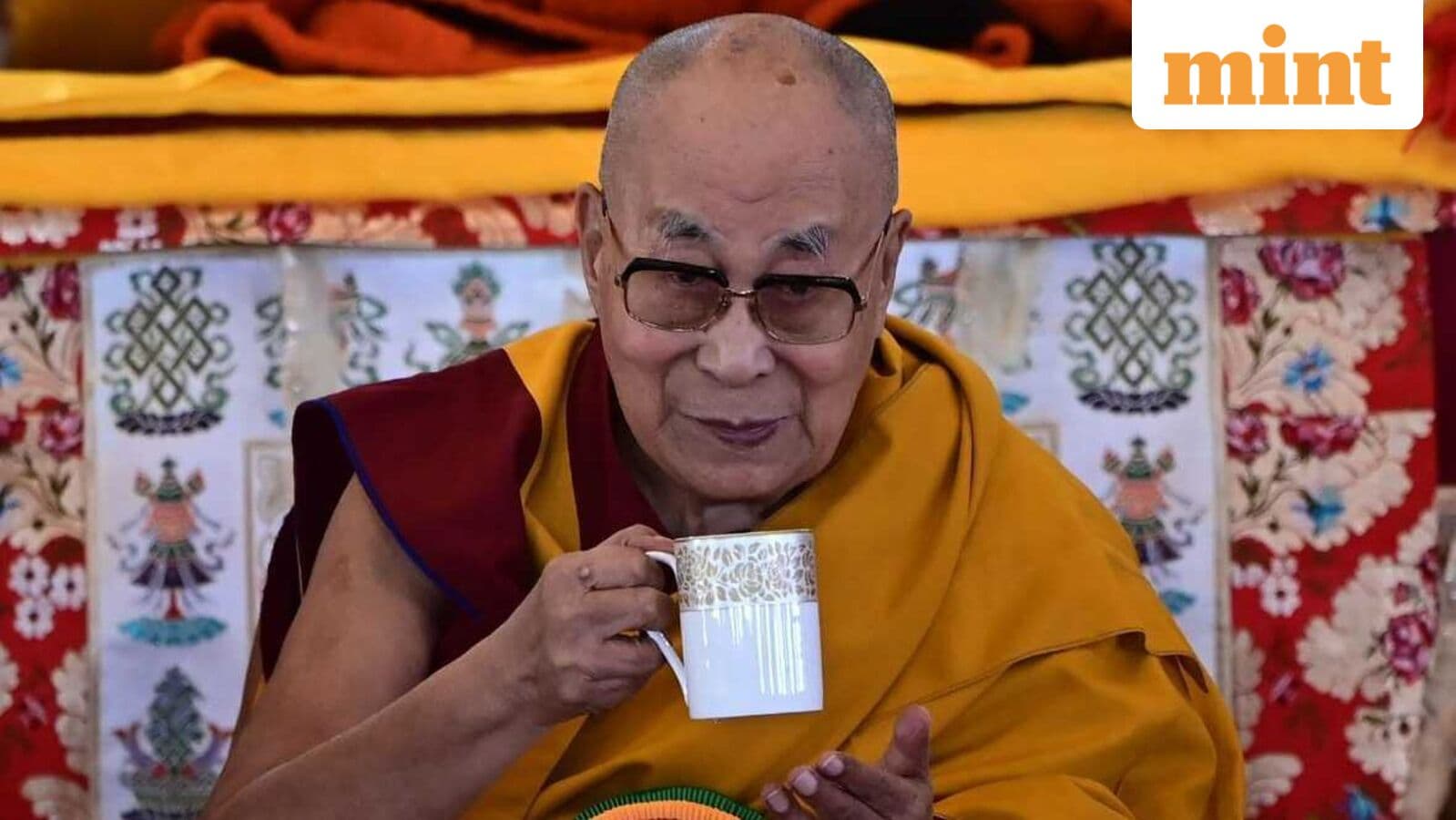
Dalai Lama recently underwent successful knee replacement surgery at Apollo Hospitals and was discharged on June 12. Learn more about his recent operation here.Dalai Lama, aged 90, successfully underwent knee surgery and was discharged from hospital on June 12.(Photo: Waseem Andrabi /Hindustan Times)Tibetan spiritual leader, the 14th Dalai Lama, recently faced a health scare. As per latest update on his medical condition, the 90-year-old underwent a successful left knee replacement surgery and was discharged from hospital on Friday. He was treated for his knee at Delhi's Indraprastha Apollo Hospital.Senior Consultant at Indraprastha Apollo Hospitals, Dr Rajesh Malhotra, in a statement said, “His Holiness the Dalai Lama underwent successful left knee replacement surgery on Monday, 8 June, in New Delhi."The statement added, “Throughout his treatment, His Holiness’s personal medical team and the Office of His Holiness the Dalai Lama remained in close coordination with the administrative and medical staff at Apollo Hospitals. His Holiness is stable and expected to make full recovery. He was discharged on Friday morning, 12 June." This crucial medical update was shared on the spiritual leader's official X account.Two years ago in June 2024, Dalai Lama had undergone a successful right knee replacement surgery at the Hospital for Special Surgery in New York City.Who will be the next Dalai Lama?Sikyong of the Central Tibetan Administration Penpa Tsering during an interactive event at Delhi's India Habitat Centre here on 9 June answered a question in connection with next Dalai Lama. When a member of the audience asked him about the Chinese assertion that they will decide the next Dalai Lama, the head of the Tibetan government-in-exile said, "Chinese are not given the right; they are snatching the right to choose the next Dalai Lama... China wants to control everything," PTI reported.Asserting that Dalai Lama is committed to live long and perhaps for 130 years, he stated, “If His Holiness Dalai Lama dies, then Tibet issue will also die is China's assumption.” According to the Sikyong, the process for choosing the successor starts when the Dalai Lama is "ready to leave (the world)", it doesn't start from now.“So, I send that message to the Chinese. You, who are waiting for the Dalai Lama to die.... And the (current) Dalai Lama is committed to live long," PTI quoted the Sikyong as saying. Emphasizing that China has "never used the tools" that can win the hearts and trust of Tibetans, he added, “We will have to see whether communism outlives His Holiness Dalai Lama or whether His Holiness outlives communism.”He charged at the Chinese administration and alleged that the Chinese ethnic law is to promote only Mandarin and ensure that the Tibetan identity is "destroyed". Criticising China for its policies, he said, “Communists always have very nice name for programmes that have very adverse impact on people.”Tibetans living in the India will hold a protest march on 26 June to protest against the latest Chinese law – Ethnic Unity and Progress Promotion law. This is fundamental law on ethnic affairs in China which was adopted by China's Parliament on 12 March and will take effect on 1 July 2026.Stay updated with the latest Trending, India , World and US news. HomeNewsIndiaDalai Lama health update: How is 90-year-old Tibetan spiritual leader after medical crisisMore
The US State Department is creating a new fast pass for tourists and business travellers willing to pay $750 to bypass the line for a visa interview — but without any guarantee of securing a visa.This "temporary final rule" (TFR) is effective July 1, 2026, through December 31, 2026, according to a notice published Tuesday in the Federal Register.It gives applicants a chance to move to the front of the appointment line by paying a $750 fee.The document stated that under the six-month pilot program, foreign visitors will have the option of paying $750 for “an expedited B1/ B2, business and tourism, non-immigrant visa (NIV) interview appointment."The new service is “an optional premium addition” to the $185 standard application fee and will be “offered only to applicants at limited posts...and in limited quantities," Forbes reported while citing the document."This new fee will allow B1/B2 visa applicants who pay the fee to secure an interview appointment at selected posts within ten business days," the document states."This service will be an optional premium addition to the standard NIV application fee and will be offered only to applicants at limited posts as published on travel.state.gov and in limited quantities," it adds.However, an expedited visa appointment "in no way guarantees visa issuance," the document says.Moreover, applicants who opt to pay for an expedited appointment will still be subject to all standard visa eligibility and processing requirements, including any administrative processing deemed necessary."This service will not expedite any processing steps, including any time needed for administrative processing," the US Department of State said.The pilot program: How can a visa applicant apply for the premium serviceAs per the document, the Bureau of Consular Affairs will control which embassies and consulates can offer this service. The MRV fee was last updated in May 2023 and is currently set at $185 for B1/B2 applicants.Individuals seeking an expedited appointment who pay the $750 fee will continue to pay the MRV fee, it added.Designated consular sections will make limited amounts of expedited appointments available based on the embassy and consulates’ capacity.The appointment selection process occurs after the applicant has submitted a completed DS–160 visa application through the Consular Electronic Application Center (CEAC) and paid his or her MRV fee.An applicant for B1/B2 visas at posts where the paid expedite service is offered will first schedule a traditional (non-expedited) appointment."If the applicant then wishes to schedule an earlier (expedited) appointment, he or she will so indicate, at which point, he or she will see the available expedited appointments within the next ten business days," the document explains.If the applicant chooses one of these appointments, a 5–10-minute hold will be placed on the appointment while he or she pays the $750 expedite fee.If the applicant fails to pay the fee within this time, he or she will lose the hold, and the expedited appointment will be reopened to other applicants, the document says.But there is no guarantee that expedited appointments will be available to all interested applicants, "as consular sections will only make a limited number of expedited appointments available," it clarified.Applicants will only see expedited appointments available for booking if such appointments are available.What happens after your selection?Upon selecting an expedited appointment, applicants will be required to pay the expedited fee online before the appointment is confirmed.Failure to pay the expedited fee at that time will result in the applicant not being scheduled for the expedited appointment, reverting instead to the original, non-expedited appointment.An applicant forfeits the expedited appointment fee if he/she selects an expedited appointment and either does not attend his or her appointment or cancels his or her appointment.This TFR (temporary final rule) tempo

Discussion (0)