
Loading dispatches...
← Return to NewsroomEconomy
Shah Rukh Khan spends ₹37 crore on Delhi home where he started married life with wife Gauri

Shah Rukh Khan and Gauri Khan lived in the property after their wedding before the actor moved to Mumbai to build his career in films.Shah Rukh Khan buys Delhi house where he and Gauri lived before moving to Mumbai.Shah Rukh Khan has reportedly purchased a residential property in Delhi that carries deep personal significance for his family. The actor is said to have acquired the second and third floors of a house in the upscale Panchsheel Park neighbourhood for ₹37 crore.According to a Moneycontrol report, Shah Rukh Khan and Gauri Khan lived in the property after their wedding before the actor moved to Mumbai to build his career in films. The Khan family already owned the ground floor and basement of the building, and with this latest purchase, the entire property is now under the family's ownership.The acquisition adds another premium asset to the family's real estate portfolio, which includes properties across India as well as overseas.Details of the propertyThe newly acquired portion of the Delhi residence is part of a property spread across a 1,200-square-yard plot, measuring around 10,800 square feet.The transaction is valued at ₹37 crore, while the underlying land has been estimated at approximately ₹34,260 per square foot.Family and career updatesShah Rukh Khan and Gauri Khan got married in 1991. The couple welcomed Aryan Khan in 1997, Suhana Khan in 2020 and AbRam Khan in 2013. While Suhana made her acting debut with The Archies last year, Aryan owns the luxury streetwear brand Dyavol'X and also made his directorial debut with Netflix's The Ba**ds of Bollywood.Shah Rukh Khan's next filmOn the professional front, Shah Rukh Khan will next appear in Siddharth Anand's King. In January, the actor announced that the film will release in cinemas on December 24.Sharing the announcement video on Instagram, he wrote, "#KING is Ready to ROAR on 24.12.2026 in Cinemas, #ItsKingTime #KingDateAnnouncement."Shah Rukh Khan's journeyShah Rukh Khan made his Bollywood debut with the romantic drama Deewana (1992), following his career in the entertainment industry, which began with the Doordarshan series Fauji (1988).He gained fame with the 1993 thrillers Baazigar and Darr and went on to star in successful films such as Dilwale Dulhania Le Jayenge (1995), Dil To Pagal Hai (1997), Kuch Kuch Hota Hai (1998), Kabhi Khushi Kabhie Gham... (2001), and the list continues.He won his career's first national award for Atlee's film Jawan, which became the highest-grossing Indian film of 2023.About the AuthorKanishka SinghariaKanishka Singharia is a Senior Content Producer at Mint with a passion for news, trends, and the stories shaping the digital world. She specialises in spotting viral narratives by constantly tracking social media platforms and turning them into engaging, reader-friendly stories. Her work ranges from fast-paced breaking updates to sensitive human-interest features, blending speed with clarity. With over four years of experience in news and trend reporting, Kanishka has worked with leading organisations such as Hindustan Times and Times Now. She moves seamlessly between profiling business leaders and telling the stories of everyday people, covering national developments just as effortlessly as the memes and conversations that dominate online culture. She also reports on real estate developments and civic challenges in major urban hubs like Bengaluru, Delhi, and Gurugram. Her coverage frequently explores the struggles of startup founders, inspiring journeys of CEOs, and the experiences of candidates dealing with the complexities of visa processes. Kanishka holds an undergraduate degree in Journalism from Delhi University and a diploma from the Indian Institute of Mass Communication. Rarely offline, she spends much of her time scrolling through X, LinkedIn, Reddit, Instagram, and Facebook in search of the next big story. When she finally logs off, she enjoys binge-watching shows and exploring cafes in pu
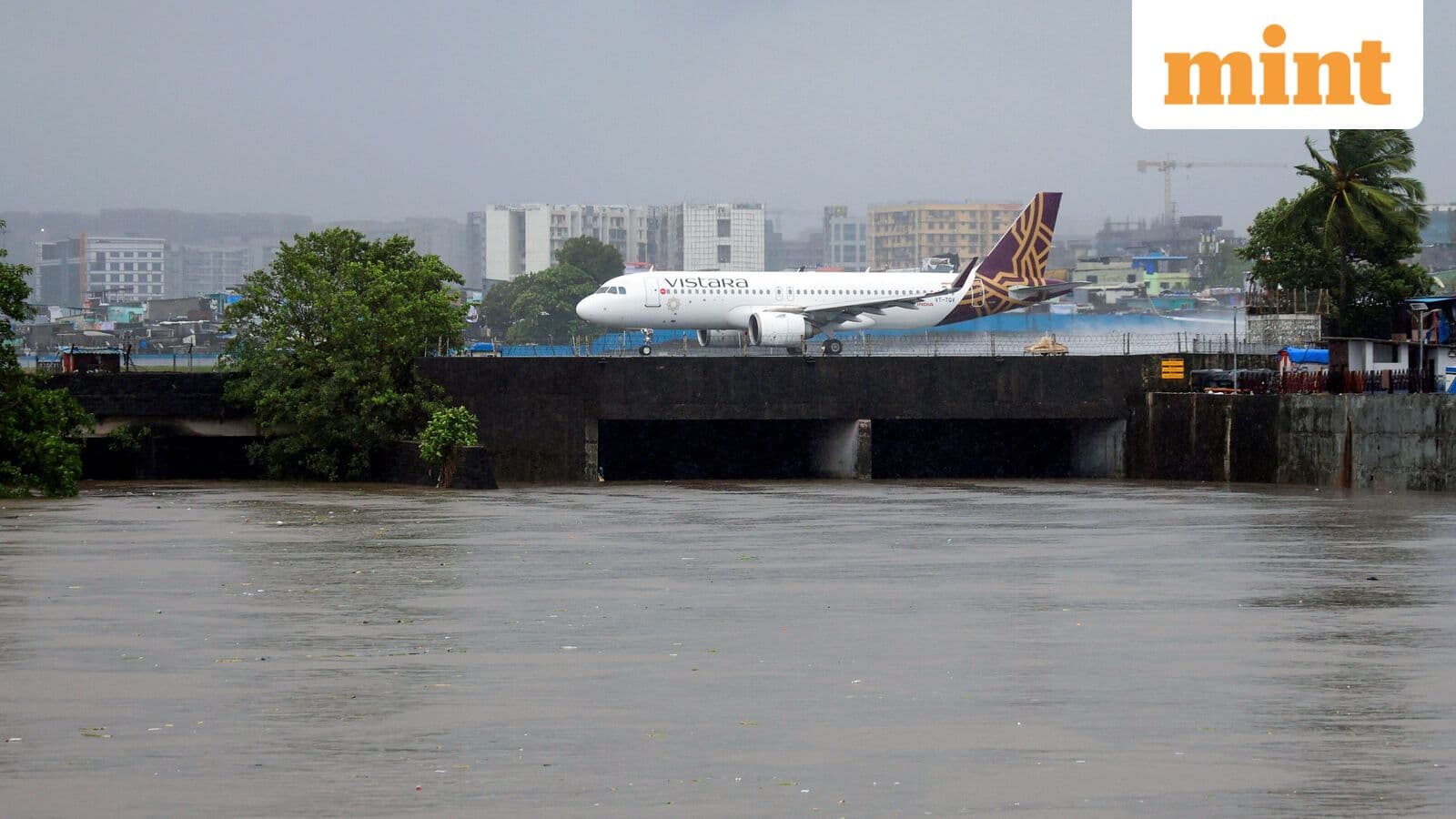
Heavy rain in Delhi and Mumbai disrupted flight operations on Tuesday, prompting Air India, IndiGo and SpiceJet to issue travel advisories for passengers. While IMD has forecast more rain in the coming days, airlines have urged travellers to check their flight status before heading to the airport.Mumbai, Jul 06 (ANI): A flight getting ready for takeoff on the runway in heavy rain near the Mithi River, in Mumbai on Monday. (ANI Photo)(Jitendra Takale)Heavy rainfall in Delhi and Mumbai disrupted flight operations on Tuesday, prompting major airlines to issue travel advisories and urge passengers to check the status of their flights before heading to the airport.The downpour brought relief from the heat in the national capital, while Mumbai continued to witness persistent rainfall. As adverse weather conditions affected normal life in both cities, airlines warned that departures, arrivals and connecting flights could face delays or disruptions.Airlines Warn Of Possible Flight DisruptionsAir India said adverse weather conditions could affect flights operating to and from Delhi."Adverse weather conditions may impact flight operations to and from Delhi," the airline said in a travel advisory posted on X.IndiGo also informed passengers that inclement weather over the national capital had impacted flight schedules and said it was closely monitoring the situation."Bad weather over Delhi has impacted flight schedules. We are closely monitoring the weather and doing our best to get you where you need to be, safely and smoothly," the airline said in a post on X.The airline advised passengers to keep track of their flight status through its website or mobile application before travelling to the airport."We request that you stay updated on your flight status via our website or app. Also, please allow extra time for your commute, as slow-moving traffic may affect road travel en route to the airport," IndiGo said.It added, “Please be assured that our teams are here to assist you at every step and provide full support. Thank you for your patience and understanding.”SpiceJet also cautioned that heavy rain in both Delhi and Mumbai could affect flight operations, including connecting services."Due to bad weather (heavy rain) in Mumbai (BOM) and Delhi (DEL), all departures/arrivals and their consequential flights might get affected. Passengers are requested to keep a check on their flight status," the airline said.Rain Affects Daily Life In Delhi, MumbaiHeavy rain also disrupted normal movement in several parts of Delhi and Mumbai.According to the latest forecast by the India Meteorological Department (IMD), the national capital is likely to witness thunderstorms accompanied by rain on Wednesday as well.In one rain-related incident, a tree fell onto a moving Mercedes and another passing car in Delhi's East of Kailash on Tuesday afternoon, officials said. No injuries were reported, but traffic on Raja Dhir Singh Marg was temporarily affected.The Delhi Fire Service (DFS) said it received a call about the incident at 1.38 pm and immediately dispatched a fire tender to the spot.Mumbai Sees Fatal Rain-Related IncidentIn Mumbai, heavy rain was linked to a fatal accident after a 55-year-old man, identified as Shaikh, allegedly fell into an open manhole, according to a PTI report.The incident prompted the Brihanmumbai Municipal Corporation (BMC) to suspend four civic officials and order a high-level inquiry.CCTV footage reportedly showed the man talking on his mobile phone before walking past a parked tempo and falling into the uncovered manhole.According to reports, the manhole cover had been temporarily removed by three contractual workers carrying out maintenance work.The workers lowered a ladder into the manhole in an attempt to rescue him but recovered only his umbrella and slippers.Officials said the strong flow of rainwater initially made it difficult to determine the direction in which the man had been swept away. He was later located some distanc
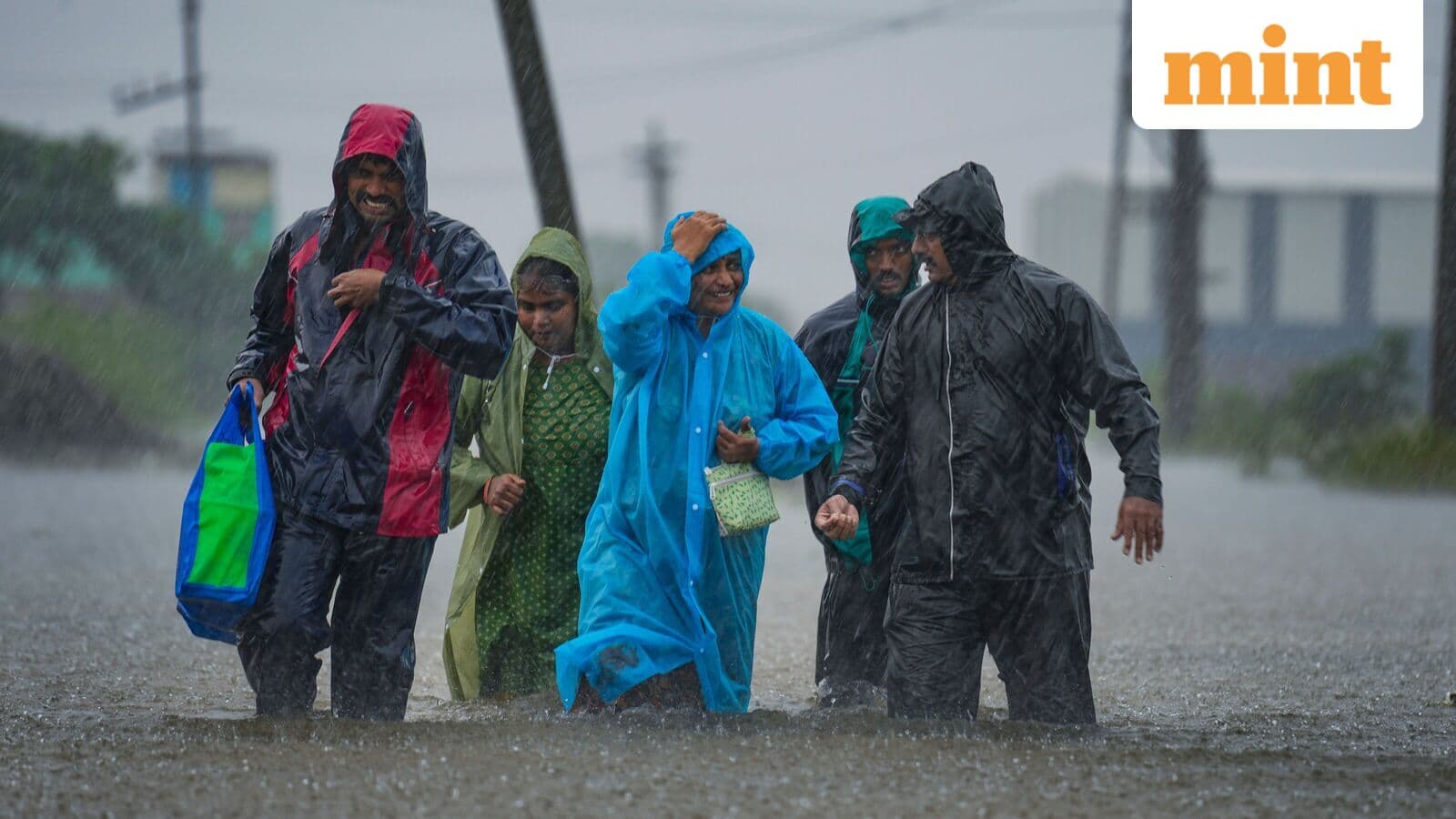
The India Meteorological Department (IMD) has issued a flash flood risk (FFR) warning for several districts in western India, with widespread rainfall expected over the next 24 hours.The highest-risk areas include parts of Gujarat, including Saurashtra & Kutch, central Maharashtra, Konkan & Goa, and coastal Karnataka, where intense rainfall could trigger rapid surface runoff, waterlogging and localized flooding in vulnerable watersheds and low-lying areas, IMD said.In Saurashtra & Kutch, IMD said Rajkot, Surendranagar, Botad and Bhavnagar districts face a moderate risk of flash floods. Across Gujarat, the alert covers Ahmedabad, Kheda, Anand, Vadodara, Panchmahal, Bharuch, Chhota Udepur, Narmada, Dangs, Navsari, Surat, Tapi, Valsad, and the Union Territories of Daman and Dadra & Nagar Haveli.In central Maharashtra, the districts of Ahilyanagar, Pune, Satara and Kolhapur are expected to face similar risks. The IMD has also warned of moderate flash flood risk across north Goa, south Goa, Mumbai city, Mumbai suburban, Palghar, Raigad, Ratnagiri, Sindhudurg and Thane in the Konkan & Goa subdivision.Along the west coast, Dakshina Kannada, Udupi and Uttara Kannada districts in coastal Karnataka have also been placed in the moderate-risk category. Separately, the weather office has forecast low to moderate flash flood risk over parts of Kerala & Mahe, covering Kasaragod, Kannur, Mahe, Wayanad, Kozhikode, Malappuram, Palakkad, Thrissur, Ernakulam, Kottayam and Alappuzha districts. In the northeast, Lunglei, Lawngtlai and Saiha districts of Mizoram have also been placed in the low to moderate flash flood risk category.According to the IMD, surface runoff and inundation may occur in places with fully saturated soil and low-lying areas within the identified areas of concern, as rainfall over the next 24 hours could overwhelm local drainage systems.Heavy rain and thunderstorms lashed several parts of the country, including parts of Maharashtra, Himachal Pradesh, Uttarakhand, Rajasthan and Chhattisgarh over the past 24 hours, triggering landslides and flash floods in some regions. The severe weather claimed lives, caused extensive damage, submerged homes and other structures, and disrupted air, rail, and road transport. Authorities in multiple states intensified emergency response measures as forecasts warned of more rainfall in the coming days.Monsoon advancesMeanwhile, the southwest monsoon has advanced further into the remaining parts of Gujarat and additional parts of Rajasthan and Haryana, bringing the seasonal rains closer to covering the entire country, IMD said.The weather office said conditions remain favourable for the monsoon to advance into the remaining parts of the north Arabian Sea, Rajasthan, Haryana and Punjab over the next two to three days, completing its spread across India.The IMD has also forecast rains are expected to intensify over north India over the next three days, with isolated heavy rainfall likely in several parts of the region.The weather office has advised residents in vulnerable areas to remain alert for localised flooding, landslides in hilly regions, and traffic disruptions, and to follow updates issued by local authorities and the IMD.About the AuthorVijay C RoyVijay C. Roy is a journalist with over 21 years of experience covering various news beats across different organisations such as Business Standard and The Tribune. In the past, he has covered beats such as finance, auto, MSME, commodities, FMCG, pharmaceutical, agriculture, IT/ITES, infrastructure and start-ups. He joined Mint in February 2025, and covers agriculture, food processing, fertilizers, environment and climate change, bringing over two decades of experience reporting on farm policy, food inflation, crop trade, and rural livelihoods. Vijay’s areas of reporting include food security and climate change policies, focusing on their impact on different stakeholders and their implications. His expertise lies in simplifying complex agri
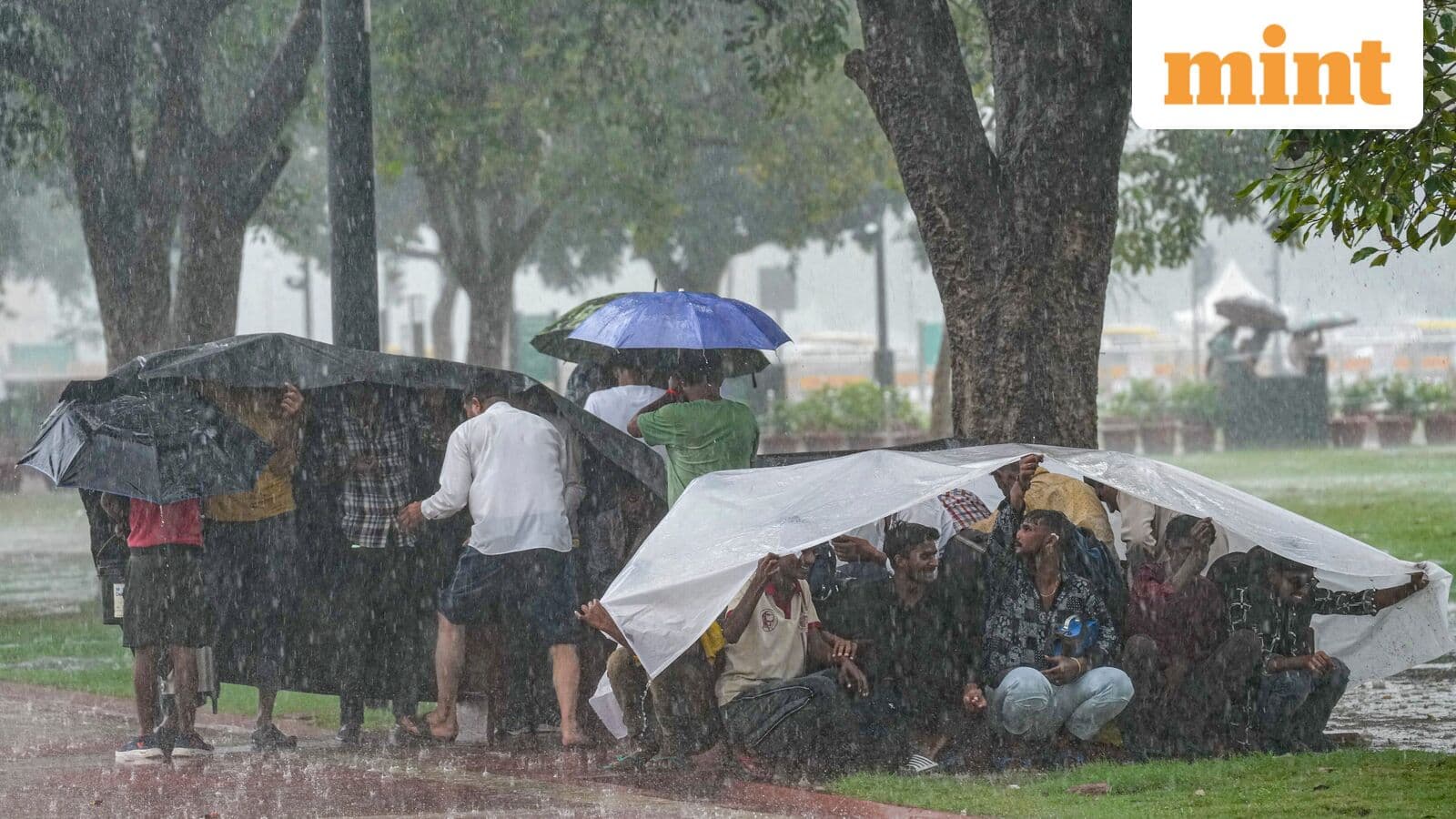
Despite the southwest monsoon arriving in Delhi on 2 July, the city is still awaiting significant relief from the heat. The IMD has forecast moderate to heavy rainfall, thunderstorms, lightning, and gusty winds, with rainfall activity expected to intensify across Delhi in the coming weekDelhi residents wait for respite from southwest monsoon | File image(PTI)Despite the southwest monsoon officially arriving in Delhi on 2 July, residents of the national capital continue to wait for respite from the heat. The India Meteorological Department (IMD) on Sunday predicted moderate to heavy rainfall accompanied by thunderstorms.The weather agency said moderate to heavy rainfall (5-20 mm per hour), accompanied by thunderstorms, lightning, and winds of 40-50 kmph gusting up to 60 kmph, is very likely over parts of Southeast Delhi, East Delhi, Shahdara, Central Delhi, Northeast Delhi, South Delhi, New Delhi, Southwest Delhi, West Delhi, Northwest Delhi, and North Delhi.IMD predicts scattered rain for DelhiAccording to the latest All India Weather Summary and Forecast Bulletin issued by the IMD today, the national capital and its adjoining areas are likely to experience isolated rainfall initially before moving towards more widespread rainfall through the week.The IMD also predicts isolated to scattered rainfall over Chandigarh, Delhi, Haryana, and Punjab on Sunday, while rainfall activity is likely to become more widespread between 6 July and 8 July. The weather agency has also predicted isolated thunderstorms, lightning, and gusty winds over Haryana, Chandigarh, Delhi, and Punjab on Sunday.IMD's weather prediction for Northwest IndiaIn its weather forecast for Northwest India, the weather agency said isolated to scattered rainfall is likely over the Jammu-Kashmir-Ladakh-Gilgit-Baltistan-Muzaffarabad region on 5 July and again on 10 July; over Haryana, Chandigarh, Delhi, and Punjab on 5 July and during 9-10 July; over West Uttar Pradesh during 5-7 July; over East Uttar Pradesh during 5-6 July; over West Rajasthan during 5-10 July; and over East Rajasthan on 10 July.Fairly widespread to widespread rainfall is predicted for Himachal Pradesh and Uttarakhand from today until 10 July. Between 6 and 9 July, the weather agency expects fairly widespread to widespread rainfall in the Jammu-Kashmir-Ladakh-Gilgit-Baltistan-Muzaffarabad region.The agency's forecast for the coming week expects fairly widespread to widespread rainfall over Haryana, Chandigarh, Delhi, and Punjab during 6-8 July; West Uttar Pradesh during 8-10 July; East Uttar Pradesh during 7-10 July; and East Rajasthan during 5-9 July.Isolated thunderstorms are likely in West Rajasthan on 5 and 6 July and in East Rajasthan during 4-9 July. Scattered thunderstorms and lightning are also predicted over Uttarakhand between 5 and 10 July and over West and East Uttar Pradesh during 7-8 July.Isolated heavy rainfall is likely over Haryana, Chandigarh, Delhi, Jammu-Kashmir-Ladakh-Gilgit-Baltistan-Muzaffarabad, and Punjab during 6-8 July; Himachal Pradesh on 5 July and during 8-9 July; Uttarakhand during 6-10 July; West Uttar Pradesh during 9-10 July; East Uttar Pradesh during 8-10 July; West Rajasthan during 6-8 July; and East Rajasthan on 8 and 10 July.Isolated very heavy rainfall is also likely over Himachal Pradesh during 6-7 July, Uttarakhand on 5 July, and East Rajasthan during 5-7 July and again on 9 July.Why is Delhi witnessing a weaker monsoon?A Hindustan Times report, citing experts, attributed Delhi's weaker monsoon this time to weather systems in other parts of the country that are drawing the monsoon trough away from the national capital. Mahesh Pehlawat, Vice President of Skymet Weather, a private weather forecaster, said, "Cyclonic circulations over Madhya Pradesh and a low pressure area over Odisha had drawn the trough to central India, which has led to a reduction in rainfall. The city is likely to see the typical monsoon rain from July 5."Delhi weather todayOn Sunday, resident

India will continue to build new crude oil refineries in order to ensure supply chain security even as Western nations shut processing units, Prime Minister Narendra Modi said.India will continue to build new crude oil refineries in order to ensure supply chain security even as Western nations shut processing units, Prime Minister Narendra Modi said.(@NarendraModi / YouTube )(Bloomberg) — India will continue to build new crude oil refineries in order to ensure supply chain security even as Western nations shut processing units, Prime Minister Narendra Modi said.“No new refinery has come up in the US in the last five decades and capacity in Europe has also been constantly declining,” Modi said Saturday, as he inaugurated the country’s first new refinery in a decade. He said India will continue to expand capacity.The 180,000-barrels-a-day greenfield refinery in the heart of Rajasthan’s Thar desert, which has 2.4 million tons a year of petrochemical capacity and was built at a cost of $8.3 billion, is likely to be the only new refinery commissioned globally this year, according to BloombergNEF analysts.The facility expands India’s refining capacity at a time when much of the West is shutting plants and investment elsewhere has slowed, highlighting New Delhi’s strategy of betting that robust domestic fuel demand, slower-than-expected electric-vehicle adoption and exports of refined products will continue to justify billions of dollars in new oil-processing infrastructure.“The Barmer refinery adds a highly complex refining capacity in one of the world’s long-term oil demand growth drivers,” said Claudio Lubis, an analyst with BloombergNEF. “We expect India to lead global refinery capacity additions between 2026 and 2030, adding over 1 million barrels a day. This would account for just under a quarter of global capacity additions by the end of this decade,” he said.The new refinery becomes particularly significant in the aftermath of the Iran conflict, which renewed concerns over potential disruptions to crude shipments through the Strait of Hormuz. Although the plant does not reduce India’s dependence on imported crude, it expands the ability to process a broader slate of oils and bolster domestic fuel supplies while sustaining exports.“It is because of investments in projects like this that India has been able to navigate the biggest oil supply shock in history,” Modi said. Even as other nations rationed supplies and raised fuel prices due to the closure of Hormuz, India’s investments over the last decade ensured its economy remained well provisioned, he said.The Rajasthan refinery is a joint venture between state-run Hindustan Petroleum Corp. Ltd. and the Rajasthan government. It will primarily produce diesel, gasoline and petrochemicals, processing about 150,000 barrels a day of imported crude. Commercial operations began on June 22.Modi had originally been scheduled to inaugurate the project in April, but the ceremony was postponed after a fire broke out at the refinery’s crude distillation unit a day before the planned launch.The latest project will increase India’s installed refining capacity by about 3.5%, to 5.4 million barrels a day. The South Asian nation, the world’s fourth-largest refiner, is on track to expand capacity to 6.2 million barrels a day by the end of the decade as companies replace aging units with larger, more efficient plants at existing sites.More stories like this are available on bloomberg.com©2026 Bloomberg L.P.Disclaimer: This story has been published from a wire agency feed without modifications to the text.Get Latest real-time updatesStay updated with the latest Trending, India , World and US news. HomeNewsIndiaModi says India will keep expanding oil refining capacityMore
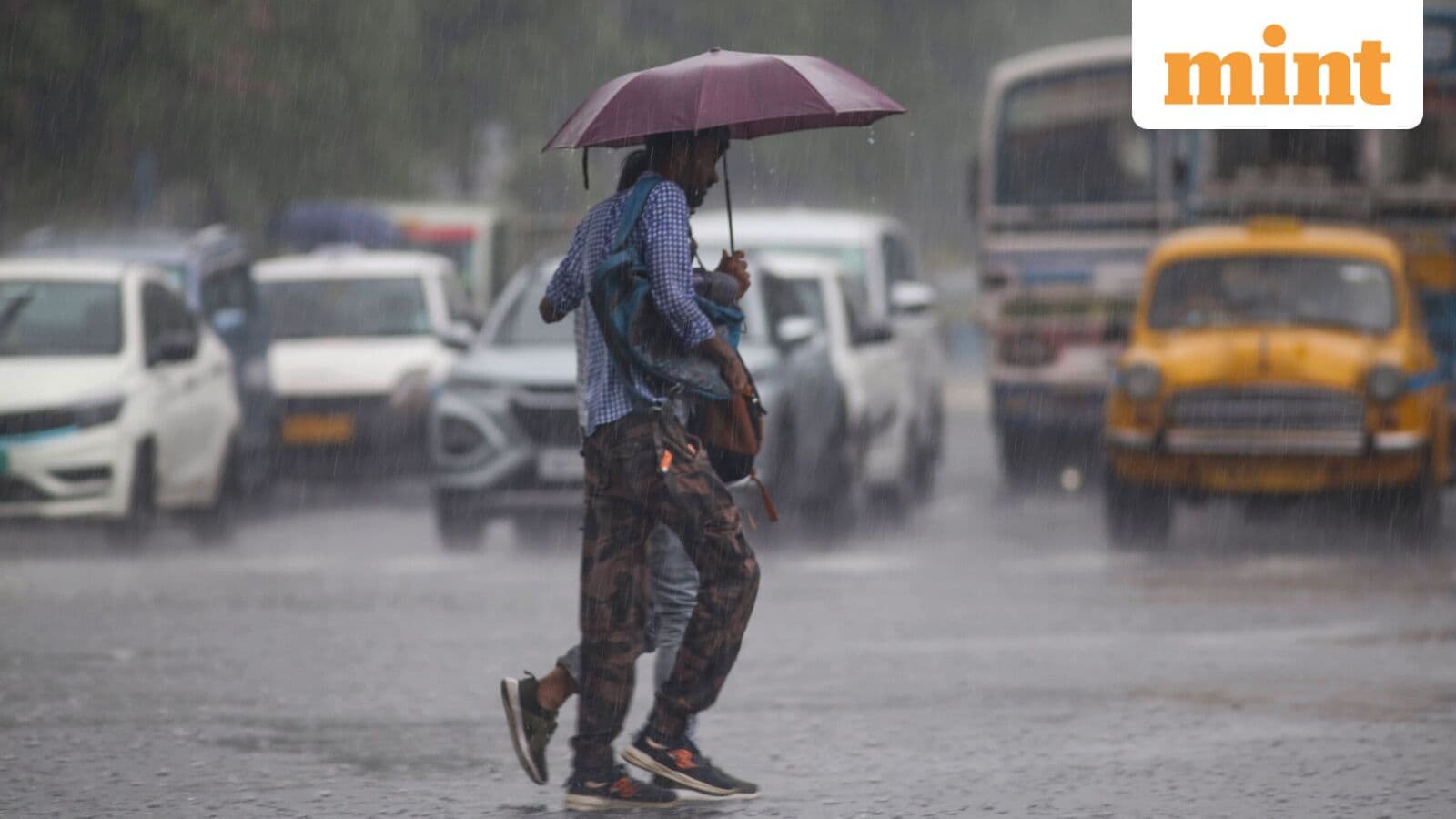
The active monsoon is expected to support kharif sowing and other agricultural operations. However, the IMD cautioned that areas receiving extremely heavy rainfall could face localised flooding, waterlogging and traffic disruptions over the coming days.A low-pressure area over the northwest Bay of Bengal is expected to keep the monsoon active across central India over the next four to five days.New Delhi: The southwest monsoon advanced further across India on Friday, covering more parts of Gujarat, the remaining areas of Madhya Pradesh, as favourable conditions continued to support its progress.The India Meteorological Department (IMD) said conditions remain favourable for the monsoon to advance into more parts of the North Arabian Sea, Gujarat, the remaining areas of Haryana and Punjab, and additional parts of Rajasthan over the next four to five days.A low-pressure area over the northwest Bay of Bengal is expected to keep the monsoon active across central India over the next four to five days, triggering widespread rainfall and raising the likelihood of heavy to extremely heavy showers in several states.The IMD has forecast isolated extremely heavy rainfall over Konkan, Madhya Maharashtra and south Gujarat on 6 July, while West Madhya Pradesh and Odisha are expected to receive extremely heavy rainfall on 4 July.The active monsoon is expected to support kharif sowing and other agricultural operations. However, the IMD cautioned that areas receiving extremely heavy rainfall could face localised flooding, waterlogging and traffic disruptions over the coming days.Rainfall activity is expected to intensify across northwest India during the forecast period. Jammu & Kashmir, Ladakh, Gilgit-Baltistan and Muzaffarabad, along with Uttarakhand, are likely to receive fairly widespread to widespread rainfall from 4 July to 9 July. Himachal Pradesh is expected to witness widespread rainfall between 5-9 July.The IMD has also forecast widespread rainfall over Haryana, Chandigarh, Delhi and Punjab between 6-8 July. East Rajasthan is likely to remain under widespread rainfall activity throughout 4-9 July, while rainfall is expected to increase over Uttar Pradesh later in the week.Central India is expected to remain one of the most active monsoon regions over the next seven days. Chhattisgarh, East and West Madhya Pradesh, and Vidarbha are likely to witness fairly widespread to widespread rainfall throughout 4-9 July.Also, eastern India is expected to witness persistent monsoon activity, with widespread rainfall over Gangetic West Bengal, Sub-Himalayan West Bengal and Sikkim, the Andaman & Nicobar Islands, Jharkhand and Odisha during most of the forecast period. Bihar is also likely to receive rainfall throughout the week.In the Northeast, Nagaland, Manipur, Mizoram and Tripura are expected to receive widespread rainfall through 9 July, while Assam and Meghalaya are likely to witness enhanced rainfall from 7 July onwards.The west coast is expected to remain under active monsoon conditions, with widespread rainfall over the Gujarat region, Konkan & Goa and Madhya Maharashtra during the first half of the week. Saurashtra & Kutch are also likely to receive widespread rainfall through July 6 before rainfall activity eases.About the AuthorVijay C RoyVijay C. Roy is a journalist with over 21 years of experience covering various news beats across different organisations such as Business Standard and The Tribune. In the past, he has covered beats such as finance, auto, MSME, commodities, FMCG, pharmaceutical, agriculture, IT/ITES, infrastructure and start-ups. He joined Mint in February 2025, and covers agriculture, food processing, fertilizers, environment and climate change, bringing over two decades of experience reporting on farm policy, food inflation, crop trade, and rural livelihoods. Vijay’s areas of reporting include food security and climate change policies, focusing on their impact on different stakeholders and their implications. Hi
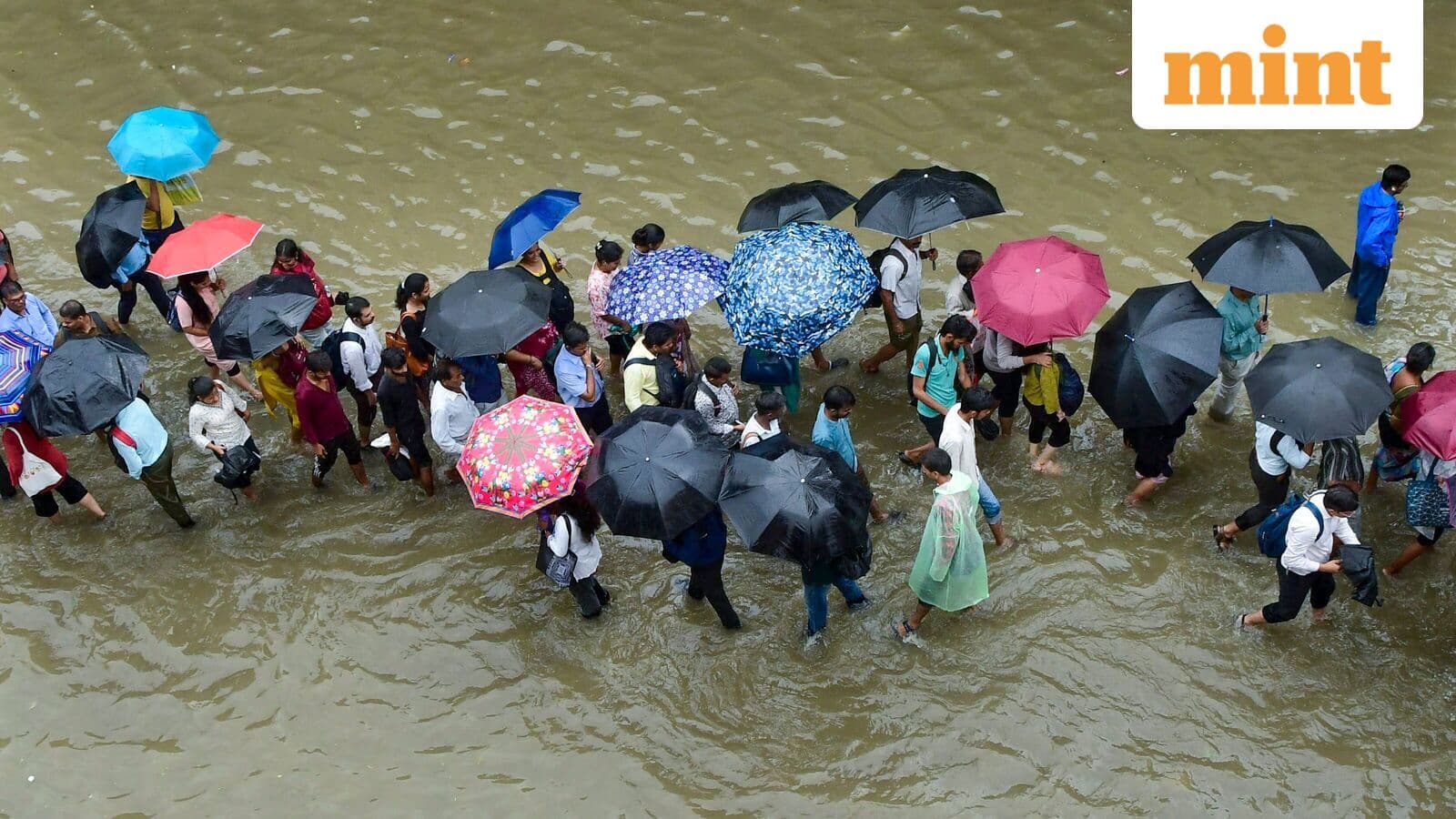
Several areas in Mumbai recorded more than 200 mm of rainfall over the last 24 hours, according to the BMC.Commuters wade through a waterlogged street after heavy rain in Mumbai on Thursday(PTI)Heavy showers inundated low-lying areas in Mumbai as the city woke to another rain-soaked morning on Thursday. The downpour brought road and rail traffic to a halt in several areals. Several areas logged more than 200 mm of rainfall over the last 24 hours, according to the Brihanmumbai Municipal Corporation (BMC).As the India Meteorological Department (IMD) forecasted more rainfall through the day, the chances of waterlogging or traffic easing are low.Heavy rain since early Thursday morning led to waterlogging in prime areas such as Dadar, Parel, Hindmata, Charkop, Worli, Goregaon and Andheri, causing inconvenience to commuters and slowing vehicular traffic.Local train movement was also affected due to water accumulation, though tracks were not submerged. Rail commuters said several local train services were running 10 to 15 minutes behind schedule, leading to overcrowding during the morning rush hour.A Central Railway spokesperson said that despite receiving more than 180 mm of rainfall in the last 24 hours, there was no major waterlogging on its network and local train services on all four corridors were operating normally, even as commuters complained of delays.The Western Railway also informed on X that suburban services on its network were running normally, while commuters claimed some trains were running behind schedule.Mumbai manhole deathA man died after being swept into an open manhole amid heavy rains in Mumbai. The incident occurred in the Chandivali area in the eastern suburbs, where waterlogging had apparently concealed the uncovered manhole.According to BMC officials, three contractual workers had removed the manhole cover to carry out maintenance work when the man, who was allegedly talking on his mobile phone, accidentally fell into the opening.Footage from a CCTV camera installed on Khairani Road showed the man, later identified as Aslam Easaf Shaikh, walking past a tempo and suddenly disappearing. It also showed workers at the spot peering into the open manhole.Officials said the workers lowered a ladder into the manhole to search for him, but found only his umbrella and slippers.Maharashtra Assembly Speaker Rahul Narwekar called the death of a man in a manhole in Mumbai a serious matter and said it amounted to "culpable homicide".He asked the state government to place a detailed statement in the House on the incident before the day's proceedings concluded.IMD forecasts heavy rainsThe India Meteorological Department (IMD) has forecast heavy to very heavy rainfall in Mumbai and its suburbs, with the possibility of extremely heavy showers towards Thursday night and early Friday morning. Occasional gusty winds reaching 50-60 kmph are also likely.The BMC said a high tide of 4.27 metres is expected at 1.45 PM on Thursday, while the next high tide of 3.71 metres is due at 1.31 AM on Friday. A low tide of 1.82 metres is expected at 7.49 PM on Thursday.As per BMC, the eastern suburbs received the highest average rainfall of 189 mm in the 24 hours ending at 8 AM on Thursday, followed by 172 mm in the island city and 165 mm in the western suburbs.Among the highest rainfall readings, Santacruz SWM Workshop and the S Ward Office in Bhandup recorded 238.8 mm each, followed by Paspoli Municipal School in Powai (234.6 mm), Tagore Nagar Municipal School in Vikhroli (233.2 mm), Mithagar Municipal School in Mulund (226 mm), Andheri Fire Station (225.4 mm), F South Ward Office at Parel (222 mm) and G South Ward Office at Prabhadevi (220.4 mm).(With agency inputs)Get Latest real-time updatesStay updated with the latest Trending, India , World and US news. HomeNewsIndiaMumbai rains: Prime areas like Worli, Goregaon witness waterlogging after heavy showers; traffic and trains slow downMore

India and Japan are set to advance plans for a local-currency settlement framework that would allow direct yen-rupee transactions for bilateral trade and reduce reliance on the US dollar, according to a Nikkei Asia report ahead of Japanese Prime Minister Sanae Takaichi’s visit to New Delhi today.The proposal might as well be included in the Joint Statement to be issued after Prime Minister Narendra Modi and his Japanese counterpart Takaichi meet for the 16th India-Japan Annual Summit during the official trip, Nikkei reported.This would be the first-time currency cooperation has been formally incorporated into a leaders’ joint statement between the two countries, Nikkei reported.Prime Minister Takaichi will begin her three-day visit to India today to explore ways to expand bilateral ties in a range of areas, including trade, investment and defence.At the invitation of Prime Minister Narendra Modi, Takaichi will be on an official visit to New Delhi from 1 July to 3 July for the 16th India-Japan annual summit, the Ministry of External Affairs (MEA) said.What is the proposal?Japanese non-residents would be allowed to open accounts with Indian banks, enabling financial institutions in both countries to settle cross-border payments directly in yen and rupees without routing transactions through the US dollar, under the proposed framework, the Nikkei report said.The plan aims to facilitate trade and investment by making cross-border payments more efficient, particularly for Japanese companies expanding their presence in India.The proposal builds on the 2025 Japan-India Joint Vision, which first referred to closer currency cooperation. Its inclusion in the upcoming summit statement would mark a significant upgrade in bilateral financial cooperation.Japan implemented a similar local-currency settlement arrangement with Indonesia in 2019. Bilateral transactions under that framework reached $7.7 billion in 2025, according to Nikkei. Tokyo is also evaluating a comparable mechanism with Malaysia.What's on PM Takaichi’s agenda?PM Takaichi will meet Prime Minister Narendra Modi during her India visit in order to strengthen relations with India, which is of utmost importance for the realization of a "Free and Open Indo-Pacific," the Japanese Foreign Ministry said in a statement.“The two leaders will discuss the further strengthening of mutually complementary cooperation under the Japan-India Joint Vision for the Next Decade announced at Prime Minister Modi's visit to Japan last August, in the areas of economic security, including energy, as well as economic growth through investment and innovation,” the Japanese Foreign Ministry said.Takaichi's visit follows PM Modi's trip to Tokyo in August 2025, during which the two countries unveiled the Japan-India Joint Vision for the Next Decade and Japan announced a target of investing 10 trillion yen in India over the coming decade.Special Strategic and Global PartnershipIndia and Japan share a Special Strategic and Global Partnership, with cooperation spanning trade and investment, infrastructure, defence and security, clean energy and emerging technologies.Bilateral trade reached $27.5 billion in fiscal year 2025/26, while Japanese investment in India totalled $3.2 billion between April and December 2025, according to Indian government data quoted by Reuters.Japan is among India's largest investors, backing major infrastructure projects including a high-speed rail corridor between the cities of Mumbai and Ahmedabad. Japanese firms have also increased investments in Indian companies, including a recent $1.6 billion deal for a 20 per cent stake in Yes Bank, according to Reuters.Following last year's summit, Japan set an investment target of 10 trillion yen (approx ₹60,000 cr) in India over a decade. The two sides also sealed a raft of big-ticket pacts including a framework for defence ties and a 10-year roadmap to largely boost economic partnership.This would be the first-time currency cooperati

This is the first official visit of Prime Minister Takaichi to India. This visit follows PM Modi’s visit to Tokyo in August 2025 for the 15th India-Japan Annual Summit, the MEA said in a statement.Japanese PM Sanae Takaichi arrives in India today: Trade, investment and defence talks top agenda(File)Japanese Prime Minister Sanae Takaichi will begin her three-day visit to India today, 1 July to explore ways to expand bilateral ties in a range of areas including trade, investment and defence.At the invitation of Prime Minister Narendra Modi, Takaichi will be on an official visit to New Delhi from 1 July to 3 July for the 16th India-Japan annual summit, the Ministry of External Affairs (MEA) said on Friday."The Summit will provide an opportunity for both sides to review and strengthen the full spectrum of bilateral cooperation as well as exchange views on regional and global issues of mutual interest," it said.It would be the first official visit of Takaichi to India.Takaichi will meet Prime Minister Narendra Modi during her India visit. Through this visit, in order to strengthen relations with India, which is of utmost importance for the realization of a "Free and Open Indo-Pacific," the Japanese Foreign Ministry said on a statement.What's on the agenda?“The two leaders will discuss the further strengthening of mutually complementary cooperation under the Japan-India Joint Vision for the Next Decade announced at Prime Minister Modi's visit to Japan last August, in the areas of economic security including energy, as well as economic growth through investment and innovation,” the Ministry said.Takaichi's visit follows PM Modi's trip to Tokyo in August 2025, during which the two countries unveiled the Japan-India Joint Vision for the Next Decade and Japan announced a target of investing 10 trillion yen in India over the coming decade.‘Local-currency settlement framework’Expected outcome documents of the visit include a Joint Statement on the Annual Summit, energy resilience, and MOUs covering sectors like AI, pharmaceuticals, batteries, and critical minerals.India and Japan are set to advance plans for a local-currency settlement framework that would allow direct yen-rupee transactions for bilateral trade, according to a Nikkei Asia report.The proposal is expected to be included in the joint statement following Modi and Takaichi's meeting at the 16th India-Japan Annual Summit, according to the report.Under the proposed framework, Japanese entities that are non-residents in India would be allowed to open accounts with Indian banks. This would enable financial institutions in both countries to settle cross-border payments directly in yen and rupees, without routing transactions through the US dollar, Nikkei reported.Japan PM will also attend the India-Japan Business Forum meeting.Special Strategic and Global PartnershipIndia and Japan share a Special Strategic and Global Partnership, with cooperation spanning trade and investment, infrastructure, defence and security, clean energy and emerging technologies.Bilateral trade reached $27.5 billion in fiscal year 2025/26, while Japanese investment in India totalled $3.2 billion between April and December 2025, according to Indian government data.Japan is among India's largest investors, backing major infrastructure projects including a high-speed rail corridor between the cities of Mumbai and Ahmedabad. Japanese firms have also increased investments in Indian companies, including a recent $1.6 billion deal for a 20 per cent stake in Yes Bank, according to Reuters.Following last year's summit, Japan set an investment target of 10 trillion yen (approx ₹60,000 cr) in India over a decade. The two sides also sealed a raft of big-ticket pacts including a framework for defence ties and a 10-year roadmap to largely boost economic partnership.About 1,400 Japanese companies operate in India, nearly half of them in manufacturing.The Summit will provide an opportunity for both sides to review
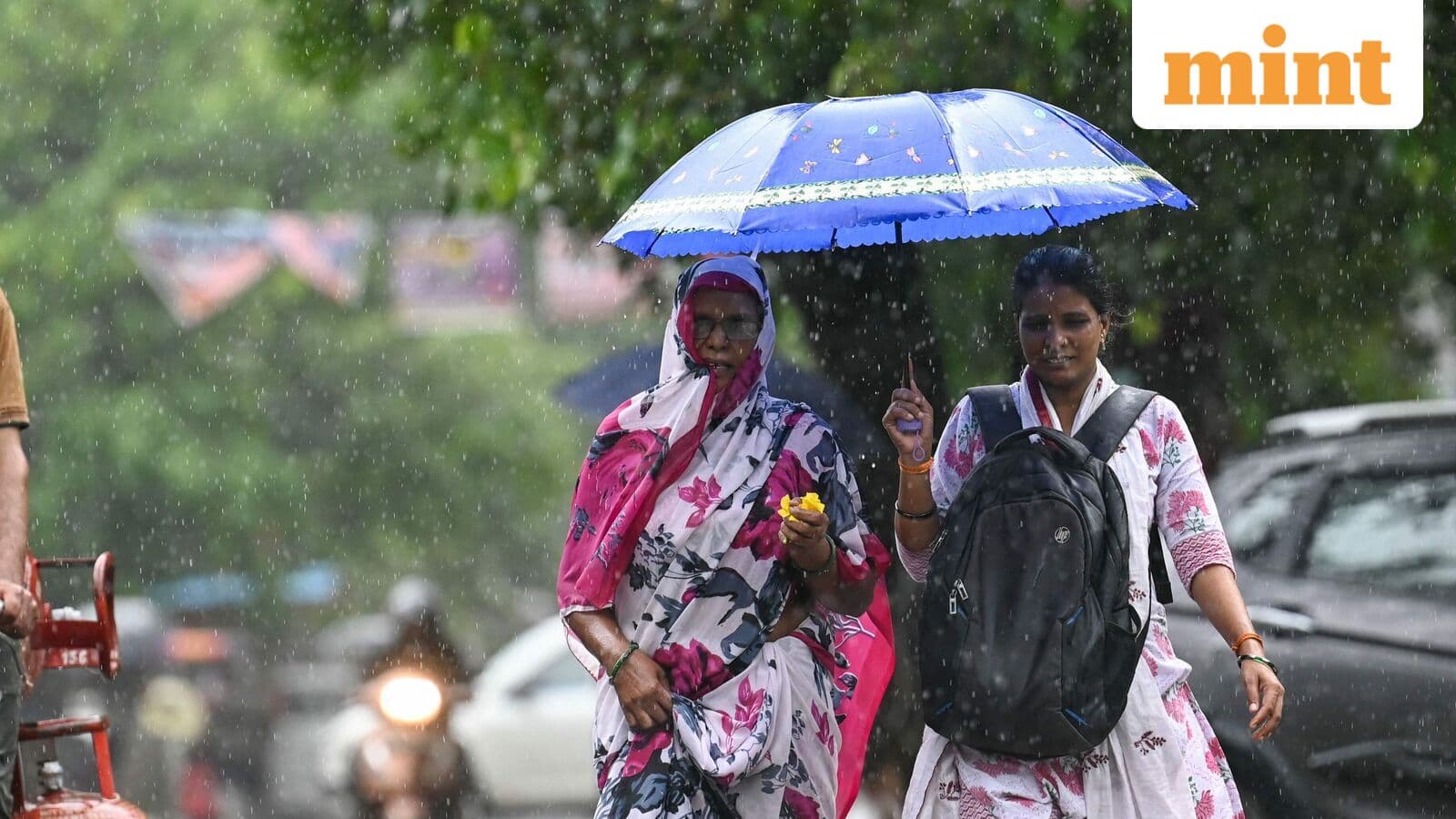
India is likely to receive below-normal rainfall in July, at less than 94% of the long-period average (LPA), according to the India Meteorological Department's (IMD) latest monthly outlook.The forecast follows India's driest June in more than a decade, and the fifth-driest since records began in 1901, with south-west monsoon rainfall 39.8% below the LPA. The country received 99.5mm of rainfall during the month, compared with the normal of 165.3mm.The IMD on 29 May revised its south-west monsoon forecast for 2026 to 90% of the LPA, down from its earlier estimate of 92%, due to El Niño conditions. The LPA for the June-September season, based on the 1971-2020 climatological record, is 87cm. The country saw below-normal monsoon last in 2023, when rainfall stood at 95% of the LPA.The latest forecast suggests that rainfall will remain below normal across most parts of the country. However, some areas of North-West and North-East India, East-Central India and the eastern peninsular region are expected to receive normal to above-normal rainfall.Warmer-than-usual summerThe weather department has also projected warmer-than-normal conditions across much of the country during July. Maximum temperatures are expected to remain above normal across most parts of the country, except for a few isolated pockets of West-Central India, where daytime temperatures are likely to be normal to below normal.Weak El Niño-Southern Oscillation (ENSO) conditions are currently prevailing over the equatorial Pacific Ocean. The latest forecasts from the Monsoon Mission Climate Forecast System (MMCFS) and other global climate models indicate that these conditions are likely to strengthen further during the season, the IMD said.“Currently, neutral Indian Ocean Dipole (IOD) conditions are being observed over the Indian Ocean. The model forecast indicates that neutral IOD conditions are likely to persist during the season,” said Mrutyunjay Mohapatra, director general of meteorology, IMD.The combination of below-normal rainfall and higher temperatures could increase heat stress in several regions and may affect soil moisture, particularly in rain-fed agricultural areas, according to experts.“The forecast of deficient rainfall is likely to raise farmers' cost of cultivation as they may have to rely more on irrigation. It could also prompt a shift towards less water-intensive or short-duration crops to reduce weather-related risks during the kharif season,” said Sudhir Panwar, an agriculture expert and former member of Uttar Pradesh Planning Commission.Impact on growthThe country remains heavily dependent on the south-west monsoon, which accounts for more than 70% of its annual precipitation. With only about 55% of the country's net sown area irrigated, the rest depends on rainfall.A good monsoon supports the farm economy and lifts rural demand, benefiting sectors such as two-wheelers, tractors and packaged consumer goods, where volumes typically rise 10-12% in favourable years, according to industry estimates. Conversely, weak rains can weigh on rural consumption.“A below-normal rainfall pattern could delay kharif sowing and weigh on crop yields, potentially resulting in lower output. A weaker harvest may, in turn, dampen rural demand, particularly for fast-moving consumer goods and consumer durables,” said Neeraj Hatekar, economist and former professor at the University of Mumbai.The Reserve Bank of India (RBI), in its 5 June monetary policy statement, projected consumer price index (CPI)-based inflation at 5.1% for 2026-27, while cautioning that the outlook is subject to upside risks from global supply chain disruptions and uncertainty over the spatial and temporal distribution of the monsoon.However, it said adequate foodgrain stocks and satisfactory reservoir levels provide some comfort.The central bank also projected real gross domestic product (GDP) growth of 6.6% for FY27, while warning that weather-related shocks could weigh on agricultural activity, rural d


Discussion (0)