
Loading dispatches...
← Return to Newsroomgeneral
UPSC Key: India-France ties, US diplomat summoned and El Niño
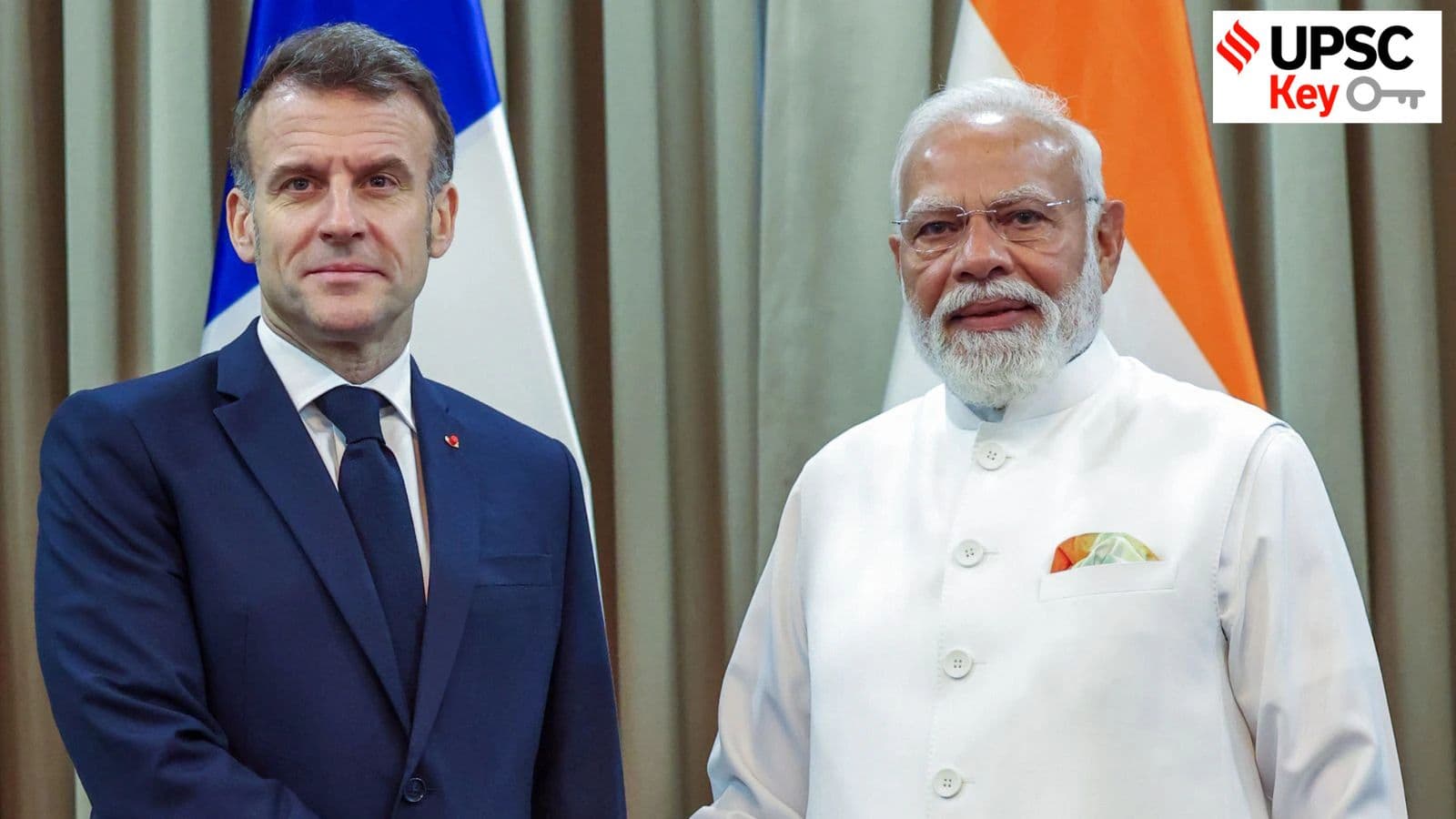
Preliminary Examination: Current events of national and international importance Mains Examination: General Studies-II: Bilateral, regional and global groupings and agreements involving India and/or affecting India’s interests What’s the ongoing story: For the second time in less than 48 hours, India Friday summoned the US charge d’affaires (CDA) and lodged a “strong protest” over the series of attacks by US naval forces on commercial vessels carrying Indian mariners in the Gulf of Oman. Key Points to Ponder: — How is the global shipping industry being impacted due to the war? — What are the challenges of seafarers in war torn regions? — Maritime security and the safety of seafarers are a major concern in the Strait of Hormuz area. Elaborate. — What are shadow fleets? — What do you understand about the Indian flag ship? — Why did the US attack the commercial oil thanker? — What are the challenges in reaching a peace deal between Iran and the USA? — What are the steps needed to be taken by countries like India to ensure maritime security in these regions? Key Takeaways: — On Thursday, the government confirmed the death of three Indian seafarers, reported missing a day earlier from MT Settebello after it was attacked — of the 24 Indians on board, 21 were rescued. — The MEA, which usually doesn’t use the word “summoning” for calling in foreign diplomats, said in a statement: “The US Charge d’Affaires, Mr Jason Meeks, was summoned to the Ministry of External Affairs today…” — The war in West Asia, triggered by the US-Israeli attack on Iran on February 28 and the subsequent naval blockade near the Strait of Hormuz, have jeopardised Indian lives and livelihoods, apart from the economic impact. — Since Indian seafarers are part of the global shipping industry, they have become casualties in the ongoing conflict. At least 13 Indians have been killed since the start of the war, and one remains missing. — The strait is the key channel through which 20 percent of the global energy supply passes in large carriers. Qatar, UAE, Kuwait have all been negatively impacted by the closure of the strait, and that has led to a global rise in prices of oil and gas, and impacted the supply of LPG to India and other countries. Do You Know: — The United States and Iran are expected to sign a memorandum as early as Sunday, likely in Geneva, that could reopen the Strait of Hormuz and halt fighting across multiple fronts in the Gulf, according to Reuters sources familiar with the negotiations. — As the war continues, and ships continue to find themselves stranded near the Strait of Hormuz, industry stakeholders are warning of the increasing risk of “abandonments” — when shipowners cease all support to their crew and ships. — Indians, who make up about 15% of the world’s seafarer workforce — the second biggest share by nationality — top the list of “abandoned seafarers”. — Indian seafarers top abandonment lists owing to a mix of socioeconomic pressures, systemic flaws in recruitment, and a surge in fraudulent practices, says Bahri. — In India, the Directorate General of Shipping is responsible for verifying the credentials of ships, their owners and recruitment and placement agencies. But the shipping community alleges that lax regulatory oversight is behind issues such as abandonment. Other Important Articles Covering the same topic: 📍War in West Asia spotlights a growing risk for Indian seafarers: Abandonment 📍US, Iran may sign Geneva memorandum by Sunday as Hormuz reopening nears Previous year UPSC Mains Question Covering similar theme: Why is maritime security vital to protect India’s sea trade? Discuss maritime and coastal security challenges and the way forward. (UPSC CSE 2025) EXPLAINED How trust underpins India’s ties with France Syllabus: Preliminary Examination: Current events of national and international importance. Mains Examination: General Studies-II: Bilateral, regional and global groupings and agreements involving India and/or affectin
New DelhiJun 13, 2026 02:27 PM IST The rules state that private radio services must remain free-to-air, emphasising they cannot charge listeners for access. (File Photo)TV channels should air 30 minutes of content daily between 6 am and 11 pm on themes of national importance, private FM stations should broadcast at least an hour of programme of “social relevance”, and appointments of key managerial personnel should be made after security clearance: These are some of the draft rules the Information & Broadcasting (I&B) ministry has published for the telecommunications sector. The draft Telecommunications (Television, Radio and Associated Services) Rules, 2026, consolidate various existing guidelines governing television, radio, and related services, replacing the regulatory framework that operated under the Telegraph Act of 1885. Stakeholders have been invited to submit comments on the draft rules by July 27.The proposed rules will cover television channels, Direct-to-Home (DTH) services, Headend-in-the-Sky (HITS) platforms, teleport, private FM radio, community radio stations, news agencies supplying footage to television, and Internet Protocol Television (IPTV) services under the Telecommunications Act, 2023. The rules mandate that TV channels should air at least 30 minutes of content every day on themes of national importance and social relevance between 6 am and 11 pm. The topics suggested range from education, agriculture and healthcare to science, women’s welfare, environmental protection and national integration. Television channels would also be required to stay active throughout the validity of their authorisation, according to the draft rules. Channels going off air for more than 60 consecutive days must notify the government and provide an explanation of the reasons, they added. Their authorisation can lapse if operations remain suspended for over 90 continuous days. Private FM stations would need to broadcast at least an hour of programmes of “social relevance” while ensuring that at least 20% of their daily content is locally produced. The rules state that private radio services must remain free-to-air, emphasising they cannot charge listeners for access.Story continues below this ad The draft rules propose an authorisation period of 10 years for television channels, teleports, television news agencies and community radio services, 15 years for private FM radio operators, and 20 years for television channel distribution services. The draft rules state that the entities that already hold internet service authorisations or multi-system operator registrations would be able to offer IPTV services after they file a declaration with the government, thus simplifying their market entry. IPTV enables the delivery of television content over internet protocol networks instead of transmitting over traditional terrestrial, satellite, or cable television formats. Significantly, the rules mandate broadcasters to disclose information related to “landing-page placements” to both the government and television ratings agencies.Story continues below this ad Other compliance-related requirements include preservation of recordings of programmes and advertisements for 90 days by broadcasters and furnishing them to authorities when requested. The rules also state that any ownership switch that leads to key management changes would need government approval in advance. The rules mandate that broadcasters, key managerial personnel and governing body members would need security clearance till the time their authorisations are valid. Foreign personnel involved in installation, maintenance or operation of broadcasting networks would also need security clearance before deployment. Amrita Nayak Dutta writes on defence and national security as part of the national bureau of The Indian Express. In the past, Amrita has extensively reported on the media industry and broadcasting matters, urban affairs, bureaucracy and government policie


Discussion (0)