
Loading dispatches...
← Return to NewsroomPolitics
SC orders single-phase Tripura village committee polls on September 27
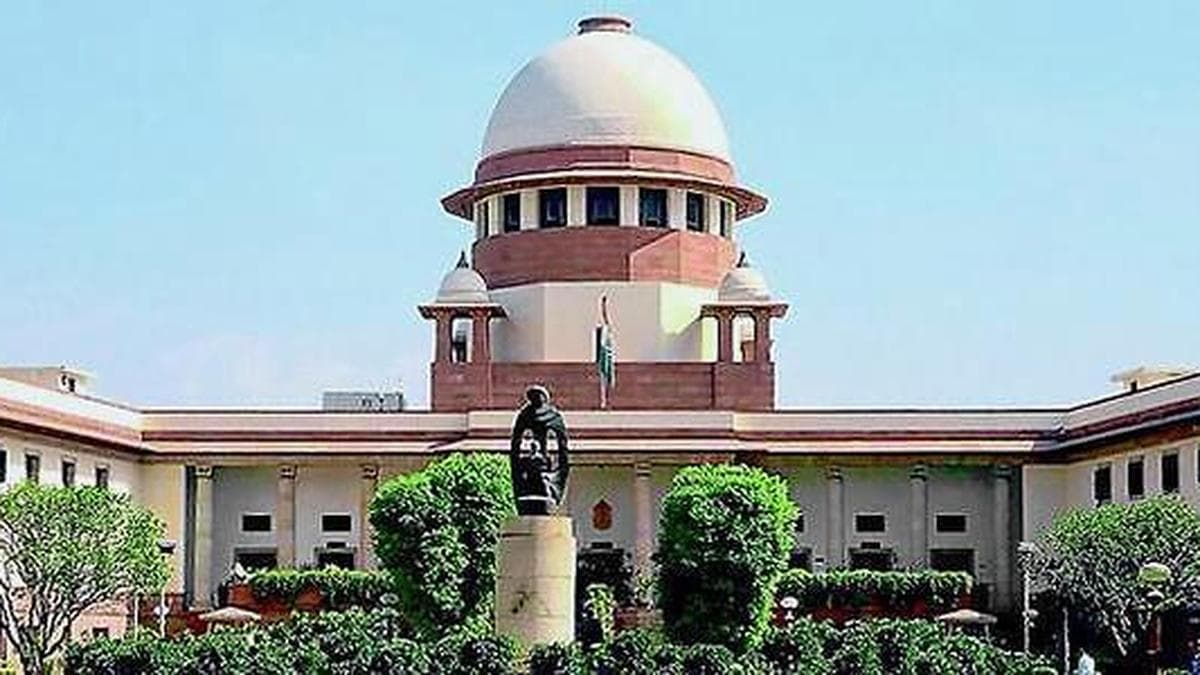
The Supreme Court of India. The Supreme Court on Tuesday (June 16, 2026) directed the Tripura State Election Commission (SEC) to hold the long-overdue elections to the village committees under the Tripura Tribal Areas Autonomous District Council (TTAADC) in a single phase on September 27, making it clear that no further extension of the poll schedule would be granted.A Bench of Justices Joymalya Bagchi and Vipul M. Pancholi passed the order after the SEC informed the court that it was in a position to complete the entire electoral exercise in one phase.Attorney General R. Venkataramani, appearing for the Commission, submitted that holding the elections in a single phase would enable the electoral exercise to be completed more efficiently and negate the need for additional Central paramilitary forces as local security arrangements would be sufficient to maintain law and order.Solicitor General Tushar Mehta, appearing for the Tripura government, endorsed the proposal. “There have been some incidents of violence in the recent past. The atmosphere would also calm down by September,” he submitted.The Bench agreed, observing that a single-phase poll would also ease the burden of security deployment.“I am in complete agreement with the Election Commission. It would be better if it were completed in one phase. You will not have to spare more security forces,” the Chief Justice observed.The top court was hearing a petition filed by Tipra Motha founder and former Tripura royal scion Pradyot Deb Burman, who alleged that the authorities had failed to conduct elections to the village committees within the statutory period prescribed. The petition stated that the last village committee elections were held in 2016 and that the term of the committees expired on March 7, 2021.Under Section 4 of the Tripura Tribal Areas Autonomous District Council (Establishment of Village Committee) Act, 1994, fresh elections are required to be held before the expiry of the committee’s five-year term.Earlier, the court had asked the poll body to indicate whether the polling process could be completed in phases. Pursuant to the direction, the Commission had placed an affidavit on record setting out the security requirements for both single-phase and multi-phase elections.Taking note of the affidavit and the broad consensus among the parties, the Bench recorded in its order: “…the State Election Commission has submitted an affidavit detailing the multi-phase and single-phase schedules. All parties before us are at ad idem that the election may be held in a single phase…. As the parties are substantially in agreement on the manner, we direct that the election to the village committees be conducted as per the proposed schedule.”The Bench, however, directed all authorities concerned to adhere to the schedule and ensure completion of the election process within the prescribed timeline, making it clear that no further extension would be permitted.In his petition, Mr. Burman pointed out that the Tripura High Court had, in July 2022, held that the village committee elections were overdue and directed the authorities to hold them. He said the directions were never acted upon and that the continued absence of elected village committees had affected development projects in the region, depriving tribal and rural communities of basic healthcare, sanitation and welfare benefits.The TTAADC covers nearly 70% of Tripura’s geographical area and extends across most districts of the State. It is home to a substantial tribal population drawn from 19 indigenous communities and is governed at the grassroots level through 587 village committees.Elections to these committees were due in 2021 but were deferred following the outbreak of the COVID-19 pandemic. Thereafter, an administrator was appointed to oversee their functioning under the supervision of the Governor. Published - June 16, 2026 06:06 pm IST
Kendrapara has witnessed one of the worst rates of human-crocodile conflicts in Odisha, with more than 20 fatalities reported over the past four years. | The CSIR laboratories are planning to introduce an artificial intelligence (AI)-enabled wild animal detection and alert system aimed at mitigating human-animal conflict. The proposed AI system is likely to be installed at two key entry points to the village.Kendrapara has witnessed one of the worst rates of human-crocodile conflicts in the State, with more than 20 fatalities reported over the past four years.The village is set to witness a comprehensive infrastructure upgrade, including a renovated water gate facility, an underground drainage system, a reconstructed community building, community toilets, and a revamped cremation centre. Roads will be developed using innovative methods, including cold mix technology, waste plastic road technology, and cement grouted bituminous mix.Beyond basic infrastructure, Kusunpur is expected to emerge as a hub for green livelihoods. Over time, the initiative could generate a range of green jobs, while encouraging local entrepreneurs to explore sustainable business opportunities, thereby enhancing incomes.Human-reptile conflict in Odisha: when crocodiles attackAligned with the CSIR’s guiding ‘lab to land’ principle, a suite of technologies has been proposed for deployment in the village. These include dry flower processing, production of value-added crispy fruits through freeze-drying, and the development of nutritious food products to combat malnutrition. Other initiatives include biodegradable tableware, small-scale processing units, herbal floor-cleaning liquids, mosquito repellent lotions, and scented candles made from natural beeswax. Plans also include the installation of brick and block-making machines, village-scale rice and moong dal (green gram) milling units, and a scientifically designed parboiled rice processing unit.“Over the next three years, scientists from 17 CSIR laboratories will visit Kusunpur to ensure smooth deployment of these technologies for the village’s overall development,” CSIR-Central Building Research Institute (CBRI) Director Pradeep Kumar Ramancharla, who visited the village on Sunday (June 14, 2026), said.Human-croc conflict impacting life in Odisha“The fundamental rationale behind creating smart villages is to integrate them into India’s growth story. While India is now the fourth-largest economy in the world, it still trails significantly behind the top two economies — the United States and China. Bridging this gap will require contributions from all sectors. At present, urban centres are the primary drivers of job creation and economic growth, but villages must also play a vital role,” Mr. Ramancharla said.Ramanuj Narayan, Director, CSIR-Institute of Minerals & Materials Technology (IMMT), Bhubaneswar, said his laboratory would pitch in with sustainable water filters and smokeless chullahs (stoves) for Kusunpur.Natural resource mapping, need assessment, and consultations with villagers have been completed, Kishor S. Kulkarni, Principal Scientist, CBRI, and the nodal official for the implementation of the ‘Smart Village’ initiative for Kusunpur, said. Published - June 14, 2026 09:54 pm IST

Discussion (0)