
Loading dispatches...
← Return to NewsroomEconomy
Lauren Bennett, singer on LMFAO's Party Rock Anthem and GRL member, dies aged 37

British singer Lauren Bennett, best known for featuring on LMFAO's Party Rock Anthem and as a member of GRL, has died aged 37. She rose to fame after competing on The X Factor and building a successful pop career.Singer Lauren Bennett has passed away at the age of 37.Lauren Bennett, the British-born singer who gained international recognition for her vocals on LMFAO's 2011 hit Party Rock Anthem and later became a member of the girl group GRL, has died aged 37.Singer Lauren Bennett dies at 37News of Bennett's death was confirmed by her family. A cause of death has not been publicly disclosed.Born in Meopham, Kent, Bennett developed an interest in music from an early age, taking part in local talent competitions and performing in pubs and clubs before pursuing a professional career. As a teenager, she auditioned for the UK television talent show The X Factor, where she progressed to the final 12 contestants before being eliminated.Although her journey on the programme ended before the live finals, it proved to be a turning point in her career. Soon afterwards, Bennett was invited to audition for the girl group Paradiso Girls, leading her to relocate to Los Angeles at the age of 17.The group released the single Patron Tequila, featuring Lil Jon and Eve, in 2009. The track reached No. 3 on the US Dance Club Songs chart and marked Bennett's first notable commercial success in the music industry.Her international breakthrough came in 2011 when she featured on LMFAO's Party Rock Anthem. The dance-pop anthem, which also featured GoonRock, became one of the biggest songs of the decade, topping charts in multiple countries, including the United States, the United Kingdom, Australia and Canada. The song went on to sell millions of copies worldwide and remains one of the best-selling digital singles in history.Following the success of Party Rock Anthem, Bennett joined the five-member girl group G.R.L., formed by music producer Robin Antin. The group gained international attention with a series of pop releases and collaborations, including Wild Wild Love with Pitbull in 2014.G.R.L. also achieved commercial success with Ugly Heart, which reached the UK Top 20 and entered the Top Five in Australia and New Zealand. The group's energetic performances and vocal harmonies earned them a dedicated international fanbase.Throughout her career, Bennett collaborated with several high-profile artists and built a reputation as a versatile vocalist capable of moving between dance-pop, R&B and mainstream pop music.About the AuthorTrisha BhattacharyaTrisha Bhattacharya is a Senior Content Producer at Livemint, with over two years of experience covering entertainment news from India and beyond. She spends her days tracking what’s trending, breaking down pop culture moments, and turning fast-moving entertainment stories into sharp, engaging reads that actually make people want to click — and stay. She holds a Master’s degree in English Literature from Lucknow University, a background that shapes her love for layered narratives, strong voices, and stories that linger long after they’re told. Before joining Livemint, Trisha worked with India Today as an entertainment journalist and film critic. There, she reviewed films, covered industry news, and built a strong foundation in storytelling and cultural analysis. Trisha enjoys working at the intersection of media, culture, and audience interest, always looking for fresh angles and formats. Films, shows, and music are not just her beat but her biggest passion — something that naturally reflects in her writing. Whether it’s cinema, streaming shows, music, or internet trends, she approaches every story with curiosity and intent. Outside the job description, she’s unapologetically passionate about films, shows, and music — sometimes a little too passionate, if you ask her. That enthusiasm often spills into her work, adding personality, urgency, and a touch of chaos that keeps her writing alive. For Tr

Messaging platform Telegram on Wednesday moved the Delhi High Court against the Central government's decision to ban it ahead of the National Eligibility cum Entrance Test (NEET-UG) re-test.Mint ImageMessaging platform Telegram on Wednesday moved the Delhi High Court against the Central government's decision to ban it ahead of the National Eligibility cum Entrance Test (NEET-UG) re-test to prevent a paper leak, which is scheduled on 21 June.The matter was mentioned before the bench of Justice Tajas Karia, who agreed to hear it today. The development comes following recommendations by the National Testing Agency (NTA) and the Department of Higher Education, Ministry of Education.Responding to the Central government's action, Telegram's Chief Executive Officer (CEO) Pavel Durov, in a post on X, noted that the decision punishes over 150 million Telegram users in the country, and not the "insiders" who leaked the exam materials.Quick answers to key questions•5 QUESTIONSThe Indian government banned Telegram to prevent organized cheating and curb the dissemination of false information regarding exam papers ahead of the NEET-UG re-exam scheduled for June 21.Telegram is said to be exploited by scam networks to distribute fake question papers and create misleading evidence of exam leaks through its message-editing feature, which can keep old timestamps intact.The National Testing Agency has added multiple layers of security to ensure the integrity of the NEET-UG exam, including tighter controls over question paper distribution and monitoring of communications on platforms like Telegram.Yes, Telegram users in India should be concerned as the ban is in effect until June 22, impacting their ability to access the platform for communication and study resources during critical exam preparation.The Internet Freedom Foundation criticized the Telegram ban as a 'band-aid solution', arguing it disproportionately affects millions of users and does not address the underlying issues of exam malpractice.This is a developing story. More details awaited.About the AuthorSwati GandhiSwati Gandhi is a digital journalist with over four years of experience, specialising in international and geopolitical issues. Her work focuses on foreign policy, global power shifts, and the political and economic forces shaping international relations, with a particular emphasis on how global developments affect India. She approaches journalism with a strong belief in context-driven reporting, aiming to break down complex global events into clear, accessible narratives for a wide readership. Previously, Swati has worked at Business Standard, where she covered a range of beats including national affairs, politics, and business. This diverse newsroom experience helped her build a strong grounding in reporting, while also strengthening her ability to work across both breaking news and in-depth explanatory stories. Covering multiple beats early in her career has helped her be informed about her current work, allowing her to connect domestic developments with wider international trends. At Live Mint, she focuses on international and geopolitical issues through a business and economic lens, examining how global political developments, foreign policy decisions, and power shifts impact markets, industries, and India’s strategic and economic interests. She holds a Bachelor’s degree in English (Honours) from the University of Delhi and a Master’s degree in Journalism and Mass Communication from Guru Gobind Singh Indraprastha University. Her academic training has shaped her emphasis on precision, analytical rigour, and clarity in writing. Her interests include global political economy and the intersection of geopolitics with business. Outside work, Swati focuses on exploring her passion and love for food. From fancy cafes to street spots, Swati explores food like a true foodie. Get Latest real-time updatesStay updated with the latest Trending, Ind
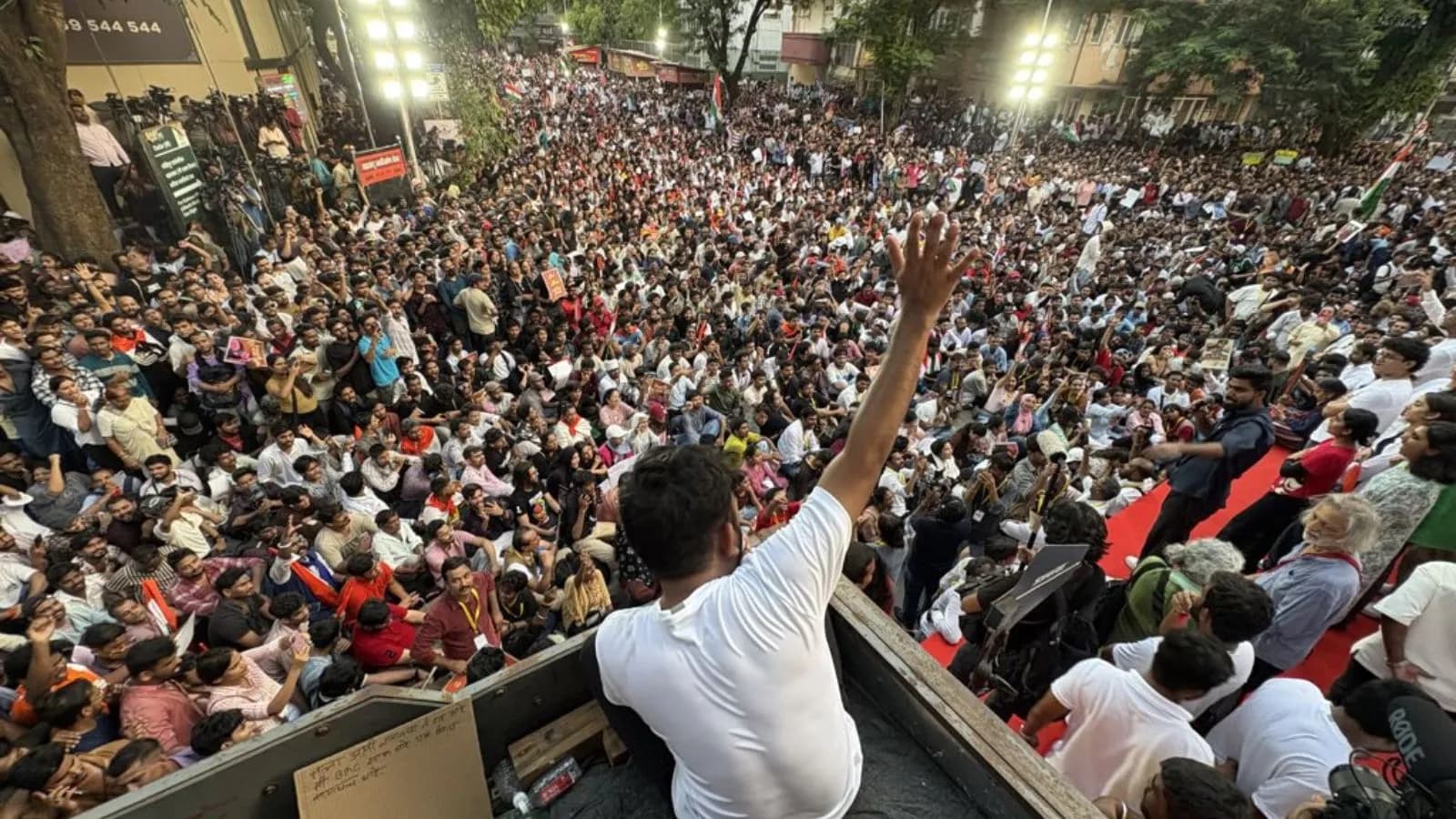
India moved on Tuesday to block the popular messaging platform Telegram until 22 June 2026, citing its exploitation by organised cheating networks ahead of the National Eligibility cum Entrance Test (NEET) undergraduate re-examination, scheduled for 21 June. The shutdown, which the government described as a measure of last resort, has drawn sharp criticism from the Internet Freedom Foundation (IFF), which argues that the order is legally overreaching, practically ineffective, and ultimately harmful to the very students it claims to protect.What Triggered the Telegram Block in IndiaThe National Testing Agency (NTA), under the Ministry of Education, announced the block “in response to the organised use of the platform by cheating rackets to defraud candidates appearing for the National Eligibility cum Entrance Test 2026 re-examination scheduled on 21 June 2026.”The action follows a turbulent few weeks for India's premier medical entrance examination. Last month, the government cancelled NEET undergraduate results for approximately 2.3 million students after authorities launched investigations into allegations that question papers had been leaked before the examination.The cancellations triggered widespread protests across the country, including demonstrations organised by the viral Cockroach Janta Party, which publicly demanded the resignation of Education Minister Dharmendra Pradhan.How India's IT Law Was Used to Justify the Telegram ShutdownThe block was issued under Section 69A of India's Information Technology Act, 2000, a provision that allows the central government to restrict access to online platforms in the interest of "sovereignty and integrity of India."Separately, the government also ordered Telegram to disable its message-editing feature for all Indian users until 30 June 2026.Technology giants Alphabet's Google and Apple both received government directives to remove the Telegram application from their respective app stores temporarily, and sources with direct knowledge of the matter confirmed they will comply.The government acknowledged that the measure would cause inconvenience, describing it as unavoidable after earlier targeted actions to remove offending content had not produced the desired results.Internet Freedom Foundation Challenges the Legal Basis of the BlockThe IFF has raised substantive objections to the decision, arguing that the government has invoked a law that does not actually permit what it has done.In a detailed statement released on Tuesday, the organisation said: “Section 69A and the Blocking Rules of 2009 framed under it allow the Government to block access to specific 'information' on a computer resource. They do not extend to switching off an entire intermediary, still less to ordering a company to redesign its product by removing a feature for a whole country.”The IFF cited the Supreme Court's landmark ruling in Shreya Singhal v Union of India, which upheld Section 69A precisely because its scope was narrow and governed by procedural safeguards. Extending the provision to justify a full platform shutdown, the organisation argued, stretches it well beyond its constitutional boundaries. On the separate directive regarding message-editing, the IFF noted that "the release identifies no source of power at all."Govt's Own Narrative Undermines the Case for a Blanket BlockOne of the IFF's most pointed arguments draws directly from the NTA's own press release. The foundation observed that the government simultaneously admitted that channel-level takedowns had already been working, and that no examination paper was available outside secured channels.The NTA's release acknowledged its nodal agency "has secured the prompt take-down of a substantial number of Telegram channels, groups and bots," and that this targeted work “is the reason the harm caused by these rackets has been contained to the extent it has.”The IFF argued this admission fatally weakens the rationale for a full ban: "If channel level


Discussion (0)