
Loading dispatches...
← Return to NewsroomEconomy
Trump bombshells on Israel: 'They'll do as I say' on Lebanon issue; says he has to keep Netanyahu 'sane'

US President Donald Trump on Friday (local time) claimed that he would be able to stop Israel from carrying out any more strikes in Lebanon, asserting that the Israeli leadership acts on his directions due to what he calls strong mutual respect.Trump made these remarks during an interview on The Axios Show. When asked if he could influence Israeli military actions in the Middle East region, especially potential strikes on Beirut, the US President said that he would be able to exercise control over such decisions. He added, "Yeah, I will be. I mean, they have a lot of respect for me, and they do as I say."Trump's remarks come days after he signed the US-Iran interim peace deal, a 14-point Memorandum of Understanding (MoU), at Versailles, France. The agreement, which is aimed at ending the US-Iran conflict permanently, also seeks the permanent and immediate cessation of hostilities on all fronts, including Lebanon. However, so far, Tel Aviv has continued with its military offensive in Beirut to target Iran-backed Hezbollah militants, a move that has irked Trump a lot more in the last few weeks and strained ties between the two leaders.Trump-Netanyahu tiesDuring the interview, he also referred to Israeli Prime Minister Benjamin Netanyahu and said that he maintains a strong but closely watched relationship with him and added, "It's good, but we have to keep him a little bit sane."His remarks came after the US President expressed frustration with Netanyahu over jeopardising the US-Iran deal. According to reports, the Israeli prime minister was also sidelined from the negotiations that led to the interim deal. The Wall Street Journal reported that the frequent phone calls between the two leaders have now become less friendly. During a recent phone call about Beirut, Trump asked Netanyahu, "Why are you blowing up buildings?" and asked him to "stop blowing up buildings." In another call, he reportedly complained that the worldwide downturn sparked by the war could tie him to Herbert Hoover and the Great Depression of the 1930s.Since the war began in late February, the US President has yelled at Netanyahu on several occasions, a fact he acknowledged earlier this month. Earlier this week, he said, “Without the US, there would be no Israel. Without me, there would be no Israel because no other President was willing to do what I did. I have had a great relationship with Bibi. Now Bibi has to be more responsible with respect to Lebanon.”Earlier this month, both Netanyahu and Trump downplayed their rift. Speaking with CNBC, he said that while they sometimes have "tactical disagreements," they "agree on the main things." He said, "Sometimes we have, as in the best of families, these tactical disagreements, but we always find a way to work them out, and we do so as great friends."The Israeli PM added, "We can disagree in the morning" and find common ground by the afternoon.During the interview, Trump reiterated that without him, Israel would have been "eviscerated." He added, "Remember this: if I don't terminate the JCPOA--road to--remember that was a road to a nuclear weapon legally. It says right there. And Obama thought he could pay them off. He gave them billions and billions of dollars, 1.7 billion in cash. You know, it was a well-known story, but it didn't work. You can't bribe your way out of it; you can't pay your way. But if I didn't do that and if I didn't attack their nuclear supply 10 months ago with the B-2 bombers, Israel would not exist today."Israel-Hezbollah ceasefireOn Friday (local time), reports suggest that a renewed ceasefire agreement was reached between Israel and Hezbollah amid efforts to de-escalate tensions in the region.CNN, citing sources familiar with the negotiations, reported that Israel and Hezbollah have reached an agreement to reinstate a ceasefire, which came into effect at 9 am (local time).However, Israel Defence Forces (IDF) Spokesperson Brigadier General Effie Defrin said that the Israeli forces would c

US President Donald Trump listed PM Modi among one of the greatest leaders and called him a ‘very tough cookie’ in an interview on Thursday, shortly after returning from a G7 summit in France.US President Donald Trump labeled PM Modi as ‘greatest leader’ along with Chinese President Xi Jinping and called him ‘very tough cookie’.(REUTERS)US President Donald Trump categorised Prime Minister Narendra Modi and Chinese President Xi Jinping as the two greatest leaders on the world stage. In an interview with Axios, the 80-year-old Republican described the qualities of each of the two that makes them stand out. Trump not only called PM Modi “great” but also “a very tough cookie” when he was questioned about two most admirable world leaders for from his two terms as President.In the viral clip where Trump made such inside revelations about his personal belief, he said that he considered Xi Jinping the greatest in terms of leadership. While considering power and leverage and the ability to execute order, he named PM Modi and said, “Well, I think Modi is very good, yeah. They had some very good numbers announced. He stays out of wars which is smart. He is 1.5 billion people, he is actually the biggest, India is actually the biggest. Modi is a great leader."Trump made the remarks on "The Axios Show" on Thursday, shortly after returning from a G7 summit in France. Trump also made reference to India's tariff policy and noted, "We do a lot of business with them. But now, we do fair business. They used to really rip us off. I don't blame them for that. You know we have stupid politicians they allowed that to happen. But now, we do a lot of business, and they are not happy about this because they used to do a lot better so… but Modi is great, President Xi is great.”Praising PM Modi and Xi Jinping's personality and aura, he suggested that if one ever wanted to make a movie on the two of them, they wouldn't be able to find the suitable match in Hollywood to take their roles.Arguing that PM Modi is a very tough cookie, he remarked, "Classics you know I mean. If you are going to make a movie about either one of them, you wouldn't be able to find the man in Hollywood. I'm telling you, is like, as an example, the look of Xi's got a great look, you know. Looks don't matter, right? You know, we don't like that they say don't talk about looks, but he's, you know, he's tall, he's six foot two, he's got a great stature, he's got great confidence and he's smart. Modi in a very different way, just highly respected. I've seen, you know, I know the real Modi is a very tough cookie. I'll tell you, you have.. I got to know."When the journalist enquired about Trump's definition of a great leader, Trump called PM Modi “very tough guy” as he described the prime minister's “calmness”. Speeking highly of his “friend,” Donald Trump said, “Yesterday, as an example, I'll mention the name again, because pretty great, you know. All my life, I've watched India - they just kept changing, changing, changing. Somebody would be there for six months, and then a year, and then all of a sudden, Prime Minister Modi ends up there. He's been there for more than 12 years, very solid, and he does it through like there's a great calmness, and yet he's not a calm person, he's a very tough guy.”These remarks came nearly 48 hours after Trump praised PM Modi at a joint press conference at the G7 Summit.Get Latest real-time updatesStay updated with the latest Trending, India , World and US news. HomeNewsTrendsTrump labels PM Modi as ‘greatest leader’ with Xi Jinping — What did he say on making Hollywood movie on the twoMore
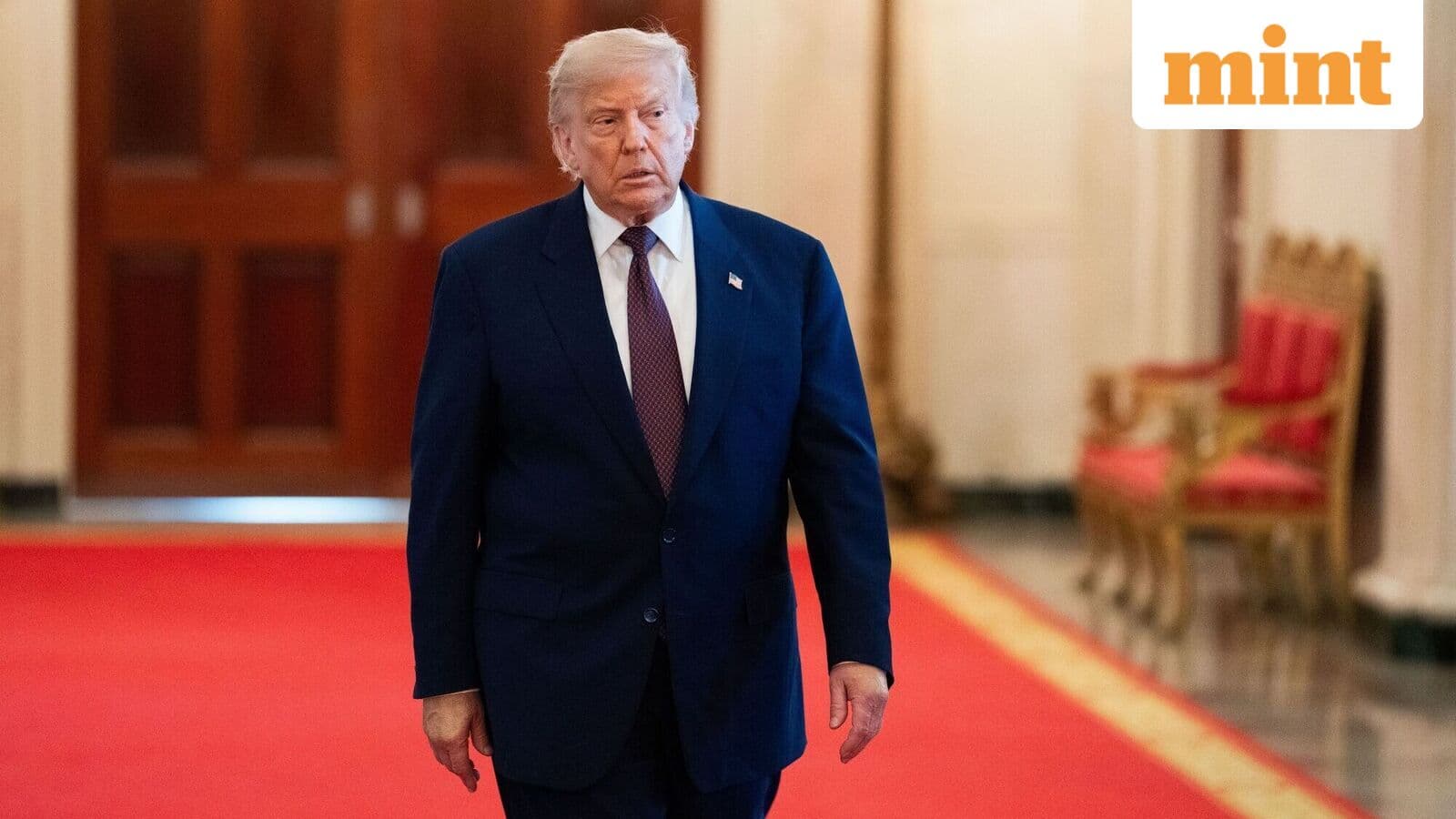
US President Donald Trump has dismissed the idea that the war with Iran exposed any limits to his power, telling Axios that he still believes there are "no limits" to what he can do as president. The remark followed his decision to settle for a far narrower deal with Tehran than the one he originally demanded, and comes as Trump is separately reported to be testing comparisons between himself and history's most dominant rulers.Trump entered the conflict insisting on Iran's unconditional surrender and ended it instead with a memorandum of understanding, according to Axios. He told Axios correspondent Marc Caputo on "The Axios Show" that he had agreed to the narrower deal specifically to stop the war tipping into a global economic depression, while continuing to insist the outcome amounted to total victory.Quick answers to key questions•5 QUESTIONSTrump's Iran deal includes 14 provisions, such as requiring Iran to allow free passage through the Strait of Hormuz, the US to end its naval blockade, and Tehran gaining access to at least $300 billion in financing.Trump settled for a narrower deal to prevent the war from potentially triggering a global economic depression, emphasizing that the war's escalation could have severe repercussions on global oil supply.Trump justified his claims of victory by stating that the military objectives were achieved while maintaining that the memorandum amounts to unconditional surrender, even if the terms differed from his original demands.Iran's Supreme Leader Mojtaba Khamenei had a negative view of the deal but permitted President Masoud Pezeshkian to sign it, indicating a pragmatic approach despite his reservations.Critics warn that the Iran deal may leave Tehran financially better off, raising concerns among US citizens about its potential long-term effects on national security and economic strategies.Asked what the war had taught him about the limits of his own power, Trump did not hesitate. "There are no limits," he said. Pressed further, he added: "I haven't learned that lesson yet. I know there are, but there are no limits."Behind the small print: what the deal actually gives IranThe gap between Trump's original demand and the agreement he signed drew direct pushback during the interview. "Beginning of the conflict, you had talked about, you only wanted unconditional surrender," Caputo said. "And the MOU doesn't look like unconditional surrender."Trump disagreed, insisting "we defeated them totally militarily" and that the memorandum “probably is unconditional surrender.”The text of the agreement suggests a more complicated picture. It runs to 14 provisions, requiring Iran to allow free passage of shipping through the Strait of Hormuz and the US to end its naval blockade, while giving Tehran access to at least 300 billion US dollars in financing, with the removal of existing US sanctions contingent on a final agreement still to come.The arrangement contains 14 provisions requiring Iran to allow ships to travel freely through the Strait of Hormuz, the US to cease its naval blockade, and Iran to gain access to at least $300 billion in financing, with several provisions advantageous to Iran including funds for rehabilitation and economic development.Even inside Iran, the agreement was not universally welcomed. Supreme Leader Mojtaba Khamenei reportedly held a negative view of the deal but granted permission for President Masoud Pezeshkian to sign it regardless.Iranian President Masoud Pezeshkian signed the MOU after Supreme Leader Mojtaba Khamenei granted permission despite his negative opinion of the peace agreement. MediaiteWashington ExaminerMilitary bragging rights: the blockade defenceTrump pointed to the US naval response, part of a campaign the Pentagon had named Operation Epic Fury, as evidence of strength rather than restraint. "We have the most powerful military in the world, by far," he said."Who else could have done a blockade like that? I did a naval blockade where not one ship w

As United States President Donald Trump signed the Iran Memorandum of Understanding (MoU) at Versailles, France, attention has now turned to his ties with Israeli Prime Minister Benjamin Netanyahu. According to NBC News, the Israeli government was sidelined and was not shown the draft MoU aimed at ending the war.The move is particularly significant for Netanyahu, whose government was excluded from the negotiations that produced the agreement. Israel's absence from the talks is now emerging as a crucial challenge for Netanyahu, who is heading into what many consider a career-defining election before the end of October.Why the US-Iran deal is bad for Israel and Netanyahu?According to reports, when the US and Israel waged a war in late February, the two allies were optimistic that they could bring Tehran's regime to an end. The US president declared to Iranians that "the hour of your freedom is at hand” and urged them, at the appropriate moment, to “take over your government”.Quick answers to key questions•5 QUESTIONSIsrael was excluded from the negotiations that produced the Iran Memorandum of Understanding (MoU), raising concerns for Israeli Prime Minister Netanyahu, particularly as the agreement could impact Israel's security.Netanyahu's position has weakened as he faces backlash for being sidelined from US-Iran negotiations, which some say could lead to significant repercussions for him in upcoming elections.Netanyahu has expressed frustrations about the deal, claiming he would continue to fight against Iran acquiring nuclear weapons, despite the peace agreement signaling a shift in US policy.Criticism has mounted against Netanyahu from various Israeli political figures and polls indicate a drop in public support, with many viewing the deal as a failure of his foreign policy.Trump's relationship with Netanyahu has become strained, with the US president expressing frustration over Israeli military actions in Lebanon that jeopardize the peace negotiations.While the Islamic Republic of Iran has suffered damage from the aerial bombardment, it has not fallen and appears to be in no immediate danger of collapse. The sidelining from the negotiations and Washington's decision to agree to end hostilities on all fronts, including Lebanon, can prove frustrating for Netanyahu, who has spent years pushing for a war with Iran and popularising it in Israel, Al Jazeera reported. The Israeli PM has reportedly gone to considerable pains to put a lot of distance between himself and what he called "Trump's decision" to end the war, while he previously claimed to have been an equal partner in launching the war.Additionally, if the final agreement comes into effect within the stipulated time frame, Netanyahu, who has been the longest-serving prime minister, could face repercussions back home during elections.Daniel Shapiro, former US Ambassador to Israel and a Distinguished Fellow at the Atlantic Council, told PBS News that Netanyahu is now in a precarious situation and "All Hezbollah has to do is get one rocket across into an Israeli town in northern Israel, and then the pressure on Netanyahu — which he's already hearing from his own base and from the opposition ... will ramp up."Israeli strikes on Lebanonanger TrumpThe apparent sidelining of Netanyahu comes at a time when his ties with Trump have gone for a toss. According to The Wall Street Journal, the frequent phone calls between the two leaders are becoming less friendly now.Citing sources, the report stated that while Trump was trying to broker a permanent end to his war in Iran, which has weighed on the US economy, he had choice words for the ally who urged him into it. During a recent phone call about Lebanon, Trump asked Netanyahu, “Why are you blowing up buildings?” and asked him to ”stop blowing up buildings." In another call, he reportedly complained that the worldwide downturn sparked by the war could tie him to Herbert Hoover and the Great Depression of the 1930s.Ever since the war

The White House on Wednesday confirmed that the US-Iran peace agreement has been signed by US President Donald Trump at Versailles, France. The Iranian President, Masoud Pezeshkian, has also signed the MoU, while questions linger over Friday's official ceremony.Trump Signs Landmark Iran MoU, Calls Agreement a Difficult Diplomatic Breakthrough | #shortsUS President Donald Trump on Wednesday (local time) signed the US-Iran memorandum of understanding (MoU) at Versailles, France, while attending a dinner hosted by French President Emmanuel Macron for leaders of the Group of Seven (G7).According to the White House, the agreement has also been signed by Iranian President Masoud Pezeshkian and came days after Iranian parliamentary speaker Mohammad Bagher Ghalibaf and US Vice President JD Vance signed it electronically on 14 June.The BBC, citing the White House, reported that the agreement is now in effect and has commenced the 60-day extendable period for Washington and Tehran to reach a more final deal.Quick answers to key questions•5 QUESTIONSThe US-Iran MoU includes commitments such as Iran's pledge not to pursue nuclear weapons, the reopening of the Strait of Hormuz, the lifting of US sanctions, and a ceasefire on all fronts including Lebanon.Trump signed the MoU with Iran at Versailles as part of a diplomatic effort to end the ongoing conflict, aiming to prevent an economic catastrophe and ensure a peaceful resolution.The MoU stipulates that the Islamic Republic of Iran will immediately reopen the Strait of Hormuz and that the United States will lift its naval blockade, allowing for toll-free traffic for a period of 60 days.Trump warned Iran that if they fail to honor the MoU, the United States would resume military action, threatening to 'bomb the hell out of them' as necessary.Yes, the MoU establishes a 60-day period for the US and Iran to negotiate a final agreement, which can be extended upon mutual consent.Pakistan PM says agreement takes effect 'immediately'On Thursday (local time), Pakistan's Prime Minister Shehbaz Sharif announced that the US-Iran MoU has come into effect 'immediately.' In a post on X, Sharif wrote, "I am honoured to announce that the historic ‘Islamabad Memorandum of Understanding’ has been electronically signed today between the United States of America and the Islamic Republic of Iran. The Memorandum has been signed by the honourable Presidents of both countries and also endorsed by me as the mediator."He added, "Islamabad MoU shall enter into force with immediate effect and as a first step, the Islamic Republic of Iran will instantly reopen the Strait of Hormuz and the United States of America will immediately lift the naval blockade."Sharif hailed the US President and noted that “his steadfast commitment to diplomacy and preference for peaceful resolution have once again helped end a conflict that could have led to devastating consequences for the region and beyond.”As Trump and Pezeshkian signed the US-Iran agreement to end the war, it remains unclear if the official signing ceremony, scheduled to take place in Switzerland on Friday, will continue.Trump threatens to bomb IranThe signing of the agreement comes a day after Trump threatened to resume attacks on Iran and kill Iranian officials if they failed to honour their commitments. Speaking at a press conference on Wednesday at the G7 summit, Trump said, "We're going to bomb the hell out of them if they violate the agreement," and added, "I don't want them to. I want them to honour the agreement."According to a Reuters report, he also termed Iranians as "smart people" as the two sides work on a permanent ceasefire to end the war in the next two months. This is not the first time that Trump has threatened to resume attacks on the Islamic Republic while negotiations were underway. Previously, he had said, “If I don't like it, if they don't behave, we'll go right back to dropping bombs right smack in the middle of their head, OK?”Iran's top negotiat

Iran's Foreign Ministry spokesperson, Esmaeil Baghaei on early Thursday said that a planned round of talks between Iran and the United States in Switzerland on Friday has not yet been confirmed. US President Donald Trump stated that he had signed a memorandum of understanding (MoU) with Iran, according to AP.The White House also announced that Trump signed the agreement aimed at ending the conflict involving Iran while he was at Versailles, although no media cameras were present during the signing."The Friday meeting was confirmed until a few hours ago, but when it was decided that the presidents of the two sides (Iran and the US) would sign the agreement, it was decided to pause consideration of the Friday meeting for now," Reuters quoted Baghaei as saying.Quick answers to key questions•5 QUESTIONSThe purpose of the US-Iran peace deal is to end the ongoing conflict between the two nations, ensuring that Iran commits not to pursue nuclear weapons while receiving economic incentives.Switzerland is hosting the signing of the peace deal as it has historically served as a neutral ground for diplomatic negotiations between Iran and the United States.The deal will provide Iran with rights to sell oil, access a $300 billion development fund, and potentially recover frozen assets as part of the agreement.The US will reinstate military action against Iran if the nation fails to honor the terms of the peace agreement, as emphasized by President Trump.The MoU outlines commitments to cease military operations, negotiate a final deal within 60 days, and establishes provisions for Iran's nuclear program and economic sanctions relief.According to a US official, both Trump and Iranian President Masoud Pezeshkian signed the agreement. Earlier reports indicated that Trump and Vice President JD Vance had digitally signed the document on Sunday and that a formal signing ceremony would take place in Switzerland on Friday. However, AP citing an official speaking anonymously, said that Trump signed the deal in person at Versailles on Wednesday, and Pezeshkian also signed it the same day.It remains uncertain whether the signing triggered a 60-day period for negotiating a final agreement. It is also unclear how Trump's signing of the deal at Versailles differed from the digital signature he reportedly provided on Sunday.Versailles has been the site of numerous landmark treaties throughout history, many of which brought an end to wars or resolved territorial conflicts. The most notable was the 1919 peace treaty that formally concluded World War I. Some historians argue that the treaty's severe penalties on Germany contributed to the conditions that later led to World War II.Trump says text of MoU to be released ‘pretty soon’Trump said on Monday that the complete text of the memorandum of understanding (MoU) between the US and Iran would be released in the near future, describing it as a “very powerful document”.Speaking alongside French President Emmanuel Macron during a bilateral meeting in Evian on the sidelines of the G7 Summit, Trump indicated that the document would likely be made public after the formal signing ceremony expected later in the week.When asked about the timeline for its release, Trump mentioned, “I think pretty soon. I would say I mean, I want it to be released because it's a very powerful document. This is a very powerful document, and I want it to be released. So, probably pretty soon. I would say after sometime after Friday.”Meanwhile, Trump and his administration had long pointed to several key issues as justification for taking a hardline stance toward Iran. However, during a press conference on Wednesday, Trump appeared to downplay many of those concerns.While explaining his decision to support an interim peace agreement, Trump reiterated that Iran must never obtain a nuclear weapon. At the same time, he suggested that Tehran could retain the ability to enrich uranium, continue developing ballistic missile technology, and rega

US-Iran news LIVE: Pakistan Prime Minister Shehbaz Sharif on Thursday confirmed that the US-Iran peace agreement, which was signed electronically by both sides, has come into effect "immediately." He, however, added that the official signing will take place on Friday in Switzerland, as previously announced. In a social media post, Sharif reassured that, as the first step of the agreement, Tehran will reopen the Strait of Hormuz and Washington will lift the naval blockade.Trump says he could still resume attacksThe US and Iran released the text of an interim agreement to end their war on Wednesday, with US President Donald Trump threatening to resume attacks and kill Iranian officials if they failed to honour their commitments. While attending the G7 summit in France, he also withdrew at least one of his previously stated rationales for attacking Iran in the first place. He said that it would be "unfair" for the Islamic Republic not to have ballistic missiles, having previously vowed to obliterate them."We're going to bomb the hell out of them if they violate the agreement," Trump said of Iran at a press conference. "I don't want them to. I want them to honor the agreement." He also called Iranians "smart people" as US and Iranian negotiators work on a permanent truce over the coming 60 days.Focus turns to the Strait of Hormuz as US-Iran deal takes effectDonald Trump has signed an interim deal to end the war with Iran and reopen the Strait of Hormuz, speeding up the timeline for the agreement despite blowback from Republicans who said it amounted to victory for Tehran. The so-called memorandum of understanding is now in effect, a US official said. It was unclear if Iran had immediately begun taking steps to fully reopen the Strait of Hormuz. Trump told reporters he signed the document at the palace of Versailles near Paris, where he had dinner with French President Emmanuel Macron. Versailles was where leaders of the great powers gathered in 1919 to sign the peace treaty that formally ended World War I.Draft 14-point MOUHere's a list of the draft 14-point MoU that the US and Iran have agreed to:1. Immediate and permanent end to war on all fronts, including Lebanon2. The US and Iran will respect each other’s sovereignty and territorial integrity and refrain from interfering in each other’s internal affairs3. The two sides will try to reach a final agreement within 60 days4. The US will lift the naval blockade after signing the agreement5. The US will also withdraw its forces from the surrounding areas within 30 days after the final agreement.6. The US and regional partners will establish a comprehensive economic rehabilitation and development plan for Iran, backed by at least $300 billion in funding.7. The implementation mechanism for the economic development plan will be finalized within 60 days.8. Iran to restore merchant shipping between the Persian Gulf and the Sea of Oman to pre-war levels within 30 days, including mine-clearing and removal of technical obstacles.9. The US will commit to ending all sanctions on Iran under a timetable to be agreed in the final agreement, including UN, IAEA, and unilateral US sanctions.10. Iran reaffirms that it will never develop or produce nuclear weapons.11. During the 60-day negotiation period, it also seeks the release of $24 billion in frozen Iranian assets12. Iran and the US have agreed that the fate of enriched material and the fate of all other mutually agreed nuclear-related issues, including Iran’s nuclear needs, will be adequately addressed in a final agreement13. The US Treasury Department will issue waivers for exports of Iranian crude oil, petrochemical products and their derivatives, and all related services, including banking, insurance, transportation, and the like14. The final agreement will be approved through a binding resolution of the UN Security Council.

US President Donald Trump issued a stark warning to Iran on Wednesday (June 17) while defending his administration’s interim peace agreement, saying Washington would resume military action if Tehran failed to comply with the terms of the deal.Speaking at the close of the G7 Summit in Évian-les-Bains, Trump outlined his rationale for pursuing the agreement, discussed the future of US-Iran relations, commented on Israel and Lebanon, and suggested that the accord could help avert a broader economic crisis.1. Trump warns Iran of renewed military actionQuick answers to key questions•5 QUESTIONSTrump warned that the U.S. would resume military action against Iran if they failed to honor the peace agreement, stating, 'We're going to bomb the hell out of them if they violate the agreement.'Trump argued that ending the conflict through the Iran deal was crucial to prevent a global economic catastrophe that could arise from a prolonged war in the Middle East.Trump compared the potential economic fallout from a prolonged Iran conflict to the Great Depression, stating he did not want the U.S. to experience a situation like that caused by Herbert Hoover.The agreement is conditional, allowing for a return to military actions should Iran not comply, and it is described as a memorandum of understanding rather than a final agreement.Trump indicated that while Israel is not a direct party to the agreement, the ongoing tensions and military actions involving Israel in Lebanon could complicate the peace process with Iran.Trump made clear that the agreement remains conditional and that the United States could quickly return to military operations if Iran violates its commitments.“We're going to bomb the hell out of them if they violate the agreement.”He added: “If I don't like it, if they don't behave, we'll go right back to dropping bombs right smack in the middle of their head.”Trump repeatedly stressed that the current arrangement is only a memorandum of understanding and not yet a final, binding agreement.2. Says the deal prevented an economic catastropheDefending the decision to negotiate with Tehran, Trump argued that extending the conflict would have caused severe damage to the global economy.“So the one thing I didn't want to see is, I didn't want to see economic catastrophe. If you kept this going, that could have happened.”The conflict had already pushed up energy prices, disrupted shipping routes and raised concerns over inflation and food security.Trump said preventing a wider economic crisis was a major factor behind the agreement.3. Invokes the Great DepressionTrump compared the risks posed by a prolonged war to the economic collapse that followed the 1929 stock market crash.“I did not want to be like Herbert Hoover.”The reference underscored his concern that a prolonged Middle East conflict could trigger major global economic repercussions.4. Iran deal likely to be signed soonTrump said the agreement reached with Iran on Sunday could be formally signed within days, though he avoided committing to a specific timeline.“The deal we reached with Iran on Sunday will be signed shortly, tomorrow, maybe the next day.”He added: “We are going to most likely sign a deal.”Vice President JD Vance is expected to represent the United States at the signing ceremony.5. Trump thanks Putin and XiTrump acknowledged the roles of Russian President Vladimir Putin and Chinese President Xi Jinping during the conflict.“They stayed neutral.”He thanked both leaders for not obstructing efforts aimed at reaching an agreement with Iran.6. Trump gently criticises NetanyahuTrump also addressed tensions with Israeli Prime Minister Benjamin Netanyahu over military operations in Lebanon.“Netanyahu happens to be a good man, gets a little excited sometimes.”Referring to Israeli strikes against Hezbollah targets, Trump said:“You can do a little softer touch, Bibi.”The remarks highlighted continuing differences between Washington and Jerusalem over how aggressively to purs

The comments came as global markets continue to assess the impact of months of conflict that drove up energy prices, heightened inflation concerns and disrupted key shipping routes.US President Donald Trump gestures as he addresses the media during a closing press conference at the G7 summit, in Evian, eastern France, on June 17, 2026. (Photo by Mandel NGAN / AFP)(AFP)US President Donald Trump on Wednesday (June 17) defended his administration's interim agreement with Iran, arguing that ending the conflict was necessary to prevent a global economic shock triggered by a prolonged war in the Middle East.Speaking at the close of the G7 Summit in Évian-les-Bains, France, Trump said the risk of escalating economic damage weighed heavily on his decision to pursue a deal.“So the one thing I didn't want to see is, I didn't want to see economic catastrophe. If you kept this going, that could have happened.”The comments came as global markets continue to assess the impact of months of conflict that drove up energy prices, heightened inflation concerns and disrupted key shipping routes.Trump invokes Great Depression warningExplaining his concerns, Trump drew a comparison with former US President Herbert Hoover, who was in office when the 1929 stock market crash triggered the Great Depression.“I did not want to be like Herbert Hoover,” Trump said, warning that a prolonged conflict could have produced severe economic consequences.The war, which began with US and Israeli strikes on Iran in February and later expanded into a broader regional conflict, fueled fears of a major disruption to global energy supplies and food markets.Deal expected to be signed soonTrump said the agreement reached with Iran on Sunday is expected to be formally signed within days, although he stopped short of providing a definitive timeline.“The deal we reached with Iran on Sunday will be signed shortly, tomorrow, maybe the next day.”He added: “We are going to most likely sign a deal.”Trump also reiterated that Tehran appears willing to move forward.“Iran wants to sign a deal.”However, he acknowledged earlier in the day that the agreement is not yet final and warned that Washington could reverse course if it is dissatisfied with Iran's actions.US to discuss missiles and proxies with Gulf nationsTrump said Washington will simultaneously pursue discussions with Gulf allies on Iran's ballistic missile programme and its network of regional proxy groups.“We will discuss Iran's ballistic missiles and terrorist proxies with Gulf nations.”The comments suggest that security concerns extending beyond the nuclear issue will remain part of broader regional diplomacy.Trump comments on Netanyahu, Lebanon and SyriaDuring the press conference, Trump also commented on Israeli Prime Minister Benjamin Netanyahu.“Netanyahu is a good man who gets a little excited sometimes.”Trump further revealed that Lebanon's leadership is expected to engage with Washington in the coming weeks and said Syria's leadership is interested in targeting Hezbollah positions with greater precision inside Lebanon.The remarks highlighted the broader regional dimensions of the post-war diplomatic effort.Strait of Hormuz reopening central to accordAccording to US and regional officials, the interim agreement requires Iran to immediately facilitate the reopening of the Strait of Hormuz, one of the world's most important energy transit routes.The waterway handles a significant share of global oil and natural gas shipments and has been at the centre of concerns over energy security during the conflict.The agreement would also allow Iran to resume unrestricted oil exports while broader negotiations continue on a final settlement.Nuclear programme remains biggest challengeWhile the interim accord focuses on ending hostilities and stabilising regional trade, the most contentious issue — Iran's nuclear programme — remains unresolved.The agreement is expected to launch a 60-day negotiating period aimed at reaching a broa
As the US and Iran appear to be finalising a deal to end the war, US President Donald Trump's ties with Israeli Prime Minister Benjamin Netanyahu seem to be worsening. Following the recent Israeli strikes in Lebanon, Trump slammed Netanyahu and claimed credit for Tel Aviv's existence.Mint ImageAs the United States and Iran appear to be finalising a deal to end the war that will reportedly bring stability and peace in the Middle East, US President Donald Trump's ties with Israeli Prime Minister Benjamin Netanyahu seem to be worsening. Following the recent Israeli strikes in Lebanon, Trump slammed Netanyahu and claimed credit for Tel Aviv's existence."Without me, there would be no Israel," Trump said as he unloaded on Netanyahu with rhetoric that no other American leader has dared to use publicly. The US President has also described the Israeli PM as "crazy."The tension comes as Trump slammed recent attacks in Lebanon, which threatened to jeopardise negotiations between Washington and Tehran. He has been pushing for a deal with the Islamic Republic as he faces growing political backlash at home, where the war is unpopular and has driven up gasoline prices.This is a developing story. More details awaited.About the AuthorSwati GandhiSwati Gandhi is a digital journalist with over four years of experience, specialising in international and geopolitical issues. Her work focuses on foreign policy, global power shifts, and the political and economic forces shaping international relations, with a particular emphasis on how global developments affect India. She approaches journalism with a strong belief in context-driven reporting, aiming to break down complex global events into clear, accessible narratives for a wide readership. Previously, Swati has worked at Business Standard, where she covered a range of beats including national affairs, politics, and business. This diverse newsroom experience helped her build a strong grounding in reporting, while also strengthening her ability to work across both breaking news and in-depth explanatory stories. Covering multiple beats early in her career has helped her be informed about her current work, allowing her to connect domestic developments with wider international trends. At Live Mint, she focuses on international and geopolitical issues through a business and economic lens, examining how global political developments, foreign policy decisions, and power shifts impact markets, industries, and India’s strategic and economic interests. She holds a Bachelor’s degree in English (Honours) from the University of Delhi and a Master’s degree in Journalism and Mass Communication from Guru Gobind Singh Indraprastha University. Her academic training has shaped her emphasis on precision, analytical rigour, and clarity in writing. Her interests include global political economy and the intersection of geopolitics with business. Outside work, Swati focuses on exploring her passion and love for food. From fancy cafes to street spots, Swati explores food like a true foodie. Get Latest real-time updatesStay updated with the latest Trending, India , World and US news. HomeNewsUs News‘Without me, there would be no Israel,’ claims Trump as he seeks to finalise a peace deal with IranMore

Discussion (0)