
Loading dispatches...
← Return to NewsroomPolitics
Rights groups seek government aid for families of 18 deceased farmers

Calling out the State government for its ‘apathy’, Rythu Swarajya Vedika (RSV) and Human Rights Forum (HRF) demanded that the officials immediately provide assistance to families of 18 farmers who allegedly ended their lives due to the agrarian crisis in Anantapur district.In a press release on Tuesday, activists from the two organisations pointed out that none of the 18 families received any compensation as mandated by the G.O.Ms.No.43. Moreover, most of the widows in these families are yet to receive their pensions as well. Farmers’ families are eligible to receive ₹7 lakh ex gratia if the suicides were due to agrarian distress.According to the G.O.Ms.No 102, dated October 14, 2019, a Village Revenue Officer should visit the family on the same day of the incident (suicide) and a mandal-level committee should submit a preliminary report to the Divisional Level Committee within 24 hours. The Divisional Level Committee, led by Revenue Divisional Officer, should verify the information and submit recommendations for grant of ex gratia within seven days.However, the HRF and RSV teams, which visited the families scattered across 18 villages in nine mandals of three revenue divisions in the district on June 27 and 28, stated in a release that while the mandal-level committee visited some of these families and verified the suicides as farm-related, their visit was not followed by the RDO-led committee and compensation has not been disbursed to these families till date.According to information collated by the HRF, around 150 farmers reportedly ended their lives in the combined Anantapur district from the beginning of the year 2024 to date, and not one has received compensation.In most cases, those who ended their lives were reportedly farmers having small portions of land, where they cultivated highly risky and market-oriented cotton, chilli, tomato, groundnut and other crops. Lack of water availability, failure of borewells, increasing temperatures, high input costs, lack of assured price for the produce, recurring pest attacks were reportedly the reasons that pushed farmers to the brink.The HRF and RSV activists said the government should not look away from the agrarian crisis in the district and ensure that the Divisional-Level Committee completes the inquiry and the families receive assistance at the earliest. Published - June 30, 2026 06:55 pm IST

The June 21 ammonia leak in the seafood export firm at Periyapalayam in Tiruvallur district claimed the lives of 16 migrant workers. | Jothi Ramalingam Forty-one migrant workers from Jharkhand, who were evacuated from St. Paul and Peter Seafood Export Firm at Periyapalayam in Tiruvallur district after the ammonia leak that claimed 16 lives, remain stranded in Tamil Nadu without any assistance to return to their home State.Officials in Tiruvallur district said there had been no response from the Jharkhand government despite repeated requests to facilitate the workers’ return.On June 21, migrant workers from Assam, Jharkhand, and Odisha employed at the seafood processing unit were evacuated after the ammonia leak. More than 80 workers exposed to the toxic gas were admitted to hospitals. Sixteen workers — 13 from Odisha, two from Jharkhand, and one from Assam — died in the incident.The surviving workers were accommodated at a marriage hall in Periyapalayam, where the Tamil Nadu government has been providing food, shelter, and medical assistance. The surviving workers were accommodated at a marriage hall in Periyapalayam, where the Tamil Nadu government has been providing food, shelter, and medical assistance. Officials from the Odisha and Assam governments visited the affected workers and coordinated with the Tiruvallur administration to arrange their transportation back home by train. However, the 41 workers from Jharkhand continue to remain at the shelter in Periyapalayam, with no clarity on when they will be able to return.One of the stranded workers appealed to the Jharkhand government to intervene immediately. “Everyone wants to return home, but we are not being allowed to leave. The Jharkhand government should take note of our situation and provide us with immediate relief,” he said.Another video message from one of the workers said: “After the ammonia leak, we were shifted to this shelter. We have been here for several days. We are being provided food, but we are not allowed to go outside or leave. No one has informed us whether we will be sent home or what will happen next. Our identity documents are checked repeatedly, and we are under severe mental stress.”A revenue official in Tiruvallur said representatives of the Odisha and Assam governments had personally visited the affected workers from their respective States and coordinated their return. “We extended all necessary assistance to facilitate their journey. However, 41 workers from Jharkhand are yet to be repatriated. We have sent emails and made phone calls to the Jharkhand authorities, but there has been no response so far. Until then, we will be providing them with shelter, food, and medical assistance while continuing efforts to arrange their return,” the official added. Published - June 30, 2026 05:30 am IST
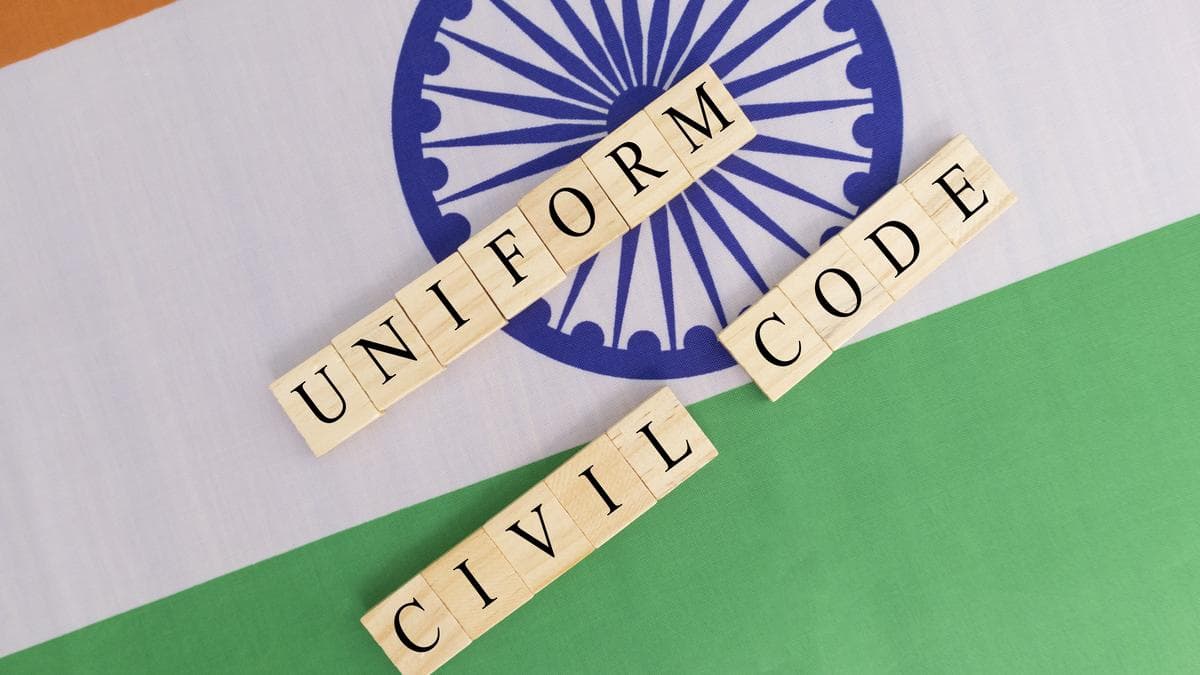
West Bengal is all set to table a Uniform Civil Code (UCC) Bill in the Assembly, joining a growing list of States that have sought to enact a common civil law governing personal matters.Goa has followed a Uniform Civil Code since the Portuguese Civil Code was introduced during Portuguese rule. After Goa was liberated and merged with India in 1961, the Code was retained. It governs all residents of Goa in matters of marriage, divorce and inheritance, regardless of religion. However, after Independence, Uttarakhand became the first State to implement a UCC in 2024, followed by Gujarat and Assam in 2026. West Bengal is now set to join the list.Legal pluralism in personal lawThe constitutional vision stems from Article 44 of the Constitution, which states that “The State shall endeavour to secure for the citizens a Uniform Civil Code throughout the territory of India.”The UCCs largely regulate four areas of personal law: marriage, divorce, succession and inheritance, and live-in relationships. These laws apply to all residents of the respective States except Scheduled Tribes (within the meaning of clause (25) of Article 366 read with Article 342 of the Constitution), whose customary laws are protected under the Constitution.MarriageAll three UCCs prescribe a common minimum marriage age of 21 years for men and 18 years for women, irrespective of religion. Marriages may be solemnised according to religious ceremonies or under the Special Marriage Act. By prohibiting marriage during the subsistence of an existing marriage, the Codes prohibit polygamy and remove religion-specific exceptions that previously existed. Each law makes registration of marriages compulsory, though the consequences for failing to register differ.The UCCs also prohibit certain practices followed by sections of the Muslim community. One such practice is nikah halala, which requires a divorced woman to marry another man and obtain a divorce before remarrying her former husband. All three Codes provide that the right to remarry includes the right to remarry a divorced spouse “without any condition, such as marrying a third person before such remarriage”. Forcing or abetting such practices attracts legal consequences.Marriages within prohibited degrees of relationship are invalid unless an established custom or usage governing one of the parties permits it and such custom is not against public policy or morality.Couples retain the freedom to solemnise their marriage according to their religious beliefs and customary rites (such as Saptapadi, Nikah, Anand Karaj or Ahom Chaklong Bibah). However, registration of the marriage is legally compulsory across all three States.UCC Bill ‘introduces moral policing, criminalises autonomy’DivorceThe three States establish a uniform judicial process for the dissolution of marriage, explicitly declaring that no marriage can be dissolved outside the Code, thereby overriding religion-specific procedures such as iddat or customary out-of-court divorces.Either party may seek divorce on identical grounds, including voluntary sexual intercourse with another person, cruelty, desertion for a continuous period of two years, conversion to another religion, or incurable unsoundness of mind.Wives are granted additional grounds for divorce, such as where the husband is guilty of rape or an unnatural sexual offence, or where he had more than one wife from marriages contracted before the UCC came into force.Couples may also seek divorce by mutual consent, provided they have lived separately for at least one year.Succession and inheritanceBefore the introduction of these laws, inheritance depended on religion-based personal laws. Hindus, Buddhists, Jains and Sikhs were governed by the Hindu Succession Act; Muslims largely followed uncodified personal law, while Christians and Parsis were governed by the Indian Succession Act.The Codes abolish differing religious inheritance laws by implementing a single framework for intestate succession, where
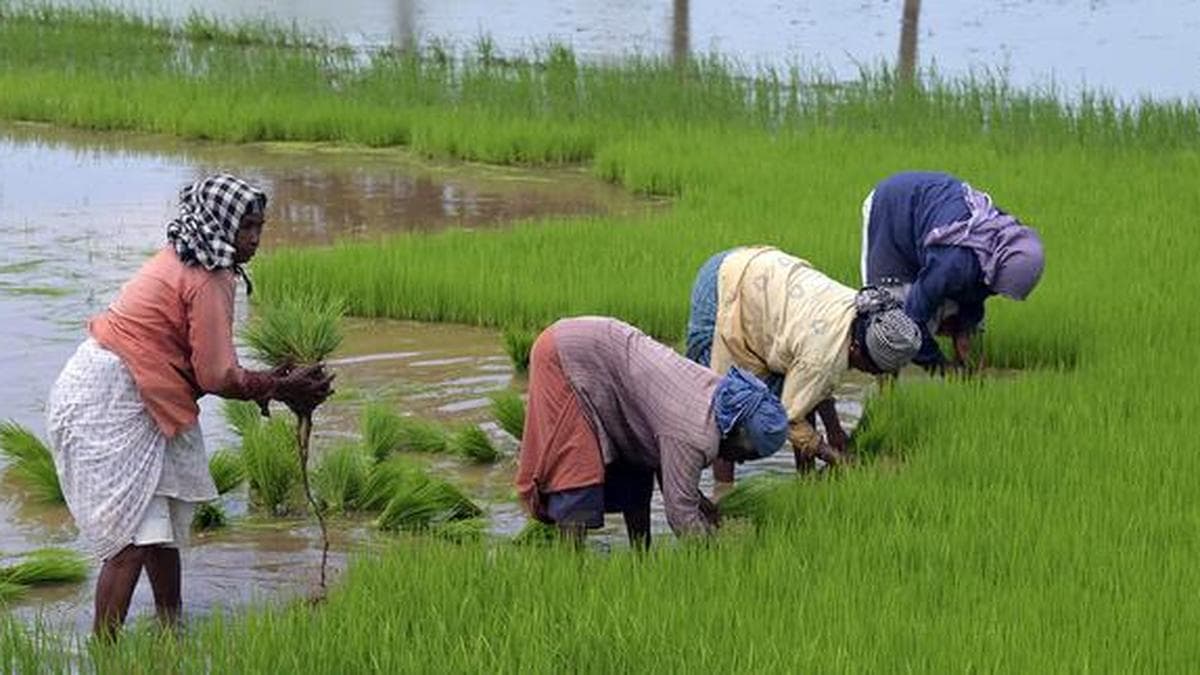
Farm workers prepare paddy seedlings for transplantation in a field | A high-level meeting with his State-level counterparts was conducted to take preparatory measures and draw up contingency plans.In this context, here are some key metrics to shed light on the monsoon’s progress, India’s agricultural characteristics and potential risks in the face of a lack of rains.Monsoon progressAs of June 24, 2026, several States have recorded either deficiency or large deficiency in rains. This shortfall ranged between 20% to 81%. Rajasthan alone recorded an excess rainfall of 20%.IrrigationWith a potential shortfall in rains, a look at India’s irrigation level can indicate water access for the kharif season. Overall net irrigated area as a percentage of net sown area has been increasing since 1950. As of 2023-24, 59.3% of net sown area is irrigated, with the rest being rainfed.However, irrigated area by crop variety varies. Water-intense crops like sugarcane have high irrigation levels by area sown. On the other hand, pulses have lower irrigation levels and are mostly rain-fed.The government, after the high-level meeting of State Agriculture Ministers, recommended farmers to switch from water-guzzling crops like sugarcane to crops like pulses that require less water for shorter duration as a way to handle lesser rains this year.While pulses do not need access to water as much or as long as other crops like rice, wheat or sugarcane, kharif-season pulse crops like green gram require a single “life-saving irrigation” during the early pod formation stage, as per a NITI Ayog study. Moreover, the same study noted that “the prominence of rainfed agriculture, coupled with insufficient irrigation infrastructure renders pulse cultivation highly vulnerable to climate vagaries.”However, while irrigation does play an important part in ensuring healthy pulse crop yields, farmers point to lower prices at harvest and high input costs as more pressing issues.Reservoir levelsAs per data from the Central Water Commission, reservoir levels in the five regions of the country varied from over 19% to over 32%. Except for the Southern and Eastern regions, these levels are in excess of what is normally stored in the reservoirs at this point of time in the year. However, in these two regions, the current reservoir levels are lower by over 14% and over 19% than normal, respectively.State-level differencesA report from Care Edge Ratings showed that while at the national level, buffer stocks and decreasing significance of agriculture on total Gross Value Added might help soften economic impact, some States may be vulnerable due to a mix of low irrigation coverage, reliance on water-intensive crops and the share of crop-based output in agricultural Gross Value Added.The ratings firm came up with an Index that is built on six measures - (i) Irrigation coverage, (ii) Share of agriculture in overall GVA; (iii)Share of non-crop activities in agricultural GVA; (iv) Share of water-intensive crops (rice and sugarcane) in kharif output; (v) Average historical rainfall deviation from LPA; and (vi) Regional reservoir levels.Based on these parameters, a weighted score was given from 0 to 100 for the States, with higher scores meaning higher resilience against monsoon variability.The report noted that Odisha, Chhattisgarh, Madhya Pradesh, and Uttar Pradesh are more vulnerable. These States are more exposed due to a combination of lower irrigation coverage, reliance on water-intensive crops and limited diversification into allied agricultural activities. Published - June 26, 2026 12:53 pm IST

The plea has sought directions to the Centre, States and the Election Commission of India to ensure that Aadhaar is used as a proof of identity and not as a proof of citizenship, domicile, address and date of birth. File | The petition claimed that “infiltrators and illegal immigrants” are able to obtain Aadhaar cards and project themselves as “lawful residents”, thereby availing benefits to which they are not legally entitled.A Bench of Chief Justice of India (CJI) Surya Kant and Justice V. Mohana issued notice on the plea filed by advocate Ashwini Kumar Upadhyay and directed that it be tagged with similar pending petitions.The petition contended that the continued use of Aadhaar for purposes beyond identity verification is contrary to Section 9 of the Aadhaar Act, 2016, which expressly states that Aadhaar is not proof of citizenship or domicile. It also relied on a UIDAI notification issued in August 2023 clarifying that Aadhaar serves only as proof of identity and cannot be treated as proof of citizenship, residence or date of birth.The plea also questioned the use of Aadhaar as proof of date of birth and residence in Form-6, the application form for fresh voter registration. Mr. Upadhyay argued that allowing Aadhaar to be used for this purpose could undermine the integrity of the electoral process.“...Aadhaar is not only being used as proof of age, citizenship & domicile for school admission, property purchase, and to obtain birth certificate, ration card, driving licence, but also being used in the application form for new voter registration (Form-6) as proof of date of birth & proof of residence. And thus, infiltrators & illegal immigrants are obtaining various documents using the Aadhaar,” the plea stated.‘Illegal migrants’Referring to what he described as the presence of a “huge number of illegal migrants” occupying “vast tracts of land, particularly along sensitive international borders”, Mr. Upadhyay contended that the ease with which such persons can obtain Aadhaar cards enables them to secure other identity documents and eventually seek inclusion in electoral rolls.“Infiltration is a weapon of political parties to subvert the electoral process for their benefit. Bengal, Assam and other Northeastern States have been afflicted by cheap political tactics. The infiltrators are helped by either the party in power or the Opposition parties, and are also helped with identity documents such as Aadhaar/ration card. Once they have a plethora of documents, they enrol themselves in the voting list and become eligible as Indian voters. Thus, the sacrosanct nature of the election process is compromised,” the plea stated.Accordingly, the petition sought a complete overhaul of the verification framework used in electoral processes and proposed the establishment of a high-powered monitoring committee comprising a retired Supreme Court judge along with cybersecurity and forensic experts to oversee reforms.It also prayed for a direction “to declare that the use of Aadhaar as proof of date of birth and residence in the application form for new voter registration” is contrary to statutory provisions and therefore liable to be declared “void and inoperative”. Published - June 16, 2026 12:19 pm IST
Uttar Pradesh, Gujarat, Jharkhand, Manipur, and nine other States recorded surplus revenues in 2024-25, while the remaining 15 States had a deficit.Eighteen States targeted revenue surplus, three States targeted revenue deficit, and seven targeted zero revenue deficit in FY 2024-25, according to a report on 'State Finances 2024-25' released by Comptroller and Auditor General of India K Sanjay Murthy on Tuesday (June 16, 2026)."In FY 2024-25, 15 States were revenue-deficient while the rest 13 States were revenue surplus," the report said.Of the 18 States that targeted revenue surplus, nine achieved the target, while Assam, Bihar, Chhattisgarh, Haryana, Himachal Pradesh, Karnataka, Maharashtra, Mizoram, and Telangana ended up being revenue deficit in 2024-25.Seven states -Goa, Jharkhand, Punjab, Rajasthan, Tamil Nadu, Tripura, and Uttar Pradesh- targeted a zero-revenue deficit.Among them, four States -Goa, Jharkhand, Tripura, and Uttar Pradesh - achieved a revenue surplus, whereas Punjab, Rajasthan and Tamil Nadu ended the year with a revenue deficit.Of the 15 States that were revenue-deficient in 2024-25, Himachal Pradesh, Mizoram, Punjab and West Bengal received Finance Commission revenue deficit grants.The report further said that if the indicative fiscal deficit target of three per cent of the GSDP, fixed by the Fifteenth Finance Commission for 2024-25, for States' fiscal consolidation path is considered, then 18 states were above the target.The aggregate revenue deficit of 15 revenue-deficit states, without netting revenue surplus of 13 States, stood at ₹3,46,385 crore, which was 1.5% of their combined GSDP. The net revenue deficit, after adjusting the revenue surplus in 13 States, stood at ₹2,19,041 crore, 0.68% of the combined GSDP of all 28 States."I hope that the publication on State Finances 2024-25 will serve as a useful evidence-based resource for governments, researchers, policymakers and citizens, enabling a deeper understanding of state finances and supporting informed fiscal decision-making," CAG Murthy said.The publication highlights the growing importance of States' own tax revenues, which accounted for 50% of the combined total revenue receipts of ₹40.52 lakh crore across the 28 States in 2024-25.State GST constituted more than 43% of the combined States' own tax revenues.The States which witnessed a substantial increase in fiscal deficit in 2024-25 as compared to 2023-24 were Andhra Pradesh, Assam, Gujarat, Jharkhand, Karnataka, Kerala, Madhya Pradesh, Maharashtra, Meghalaya, Mizoram, Nagaland, Odisha, Tripura and Uttarakhand.

Discussion (0)