
Loading dispatches...
← Return to NewsroomScience
This star's light has been crossing space since the American Revolution. Here's how to find it
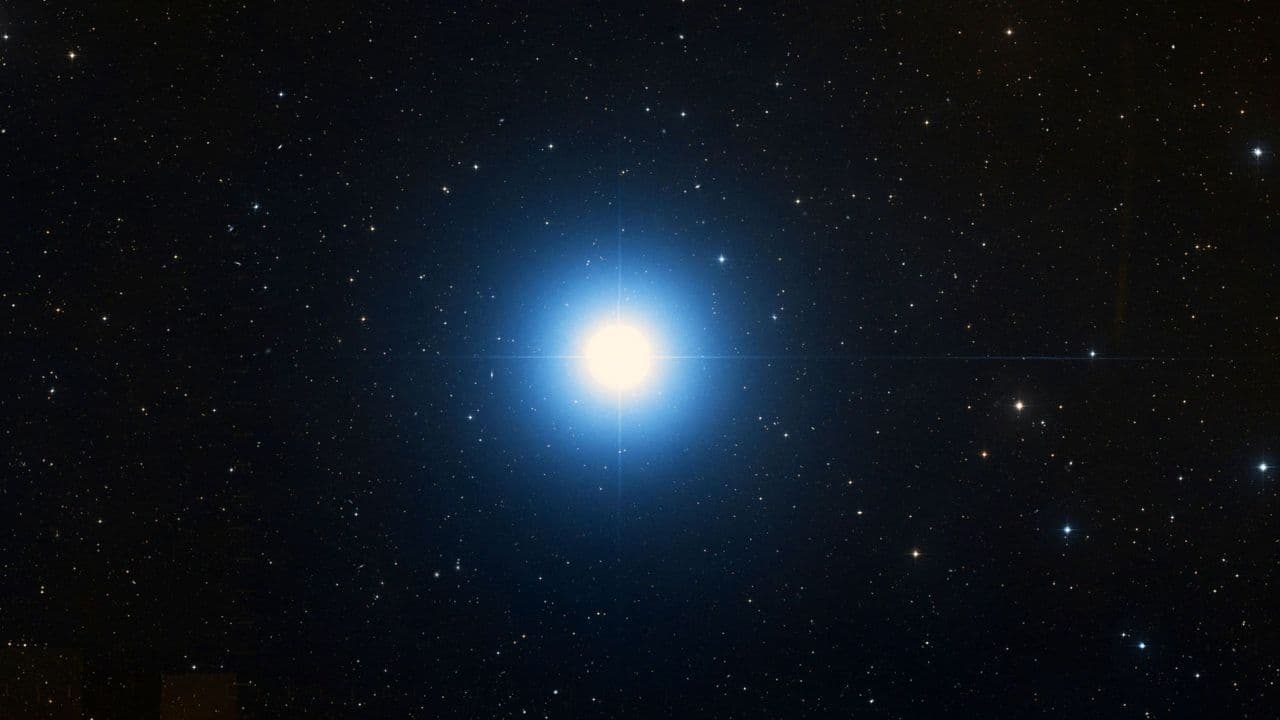
The United States' 250th birthday is right around the corner and what better way to celebrate than by looking for a star whose light began its journey to Earth around the time the Declaration of Independence was signed?Starlight travels through the near-perfect vacuum of space at a staggering 186,282 miles (299,791 kilometers) per second— or the speed of light. Even at this pace, it can take hundreds, thousands, or even millions of years for starlight to reach its destination, rendering each point of light in the night sky a twinkling time capsule, which represents a snapshot in the life of a star encoded at the moment the radiation left its source.The blue-white double star system Alpha Virginis — known colloquially as Spica — happens to shine roughly 250 light-years from Earth. In other words, the light we see today left the star's surface 250 years ago, around the time that America's founding fathers signed the Declaration of Independence in 1776.How to find Spica in the night skyFinding Spica is easy. First, locate the Big Dipper, shining above the northwestern horizon in the hours following sunset in June for viewers in the U.S., with the three stars representing its "handle" pointing up and away from the horizon.Next, draw an imaginary line following the arc of the handle out into space, until you find the red light of Arcturus, the 4th brightest star in the night sky. Continue the arc beyond Arcturus and the next dazzling bright blue-white star that you spot will be Spica, which twinkles above the southwestern horizon at sunset in early summer. How to find Spica in the summer sky. ()The single point of light that we call Spica is actually a pair of massive stars that orbit each other once every four days, while shining with the combined light of over 12,000 suns.Another star at a similar distance from Earth is Bellatrix, which shines at the left shoulder of the celestial hunter depicted in the constellation Orion. This variable star is also located 250 light-years from Earth, but is sadly lost from view in the glare of the sun during the summer months.Want to get a closer look at the night sky? Then be sure to read our roundup of the best telescopes and binoculars for exploring the post sunset realm, along with our beginner's guide to amateur astronomy.Editor's Note: If you would like to share your astrophotography with Space.com's readers, then please send your photo(s), comments, and your name and location to .
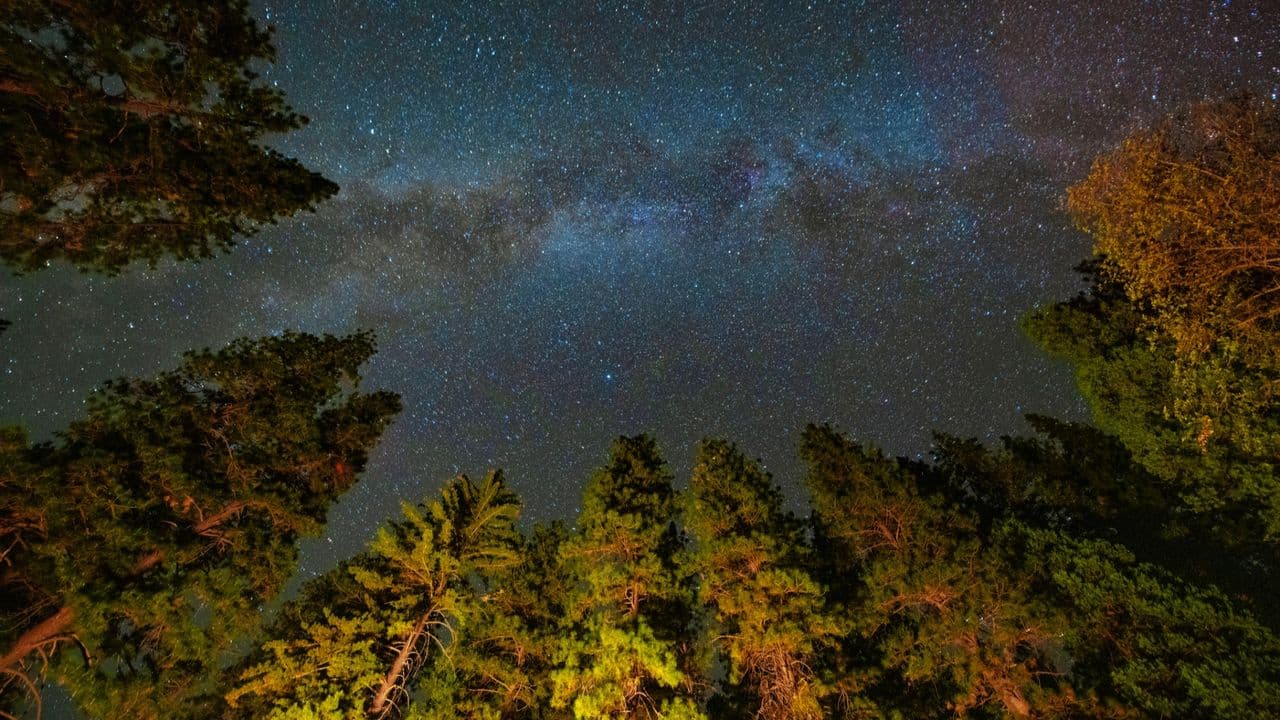
The Milky Way is visible in the night sky above illuminated trees at Yosemite National Park, which is in California. (Scientists have long warned that rising levels of artificial light — increasingly amplified by satellite megaconstellations orbiting our planet — are steadily eroding these nightscapes, disrupting ecosystems, affecting human health and dimming views of stars and distant celestial objects. Darkness itself carries no price tag, however, meaning its loss has largely been absent from the economic calculations that guide development and outdoor lighting decisions. Now, new research attempts to translate that loss visible in monetary terms.A study combining satellite data with on-the-ground surveys of visitors at several "gold-tier" dark-sky sites found that people were less likely to choose parks with greater artificial skyglow or poorer night-sky conditions, and showed a clear willingness to pay more for darker skies.On average, visitors would pay about $18 more per trip for marginally darker skies, and roughly $45 more per night for a one-step improvement on the Bortle Dark Sky Scale, a widely used measure of night-sky quality."This may seem really small at the per-visitor and per-trip unit estimate," said Jordan Smith, the study's lead author and director of the Institute of Outdoor Recreation and Tourism at Utah State University, "but when we scale through park-wide visitation, it becomes very, very significant."Over a four-month period, the researchers estimated that light pollution reduced the recreational value of flagship dark-sky destinations in the U.S. by between $25 million and nearly $66 million.The figures, presented at the 248th meeting of the American Astronomical Society in California, do not represent lost park revenue, but what economists call "welfare losses" — the decline in visitor satisfaction when environmental quality deteriorates. The concept is akin to paying for a concert expecting excellent sound and instead finding the speakers distorted; the performance still occurs, but it feels worth less than anticipated.By assigning a dollar value to changes in night-sky quality, the researchers argue, policymakers gain a way to weigh the hidden costs of artificial lighting against the benefits of development and outdoor illumination."It's a foundational building block that allows that cost-benefit analysis to subsequently occur," Smith said.Speaking at a press briefing during the conference, Smith said a central challenge is the gap between measuring light pollution and measuring what it costs in lived experience. Satellites and ground instruments can track where artificial light is spreading and how quickly it is increasing, he said, "but they can't tell us much about what that value is — what is actually lost due to anthropogenic light at night?" This image of Great Basin National Park, one of the darkest places in the U.S., was taken in 2025 by the VIIRS (Visible Infrared Imaging Radiometer Suite) on the Suomi NPP satellite. VIIRS can detect signals such as auroras, city lights and reflected moonlight. You can see the contrast between the dark sky zone and major light sources like Las Vegas and Salt Lake City. (Over 82 nights in April, May, September and October, researchers interviewed visitors after dusk at campgrounds, scen
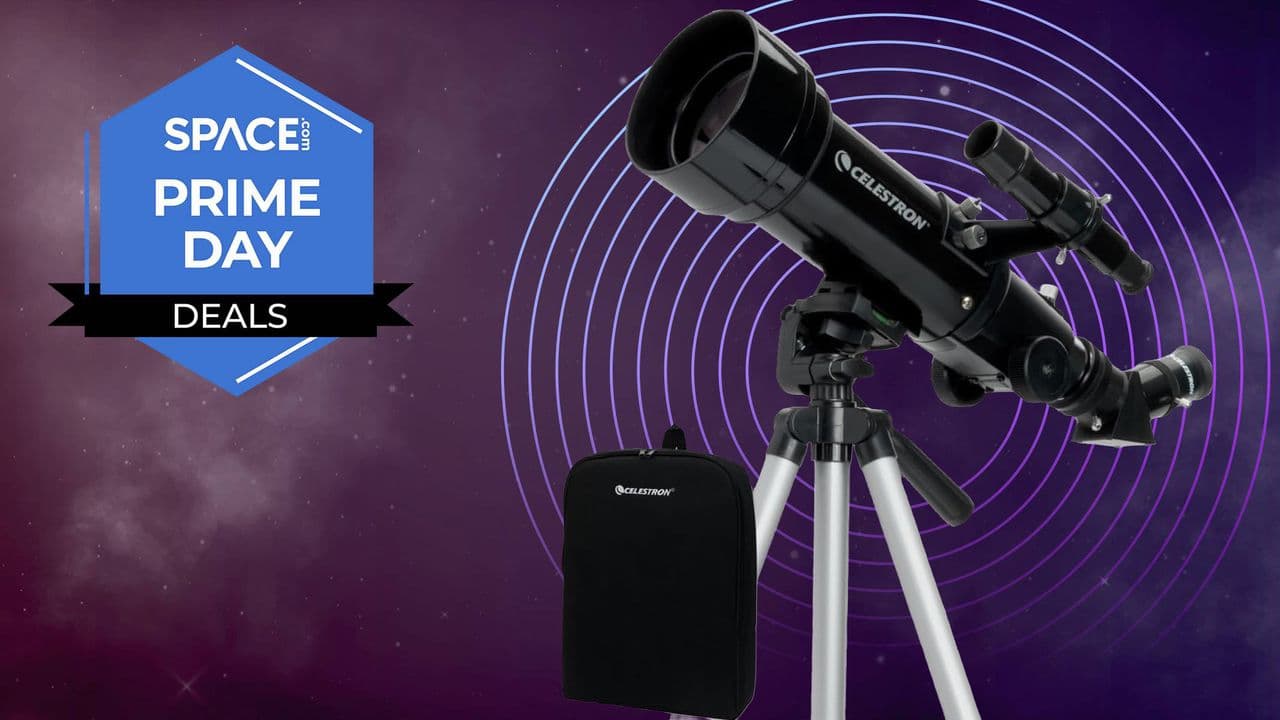
The Celestron Travel Scope 70 is beginner-friendly and easy to pack away when you're done. ( I ended up starting my stargazing journey by buying the Celestron Travel Scope 70 and today, thanks to Amazon Prime Day, it's $40 off, making it just $81.This portable, beginner-friendly Celestron Travel Scope 70 is $81 right now at Amazon. Not only is this telescope the reason I got into stargazing but it has the pedigree of being from reputable telescope manufacturer Celestron, whose products appear in our best telescope guide and best binoculars guide. It's a breeze to use and super portable with it.The moment I trained it on the moon and took in the stunning, detailed views of its craters, I was hooked. Now, thanks to Prime Day, you can save big on this fantastic, beginner-friendly scope.Chris is a freelance journalist who owns three telescopes. When he's not writing, skywatching, playing games or building Lego, indulges his taste for horror, sci-fi and the post-apocalyptic. As well as Space.com, you can find his work at GameSpew (where he’s the weekend editor).Check out our Prime Day hub, where we bring you the best deals of Prime Day 2026, including early Prime Day deals. We've also got you covered with reviews and rankings of the best telescopes, binoculars, star projectors, cameras, drones, Lego, streaming and more.Image 1 of 1The Celestron Travel Scope 70 packs neatly away into a small backpack, for easy storage. ( I didn't want to spend a fortune or to tie up a room, so the Celestron Travel Scope 70 fit the bill. Several years later, I have a Skywatcher 200P Classic dominating my front room, so you can tell how that went.So what makes the Celestron Travel Scope 70 such a great starter scope? It's an absolute breeze to use, easy to assemble and while the included 20mm and 10mm eyepieces are basic, they still give you excellent views of objects within our solar system.And while it doesn't match up to the best deep space telescopes, the Celestron Travel Scope 70 offers respectable views of some deep space objects, light pollution aside. It also comes with a basic version of Celestron's own stargazing software.Could the tripod be sturdier? Yes, but I personally had no problems with that; my only gripe was that it took a little while to master fine-tuning the scope. But at $80, this is a superb starter scope and an absolute steal.Key features: 70mm aperture, fully coated optics, a carry bag, a collapsible, full-height tripod, 10mm and 20mm eyepieces, a finderscope and Celestron's Starry Night Software Basic Edition.Price history: This scope has dipped to around $90 previously but this is the cheapest it's been all year.Review consensus: This is a superb beginner-friendly scope, especially if you're short on space. I don't regret my purchase one bit and going by its Amazon reviews, most purchasers feel the same, with just a few wishing the tripod was a tad more stable.✅ Buy it if: You're after a beginner-friendly telescope that can be packed away, or are dipping your toes in skywatching.❌ Don't buy it if: You're prepared to spend a lot more, and have the room to house a bigger scope. Take a look at our best telescopes guide for other options.Check out our other guides to the best telescopes, binoculars, cameras, star projectors, drones, lego and much more. Breaking space news, the latest updates on rocket launches, skywatching events and more! Chris is a freelance journalist who, aside from covering games and gaming-related tech, has a taste for horror, sci-fi and the post-apocalyptic. As well as Space.com, you can find his work at The Escapist, GameSpew (where he’s the morning news writer) and more. You can follow him on Twitter
Discussion (0)