
Loading dispatches...
← Return to NewsroomPolitics
West Bengal moves Supreme Court against early release of 1993 Bowbazar blast convict

Representative image. | The State sought urgent intervention from the apex court to prevent his release.The counsel representing the State sought urgent listing of the matter before a Bench of Chief Justice of India Surya Kant and Justice V. Mohana, contending that the case involved a “very serious offence” and should be heard on Monday (June 22). He also pointed out that the June 5 judgment of the High Court had erred in directing Khan’s premature release despite the State Sentence Review Board (SSRB) having repeatedly declined his requests for remission.During the hearing, the Chief Justice sought to know the period of incarceration already undergone by Khan. In response, the counsel for the State submitted that he had spent nearly 30 years in prison, including the remission earned during his incarceration.Also read: A new lease of life under the sun for death row prisoners The Chief Justice thereafter agreed to consider the State’s request for listing the matter.Khan was convicted on August 31, 2001, for offences under the Indian Penal Code, the Explosives Act, and the Terrorist and Disruptive Activities (Prevention) Act (TADA) in connection with the March 16, 1993, blast that struck a densely populated area of Kolkata. Since his arrest in 1993, he has remained behind bars.Also read:For Delhi’s lifers, release after 14 yrs becomes a board gameSeeking remission, the convict submitted that he had spent more than 33 years in custody and was now 77 years old. He relied on his advanced age and various medical conditions, including age-related ailments, in support of his plea. He also pointed out that a co-convict, Pannalal Jaysowara, had been granted premature release in March 2014.The court was apprised that the SSRB had recommended his release on March 25, 2015, but the recommendation was subsequently reviewed and rejected in September that year.The State, however, opposed the plea, maintaining that Khan was the “mastermind” behind the blast and was not entitled to premature release given the serious nature of the crime and its impact on public safety.‘Reformative approach’In a judgment delivered on June 5, the High Court directed Khan’s premature release, holding that the period of incarceration already undergone was sufficient to meet the objectives of punishment and deterrence. Justice Neena Bansal Krishna noted that the SSRB had, in 2015, recommended Khan’s release after assessing his conduct and other relevant considerations.The court observed that the subsequent decision to deny remission was not founded on any fresh material and largely relied on factors that had already been considered while making the earlier recommendation.While acknowledging that the offence had a significant impact on society, the High Court emphasised that the remission framework is premised on the principle of reformation rather than retribution.“There has been a reformative approach taken with respect to convicts in cases of remission rather than a retributive approach. In such a case, to keep the petitioner in jail, when he has already spent over 33 years in prison, may not be fruitful in any manner. The punishment undergone by the petitioner has sufficiently fulfilled the deterrence sought to be induced in a convict who has committed such grave offence,” the court said.The High Court was also unconvinced by the State’s argument that Khan remained a threat to society, noting his conduct during parole, positive assessments by prison authorities and the absence of any adverse reports regarding his behaviour. Published - June 18, 2026 03:02 pm IST
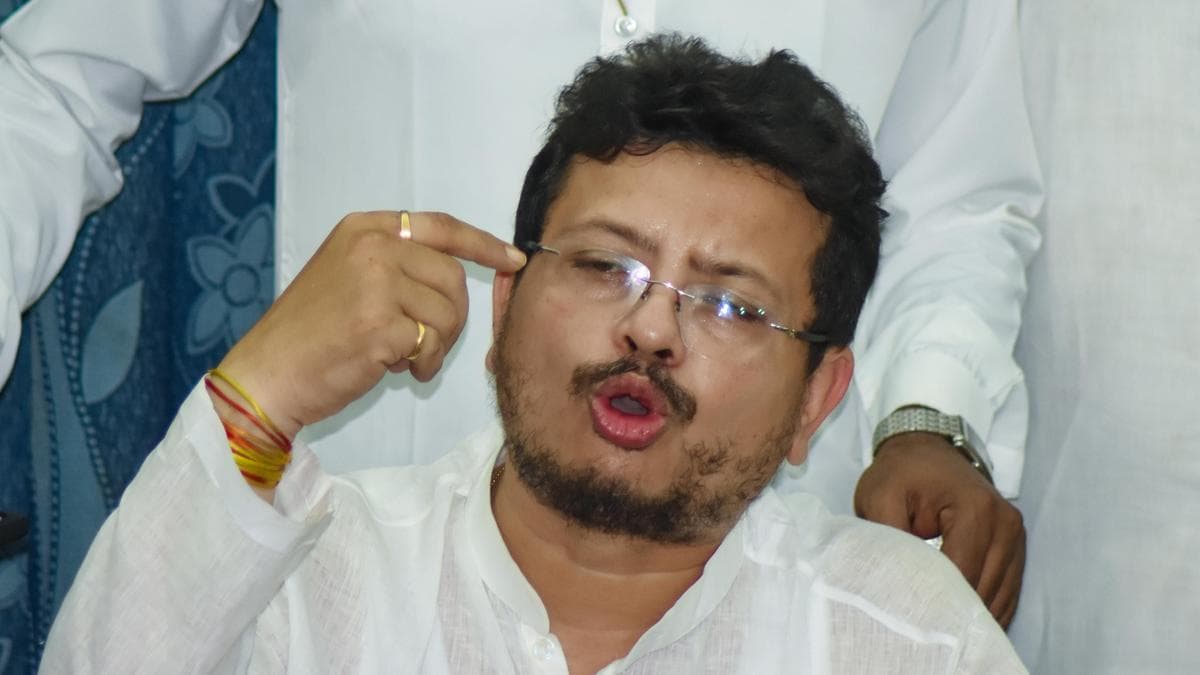
TMC MLA Ritabrata Banerjee. File | “No prayer for interim relief is made out, the balance of convenience is not in favour of the petitioner”, the court held.The court, however, called for affidavits by all parties to examine the larger question of whether the Speaker acted within the ambit of his powers while recognising the LoP.Justice Krishna Rao, who was hearing a petition filed by Mr. Chattopadhyay refused an interim stay on the appointment of Mr. Ritabrata Banerjee as the Leader of Opposition.“This court did not find any prima facie case for grant of interim order. The interim order is refused, “ Justice Rao said. Justice Rao directed the respondents to affidavit in three weeks. The matter will come up for hearing again on July 28. The High Court’s order came on the day when the Budget session of the West Bengal Assembly started with the address by the Governor R. N. Ravi. The MLAs supporting Mr. Ritabrata Banerjee called the High Court order a moral victory. Trinamool Congress had won 80 of the 294 seats in the West Bengal Assembly polls. While a letter was sent by the Trinamool general secretary Abhishek Banerjee nominating Mr. Chattopadhyay as the LoP, some MLAs led by Mr. Ritabrata Banerjee said that their signature in the letter was forged. Mr. Ritabrata Banerjee and Sandipan Saha were expelled after they made a formal complaint and on June 3, Mr. Ritabrata Banerjee was appointed LoP by the Speaker with the support of 58 MLAs. Mr. Ritabrata Banerjee now claims support of 65 out of 80 MLAs.The West Bengal CID is probing allegations of signature fraud and Mr. Abhishek Banerjee has been questioned in the matter. Published - June 18, 2026 11:46 am IST
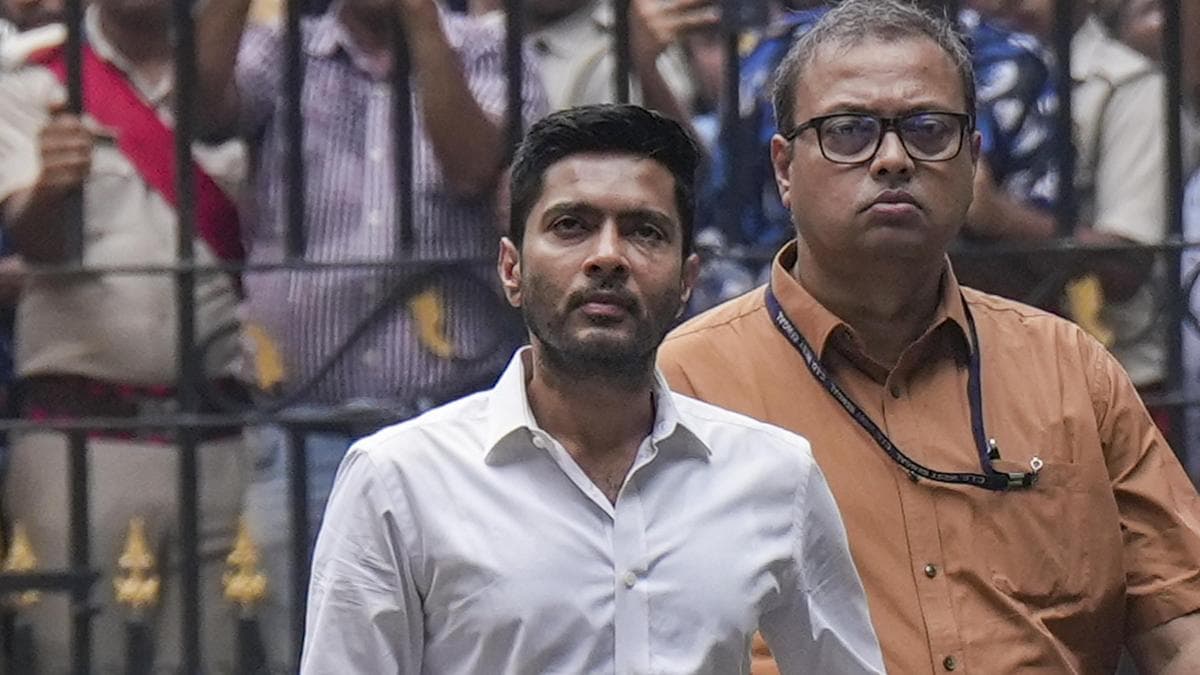
TMC National General Secretary Abhishek Banerjee. File | The decision is likely to increase legal troubles for the TMC general secretary, who is already facing an investigation by the Enforcement Directorate on corruption charges.A single Bench of Justice Pramod Kumar Agarwal on Wednesday (June 17, 2026) dismissed Abhishek Banerjee's petition and lifted the stay, granted in November 2025, on the execution of the arrest warrant issued by a special Bhopal court.Former Indore MLA Akash Vijayvargiya, son of senior Bharatiya Janata Party (BJP) leader and minister Kailash Vijayvargiya, filed the defamation case against Abhishek Banerjee in the MP-MLA court in Bhopal in 2021.The defamation suit alleged that Abhishek Banerjee called Akash Vijayvargiya a "goon" while addressing a rally in Kolkata in November 2020.The MP-MLA court had issued the arrest warrant against Abhishek Banerjee, following which he approached the HC.In his petition before the HC, the TMC leader had argued that he is a Member of Parliament and is unlikely to abscond. Hearing the petition, a single bench stayed the execution of the arrest warrant on November 12 last year.On Wednesday (June 17, 2026), no one appeared on behalf of the petitioner during the hearing.Taking serious note of the absence, the Bench stated in its order that it appears the petitioner has lost interest in pursuing the plea.Justice Agarwal lifted the stay on the arrest warrant, dismissed the petition, and directed that a copy of the order be sent to the Bhopal court. Published - June 18, 2026 09:55 am IST
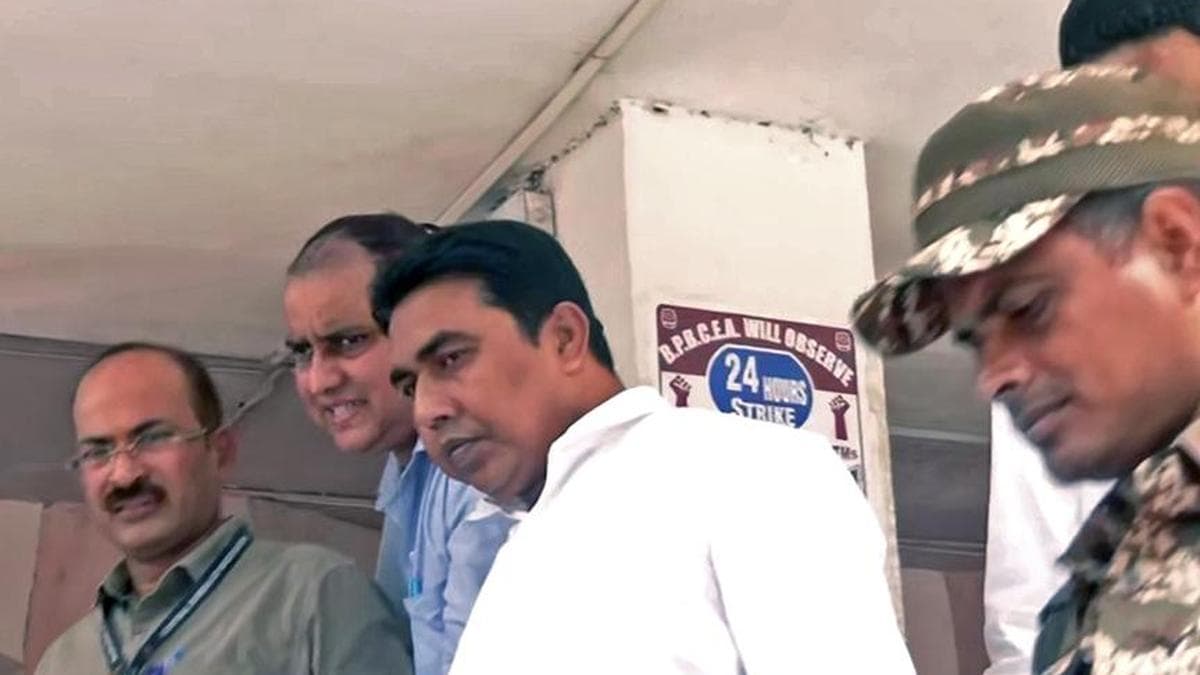
Ex-Trinamool Congress (TMC) strongman and Sandeshkhali incident accused Shahjahan Sheikh. File. | The court ordered framing of charges against the accused on June 15, the central agency said in a statement.The others against whom charges have been framed include Shahjahan’s accomplices Shib Prasad Hazra and Didar Boksh Molla. All four are currently lodged in jail under judicial custody.The Enforcement Directorate (ED) had chargesheeted the four men under various sections of the Prevention of Money Laundering Act (PMLA) on May 27, 2024, and the court took cognisance of it on June 3, 2024.The money laundering investigation against Shahjahan and his associates stems from multiple FIRs registered against them by the West Bengal Police on charges of issuing threats, murder, attempt to murder, extortion, land grabbing, etc.The ED arrested Shahjahan on March 30, 2024, in connection with a case of mob assault on the agency's officials when they went to search his premises in Sandeshkhali in North 24 Parganas district on January 5, 2024, in a money laundering case linked to an alleged scam in PDS ration distribution in Bengal.The ED alleged that Shahjahan, with political support and an army of his goons, established a "reign of terror" in Sandeshkhali."Starting with petty crime, he gradually expanded his criminal empire with the use of force and intimidation.”“His wealth accumulation involved land grabbing, illegal fish farming and trading, brick kiln grabbing, getting contracts through his brother Sheikh Alomgir, Hazra and others, and collection of illegal levies," the ED said.The "ill-gotten" money garnered by Shahjahan was "laundered" by disguising it as income from fish business and employing many trusted associates to channelise the money to himself, it said. Published - June 18, 2026 08:19 am IST
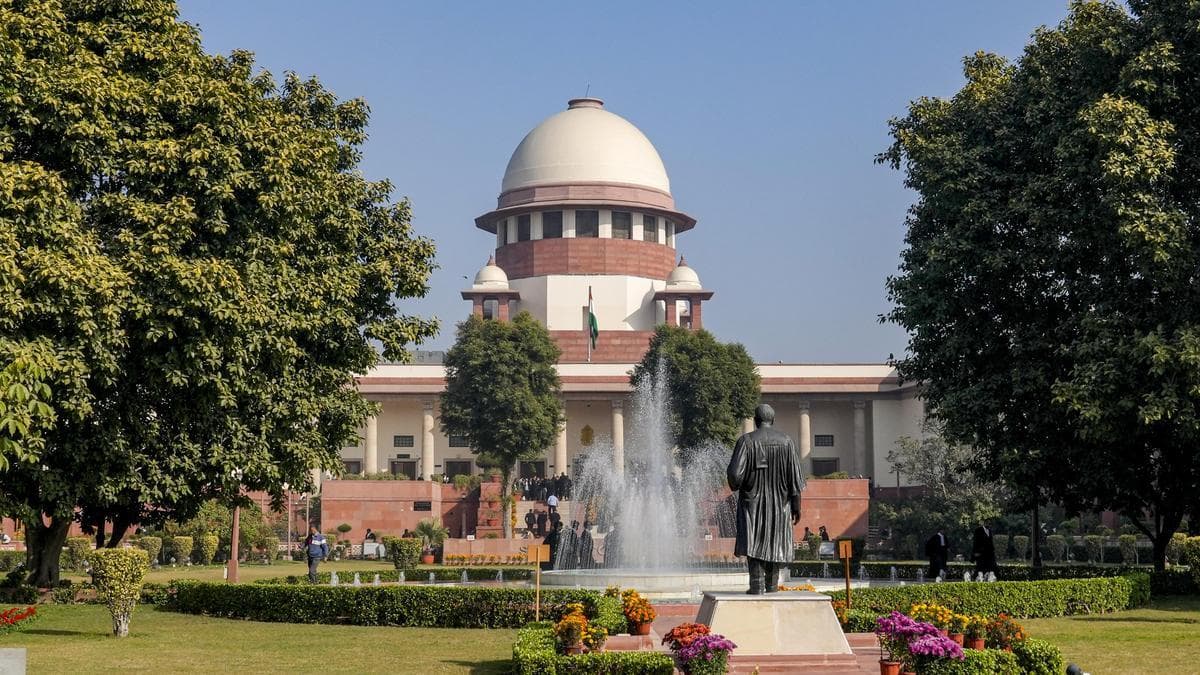
Supreme Court of India in New Delhi. | A Bench comprising Chief Justice of India (CJI) Surya Kant and Justice V. Mohana made the observation after advocate Shubhi Shivani Ahmed informed the court that the file relating to an appeal against an April 27, 2026 order of the Punjab and Haryana High Court rejecting her client’s anticipatory bail plea had allegedly been misplaced by the administrative wing of the apex court.“The special leave petition was filed on June 8. However, it has not been registered by the Registry to date,” she submitted. Ms. Ahmed further informed the Bench that she had written to the concerned Registrar seeking clarification but had received no response.The Chief Justice observed that the allegation could not be brushed aside and would have to be thoroughly examined.“It is a very serious matter if the Registry has misplaced the file. If our Registry is misplacing files in urgent matters, do you think I will simply direct the matter to be listed? I must do something more. Please give me the details. I would like to look into this inefficiency, what is the reason behind it and who is responsible for it,” he said.The Chief Justice also asked Ms. Ahmed to have the advocate-on-record (AoR) who had filed the petition lodge a formal complaint and furnish the relevant details of the incident.“Ask your AoR to submit a complaint to me today. I am available. He or she may submit it in chambers or at my residence. Give me the case details,” he said.Repeated instancesThis is not the first time CJI Kant has voiced concern over the functioning of the Registry.In May, he delivered a sharp rebuke to the administrative wing, terming the conduct of its officials “nasty” and remarking that some appeared to think of themselves as a “super Chief Justice of India”. The remarks came after he questioned how Registry officials had concluded that the Bench had not issued notice to the Enforcement Directorate and other respondents in a matter before it.In March, the Chief Justice had also raised concerns over the Registry’s functioning after a public interest litigation (PIL) was listed for hearing more than a year after it was last taken up in February 2025. He had then sought a report from the Registrar on the delay.The Chief Justice has on earlier occasions indicated that “reforms” are required in the functioning of the Registry and observed that he would be “failing in his duty” if he did not undertake such reforms during his tenure.“The Registry officials think they are here for 20 years... and we are all in the transit stage while they are permanent. They think the Registry should function the way they want,” he had remarked in February.The Supreme Court Registry functions under Article 146 of the Constitution and operates under the overall supervision of the Secretary General, who reports to the CJI. The Registry is responsible for the administration of court records, listing of cases, and compliance with procedural requirements. It comprises a hierarchy of officers, including registrars, additional registrars, deputy registrars, and branch officers. Published - June 17, 2026 04:33 pm IST
The special investigation team (SIT) probing the Vadakara ‘kafir screenshot’ case is set to move the Vadakara Sessions court on Thursday seeking custody of Jithin Bhaskar, a Democratic Youth Federation of India (DYFI) leader arrested over circulation of a controversial social media message during the 2024 Lok Sabha election campaign.The move follows his arrest being formally recorded after interrogation. He had earlier been questioned and released, but was summoned again on Tuesday and arrested. He has been remanded in judicial custody.Mr. Bhaskar, a DYFI Vadakara block committee member and admin of a WhatsApp group ‘Vadakara Squad’, is suspected of sharing it with over 200 people. His mobile phone had been sent for forensic examination. Police sources said he was the first to share the screenshot within a few local WhatsApp group. Investigation team members also claimed that the content was later circulated by another DYFI leader, Ribesh Ramakrishnan, in a separate group named ‘Red Encounter’. The SIT has questioned several group administrators in its widening probe.A senior officer with the SIT said the investigation into the origin of the screenshot was progressing with the help of digital evidence and forensic analysis. He said the custody of Mr. Bhaskar was required for further interrogation to trace the chain of circulation and identify the possible source of the message.His arrest, according to Congress leaders, has put the CPI(M) on the defensive. Earlier explanations shared by party leaders are now under scrutiny. However, the police have not established that Mr. Bhaskar was the creator of the screenshot. The SIT is now focussing on identifying who orchestrated the creation. It will also check the trigger behind the wider circulation of the message, which is suspected to have been part of a coordinated campaign.There are also allegations that the screenshot may have been created on the instructions of a senior CPI(M) leader, with lower-level functionaries taking responsibility to shield superiors. The party has not issued a detailed response to these claims. The controversial screenshot surfaced during the peak of campaigning, targeting UDF candidate Shafi Parambil and referring to CPI(M) leader K.K. Shailaja in a communal framing meant to polarise voters.Earlier investigation during the LDF government had reportedly reached a dead end, but the renewed probe under the UDF government f has revived the case. Published - June 17, 2026 09:25 pm IST

Discussion (0)