
Loading dispatches...
← Return to NewsroomPolitics
Kerala Assembly: Minister says Transport dept mulling pre-licence training in schools for Plus Two students

Transport Minister C.P. John | VIBHU The Transport department is mulling an intervention in the school curriculum to provide pre-licence training to Plus Two higher secondary students, Kerala Minister for Transport C.P. John has said.Discussions would be held in this regard with the General Education department, the Minister said in reply to questions in the Assembly on Tuesday on the matter of licences and services provided by the Motor Vehicles Department (MVD).The Minister said the idea was to provide these students’ licences by the time they finish Plus Two (when they turn 18).Nearly 1.5 lakh licences, including new ones and those renewed, were issued in a month. This came to 18 lakh a year, he said.In reply to a query on discontinuation of Kerala State Road Transport Corporation (KSRTC) buses on many routes citing poor collection and in the wake of COVID-19, the Minister said the KSRTC had been asked to conduct a study on services discontinued during the pandemic so that these could be restarted. Many of the discontinued services were on routes that were profitable, the Minister pointed out.On private bus crisisOn the crisis in the private bus sector in the wake of the launch of free bus travel scheme for women on ordinary buses of the KSRTC, the Minister said the government considered private bus operators as “investors” in public transport and therefore had reduced the tax on all India permit vehicles by 50%, as announced in the revised Budget. This resulted in a benefit of ₹50,000 to them a year.He said the impact of the free bus travel scheme was not uniform across the State. Its impact was the most in areas where both the KSRTC and the private buses plied equally. In such areas, the collection of private buses had dipped by ₹1,500-₹2,500 a day. The government was apprised of the seriousness of the situation and would take necessary steps to address it, Mr. John said.The Minister said a study would be conducted on the demand for increasing the staff strength of the MVD.The government, he said, would try to improve facilities at RTO offices within a year using a percentage of the ₹8,773 crore estimated to be received by the department as tax in the revised Budget. Better integration of the RTO offices with the national-level network of the Union government and connecting them with e-challan was also planned.On the long delays in obtaining driving licences, the Minister said urgent steps would be taken to study the matter and address it. Published - June 30, 2026 02:20 pm IST
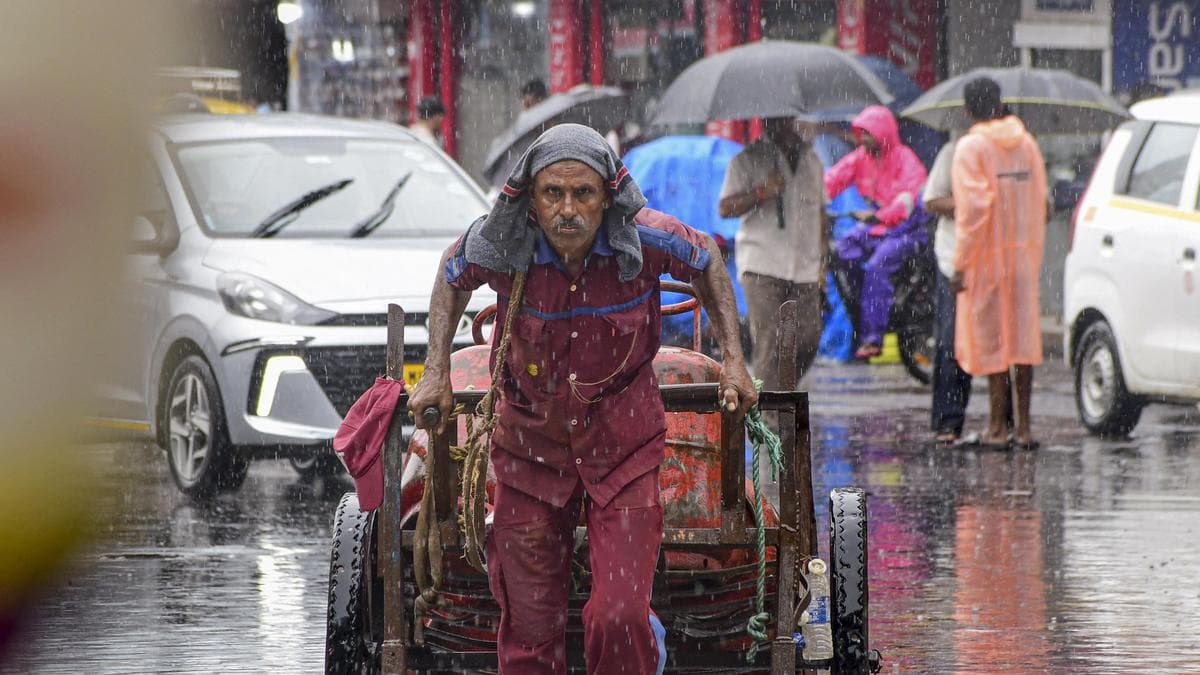
Home News India As per the IMD forecast issued at 8 a.m., Mumbai is likely to witness heavy rainfall and a generally cloudy sky, with a possibility of thunderstorms and lightning at isolated places, they said Updated - June 30, 2026 10:59 am IST A man pulls a cart amid rainfall, in Mumbai, Maharashtra. File | Rainfall activity is likely to become more widespread during the latter part of the forecast period, with isolated locations expected to experience heavy rainfall.Landslide dams river in rain-battered Arunachal, warning for Assam downstreamThunderstorms accompanied by lightning and gusty winds of 30-40 kmph are likely at isolated places in Chamba, Kangra, Kullu and Mandi districts throughout the week.The weather department has also forecast that Madhya Maharashtra may experience heavy rainfall between June 25 and 27 and again on June 30.Follow the live for more updatesJune 30, 2026 10:59 Heavy rains likely in Western Ghats region of Tamil NaduThe IMD forecast heavy rains in the Western Ghat regions of Tamil Nadu from July 1 as the southwest monsoon was still active in the State.The latest weather report from the Regional Meteorological Centre said that moderate rain at isolated places, with thunderstorms and lightning, and gusty winds reaching 40-50 kmph are likely to occur over Nilgiris, Theni, Dindigul, Erode, and Salem districts, and the ghat areas of Coimbatore and Tirupur districts from Wednesday (July 1, 2026).The data further said that as the trough runs from north coastal Tamil Nadu to the Comorin area and extends up to 0.9 km above mean sea level, light to moderate rain at isolated places with thunderstorm and lightning at one or two places is likely to occur over the rest of Tamil Nadu, Puducherry and Karaikal area during the same period.PTIJune 30, 2026 10:57 IMD forecasts heavy rain, thunderstorms for Mumbai Mumbai is gearing up for intensified rains, with the India Meteorological Department (IMD) forecasting heavy showers and thunderstorms for the city and its suburbs, civic officials said.As per the IMD forecast issued at 8 a.m., the city is likely to witness heavy rainfall and a generally cloudy sky, with a possibility of thunderstorms and lightning at isolated places, they said.Earlier, the IMD had issued a yellow alert for the city, indicating the possibility of heavy rainfall at isolated places. It may update it later today, depending on the weather conditions.PTI Published - June 30, 2026 10:56 am IST
Members of the Mumbai Youth Congress on Sunday (June 28, 2026) staged a protest outside Maharashtra School Education Minister Dada Bhuse's official residence in Mumbai, demanding his resignation over the alleged leak of the Teacher Eligibility Test (TET) question paper.Led by Mumbai Youth Congress president Zeenat Shabreen, the protesters raised slogans demanding the Minister's resignation on moral grounds.The Youth Congress alleged that repeated examination paper leaks, including the TET breach and the earlier NEET controversy, had jeopardised the future of lakhs of students and reflected the State government's failure to ensure a fair examination process.Addressing the protesters, Ms. Shabreen alleged that exam irregularities had become a recurring feature under the BJP-led government and sought an impartial probe into the TET paper leak and strict action against those involved.NEET-UG 2026 | A collection of explainers and expert opinionsThe protesters claimed that they managed to reach the Minister's residence opposite Mantralaya, the State Secretariat in south Mumbai, despite heavy police deployment.Police detained Ms. Shabreen and several Youth Congress workers during the agitation, according to the party.The Youth Congress warned it would intensify its agitation until those responsible for the alleged TET paper leak are brought to face law and students receive justice.The TET 2026 in Maharashtra was postponed on Saturday (June 27, 2026), a day before it was to be held, after police in Thane district found that a part of its question paper had been leaked and arrested three people.“Chief Minister Devendra Fadnavis ordered the constitution of a Special Investigation Team headed by Thane Joint Commissioner of Police Panjabrao Ugale to probe the paper leak,” sources said. Published - June 29, 2026 12:22 pm IST

The accident site where a tipper lorry crashed into a bus stop at Nileswaram in Kottarakkara, Kollam, recently. | Three persons were killed at Nileshwaram in Kottarakkara a few days ago when an overspeeding tipper lorry crashed into a bus stop and a motorcycle. It was later found that the vehicle’s rear tyres were worn out and that it was carrying more than twice the permitted load. It also emerged that the driver responsible for the accident was inexperienced and did not possess a heavy vehicle driving licence.“This is a clear case of driver incompetence and lack of experience,” said Sibi Mathai, who has conducted research in road safety and behavioural psychology. “The licensing system in India permits anyone who obtains a Light Motor Vehicle (LMV) licence by driving an 800cc car to drive a tipper lorry carrying 7.5 tonnes of load or more. It is high time the Motor Vehicles department (MVD) insisted that drivers of school buses and lorries have a minimum of three years of driving experience, apart from practical training in handling such vehicles. With the MVD being short-staffed, the fitness of commercial vehicles should be certified by authorised workshops, as is done in Europe,” he said.He added that vehicles older than 15 years should not be allowed to operate as school buses or goods carriers. Older vehicles often have serious issues with their braking systems, suspension and chassis, compounded by worn-out tyres, he said.Attributing the recurring tipper lorry accidents to an “unholy nexus” between tipper and lorry operators and enforcement personnel, K.A. Anoop, president of the All Kerala Truck Owners’ Association, expressed dismay that MVD and police officials were not taking deterrent action, such as suspending the driving licences and permits of tipper lorries and other goods carriers found carrying overloads.“The Kerala High Court had directed action against such vehicles in 2019. With the MVD and police doing little, the Association filed a contempt petition. None of the more than a dozen High Court orders that followed has been implemented. As a result, dangerously overloaded goods carriers continue to ply freely, even on roads near RTO offices and District Police Chiefs’ offices,” Mr. Anoop said.Transport Commissioner Nagaraju C. said efforts were being made to curb such violations. “Most of the MVD’s 950 uniformed enforcement personnel are engaged in issuing driving licences and vehicle fitness certificates. Their strength needs to be increased to effectively enforce the rules, especially since the number of vehicles registered in Kerala is expected to cross two crore in 2027. There is also a need for portable sensor-based weighbridges to deter overloading,” he said. Published - June 28, 2026 08:53 pm IST

The Maharashtra Police at Lohagad Fort, investigating the death of 26-year-old Ketan Agarwal, who was allegedly pushed into a gorge. | A popular weekend trekking destination, the fort draws visitors through most of the year, and in the weeks before and after the monsoon, the approach path fills with groups from across the Mumbai-Pune corridor.On the morning of June 18, Ketan Agarwal, 26, the director of a Pimpri-Chinchwad real estate firm and the son of Vishal Agarwal, a businessman in construction, was among those who climbed its stone steps. He had come to celebrate the birthday of his fiancée Siya Goyal, 20. He did not return. Published - June 28, 2026 04:02 am IST
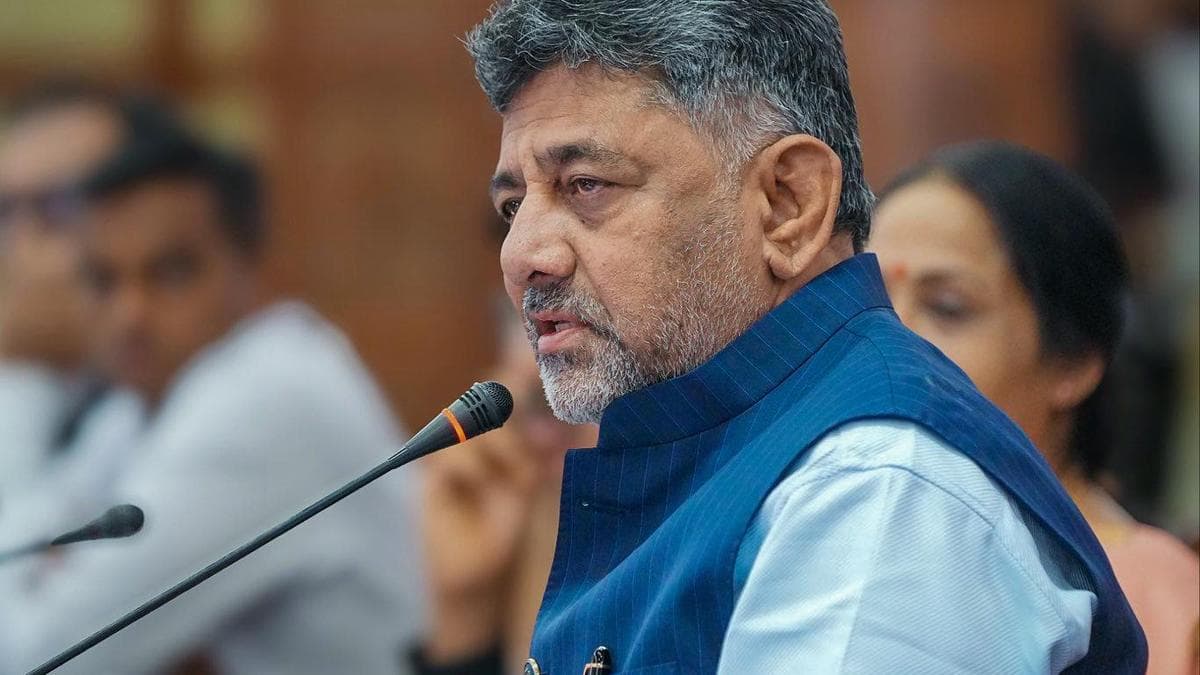
Chief Minister D.K. Shivakumar speaking during a review meeting of the Excise Department at Vidhana Soudha in Bengaluru on Friday (June 26). | A total of 574 liquor licences that have remained defunct/unallotted are going under the hammer.For the first time, the reservation quota for Scheduled Castes, incorporating internal reservation, and Scheduled Tribes has been earmarked in the auction.The auction consists of 477 CL-2A licences for retail shops and 92 CL-9A licences for bars. The online auction is seen as part of resource mobilisation for the State exchequer, which is running tight owing to huge committed expenditure besides about ₹51,000 crore being spent on the five guarantee schemes.Preparations onSources said that preparations have been made for the auction, which has also received sanction from Chief Minister D.K. Shivakumar, who holds the Finance portfolio. “The government is expecting at least ₹550 crore which would be the base price, but it may end up earning a few hundred crores more,” they added.The earlier notified base price for the auction ranged between ₹70 lakh and ₹1.5 crore depending on the location. The auctioned licences will be granted for a period of five years. At 180, the highest number of licences is being auctioned in Bengaluru Urban district. The earlier auction, which was to be held in January 2026, had been notified in December 2025, but was later questioned in the Karnataka High Court, which cleared it in April 2026.Wine merchants opposeThe auction has been opposed by wine merchants’ associations, who earlier claimed that some of the functional licences had also been identified to go under the hammer. Petitions had been filed in the Karnataka High Court against the auction, but the court has paved way for auctioning of the licences, sources said.Liquor licences are much sought after in Karnataka since the last batch of licences were issued over three decades ago in 1993-94. In places such as Bengaluru, the sub-letting of licences runs into several crores.Review meetingMeanwhile, the Chief Minister, who reviewed the Excise Department on Friday (June 26), warned officials that they would be transferred from the department through the necessary legal route if they were found to not be delivering on their responsibilities. Published - June 26, 2026 08:26 pm IST
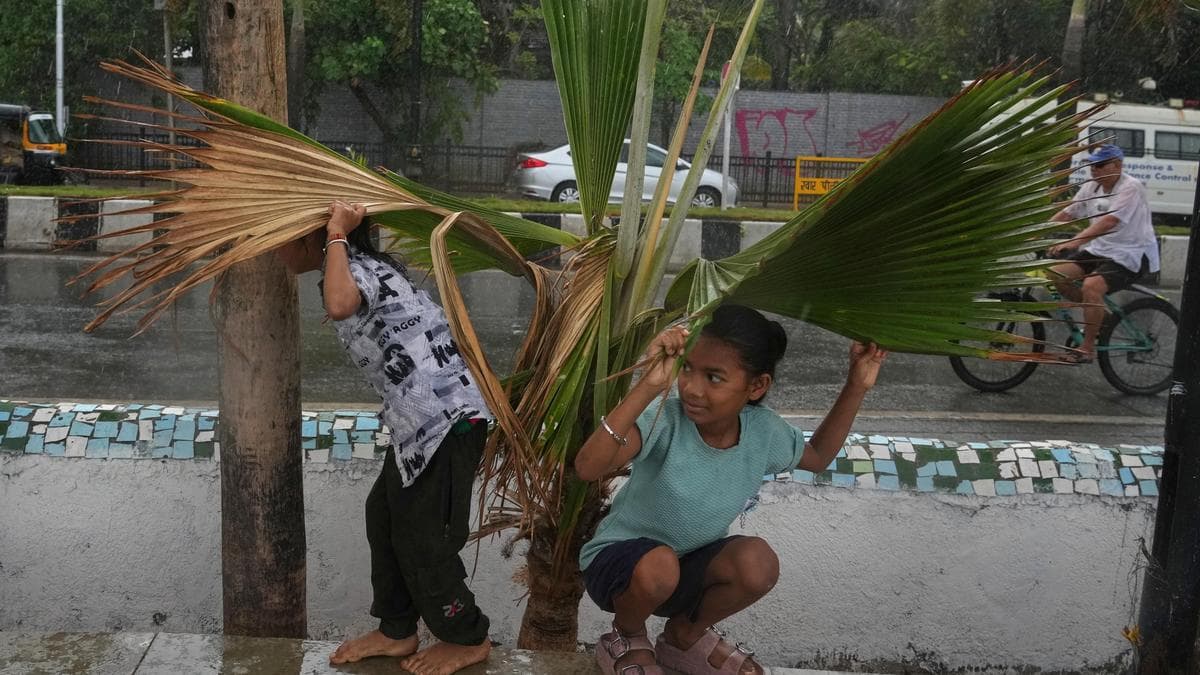
Home News India The IMD will announce the monsoon only when all parameters for monsoon onset are met Updated - June 22, 2026 02:23 pm IST Girls take shelter under palm leaves during a monsoon shower in Mumbai, on Sunday (June 21, 2026). | Moderate to heavy showers accompanied by thunder were reported from multiple locations during the morning hours, while overcast skies and cool winds made for a pleasant start to the day.Also Read : India’s rainfall deficit at 35% as monsoon progress stallsAccording to civic officials, some areas recorded intense rainfall within a short span, though no major incidents of waterlogging or disruption to public transport services were reported. The showers, however, affected visibility and slowed traffic movement at a few locations.Also Read : What a ‘super’ El Niño would mean for India’s monsoonThe southwest monsoon, which typically reaches Mumbai around June 10, has been delayed this year after its advance stalled due to unfavourable weather conditions. The latest spell of rain has renewed hopes of further monsoon progress along the west coast.No significant waterlogging or other rain-related incidents were reported, while public transport services continued to operate normally, officials said. Follow here for live weather and monsoon updates from across India:June 22, 2026 13:04 India | IMD warns of extreme rainfall in Northeast; severe heat wave in parts of central IndiaThe India Meteorological Department (IMD) said very heavy to extremely heavy rainfall is likely to continue over northeast India till June 25 and over sub-Himalayan West Bengal and Sikkim till June 22. The IMD further warned that heat wave to severe heat wave conditions are likely to prevail over Vidarbha, East Madhya Pradesh and East Uttar Pradesh for the next four to five days.Heat wave conditions are also expected over Chhattisgarh for the next three days, Telangana for the next two days, and over Madhya Maharashtra and Marathwada. According to IMD forecast, isolated to scattered rainfall over Konkan and Goa on June 22, with rainfall activity expected to intensify to fairly widespread and widespread rainfall over the region between June 23 and June 27. The Weather Department also predicted isolated thunderstorms accompanied by lightning and gusty winds with speeds reaching 40-50 kmph, gusting up to 60 kmph, over Konkan and Goa and Marathwada during June 22-25, while isolated heavy rainfall is likely over Konkan and Goa during June 22-27. - ANIJune 22, 2026 13:00 Maharashtra | Monsoon onset in Mumbai expected soonThe monsoon onset in Mumbai is expected later on Monday (June 22, 2026) or on Tuesday (June 23, 2026). The IMD will announce the monsoon only when all parameters for monsoon onset are met. In its latest weather bulletin, the IMD forecast conditions are favourable for the further advance of the southwest monsoon into some more parts of Maharashtra, Telangana, Odisha, Jharkhand and Bihar, as well as parts of Chhattisgarh, around June 23. - ANIJune 22, 2026 12:58 Maharashtra | IMD issues Orange alert for Mumbai; BMC advises residents to exercise cautionThe India Meteorological Department (IMD) on Monday (June 22, 2026) issued an Orange alert for Mumbai, forecasting thunderstorms accompanied by lightning, moderate to intense rainfall, and gusty winds of 30-40 kmph at isolated places over the next three hours. The Brihanmumbai Municipal Corporation (BMC) shared the alert and advised residents to exercise caution.According to the nowcast warning issued by the IMD and shared by the BMC, the weather conditions are expected to remain active across parts of Mumbai, with residents advised to take necessary precautions during thunderstorms and heavy rain spells.Several parts of Mumbai, including Bandra East, witnessed pre-monso
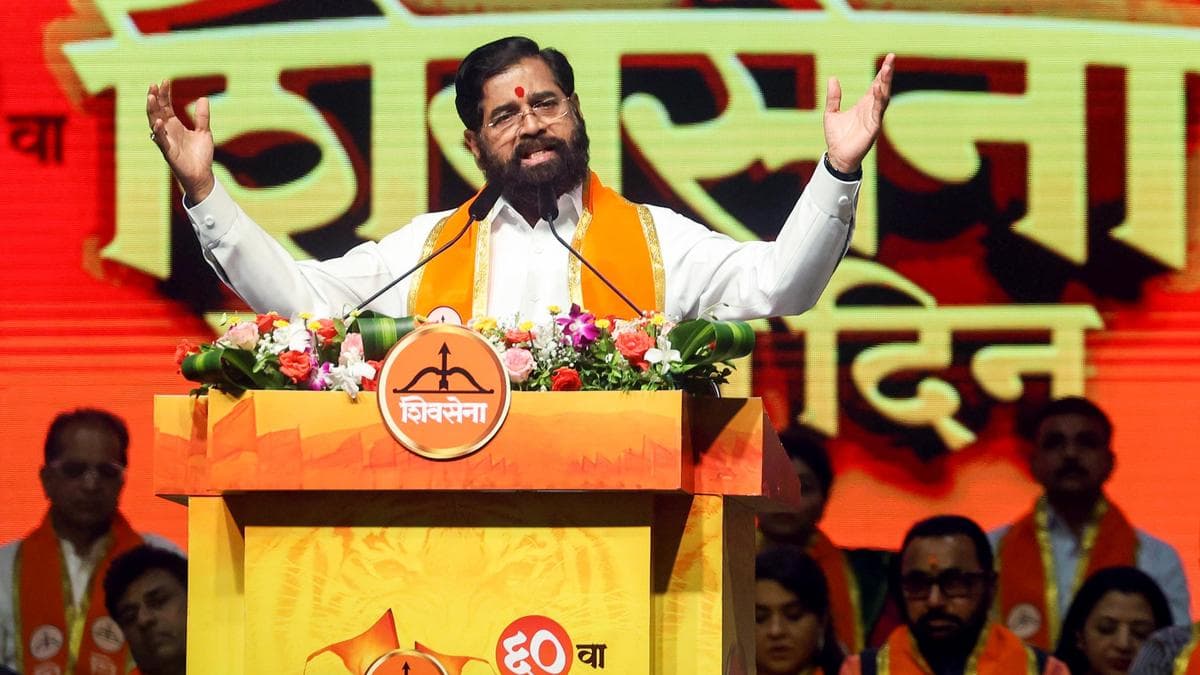
Maharashtra Deputy Chief Minister Eknath Shinde. File | Two of the six Lok Sabha members of the Shiv Sena (UBT) on Sunday (June 21, 2026) announced that they were slated to join Mr. Shinde. Nagesh Patil Ashtikar, Shiv Sena (UBT) MP from Hingoli, and Omraje Nimbalkar, the party MP from Dharashiv, cited lack of development funds as one of the primary reasons for taking the decision. Mr. Ashtikar blamed the Shiv Sena UBT leaders for speaking ill against them, claiming that they took the decision only after Uddhav Thackeray’s party leaders spoke in a derogatory manner against them. “Till June 18, we had not taken any decision,” he said in a video statement. They are slated to merge with the Shiv Sena, a senior leader said. “There were quite a few obstacles at the last minute. But we have successfully overcome them. We had support from the central BJP leadership,” a leader told The Hindu.When Mr. Shinde was asked about the developments on Sunday (June 21, 2026) evening, he said, “Those who know me, know that we do not leave any operation incomplete.” It referred to the defection of six of the nine MPs of Shiv Sena (UBT). The two-third majority would save them from disqualification proceedings, Sena leaders said. At least three of these six MPs are slated to hold rallies in their own constituencies on Monday.“Operation Tiger is successful. The body is healthy,” Maharashtra Chief Minister Devendra Fadnavis added, while interjecting Mr. Shinde on Sunday (June 21 2026).Uddhav slams BJPAmid the developments about Operation Tiger, Shiv Sena (UBT) leader Uddhav Thackeray hit out at the BJP on Sunday (June 21, 2026), during his public rally in Mumbai North East. Mr. Thackeray is slated to tour six places in Maharashtra from June 26 to 29. These include the constituencies of the MPs who are slated to leave his party to join the Shiv Sena. “Though the Shiv Sena fought against the Congress for so many decades, the Congress never tried to break away our party. It is the BJP’s sin,” he said.The names of the six MPs who are slated to break away from the Shiv Sena (UBT) are — Sanjay Dina Patil, Sanjay Jadhav, Sanjay Deshmukh, Mr. Ashtikar, Bhausaheb Wakchaure and Mr. Nimbalkar.On Sunday (June 21, 2026), Mr. Nimbalkar held a closed door meeting with his party cadre in his home constituency. Thereafter, he announced his decision publicly. “We will go in the Shiv Sena Shinde group and we will work under the leadership of Eknath Shinde ji. I have not taken this decision for any position or for money. I have also discussed with my people. So far, I have only received the love and blessings of the Shiv Sena chief. And irrespective of whatever is being said against us by anybody, we will not speak a word against Matoshree [residence of the Thackerays],” he said in Dharashiv.Mr. Ashtikar said he had not left his ideological beliefs. “I want to tell you all, we will go in Shiv Sena. We had not gone anywhere till June 18. But we took this decision after the kind of things which were spoken against us. Whoever may be angry with us, I urge you to not use unparliamentary language while talking about us. Please express yourselves. But please do so decently. I pray to you with folded hands. I want to tell all my followers that they should not worry. I have not left the ideology. I have gone to Shiv Sena,” he said in a video statement issued on Sunday (June 21, 2026).Like Mr. Nimbalkar, he too cited the lack of development funds and the problems in getting the con
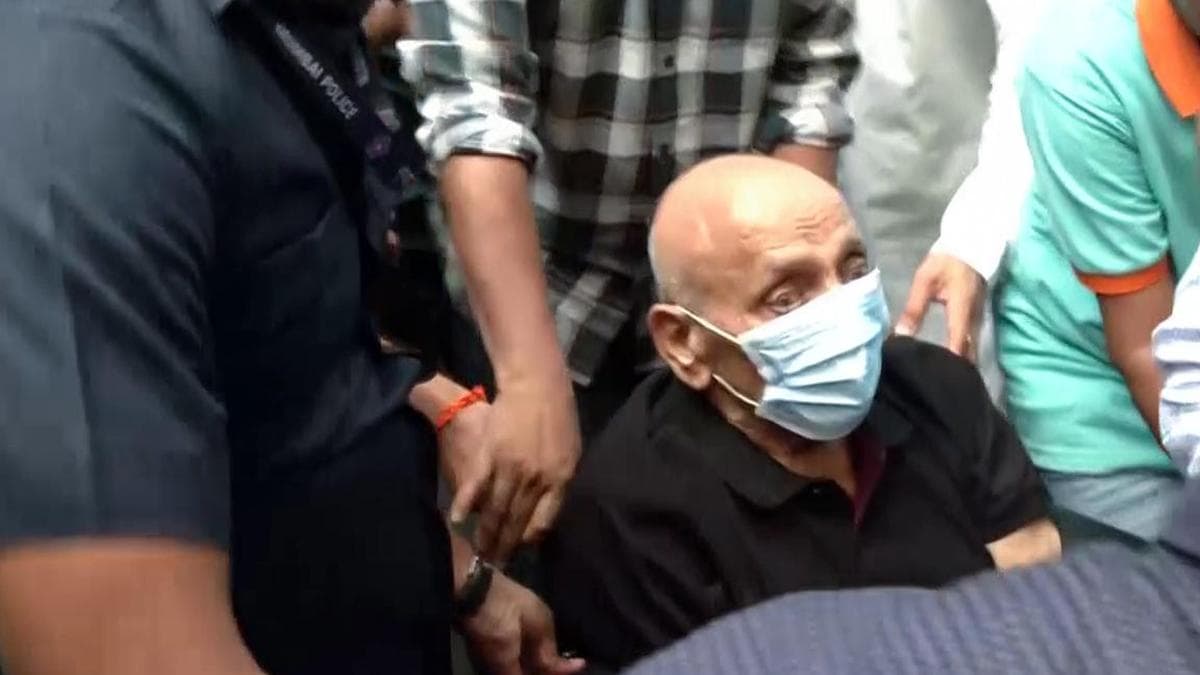
A Mumbai sessions court on Saturday (June 20, 2026), citing a lack of credible evidence, acquitted all eight accused, including Lok Sabha MP and senior leader of the Nationalist Congress Party-Sharadchandra Pawar (NCP-SP) Padamsinh Patil, in the 2006 murder of former MLA Pawanraje Nimbalkar and his driver.The court pointed to multiple flaws in the investigation by the Central Bureau of Investigation (CBI), including unreliable witnesses, missing mobile phone records, and inconsistent statements.Of the nine accused previously, one person had turned an approver.Nimbalkar and his driver were shot dead by two assailants in Kalamboli, Navi Mumbai, on June 3, 2006. Mr. Patil and the other accused, who allegedly hatched executed a conspiracy to kill Nimbalkar for a sum of ₹25 lakh, stand acquitted after two decades. The prosecution had failed to establish the guilt of the accused beyond a reasonable doubt, the court said.Apart from Mr. Patil, 86, the other accused are Satish Mandade, Mohan Shukla, Shashikant Kulkarni, Kailash Yadav, Dinesh Tiwari, Pintu Singh (the main shooter), and Chhote Pandey.Then an incumbent MP, Mr. Patil was arrested by the CBI three years after the incident, on June 6, 2009, securing bail a few months later on a personal bond of ₹2 lakh following the filing of the charge-sheet.After Maharashtra Chief Minister Devendra Fadnavis and Deputy Chief Minister Eknath Shinde requested Union Home Minister Amit Shah to look into the case, the CBI is slated to challenge the verdict in the Bombay High Court.“As CBI had brought out very good evidence against the accused in the case, CBI will be challenging the judgment of the trial court before the High Court,” the CBI said in a statement on Saturday (June 20, 2026).One of the primary reasons for the acquittal was the unreliability of a key witness, an accused who later turned an approver. This approver had a history of lying, the court said. The witness owned several properties and had substantial assets, making it implausible that he would commit such a crime for a sum of ₹50,000, the court said, adding the witness's version of events could not be trusted.The investigation also suffered from significant procedural lapses. The police did not seize the mobile phones of the accused or obtain their call detail records, which could have clarified if the accused had been in contact with each other, the court said, terming the absence of these records a major flaw.Moreover, the approver's account of his movements on the day of the murder changed multiple times. In his statements, he provided four different versions of the route travelled by him. The contradictions and frequent changes rendered the approver’s testimony unreliable, the court said.There were also discrepancies regarding the vehicle used for committing the crime. The car was completely burnt, but the seizure report mentioned its colour as green. How could the colour be determined from a burnt vehicle, the court asked. There were also differing accounts on where the vehicle had been found. One witness said the vehicle was found near a small house, another said it was found near a bungalow, while police records showed it was found on an open plot of land. These inconsistencies rendered the investigation suspect, the court said.The key witness also claimed he had met former Commissioner of Police Rakesh Maria and given him a bottle of scotch whisky. Mr. Maria had denied the claim, and the CBI had not investigated the matter further, the court said.The CBI had included in the charge-sheet a letter that Nimbalkar had written to a District Collector in 2003. In the letter, Nimbalkar had said he was concerned for his safety, naming former Maharashtra Home Minister and Lok Sabha MP Padamsingh Patil. The CBI had failed to investigate the origin and circumstances of this letter, which should have been a cause for concern, the judge said.The court acknowledged the political rivalry between Nimbalkar and Mr. Patil following t
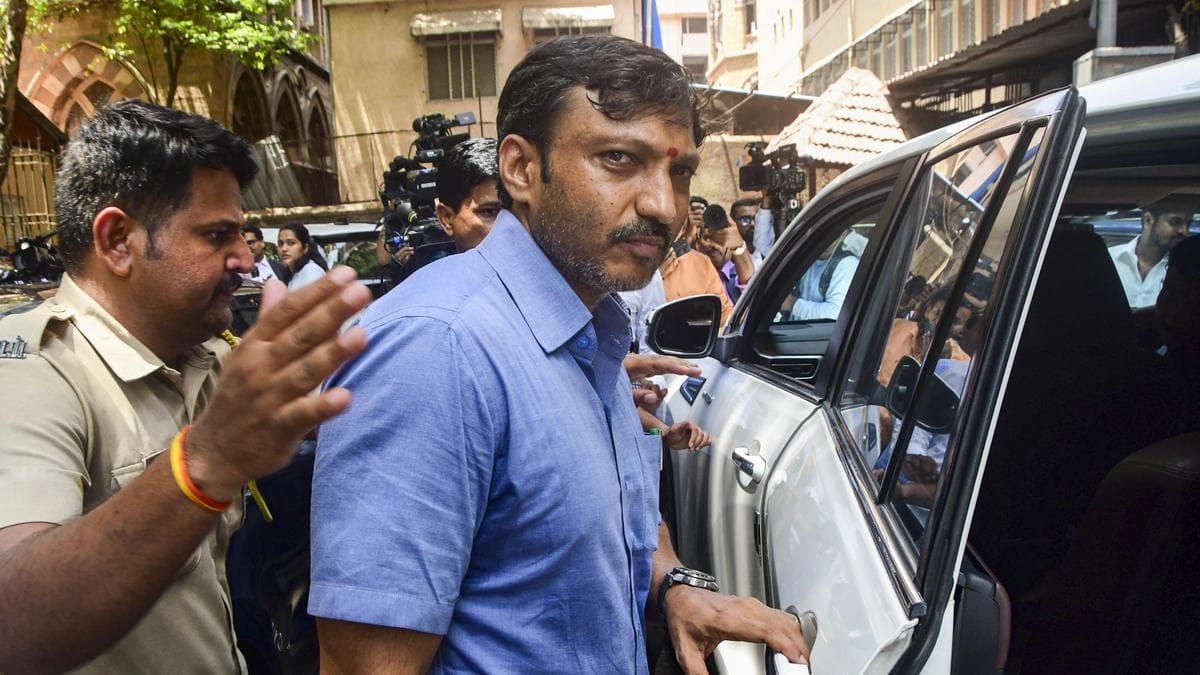
A high-profile murder case had stirred Maharashtra two decades ago. At the heart of it was the political rivalry between two cousins. The Sessions Court in Mumbai will deliver its verdict in the Pawanraje Nimbalkar murder case on Saturday (June 20, 2026).The accused is former Maharashtra Minister Padmasinh Patil, a heavyweight leader and the brother of Maharashtra Deputy Chief Minister Sunetra Pawar. Pawanraje Nimbalkar’s son, Omraje Nimbalkar, is a Shiv Sena UBT MP on his way out of the party. He has said that his family has fought for justice for 20 years.The trial, which started in 2011, lasted for 15 years. The court examined 160 witnesses in that period.Verdict deferred to June 20On Monday (June 15, 2026), the court had said that additional time was required to deliver the verdict, leading to a postponement. The court had previously ordered the accused to appear in person for the June 16 hearing. All nine accused complied with the directive. The verification of their presence was completed, and the judge recorded their attendance. The hearing lasted for a duration that court officials described as brief. The next date of hearing was communicated to all parties present.The verdict was initially expected on May 14. The hearing on that date was deferred as the accused were not present in the court. The court subsequently directed their appearance for June 16. The prosecution and the defence counsel were present on both occasions.The court has scheduled the next hearing for June 20. The accused has been directed to remain present on that date. The prosecution and the defence counsel will be present to receive the verdict. The family members of the deceased are expected to be present in the court. The case has been pending for two decades. The legal process has involved multiple hearings and procedural steps. The parties involved have been informed of the new date.Background of the casePawanraje Nimbalkar, a Congress leader from Maharashtra, arrived in Mumbai on June 3, 2006. He had completed his work in the city and proceeded towards Pune. He was scheduled to meet an individual in Kalamboli regarding a land transaction in Barshi. Pawanraje Nimbalkar travelled in a white car. The CBI charge sheet states that he reached the Char Rasta intersection in Kalamboli.According to the charge sheet, the assailants were positioned at the location. They overtook his vehicle and instructed the driver to stop. Pawanraje Nimbalkar was asleep in the vehicle at that time. The assailants approached the car and engaged the occupants in conversation under the pretext of making inquiries. The driver woke Pawanraje Nimbalkar and lowered the window. The shooters then allegedly fired at him. Pawanraje Nimbalkar sustained injuries. The driver, Samad Kazi, was also wounded in the incident.The assailants fled in their vehicle. They discarded the firearm and other weapons at a distance from the site. The vehicle used by the assailants was abandoned in Belavali village, Panvel. The Mumbai police registered a case and initiated an investigation. The investigation was later transferred to the CBI.Conspiracy and CBI chargesThe CBI took over the investigation from the Mumbai police. The charge sheet filed by the CBI in court details the circumstances surrounding the murder. The charge sheet states that Padamsinh Patil, Satish Mandade, and Mohan Shukla allegedly conspired to murder Pawanraje Nimbalkar in 2005. The CBI has alleged that Pawanraje Nimbalkar had become a threat to Padamsinh Patil’s political career and standing.Political observers have noted that the rivalry between Padamsinh Patil and Pawanraje Nimbalkar was linked to allegations of financial irregularities at the Terna Sugar Factory. The differences between the two leaders reached a point that drew the attention of the CBI during its investigation.The charge sheet further states that in January 2005, Parasmal Jain met Mohan Shukla to seek financial assistance. Shukla informed Jain about the poli

Discussion (0)