
Loading dispatches...
← Return to NewsroomEconomy
India tells UNSC that those targeting schools, children must be held accountable
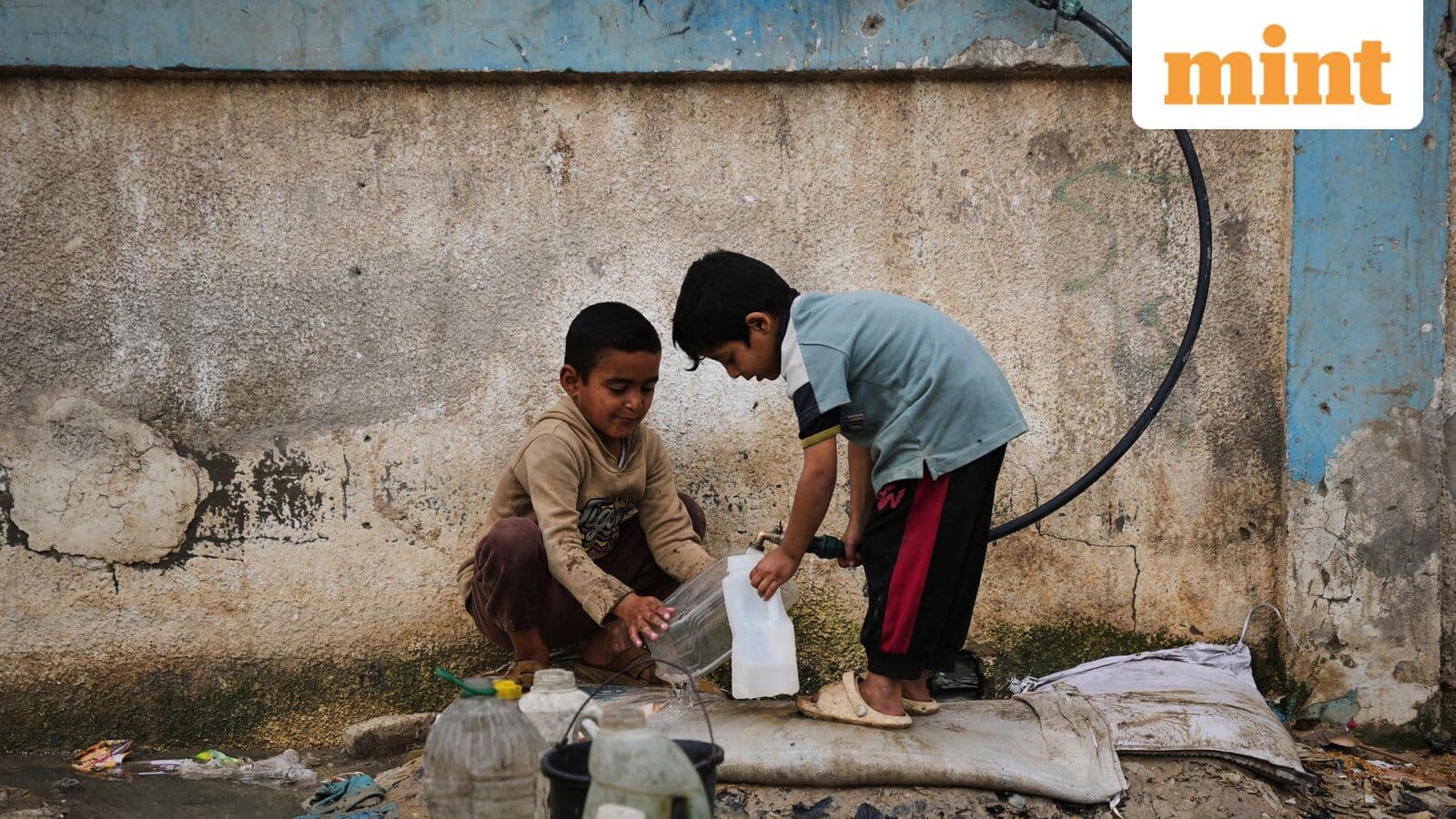
India has urged the United Nations Security Council (UNSC) to hold accountable those responsible for attacking schools and children, stressing that efforts to protect children remain incomplete without justice and accountability.India's Permanent Representative to the UN, Ambassador Harish Parvathaneni, made these remarks while addressing the UNSCon Wednesday, news agency PTI reported.Parvathaneni said, "Education is a right that should endure in times of conflict. It is a right whose fulfilment is among the most powerful contributions to lasting peace. India remains unwavering in its commitment to protecting children in armed conflict and to upholding their right to learn, to grow, and to realise their full potential."He emphasised that "protection without accountability is incomplete" and called for those who target schools and children to be held accountable.PTI reported that India's remarks came after the UN Secretary General released its report on Children and armed conflict, which said that in 2025, violations against children in armed conflict touched "shocking levels," with a record number of children being affected.Violations against children in armed conflictAccording to PTI, the report, in 2025, said the UN verified 38,558 grave violations, which affected 24,174 children, including 15,493 boys, 7,990 girls, and 691 sex unknown, making it the highest number of children being affected by serious violations since the agency began documenting such cases.The news agency said the report also revealed that the number of children subjected to several grave violations continued to see an increase from 3,137 in 2024 to 3,176 in 2025. The report said, “Parties to conflict failed to uphold or proactively undermined their obligations under international humanitarian law and international human rights law and continued to commit grave violations with near-total impunity, resulting in excessive humanitarian consequences for civilians and civilian objects, disproportionately affecting children and the facilities and services they rely on.”It also stated that the government forces accounted for most of the grave violations and were primarily responsible for the killing and maiming of children, attacks on schools and hospitals, and restrictions on humanitarian access, according to PTI.UN report presents 'alarming statistics': India to UNSCIndia's permanent representative to the UN said the 2025 report presents "alarming statistics", and the attacks on schools rose by a whopping 44% in a span of a year, according to PTI.Parvathaneni said that roughly 473 million children, which means more than one in six globally, are either living in or are fleeing conflict zones, with roughly 85 million among them having no access to education.Trump says Iran school strike culprit may never be knownIn separate news, US President Donald Trump on Wednesday said that it may never be known who was responsible for a deadly strike on a girls' school in Iran on the first day of the US-Israel war in Tehran, which killed scores of children, Reuters reported.Trump said, "I don't know that they are ever going to solve that problem in terms of whose fault it was, because there were missiles flying all over the place, and it's horrible what happened, but there were missiles flying all over the place." He added, "Somebody said it was our missile, maybe it wasn't our missile, but I have seen nothing to lead me to believe it was." He reiterated, “I don't think it was us.”Earlier in March, Reuters reported that an initial internal US military probe showed Washington's forces were likely responsible for the deadly strike in Iran's Minab.About the AuthorSwati GandhiSwati Gandhi is a digital journalist with over four years of experience, specialising in international and geopolitical issues. Her work focuses on foreign policy, global power shifts, and the political and economic forces shaping international relations, with a particular emphasis on how global develo

Siya Goyal, 20, comes from a well-known business family in Pune. Her family is involved in the dry fruits trade and lives in the Bibwewadi area of the city.Siya and Ketan got engaged in February and were scheduled to get married in a grand wedding ceremony at Udaipur in November(X)The death of 26-year-old real estate executive Ketan Agrawal in Pune has placed his fiancée, Siya Goyal, and her alleged lover, Chetan Chaudhary, at the centre of a high-profile murder investigation.What was first believed to be an accidental fall has now turned into a murder case after police claimed that Goyal and Chaudhary admitted to pushing Agrawal from Lohagad Fort near Lonavala on June 18.Clues that led investigators to the accusedAccording to investigators, several details helped them piece together the alleged conspiracy.Quick answers to key questions•5 QUESTIONSKetan Agrawal was allegedly murdered by his fiancée, Siya Goyal, and her lover, Chetan Chaudhary, during a return visit to Lohagad Fort on June 18, 2023, where he was pushed off a cliff.Siya Goyal reportedly feared family humiliation if she called off her engagement to Ketan and eloped with Chetan Chaudhary, leading her to choose to kill Ketan instead.Investigators connected Siya Goyal to Ketan's murder through various evidence, including her insistence on multiple trips to Lohagad Fort, suspicious clothing choices, and digital communications with co-accused Chetan Chaudhary.Circumstantial evidence, such as Siya's previous attempts to push Ketan off the cliff and her conflicting statements about the incident, suggested that his death was a planned murder rather than an accident.Yes, the case raises concerns about relationship pressures, the risks of concealment within engagements, and the lengths individuals may go to avoid family disgrace, highlighting a need for open communication in relationships.Police examined Siya's repeated requests to visit Lohagad Fort, Agrawal's missing passport, and the unusual clothing worn by Chaudhary during the trip. Police believe these and other pieces of evidence helped expose what they say was a planned killing.As more details emerged, public attention shifted towards Siya Goyal and her alleged attempts to portray the incident as an accident.Who is Siya Goyal?Siya Goyal, 20, comes from a well-known business family in Pune. Her family is involved in the dry fruits trade and lives in the Bibwewadi area of the city.Earlier this year, she became engaged to Ketan Agrawal, a director at the family-owned real estate company Success Group. The match was reportedly arranged through Agrawal's maternal uncle.The couple were due to marry in Udaipur in November. Hotels had already been booked, and both families were expected to spend around ₹14 crore on the wedding celebrations.Relationship with Chetan ChaudharyPolice say Goyal had been in a relationship with Chetan Chaudhary for around a year before Agrawal's death.Chaudhary's family also runs a business in Pune, and investigators believe the two became acquainted through business circles. They remained in regular contact throughout their relationship, police said.Two visits to Lohagad FortCops claim that Goyal and Agrawal visited Lohagad Fort for a trek four days before his death. During that visit, she allegedly attempted to push him towards a cliff after saying she had seen a snake.Police allege that Goyal later persuaded Agrawal to return to the fort on June 18, one day before her birthday. It was during this second visit that she allegedly pushed him from the fort.After the incident, Goyal reportedly told officers that Agrawal had accidentally slipped while taking photographs near the edge.Birthday plans before the tragedyVideos shared on social media show Agrawal preparing an elaborate birthday celebration for Goyal ahead of her 20th birthday on June 19.Relatives said he had spent nearly a month organising the event and wanted to make the occasion special for her.About the AuthorKanishka SinghariaKanish
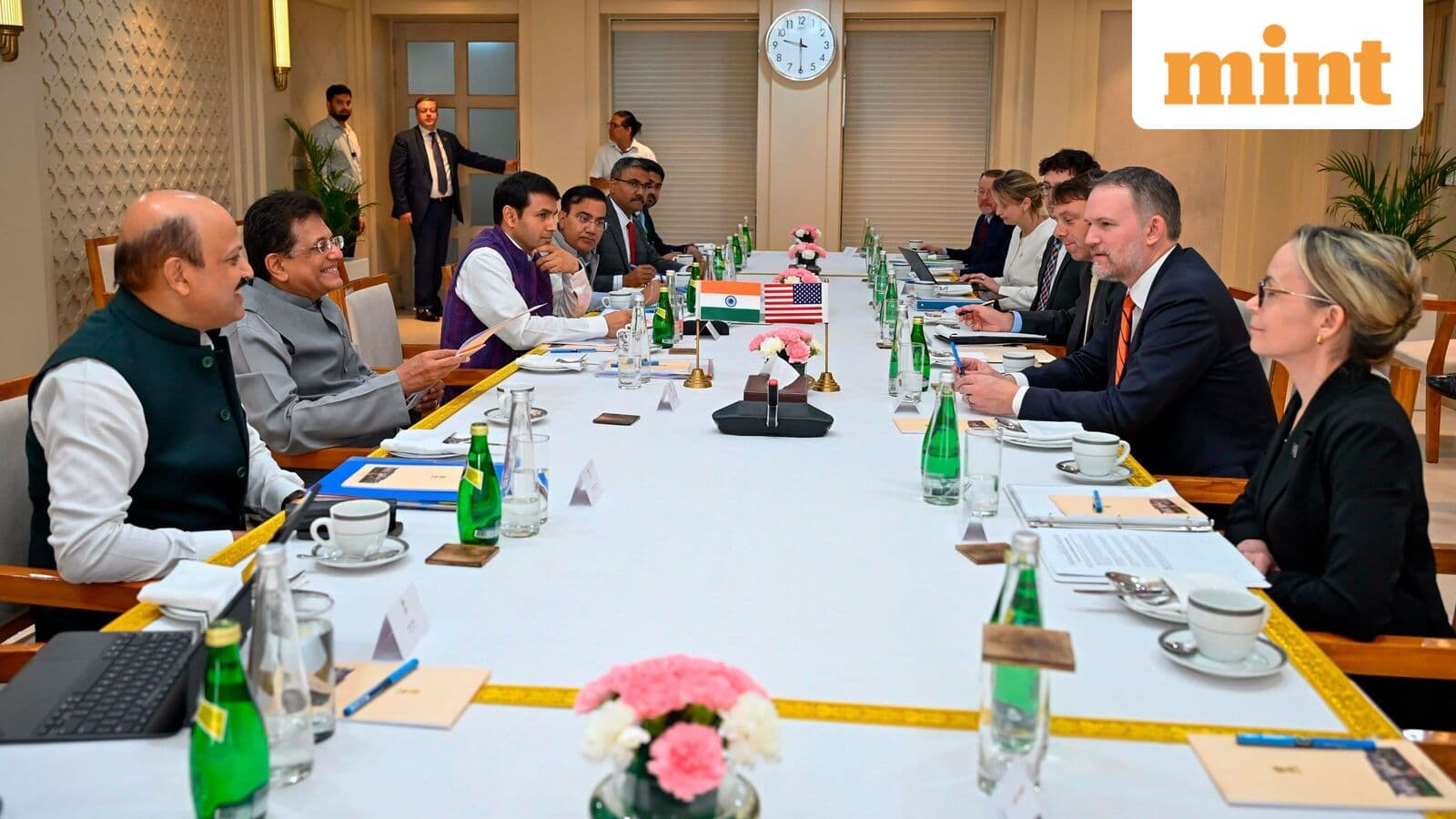
India and the United States reviewed the progress on an interim bilateral trade agreement during the two-day ministerial meeting that concluded in New Delhi on 24 June.The two sides discussed trade ageeement elements, including enhanced market access, digital trade, supply chain resilience, reduction of non-tariff barriers, and expanded cooperation in strategic sectors, the government said in a statement without any indication that all differences were resolved ahead of a key tariff deadline next month.Quick answers to key questions•5 QUESTIONSThe discussions covered enhanced market access, digital trade, supply chain resilience, and reduction of non-tariff barriers, among other key elements of the interim trade agreement.The urgency stems from the impending expiration of a temporary 10 percent US tariff regime on July 24, which has added pressure to conclude the trade negotiations.Changes in US tariff policy have prompted both nations to revisit key elements of their trade framework, which initially aimed to reduce tariffs on Indian goods but became less favorable due to legal rulings.Both India and the US are committing to a trade agreement that is balanced and commercially meaningful, aiming to deliver tangible benefits for businesses, farmers, workers, and consumers in both nations.Yes, Indian exporters should be concerned as the high tariffs, previously anticipated to decrease under the trade agreement, pose challenges in maintaining their competitiveness in the US market.Commerce and Industry Minister Piyush Goyal and visiting US Trade Representative Jamieson Greer held discussions on the first phase of a proposed bilateral trade agreement (BTA), which both sides have been negotiating since reaching a framework understanding earlier this year."The two ministers conducted a "comprehensive review" of key elements of the proposed pact, including enhanced market access, digital trade, supply chain resilience, reduction of non-tariff barriers and cooperation in strategic sectors," the Commerce Ministry said in a statement at the conclusion of talks on Wednesday.The ministry said both countries discussed pathways to conclude an interim agreement and reaffirmed their commitment to a deal that is "balanced and commercially meaningful".Greer's June 22-24 visit comes at a time when New Delhi and Washington race to finalise an interim arrangement before the expiration of a temporary 10 per cent US tariff regime on July 24, a deadline that has added urgency to negotiations.While the statement said 'substantial' progress has been made, the two sides did not say if outstanding issues had been resolved."Discussions focused on pathways to conclude an interim agreement as an important milestone toward a comprehensive BTA," the ministry said, adding that the two ministers reaffirmed their commitment to a trade agreement that is balanced, commercially meaningful, and delivers tangible benefits for businesses, farmers, workers, and consumers in both countries."Recognizing the growing significance of the India-US economic partnership amid evolving global trade dynamics, both sides reiterated their shared goal of expanding bilateral trade, fostering innovation, and building resilient, trusted supply chains," it added.‘Very close’ to concluding a historic bilateral trade deal: US Official The United States and India are ‘very, very close’ to concluding a historic bilateral trade deal that will open the 1.4 billion-strong Indian market to American goods on reciprocal and mutually beneficial terms, a senior US official was quoted as saying by news agency PTI.Addressing an event at the Capitol Hill organised by the Foundation for India and Indian Diaspora Studies (FIIDS) on Tuesday, US Deputy Assistant Secretary of State Bethany Poulos Morrison said Prime Minister Narendra Modi and US President Donald Trump were advancing a ‘result-oriented’ relationship."We're not measuring (the relationship) by meeting. We're measuring it by results," she said,
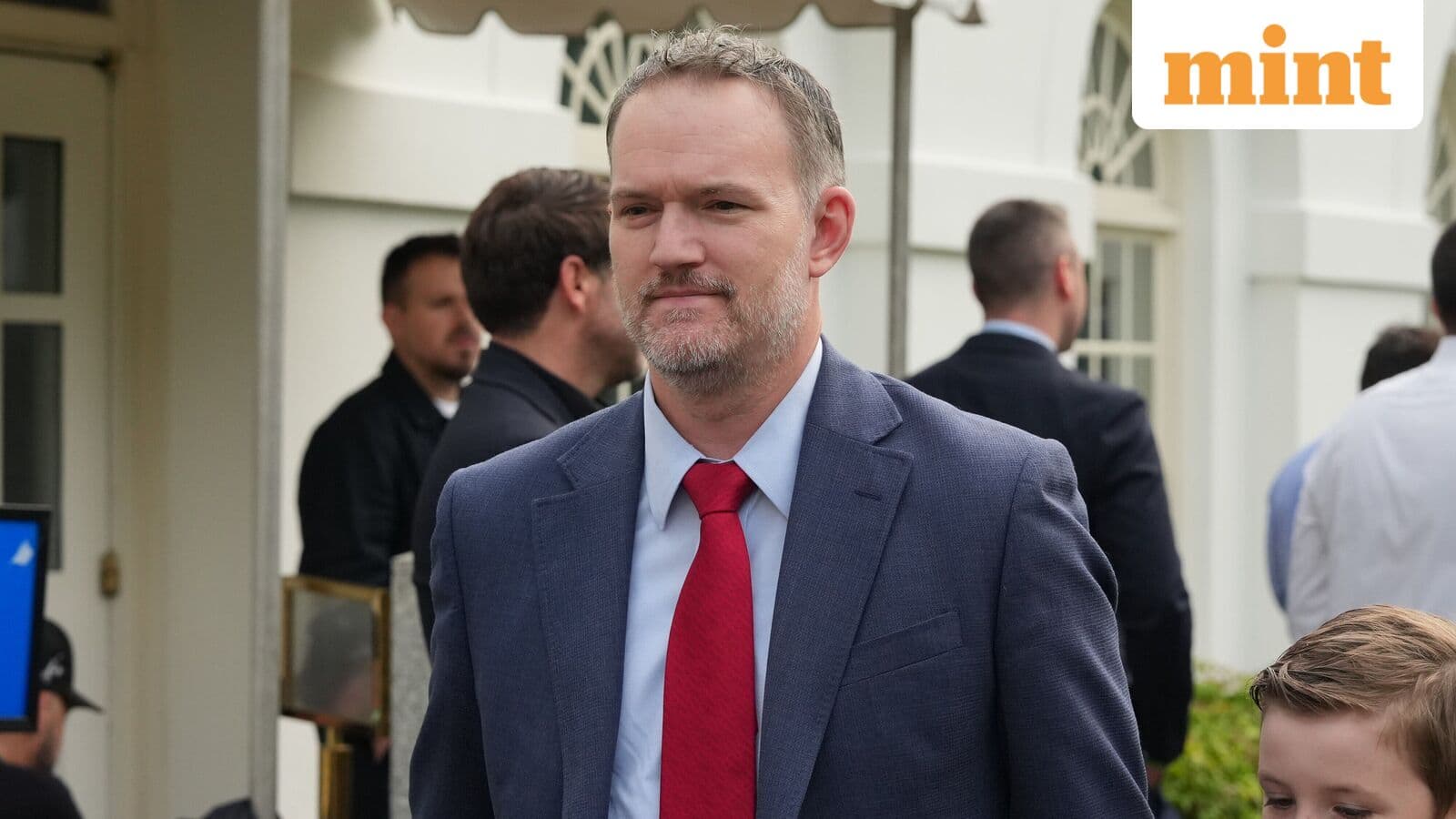
US Trade Representative Jamieson Greer and Union Commerce and Industry Minister Piyush Goyal will begin two-day talks on the first phase of the bilateral trade agreement (BTA) in the national capital today, 22 June.The high-level discussions will focus on the United States-India Joint Statement and an Interim Agreement, which is part of broader bilateral trade negotiations. These negotiations were originally launched by President Donald Trump and Prime Minister Narendra Modi on 13 February, 2025, according to a United States Trade Representative press statement.The meeting followed chief negotiator-level discussions on the pact held earlier this month (June 2-4) in the national capital."For the US trade deal talks, tomorrow my counterpart is coming to Delhi," Goyal told reporters in Mumbai on Monday. India is seeking a competitive advantage for its exporters over rival nations in the proposed trade agreement with the US, Goyal added.The talks today follow a meeting between Prime Minister Modi and President Trump on the sidelines of the G7 summit in Evian, France, where both leaders pushed for an expedited timeline.From New Delhi, Greer travels to Tashkent, Uzbekistan, to meet with President Mirziyoyev, Head of the Presidential Administration Saida Mirziyoyeva, and Deputy Prime Minister Jamshid Khodjaev.‘Interim bilateral trade pact reached its final stages’Last week, Foreign Secretary Vikram Misri said that the interim bilateral trade pact reached its final stages. Speaking at a briefing after the G7 summit, Misri highlighted that both nations made significant progress and emphasied the importance of Ambassador Greer's impending visit to New Delhi to drive the trade deliberations forward.Commerce Secretary Rajesh Agrawal also said recently that the discussions between the two ministers are expected to be centred around giving final touches to the framework deal.On June 5, Goyal said India and the US are moving towards closing all the open ends of the interim trade agreement, and both sides are likely to execute the "very, very vibrant" first phase of the BTA by the middle of next month.The 10 per cent temporary tariff imposed by the US on all its trading partners on February 24, 2026, for 150 days will expire on July 24. After that, the MFN (most favoured nation) tariffs will come into force on goods imported by the US.The temporary tariff is levied over and above the MFN duty. So before July 24, the US has to put in place a new tariff regime.For that, the US is conducting two Section 301 investigations against a number of countries, including India. This is the only legal mechanism through which the US can impose new tariffs of any magnitude.Goyal has, however, has expressed confidence that India and the United States would successfully conclude a bilateral trade agreement, despite the probe.“So this (Section 301 investigation) is really a mechanism being created, given their (the US) constraints that the Congress is not going to support any of their actions (on reciprocal tariffs)… They are trying to create a competitive edge for India. So I don’t think (we need to) worry about Section 301, we’ll tackle it, it’s our responsibility,” Goyal said at the Financial Express India's Best Banks Awards in Mumbai on Sunday, on 7 June.Sergio Gor expresses optimismUS Ambassador to India Sergio Gor on Monday expressed optimism ahead of United States Trade Representative (USTR) Jamieson Greer's visit to New Delhi to discuss the bilateral trade deal.In a post on X, the US envoy signalled his anticipation for Greer's visit, stating that he is looking forward to welcoming him to the capital for his scheduled meeting with Minister of Commerce and Industry Piyush Goyal, alongside other senior officials."Looking forward to welcoming Ambassador Greer @USTradeRep to New Delhi! Multiple sessions scheduled with Minister @PiyushGoyal to advance the U.S.-India trade deal!," he wrote.What was Feb 7 Joint Statement on BTAOn February 7, India and the US

Discussion (0)