
Loading dispatches...
← Return to NewsroomScience
Watch the total solar eclipse online Aug. 12 with these free livestreams
LIVE: Total Solar Eclipse 2026 | Views from Around the Globe - YouTube Watch On The Aug. 12 total solar eclipse is just one day away! Here's how you can watch the entire show live online from the comfort of your homeMillions of people across Spain, Iceland and Greenland will see the moon completely hide the sun during the climactic phase of totality on Aug. 12. Countless more skywatchers across Europe will witness a deep partial solar eclipse, as the moon's curved silhouette covers a swathe of the sun's surface, while failing to cover it entirely.Thankfully, we live in modern times. So there's no need for you to miss out on the solar spectacle if you find yourself outside of the path of totality, or if clouds conspire to ruin your view. Here's where to watch every phase of the 2026 total solar eclipse live online.NASANASA will be hosting its own livestream of the event starting at 1:15 p.m. EDT on Aug. 12, featuring live views of totality from cameras spread throughout the path of the eclipse. The visuals will be accompanied by information on the science of the incredible event and details on how the agency is working to learn more about our sun.The NASA coverage will be hosted here on Space.com, but can also be streamed through YouTube, Twitch, NASA+, Facebook, Instagram and Amazon Prime. 2026 Total Solar Eclipse (Official NASA Trailer) - YouTube Watch On Time and DateTime and Date's YouTube livestream kicks off at 12 p.m. EDT (1700 GMT) on Aug. 12, bringing live views of the eclipse from Leon in northwestern Spain and the island of Mallorca, along with live commentary from journalist Anne Buckle and astrophysicist Graham Jones. LIVE: Total Solar Eclipse - August 12, 2026 - YouTube Watch On The European Space AgencyAn official European Space Agency (ESA) livestream will begin at 1:30 p.m. EDT (1730 GMT) on Aug. 12. The stream will feature expert commentary on the science of the eclipse along with live views from telescopes at the Observatorio Astrofisco de Javalambre, which is located close to the Spanish city of Teruel directly in the path of totality. Total solar eclipse 2026: Telescopic feed (Official ESA broadcast) - YouTube Watch On Royal Observatory Greenwich London's historic Royal Observatory Greenwich will host two simultaneous YouTube streams featuring live views of the partial solar eclipse starting at 1:15 p.m EDT (1815 GMT) on Aug. 12. The first livestream will be presented by Royal Observatory astronomer Greg Brown, who will discuss the science of the sun while providing expert commentary on the eclipse, while the second will offer a silent livestream, featuring visuals of the eclipse with no accompanying audio. Partial solar eclipse LIVE, 12 August 2026 | Presented stream | Live from the Royal Observatory - YouTube Watch On The Virtual Telescope ProjectThe Virtual Telescope Project livestream begins at 1:20 p.m. EDT (1720 GMT) on Aug. 12, bringing real-time views from the organization's robotic telescopes in Manciano, Italy, where a partial eclipse will be visible and from the path of totality in Spain. The Virtual Telescope Project will host a separate livestream a few hours later featuring views of the Perseid meteor shower peak, which occurs overnight on Aug. 12-13. The 12 August 2026 Total Solar Eclipse: online observation. - YouTube Watch On Be sure to check out our live blog for all of the latest news on the Aug. 12 total solar eclipse. We'll also have reports from Skywatching Writer Anthony Wood as he watches the eclipse unfold low in the horizon in central Spain, and also from Skywatching Editor Daisy Dobrijevic as she witnesses the spectacle during a voyage with HX Expeditions to Greenland!Editor's Note: If you would like to share your eclipse photos with Space.com's readers, then please send your photo(s), comments, and your name and location to . Anthony Wood joined Space.com in April 2025 after contributing articles to outlets including IGN, New Atlas and Gizmo
Total solar eclipse Aug. 12, 2026 live updates — 2 days to totality Space Rush to find solar eclipse glasses as UK high street stocks run short The Guardian Europe Will Get Its First Total Solar Eclipse in Over 25 Years. Here's What You Should Know Time Magazine A solar eclipse happens this week. Here is what to know npr.org What time is the total solar eclipse on Aug. 12, 2026? Space
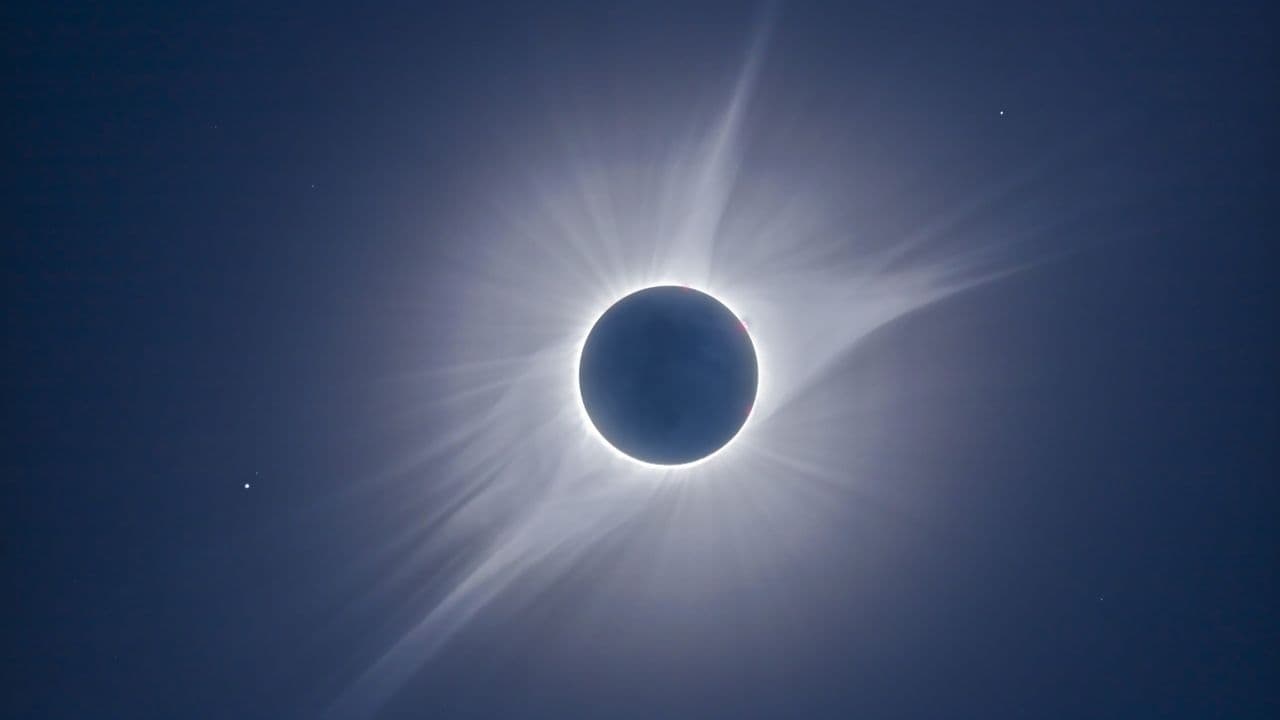
A naked-eye view of the sun's outer atmosphere is the reason eclipse chasers travel the world. ( While the silhouette of the moon passing across the sun barely changes, the moment our natural satellite covers the entire solar disk, something spectacular happens — the emergence of the corona. The Latin word for "crown", the solar corona is one of the wonders of nature. To gaze upon its delicate, spiky white tendrils during brief moments of totality is to glimpse the infinite, but it's only a glimpse because the corona is always changing. Shaped by the sun's constantly changing magnetic field, the corona evolves from year to year, month to month and even day to day. No two total eclipses ever reveal exactly the same structure.It's one reason why eclipse chasers keep traveling. The corona visible during the total solar eclipse of Aug. 12, 2026 — if skies are clear — will be a unique snapshot of the sun at a specific moment in Solar Cycle 25. It will reflect years of changing magnetic activity, thousands of sunspots and countless eruptions of solar material.Once totality ends, that exact configuration of the corona will never be seen again. Can we know in advance what it might look like?Under normal circumstances, the sun's corona — our star's outer atmosphere — is invisible. It extends millions of miles into the solar system, but it's overwhelmed by the brilliant light of the sun's photosphere, its visible surface. Totality changes that. When the moon completely covers the photosphere, the corona suddenly emerges. White streamers extend away from the black silhouette of the moon. Pink loops and prominences can appear around the edge of the moon.For many first-time observers, the greatest surprise during totality is not only the detail but the scale. The corona often appears much larger than expected, extending several solar diameters away from the eclipsed sun. Photographs can capture some of that complexity, but they rarely reproduce the impression of depth and structure visible to the human eye, whose dynamic range is vastly superior to any camera. The corona on Aug. 12, 2026, may resemble the total solar eclipse on April 20, 2023. ( Horálek/Institute of Physics in Opava; Josef Kujal (of the Astronomy Society of Hradec Kŕlové) and Milan Hlaváč.)Why every corona looks differentThe corona is not a fixed object. It is created by extremely hot plasma — highly energized, ionized gas — that's trapped and sculpted by the sun's magnetic field. Since the sun's magnetic field is constantly changing, the corona changes with it."The sun follows a natural 11-year cycle of increasing and decreasing activity," Ryan French, solar physicist, author and science communicator at the Laboratory for Atmospheric and Space Physics (LASP) in Boulder, Colorado, and author of Little Book of Eclipses: An Essential Companion to Solar and Lunar Events told Space.com in an email. "At the peak of this cycle, called solar maximum, there are loads of sunspots on the sun, which are giant magnets nestled in the base of the sun's atmosphere. These sunspots produce a lot of solar flares and coronal mass ejections, which are kind of bursts and eruptions of energy from the sun's atmosphere, and at solar minimum, the sun has none of these things."That magnetic activity determines the overall shape of the corona. During solar minimum, when the sun has few or no sunspots, the corona tends to look more uniform and more symmetrical. Long streamers often stretch from either side of the sun, giving the corona a wing-like appearance. During solar maximum, it can look much more complex. Sunspot regions act like magnetic anchors, creating structures that can appear as spikes or streamers extending in different directions."If you were to see a total eclipse during solar maximum, the solar corona looks almost like a five-pointed cartoon star," s
( Hunting for the sun with binoculars can be tricky due to the essential ISO 12312-2 rated solar filters on the glass blocking all vision except for the solar disk itself. This is where a smart telescope like the entire Unistellar range can help; it automatically finds and tracks the solar disk from a few presses on your smartphone.Need a smart telescope? Skip ahead to pick from our list of recommendations to suit all budgets. Image 1 of 2 With some light adjustments in Adobe Lightroom, the details on the solar surface really pop out on the photograph from the eQuinox 2. ( If connected to a tablet or larger screen, you can get a much bigger image of the sun to share with groups and family. This also allows you to watch the observation from a shaded spot and get comfortable without needing to stay out under the beating sun. ( Using built-in image focusing, stacking and processing, the telescope delivers a sharper image within seconds and reveals solar details like sunpots on the surface. If you don't want to miss getting a shot of the next solar eclipse, you can use the solar observation mode to capture the sun at all stages of the eclipse from your smart telescope. At the time of writing, the next total solar eclipse is coming on Aug. 12, 2026 and will be mainly visible in Greenland, western Iceland and northern Spain. Partial eclipses will be visible in some other European countries, parts of Canada and New York City. The entire path of totality for the 2026 total solar eclipse. (net. Source: Esri, Maxar, GeoEye, Earthstar Geographics, CNES/Airbus DS, USDA, USGS, AeroGRID, IGN, and the GIS User Community)What to do: A generalist step-by-step for most smart telescopes1. Turn your smart telescope on2. Link the smart telescope to a smartphone or tablet3. Install the solar filter if the model requires a separate attachment4. Select the sun on the app and wait for the location5. Focus the image if needed and then use enhanced vision for more detailWhat do you need? The eVscope 2 can easily find the solar disk once selected. ( While I'm going over how to use a Unistellar eVscope 2 for solar imaging and observation, most of the other smart telescope brands have models that are capable of this too, like the Dwarflab Dwarf Mini 3 and Vaonis Vespera II. If you are used to using a traditional telescope, bear in mind that you will need a smart device to operate the smart telescope and observe your targets. Most smart telescopes come with a tripod, so you shouldn't have to worry about getting one extra but it is an essential piece of equipment. Make sure the bubble level on the tripod is centered so your setup is flat. ( This is to protect the image sensors in the body of the telescope and drastically reduce the amount of light entering the aperture, so that you don't get a highly overexposed image. Many brands sell these solar filters separately and in the case of Unistellar, you have to make sure you get the right one for your model. There is a solar filter for their Odyssey range and then another filter for their pro range, which features the eQuinox 2 and eVscope 2 models. Some smart telescope companies sell their solar filters separately, like Unistellar, Vaonis and Celestron. (Image credit
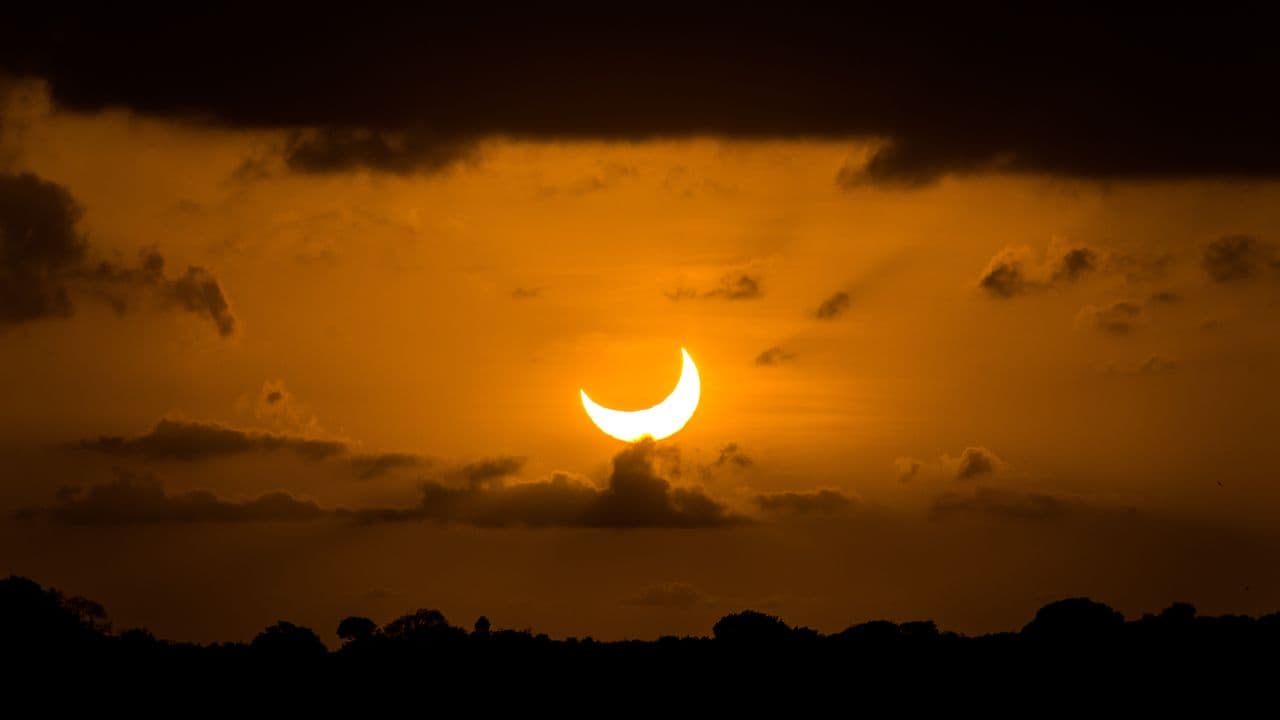
Partial solar eclipse of Oct, 14, 2023 during sunset as seen from Natal, a city in Brazil. ( From Portsmouth's Historic Dockyard and Brighton's Royal Pavilion to Dorset's Jurassic Coast and Cornwall's Land's End, beaches and cliff tops will be plunged into darkness in the day during the U.K.'s first total solar eclipse for almost 91 years. There is, however, a problem — this scenario won't occur until Sept. 23, 2090.A total solar eclipse visits a location on Earth on average once every 366 years, and the British are currently in no-man's land. Aug. 12, 2026, is particularly cruel, with a path of totality cruising past the British Isles as it surges across the Atlantic Ocean from Iceland to northern Spain. Eclipse chasers in the U.K. are used to traveling, and travel they will, but those left behind will nevertheless experience a very deep partial solar eclipse peaking at 98% in extreme locations. It will be the U.K.'s most significant partial solar eclipse since March 20, 2015, when another path of totality just missed the U.K. to the north.Related: Total solar eclipse 2026 — Everything you need to knowDuring a partial solar eclipse, it is NEVER safe to look directly at the sun without solar eclipse glasses designed for solar viewing. Read our guide on how to observe the sun safely.Where to see the partial solar eclipse in the U.K.A deep partial eclipse is a compelling sight, and the widespread nature of this one means millions of Brits can experience it without leaving home.London, Manchester and Glasgow all experience 91.4% coverage, staggered by only a few minutes. Belfast does slightly better at 93.1%, while Cardiff edges ahead among the U.K's capitals at 93.2%. In practice, these differences are subtle — this is a nationwide event that requires no travel. That said, expect crowds at U.K. national parks, such as Snowdonia, the Brecon Beacons and the Pembrokeshire Coast in Wales; the South Downs and the Lake District in England; and the Cairngorms and the Isle of Skye in Scotland.However, it's in County Kerry, Ireland, that sees the biggest eclipse in the British Isles archipelago, with Great Skellig — Luke Skywalker's island sanctuary in "Star Wars Episode VII: The Force Awakens" and "Star Wars Episode VIII: The Last Jedi" — seeing a whopping 98% partial eclipse.When to see the partial solar eclipse in the U.K.This is a late, low eclipse, and timing matters. The action takes place between 5:59 p.m. and 8:10 p.m. BST, but the main event comes around 7:05-7:13 p.m. BST, when the eclipse reaches its maximum across the U.K. The deeply eclipsed sun will appear above the west-northwest horizon as a thin crescent, hanging like a curved blade, with its tips pointing toward the ground.It won't get dark — that only happens within the path of totality. However, daylight will feel very subdued with a noticeable dimming.Location will be crucial. Because the sun will be so low, you'll need a clear, unobstructed horizon — ideally from a coastal viewpoint, hilltop, or open landscape. Get into position early, use proper eclipse glasses and solar filters, and follow the sun as the moon slowly takes its bite.If you're somewhere rural, it's worth spending the night, which also happens to be the peak of the annual Perseid meteor shower. Partial solar eclipse sequence captured on Oct. 14, 2023 from central California. (K.Whether the sky is clear on the day is another matter; August may be warm in the U.K., but it's not known for clear skies (as anyone who traveled into the last British path of totality, in Cornwall in 1999, will recall). This is why many British eclipse chasers are perfectly happy that there is no total solar eclipse in the U.K. until 2090, but statistics are not destiny. A single high-pressure system on the day could transform
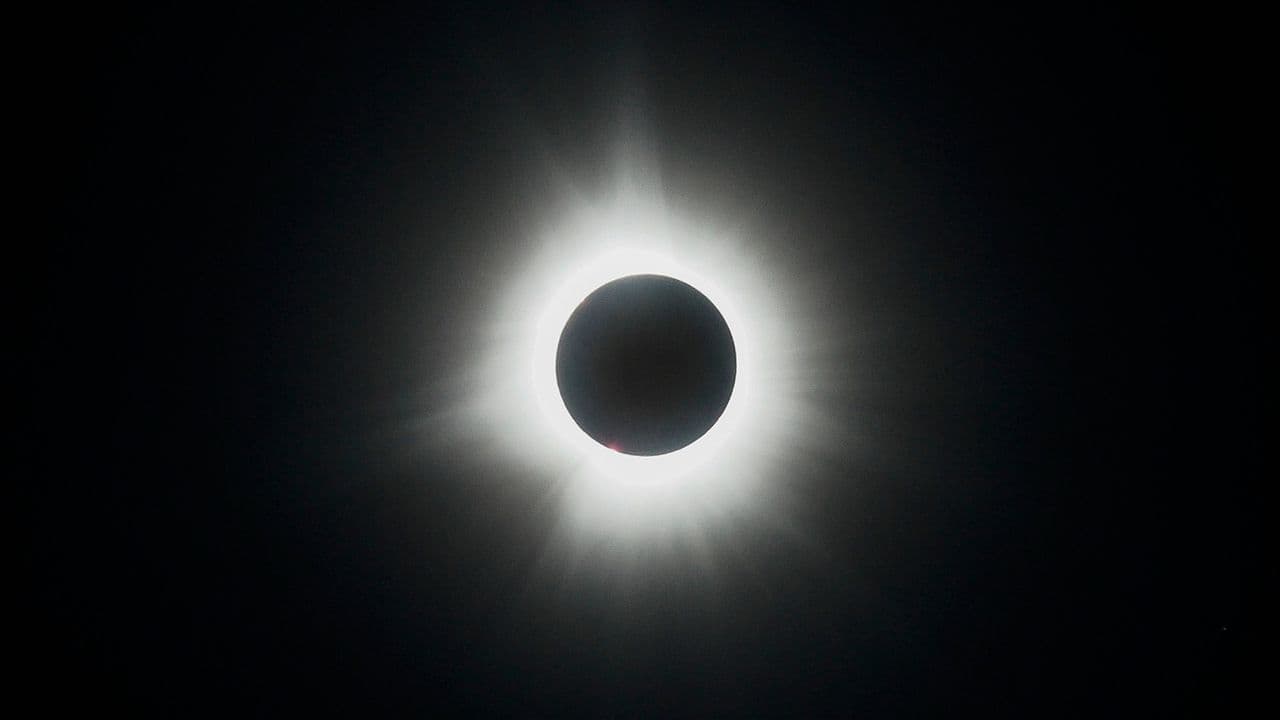
The sun's atmosphere shines around the lunar disk during the climax of a total solar eclipse. ( We're just one week away from the total solar eclipse on Aug. 12, when millions of stargazers will be treated to a spectacular display as the lunar disk passes in front of the sun, blocking its light.Roughly 15.2 million people spread across Greenland, Iceland, Portugal, Russia and Spain will be in the path of totality during the total solar eclipse 2026, where the moon will completely hide the sun's disk starting at 12:58 p.m. EDT (1658 GMT), according to Time and Date.A further 980 million people — approximately 12% of Earth's human population — will bear witness to a partial eclipse, as the lunar disk appears to takes a bite out of the sun.Solar eclipses occur during the monthly new moon phase, when the lunar disk passes directly between the sun and Earth in its slightly lopsided orbit, casting its colossal shadow over a swathe of our planet's surface.Viewers in the U.K. and several European countries will see an impressive partial solar eclipse, with around 90% of the sun's surface occulted by the moon as it sinks low on the western horizon. Several northeastern U.S. states, including New York, Maine and Pennsylvania, that sit farther from the path of totality will witness the lunar disk take a small "bite" out of the sun.You can find out exactly what percentage of the sun will be occulted by the moon using Time and Date's interactive eclipse tracker. Remember, staring directly at the sun during the partial phases of an eclipse can cause permanent vision loss. Be sure to read our guide to safely viewing a solar eclipse, along with our picks of the best solar viewing gear for the 2026 eclipse to ensure that you're ready to enjoy the event.We will also be bringing you the latest eclipse news and updates from our reporters in the field with our dedicated eclipse live blog. Skywatching Editor Daisy Dobrijevic is on an eclipse expedition to Greenland with HX Expeditions and Skywatching Writer Anthony Wood is heading to Spain shortly to experience the eclipse with NASA's DEB initiative and citizen scientists.If the eclipse isn't visible from your location, there's no need to worry. You can watch each stage of the total solar eclipse unfold in real time from the comfort of your home. Details of livestreams will be released closer to the time. Those outside of the path of totality will witness a spectacular partial solar eclipse. (Want to upgrade your gear and sharpen your skills? Then be sure to check out our roundups of the best cameras and lenses for astrophotography, along with our expert's guide to photographing a solar eclipse, to ensure that you're ready to capture the next great solar event.Editor's Note: If you would like to share your solar eclipse photos with Space.com's readers, then please send your photo(s), comments, and your name and location to spacephotos@space.com. Anthony Wood joined Space.com in April 2025 after contributing articles to outlets including IGN, New Atlas and Gizmodo. He has a passion for the night sky, science, Hideo Kojima, and human space exploration, and can’t wait for the day when astronauts once again set foot on the moon.
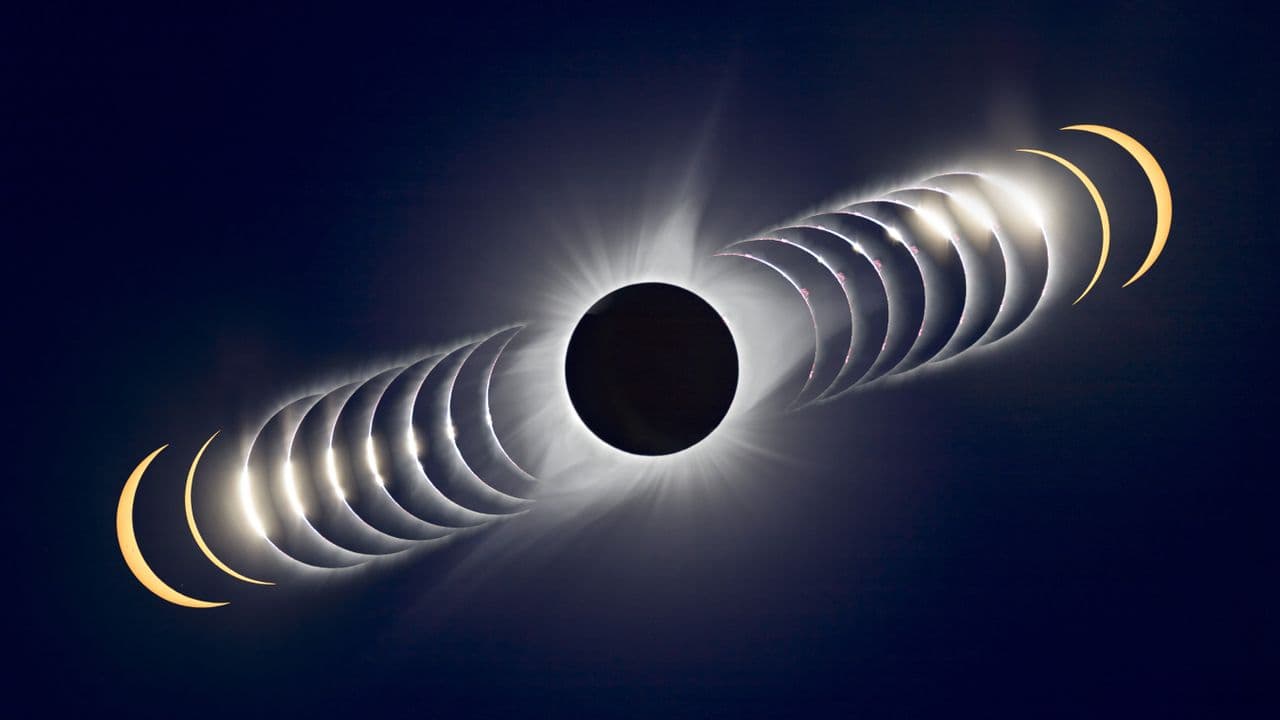
A composite photo showing the sun disappearing behind and emerging from the back of the back of the moon around totality. (At the heart of our solar system is a burning ball of superheated gas 100 times the width of Earth, with a thermonuclear reaction raging at its core. Its radiation and gravity hold the planets in their orbit and allow for the existence of life on our Blue Marble.Yet despite centuries of scientific scrutiny, many mysteries remain as to the inner workings of our sun and the influence it extends out into the solar system.What is the DEB Initiative?One effort to unravel the mysteries and share the beauty of our parent star is being undertaken by the DEB. A network of volunteer solar observers coordinated and guided by professional astronomers from Southern Illinois University Carbondale that's partly funded by NASA and the National Science Foundation."We came up with a setup that's portable, that's relatively cheap," Associate Scientist Bob Baer of the Southern Illinois University Carbondale and co-principle investigator of the DEB Initiative explained to Space.com in an interview. "They're about $1,800 once you factor in everything, like the computer, the mount, the telescope, the camera."During the great American Eclipse of 2024, the DEB had over 80 teams equipped with identical telescopes arrayed across a path of totality that cut through the contiguous United States. Having trained for months, their duty was to keep vigil on the climactic phase of totality, as the moon's silhouette covered the face of our parent star to reveal the sun's golden corona reaching out into the false twilight. The sun's corona shines from behind the lunar disk at totality during the 2024 eclipse. (Some of the volunteers are also the authors of a scientific paper set to be published in the Astrophysical Journal Letters that tracked the structure and dynamics of the sun's inner atmosphere, or corona, from 11 DEB locations over 49 minutes of evolution.Outside of eclipses, volunteers also use their telescopes to track asteroids, solar vibrations and powerful flares that blast from the surface of the sun. They even collect data on exoplanet transits, as distant worlds pass between our planet and their parent stars, creating periodic dips in their light.Having so many volunteers in different places enables a much wider range of data to be collected. "It's the network of telescopes that is the strength of the project," explained Baer. "It's not just one scope."Is the DEB watching over the 2026 eclipse?A spectacular total solar eclipse will take place on Aug. 12, as the moon's vast silhouette passes across the solar disk, completely blocking its light across a 182-mile-wide (293-kilometer) swathe of Greenland, Iceland and Spain during the climactic phase of totality.The DEB will have two teams on hand in the path of totality to observe the eclipse. One will set up in the northwestern Spanish city of Leon, while a second team — led by citizen scientist Charles Greenwald and shadowed by myself — will find the high ground in the Castilian village of Valoria la Buena, 93 miles (150 kilometers) to the southeast.My conversations with Greenwald have underscored how important passion is to maintaining an initiative like the DEB. The past eight months have seen him travel to Guadalajara, Mexico, multiple times to prepare his team for their expedition to Spain, whi
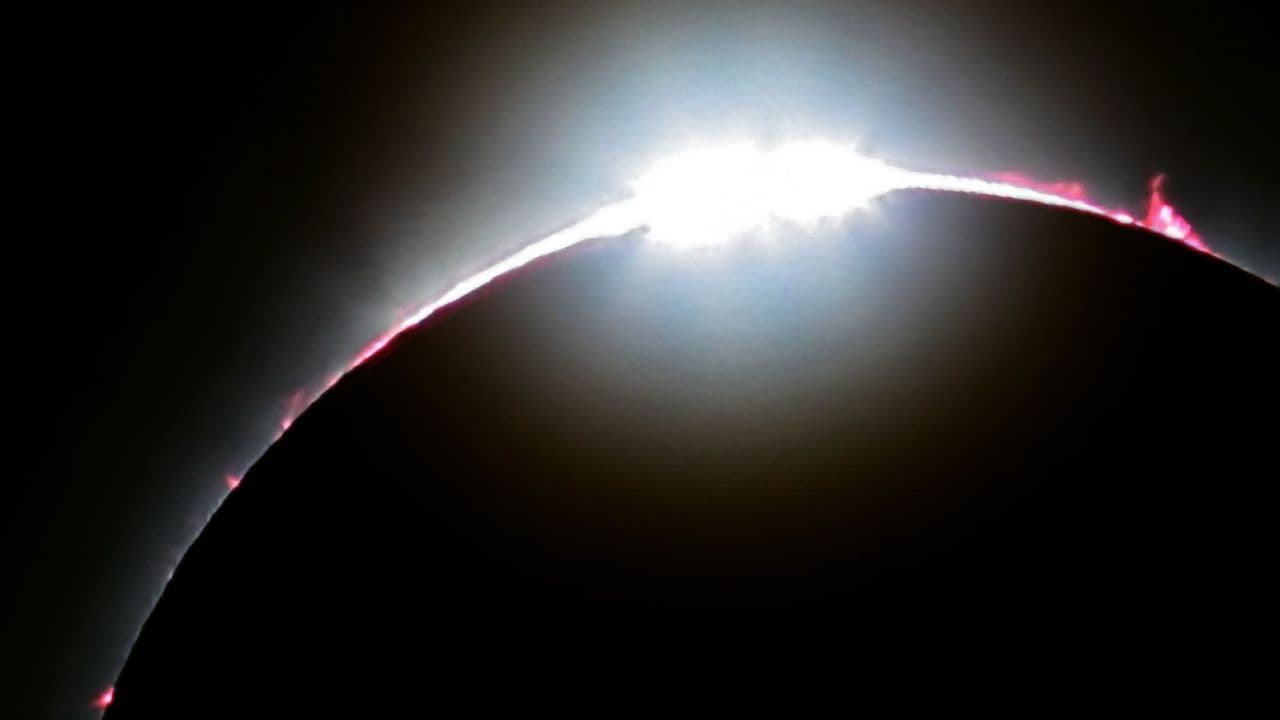
Mainland Europe will see its first total solar eclipse for 27 years on Aug. 12, 2026. (" That's despite the sun's tenuous outer atmosphere being the number one sight during totality — a genuine jaw-dropper.Instead, the focus on social media is always on the darkness during the day, arguably the least interesting — but easiest to grasp — aspect of a total solar eclipse. It's no wonder that many people misunderstand and underestimate them, and think of eclipse chasers as a little odd.But that's not the half of it. There are dozens of things to see and experience during a total solar eclipse, so many that we've put together a checklist of things to see as you're swallowed by the moon's shadow. Here's what you may experience during the solar eclipse on Aug. 12, 2026, roughly in the order they occur from first contact — when the moon begins to eclipse the sun — to fourth contact, when it departs.1. Sunspots Look for sunspots during the partial phases. ( 12, 2026. As the moon's silhouette moves across the sun, look through your ISO-certified safe solar eclipse glasses/solar filters. With luck, you'll see the edge of the moon move across dark spots on the solar surface. These are sunspots, cool patches where the sun's magnetic field is concentrated and complex. They're where solar flares come from.2. Planets Venus is below the eclipse in this image from April 8, 2024. (" during the totality phase of a total solar eclipse, to which your response should rightly be: "Who cares?" as you focus on the much rarer sight of the solar corona. The correct time to look for planets is about 15 minutes before totality, when — on Aug. 12, 2026 — Jupiter will appear about 11 degrees west-northwest, with tiny Mercury about 4 degrees beyond. Venus will be much farther away, about 46° east-southeast of the sun, but easy to see. Mars will be low in the west, but much more difficult to see.3. Crescent-shaped shadows Use a colander to create projections of crescent suns. ( When over 50% of the sun is eclipsed, crescent-shaped shadows begin to appear on the ground beneath trees. It's sunlight passing through tiny gaps, which act like the aperture control on a camera. The best way to see them is to grab a colander or spaghetti spoon — or anything with small, defined holes. Failing that, cross your fingers in a waffle pattern and you'll project diffuse crescents.4. Shadow bands Shadow bands seconds after totality, 2 July, 2019 019 total solar eclipse in Vicuna, Chile - YouTube Watch On Here's one for eclipse chasers in Spain. About two minutes before and after totality, it's sometimes possible to see wavy lines on white surfaces. It's the reduced light from the crescent sun being refracted by atmospheric turbulence, and, for some reason, it's much more noticeable when the eclipse is low in the sky — as it will be from Spain. They're called shadow bands or "shadow snakes". Pack as large a white sheet as you can (or borrow one from your bemused hotel).5. Plunging light and heat The light levels suddenly plummet just prior to totality. ( By the time it's just seconds before totality, it will be chilly as the light levels around you crash like nothing else you have experienced. "Darkness in the day" does not do it justice — it's as if the world
Will you be able to see it? USA Today This summer's sunset solar eclipse will be like nothing you've ever seen. It's a rare, beautiful sight you won't want to miss BBC Sky at Night Magazine 10 best Spanish cities to see the total solar eclipse 2026 Space 1 month until the total solar eclipse 2026 — Here's what you need to know Space
Discussion (0)