
Loading dispatches...
← Return to NewsroomEconomy
Cockroach Janta Party: India's 10 iconic public movements – from total revolution to farmers' protest
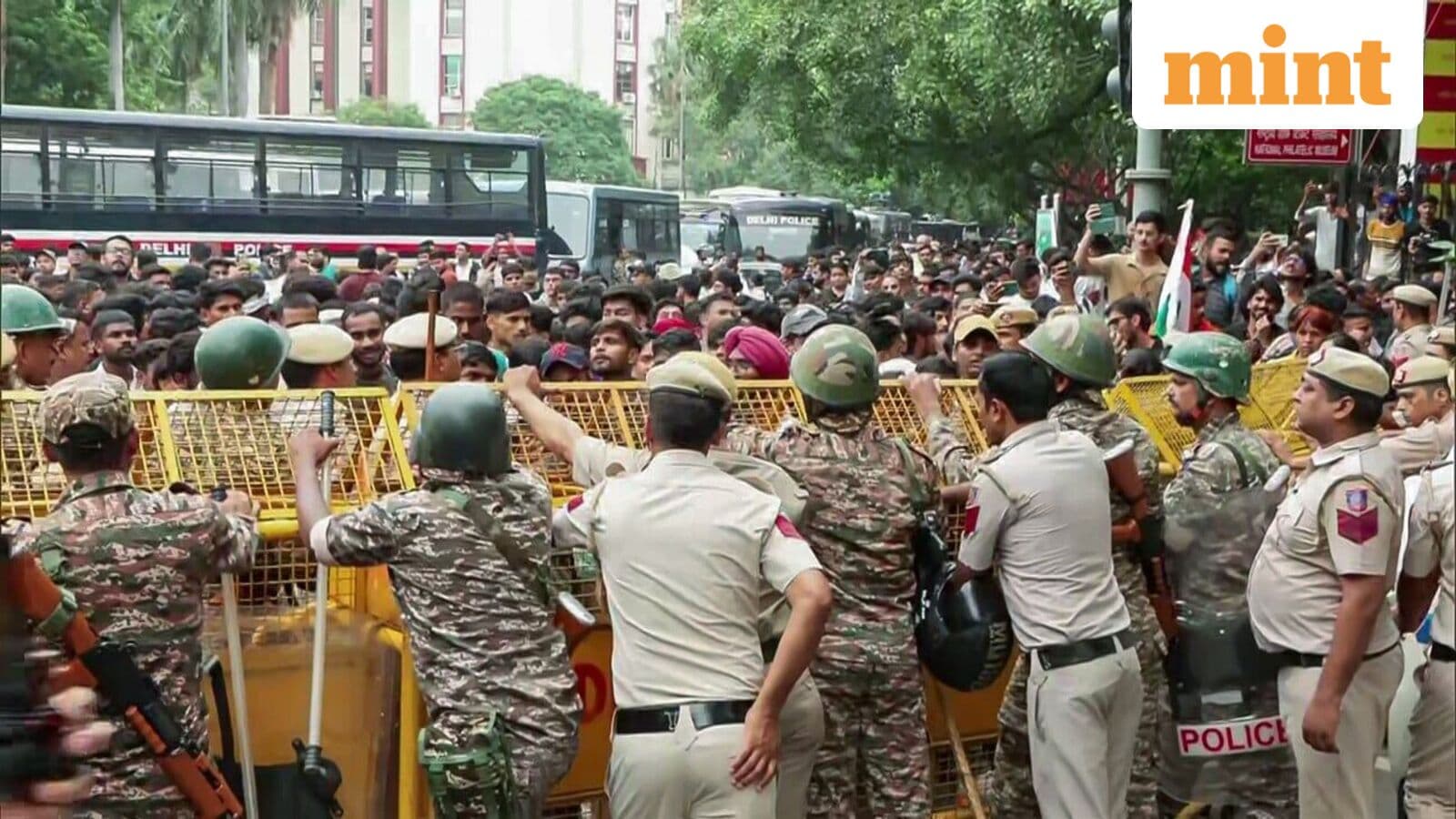
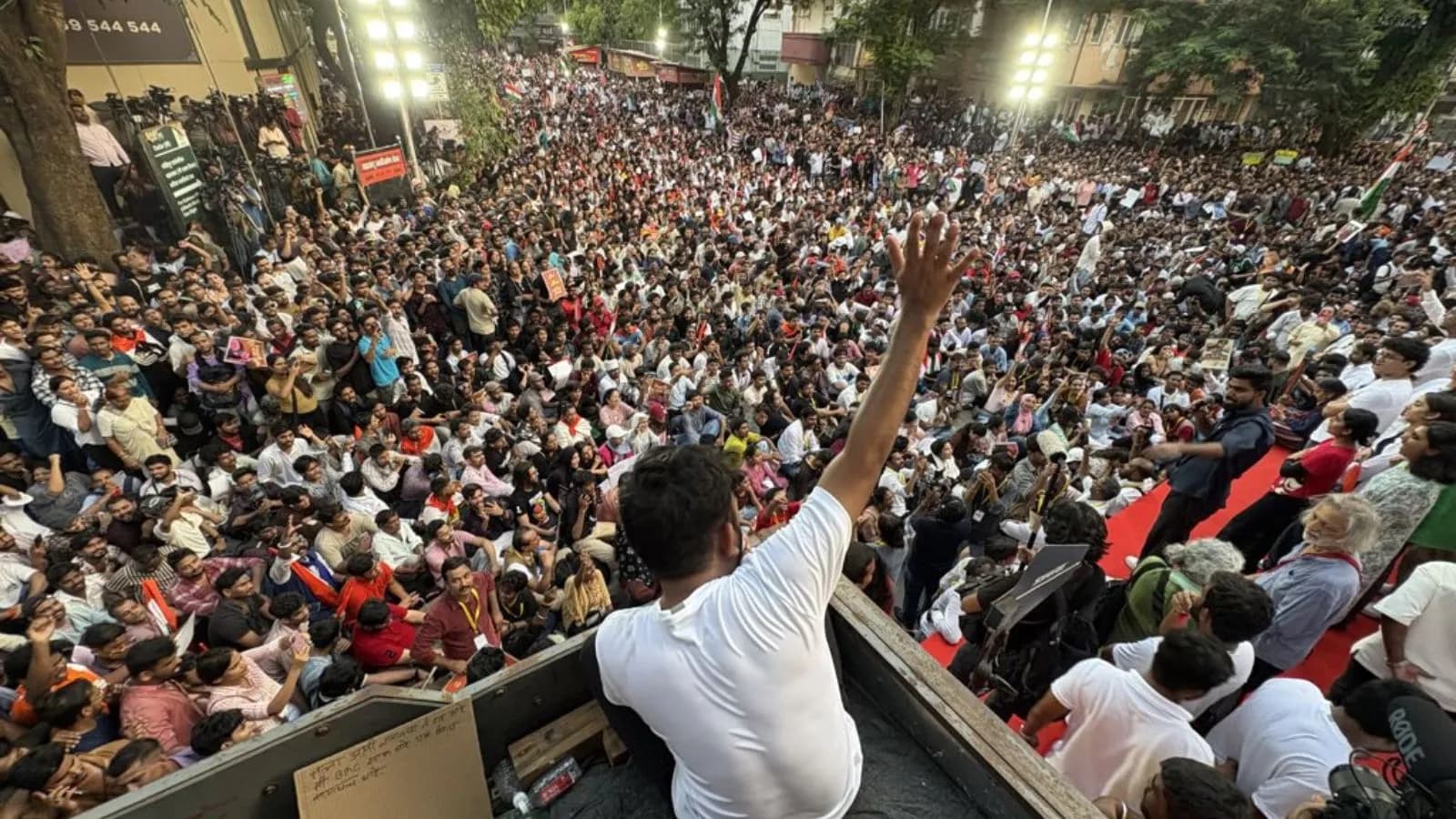
Climate activist and educator Sonam Wangchuk ended his 26-day hunger strike on Friday. The Ladakh-based activist's fast helped galvanise a youth-led movement that has grown into one of India's largest protests in recent years, prompting the Narendra Modi government to reach out to demonstrators and promise action on their demands.After Sonam's decision, protesters under the banner of Cockroach Janta Party (CJP) vowed to continue until the education minister Dharmendra Pradhan resigns – their main demand among many.Wangchuk’s fast became a rallying point for India’s “Cockroach” protests, which began more than a month ago demanding education reforms after NEET paper leaks.Quick answers to key questions•5 QUESTIONSThe CJP is demanding the resignation of Education Minister Dharmendra Pradhan, ₹1 crore compensation for families of children who died by suicide, and no prosecution of peaceful protesters during the March to Parliament.Sonam Wangchuk ended his 26-day hunger strike after lengthy negotiations and in light of possible violence, aiming to prioritize safety and well-being while still advocating for the protesters' demands.In response to the NEET protest's paper leak allegations, the government announced the establishment of fast-track courts to try related cases and promised stricter actions against those responsible for the leaks.The current CJP protests relate to India's historical protests such as Anna Hazare's Anti-Corruption Movement in 2011 and the Farmers' Protests (2020-2021), both advocating for greater accountability and reform.Students should consider continuing their protests to demand accountability and reforms, as their collective action has been a crucial factor in drawing attention to their concerns and influencing governmental responses.Since then, the movement has transformed into Indias biggest protests in years producing shocking videos with angry young voices and in a way tapping into broader public anger over unemployment, government accountability and economic opportunity,“Our protest will continue until Dharmendra Pradhan resigns,” Abhijeet Dipke, the US-return founder of CJP who has been leading the protests at Jantar Mantar, the designated agitation venue in central Delhi.Widespread protests for over a monthThe widespread protests that began on 20 June, which witnessed violent clashes between police and students last week, have prompted Prime Minister Narendra Modi to release a self-recorded, FaceTime-style video, promising strict action against those responsible for examination paper leaks.India is not alien to protests. In fact, India as a nation is cradled in a rich tradition of social and political transformation through protest, ranging from the historic march to Dandi in the Salt Satyagraha led by Mahatma Gandhi to Anna Hazare’s 2011 movement. The famous farmers' protest of 2020-21 led the government to withdraw the controversial agrarian laws.Protest is a fundamental right in democracy, enabling citizens to register dissent, demand accountability and effect change in public policy.The struggle for independence is embedded in India’s protest culture. From the Chipko movement for environmental conservation to the Mandal Commission's protests against caste-based reservations, the right to protest has been India’s democratic lifeline.View full ImageThe struggle for independence is embedded in India’s protest culture. From the Chipko movement for environmental conservation to the Mandal Commission's protests against caste-based reservations, the right to protest has been India’s democratic lifeline.(AI-generated)Here is a look at India's iconic protest movements after independence:1-JP Movement (1974–1975): Led by freedom fighter Jayaprakash Narayan (JP) in Bihar and Gujarat, advocating Sampoorna Kranti (Total Revolution) against government corruption and unemployment, eventually leading to a national opposition against Prime Minister Indira Gandhi, which directly preceded the 1975 Emergency.2-A
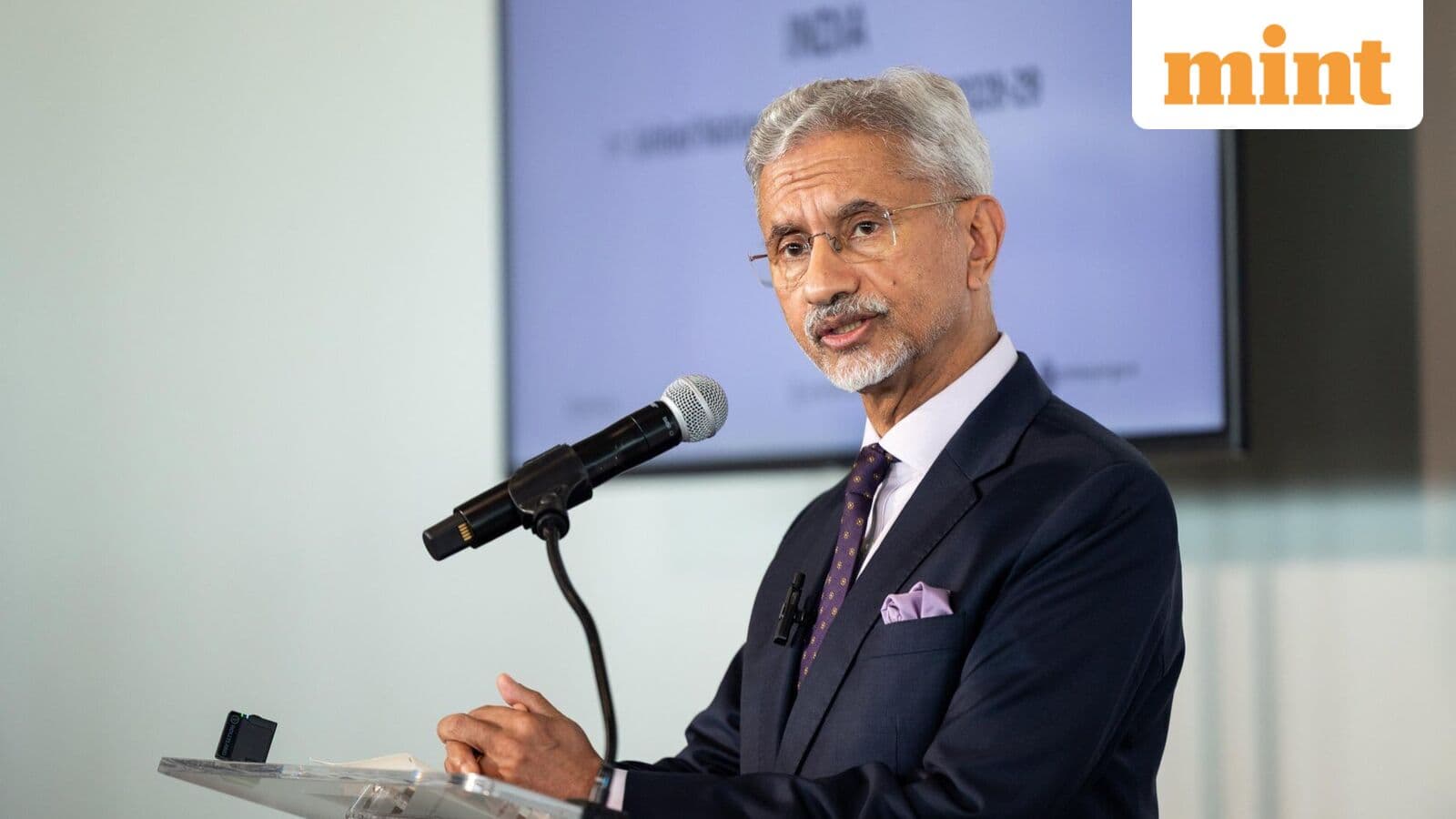
Launching India's candidature at the UN headquarters, Jaishankar said the move comes at a time when the world is facing growing conflict and instability, making the role of the United Nations and the Security Council more critical than everIndia launches campaign for UNSC non-permanent seat; Jaishankar highlights peacekeeping recordIndia has officially launched its campaign for election as a non-permanent member of the United Nations Security Council (UNSC) for the 2028-29 term, with External Affairs Minister S Jaishankar outlining the country's priorities, peacekeeping record and commitment to multilateralism.Launching India's candidature at the UN headquarters, Jaishankar said the move comes at a time when the world is facing growing conflict and instability, making the role of the United Nations and the Security Council more critical than ever."It's a pleasure to join you today afternoon to launch India's candidature to serve as a non-permanent member of the United Nations Security Council for the term 2028-29. We do so at a time when the world is facing a profound paradox... At the same time, we are witnessing levels of conflict, violence and instability that threaten even those who may be very far away," Jaishankar said.Jaishankar said member states would naturally assess both India's vision for addressing global challenges and its track record of contributing to international peace and security."As a candidate, it is natural that member states would like to understand what India brings to the table. One part of that is our vision of the priorities that the world and the United Nations must address. The other is a track record which enables the international community to make its own judgment," he said.Jaishankar unveils India's SHANTI visionPresenting India's approach to global governance, Jaishankar unveiled the SHANTI vision - Securing Holistic Advancement through Norms, Trust and Integrity - describing it as the guiding principle of India's efforts for a secure, peaceful and equitable world."Recent developments have only demonstrated that peace, progress and prosperity cannot be sustained in a fragmented manner... The world must therefore focus on holistic advancement... That journey can only be undertaken effectively when global order is valued and rules are respected. This puts a premium on norms, on trust and integrity. That is the approach that India offers: 'Securing Holistic Advancement through Norms, Trust and Integrity'. That is SHANTI as an acronym," he said.UN peacekeeping roleHighlighting India's contribution to UN peacekeeping, Jaishankar said India has deployed nearly 300,000 personnel across about 50 UN peacekeeping missions since the organisation's inception."Peacekeeping has been a crucial element of maintenance of international peace and security since the very inception of the United Nations. India has always been in the forefront of discharging that responsibility. Our cumulative contribution is nearly 300,000 deployments in about 50 missions worldwide. Currently, we have 4,300 personnel across 10 of the 11 active missions," he said.He said India would continue to advocate for better-equipped, technologically enabled and realistically mandated peacekeeping operations while championing the Women, Peace and Security agenda.Jaishankar also underlined India's role as a development partner, noting that Indian-funded projects are currently being implemented in 79 countries. He said India has consistently promoted dialogue and diplomacy amid global conflicts and has sought to amplify the concerns of the Global South.World with too many conflicts and tensions"In a world with too many conflicts and tensions, India has consistently espoused dialogue and diplomacy. We have sought to bridge differences and find common ground. Our focus has been on mitigating the impact of these developments for the Global South," he said.Jaishankar said India's presence in the Security Council would strengthen the body's decisi
Weight-loss drugs have emerged as one of the biggest healthcare trends worldwide, but India appears to be charting a different course. Despite obesity rates climbing and generic versions of GLP-1 medications becoming significantly more affordable, Indian consumers are not adopting these treatments as quickly as many expected.Zerodha co-founder Nithin Kamath recently highlighted the trend, saying he was surprised that sales of generic GLP-1 drugs had not taken off after patent expiries made them more accessible. His remarks came in response to a report by The Economic Times, which said that “homegrown drugmakers, which entered the generic semaglutide market with ambitious first-year revenue goals, are quietly paring sales targets.”Nithin Kamath Questions Slow Uptake Of GLP-1 Drugs In IndiaSharing his views on X, Mr Kamath said he had expected demand for generic GLP-1 medicines to surge once prices fell. According to him, these medicines now cost around ₹1,000 to ₹2,500 a month, making them less expensive than many gym memberships. However, reports suggest drugmakers have reduced their sales projections by 25 to 30 per cent, signalling weaker-than-anticipated demand.The tweet read, "India is a weird market. With obesity rates shooting up, I'd have bet on the sales of generic GLP-1s exploding once their patents expired. They now cost about ₹1,000–2,500 a month, and there's growing evidence pointing to benefits well beyond weight loss, including cardiovascular, metabolic, and liver health.Yet, generic drugmakers are quietly cutting their sales targets by 25–30%. At ₹1,000–2,500 a month, it's cheaper than a gym membership. The real problem seems to be retention. GLP-1s are injectables, and you have to keep taking them. If you stop, you gain back the lost weight. It seems like asking someone to stay on a weekly injection indefinitely is a much harder sell.A few other friction points:For a variety of reasons, Indians haven't taken to GLP-1s with the same enthusiasm as Western populations. Could it be because Indian physicians are conservative when it comes to prescribing newer drugs?Self-injecting is a pain for most people, and that friction and inertia might be stopping them from starting in the first place.Given that there are now GLP-1 pills, I'm wondering if the adoption curve will change."'Cheaper Than A Gym Membership,' Yet Sales Targets Are FallingAccording to Mr Kamath, pricing may not be the biggest obstacle. Instead, he believes the challenge lies in keeping patients on treatment over the long term.GLP-1 medicines, which are commonly prescribed for diabetes and weight management, generally require regular injections. Patients often need to continue taking the medication to sustain weight-loss benefits, as stopping treatment can result in regaining lost weight."It seems like asking someone to stay on a weekly injection indefinitely is a much harder sell," Mr Kamath observed.Conservative Prescribing And Weekly Injections May Be Holding Back AdoptionThe Zerodha co-founder also pointed to what he believes are other factors contributing to the slower adoption of GLP-1 drugs in India.One possibility, he suggested, is that doctors in India may be more cautious about prescribing newer medications than their counterparts in Western countries, limiting the number of patients starting these therapies.Mr Kamath also highlighted the inconvenience of self-administering injections as another potential barrier."Self-injecting is a pain for most people, and that friction and inertia might be stopping them from starting in the first place," he wrote.Could Weight-Loss Pills Change The Trend?Mr Kamath also wondered whether oral GLP-1 medications could encourage more people to opt for treatment. With pill-based alternatives becoming available, patients who are hesitant about weekly injections may find them more convenient.His comments come at a time when obesity rates continue to rise globally and studies are increasingly pointing to benefi

Discussion (0)