
Loading dispatches...
← Return to NewsroomEconomy
India maps ₹2 tn five-year bypass plan to unclog highways around 500 cities
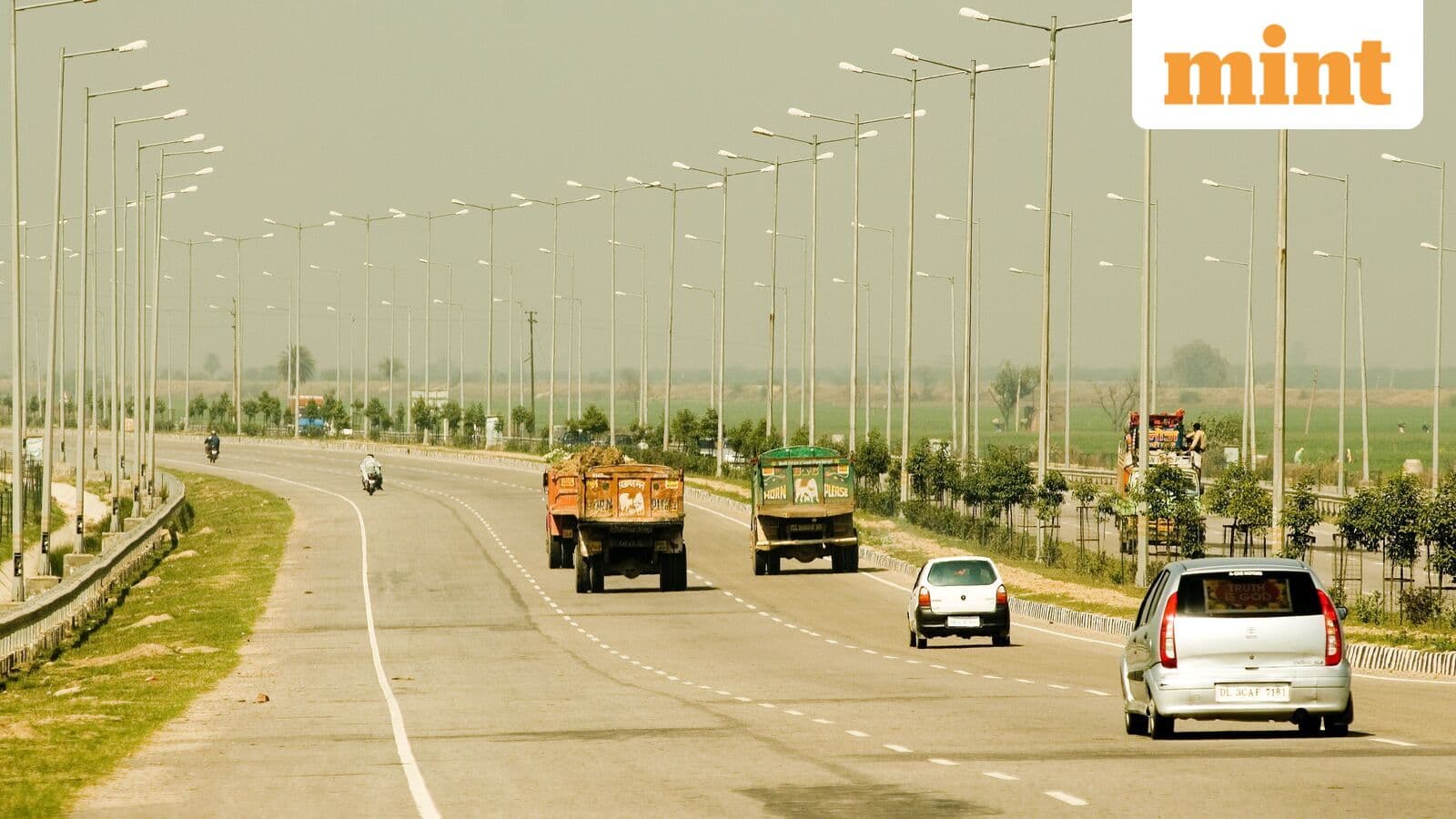
The national highway network has expanded 61% since 2014 to about 146,572 km, but average vehicle speeds remain around 50 kmph because of congestion, mixed traffic and bottlenecks around cities,(Mint)SummaryThe Centre will launch an ambitious ₹2 trillion five-year programme to decongest highways and urban centres by developing a 10,000 km network of bypasses and ring roads around 500 cities and towns across the country, two persons aware of the development said.New Delhi: The government is set to roll out an ambitious ₹2 trillion plan to build a 10,000 km network of bypasses and ring roads around about 500 cities and towns over five years in a bid to ease urban congestion and improve travel time and freight movement on national highways, two people aware of the development said.The programme, to run through FY31, marks a significant expansion of the government's earlier plan to build bypasses and ring roads around 50 cities with a population of one million or more, which was reported by Mint earlier.The expanded initiative will extend the government's earlier focus on larger cities to tier-II and tier-III cities and towns along major highways, covering urban centres with populations of at least 100,000, as smaller towns increasingly emerge as congestion hotspots that impede movement of vehicles on highways.“The idea is to take this initiative to roughly 500 cities in the first phase up to 2030,” the first person quoted above said on condition of anonymity. As per the 2011 census, India has around 500 cities with a population of 100,000 or more.The ministry of road transport and highways (MoRTH) will assess the traffic situation and choke points across cities nationwide and take action on building bypasses and ring road networks, this person said.Projects are likely to be awarded through a combination of engineering, procurement and construction (EPC), hybrid annuity model (HAM) and build-operate-transfer (BOT) formats, depending on traffic potential and project viability, said the people cited above.The move comes as India's highway development enters a new phase. The national highway network has expanded 61% since 2014 to about 146,572 km, but average vehicle speeds remain around 50 kmph because of congestion, mixed traffic and bottlenecks around cities, according to MoRTH.The bypass and ring road programme is intended to preserve design speeds of 100-120 kmph by diverting through traffic away from urban centres. The planned network will focus on high-speed corridors, with four-lane and above highways expanding to 43,512 km and operational expressways of over 3,000 km.All projects will be taken up for development as fully access-controlled corridors of minimum four-lane configuration. This would enable the design speed of 100-120 kmph for both freight and passenger vehicles to be maintained over time, the people said.A prohibited development control zone of 15 metres on either side of the highway bypass or ring road will be notified by the state government concerned as a ‘green zone’ under the state town planning laws, where development shall be prohibited unless it is for public transport requirements, the people said.Queries emailed to MoRTH remained unanswered until press time.According to the second person cited above, the new approach of MoRTH will ensure long-distance highway traffic is diverted outside the dense city cores, allowing seamless movement of freight while also reducing congestion within cities.The broad aim is to further reduce logistics costs to help boost investments and growth.As per the estimates of the Department for Promotion of Industry and Internal Trade (DPIIT), India's logistics costs (which includes transportation, warehousing, inventory-carrying, administration, and packaging costs) have fallen from a high of 13-14% of GDP prior to FY24 to around 8% now.This has happened as a result of goods and services tax reforms, FASTag, e‑way bills, digital tracking systems, and the expansion of highways



Discussion (0)