
Loading dispatches...
← Return to Newsroomgeneral
40 lakh women to get first instalment of financial aid today as Mann rolls out scheme
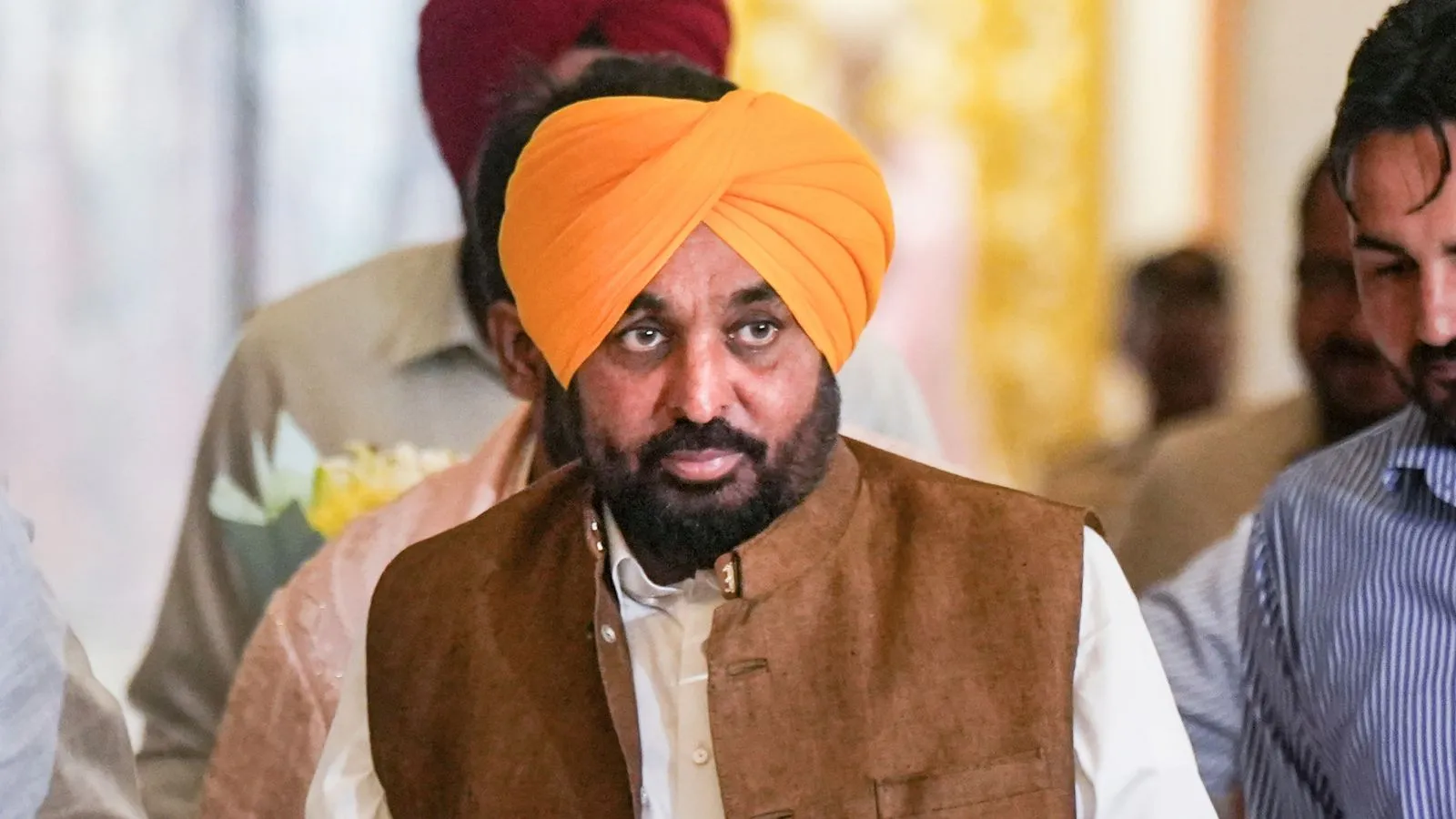
Forty lakh women in Punjab are set to receive the first instalment of the monthly financial assistance from the state government on Wednesday with Chief Minister Bhagwant Mann set to rollout the ‘Mawan Dhiyan Satkar Yojana’ from his Assemby constituency Dhuri on Wednesday.The day will be politically hot in Punjab with the government also notifying the implementation of VB G RAM G scheme from July 1 even as the Dearness Allowance (DA) case would come up for a hearing in the Punjab and Haryana High Court.Under the ‘Mawan Dhiyan Satkar Yojana’, eligible women from the general category will receive Rs 1,000 per month, while those belonging to the Scheduled Castes will receive Rs 1,500. “The amount will be transferred directly into their bank accounts, and women already receiving social security pensions will also remain eligible. Nearly 97 per cent of women in Punjab are expected to reap the benefit. The state government has allocated Rs 9,300 crore for the scheme in the budget,” Mann told reporters in Dhuri. He said more than 40 lakh women have already been registered, and the benefits will be applicable from July 1 even if the registration cards are delivered later. At a separate event in Barnala, Mann said mobile phones of women across Punjab will start buzzing after 12 noon when money is credited into their bank accounts. “This scheme may not make women rich, but it will certainly give them dignity and self respect. Women deserve the highest respect because they are the source of life itself,” he said. Mann had earlier said that the first instalment of Rs 4,500 for SC and Rs 3,000 for general category women, which is equal to three months of financial assistance, would be transferred into the bank accounts of beneficiaries on July 1.Story continues below this ad Women aged 18 years or above, registered as voters in Punjab and possessing a valid Aadhaar card reflecting Punjab residency along with a valid Voter ID issued by the Election Commission, shall be eligible to be enrolled as beneficiaries under the scheme. An official said the government has arranged Rs 1,500 crore to roll out the scheme. “We have borrowed Rs 1,000 crore from the market. The rest of the money would come from GMADA funds and labour cess,” said a source. The labour cess, officially known as the BOCW (Building and Other Construction Workers) Welfare Cess, is a mandatory 1% tax levied on the total cost of construction projects. It is collected by the BOCW Cess Portal to fund social and welfare schemes for construction workers. It is only to be spent for the welfare of labourers. According to government estimates, around 30 per cent of the registered beneficiaries belong to the SC category, making it one of the largest targeted welfare transfers in the state’s social security framework. The scheme has been one of the flagship promises of the AAP government in Punjab, which has consistently projected direct benefit transfers as a means of reducing leakage in welfare spending and ensuring timely assistance to eligible beneficiaries. The programme has been under preparation for several months, involving verification of beneficiaries and creation of a database to enable direct bank transfers.Story continues below this ad Finance Minister Harpal Singh Cheema said the government was fully prepared to launch the scheme and that administrative formalities had been completed. “We have no dearth of money. We are comfortable,” he said. Meanwhile, replying to a question on the Akal Takht’s directions regarding the anti-sacrilege law that were issued on Monday, Mann said, “Sri Akal Takht Sahib is supreme for me and my family.” “Every directive issued by this sacred institution will be fully honoured, and a detailed discussion on the matter will also be held in the Vidhan Sabha,” he said. In Barnala, Mann took a swipe at Shiromani Akali Dal chief Sukhbir Badal, saying he should stop living in a fool’s paradise. “Instead of dreaming about returning to power, it is now his
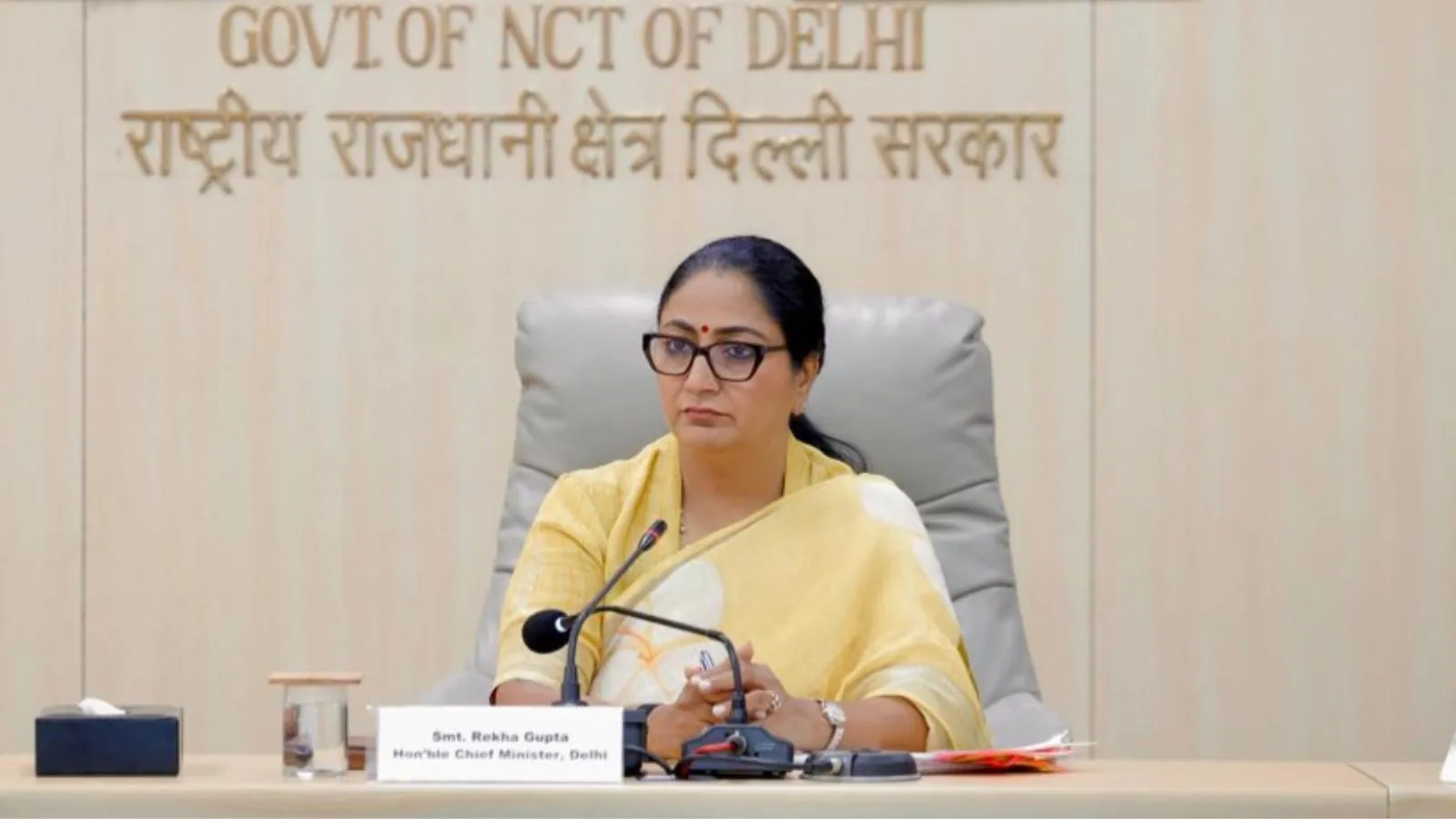
New DelhiJun 29, 2026 05:10 AM IST The Delhi government’s e-Office system is set to complete one year on July 1, with the digital governance initiative having witnessed a significant jump in adoption. Over the past year, the number of users on the platform has tripled to 15,748 across 235 government departments, boards, and educational institutions, officials said on Sunday. This assumes significance as the system had only 5,005 users across 198 departments and offices in March 2025. During this period, the platform also processed over 1.44 lakh electronic files and 9.22 lakh e-receipts, according to data released by the Delhi government.The e-Office platform was made mandatory across all Delhi government departments from July 1, 2025, replacing the movement of physical files with an online workflow for file processing, correspondence and approvals. The government said the shift has reduced dependence on paper files, improved the tracking of official work and helped speed up decision-making. “The e-Office system now makes it easy to identify which official is handling a particular file and what action has been taken on it. The system has also made record-keeping more secure, reduced unnecessary delays and enabled smoother coordination among departments,” Gupta said, adding that “the government’s objective is to create a work environment across all government offices where administration is faster, more transparent and more accountable, while ensuring that people do not have to wait unnecessarily for government services.” Of the total workload, government departments processed 1.38 lakh e-files and 8.67 lakh e-receipts. Between July 1, 2025 and April 12, 2026 departments handled 1.14 lakh e-files and 7.14 lakh e-receipts. Following the rollout of an upgraded version of the platform in April this year, another 23,767 e-files and around 1.53 lakh e-receipts were processed by June 27, indicating a sharp increase in adoption. According to officials, the government has developed separate versions of the platform for three categories of institutions — government departments, public sector undertakings and autonomous bodies, and universities and colleges — to account for differences in their administrative requirements. As per the government, e-Office is now being used regularly in 177 of the 235 departments and institutions on the platform, or about 75.3 per cent. Among core government departments, 120 of 132 departments, or around 91 per cent, are using the system regularly. The corresponding figures are 36 of 55 public sector bodies (65.5 per cent) and 21 of 48 universities and educational institutions (43.8 per cent), officials said. Devansh Mittal is a Correspondent at The Indian Express, based in the New Delhi City bureau. He reports on urban policy, civic governance, and infrastructure in the National Capital Region, with a growing focus on housing, land policy, transport, and the disruption economy and its social implications. Professional Background Education: He studied Political Science at Ashoka University. Core Beats: His reporting focuses on policy and governance in the National Capital Region, one of the largest urban agglomerations in the world. He covers housing and land policy, municipal governance, urban transport, and the interface between infrastructure, regulation, and everyday life in the city. Recent Notable Work His recent reporting includes in-depth examinations of urban policy and its on-ground consequences: An investigation into subvention-linked home loans that documented how homebuyers were drawn into under-construction projects through a “builder–bank” nexus, often leaving them financially exposed when delivery stalled. A detailed report on why Delhi’s land-pooling policy has remained stalled since 2007, tracing how fragmented land ownership, policy design flaws, and mistrust among stakeholders have kept one of the capital’s flagship urban reforms in limbo. A reported piece examining
Updated: Jun 28, 2026 05:58 AM IST The UK too has plans to impose its version of CBAM from 2027. (Reuters)The Centre is working on a scheme to absorb 90% of the compliance cost borne by micro, small, and medium enterprises (MSMEs) to help soften the disproportionate impact of the Carbon Border Adjustment Mechanism (CBAM) compliance burden imposed by the European Union, The Indian Express has learnt. India’s efforts to secure a concession for its small industries in negotiations with developed countries have not worked, and the industry has been seeking assistance to meet the steep annual compliance costs due to the imposition of the EU’s carbon tax since January 1, 2026.The UK too has plans to impose its version of CBAM from 2027. CBAM is an EU policy designed to put a price on the carbon emitted during the production of carbon-intensive goods that are entering the EU. Complying with the regulation is seen as a major global challenge, as declarants must track the embedded emissions of their goods, including direct emissions and, for certain sectors such as cement and fertilisers, indirect emissions. Industry sources said that the compliance cost for each MSME unit to meet the requirement under carbon tax alone is Rs 15 lakh to 20 lakh and that they do not have the wherewithal to report the number of data points sought under the regulation by the EU. India is the world’s second-largest producer of both crude steel and primary aluminium. Steeper challenge for MSMEs An Indian exporter is required to submit CBAM certificates that correspond to the total embedded emissions. The regulation becomes a major challenge for MSMEs as the EU says that if exporters are unable to provide actual data, importers must use “default values” provided by the European Commission. The default values for CBAM goods have to be increased by a proportionately designed percentage ‘mark-up’ in their value. “These mark-ups are 10% in 2026, 20% in 2027, and 30% from 2028 onwards. Default values, including mark-up, have been determined to ensure that embedded emissions are not underestimated when applying default values,” the regulation said.Story continues below this ad “For MSMEs, the principal challenge under CBAM is not necessarily the carbon levy itself, but the cost of compliance. Unlike large corporations, MSMEs often lack the technical expertise, systems and financial resources to measure, verify and report embedded emissions in accordance with CBAM requirements. They may have to incur significant upfront expenditure on carbon accounting, third-party verification, digital reporting systems and capacity building,” Ayush A Mehrotra, Partner, Khaitan & Co said. “These are largely fixed compliance costs, which means they do not reduce in proportion to the size of the business or export volumes. “As a result, MSMEs bear a disproportionately higher compliance burden than larger exporters, potentially eroding their price competitiveness in the EU market. If these costs are not addressed through targeted policy support, smaller exporters may find continued access to the EU market commercially unviable despite having competitive products,” Mehrotra said. CBAM impact on India Imports from India would decline for all CBAM commodities, and the impact of the CBAM is likely to be felt the most by the iron and steel (I&S) sector, where the extent of the decline in imports by the EU could be about 24%, and the Indian Council for Research on International Economic Relations (ICRIER) working paper released this month. The fertilisers and aluminium products, followed by metal products, are next in line. India’s global export of I&S will decline by 5.7%; for China, the corresponding estimate is 1.2%.Story continues below this ad This reduction is primarily due to a reduction in exports to the European Union. The report said that CBAM shall adversely impact India’s trade with the EU and will have a negligible effect on carbon emissions, adding that the impact l



Discussion (0)