
Loading dispatches...
← Return to NewsroomEconomy
Trump's immigration agenda remains his biggest political strength: What the latest poll shows
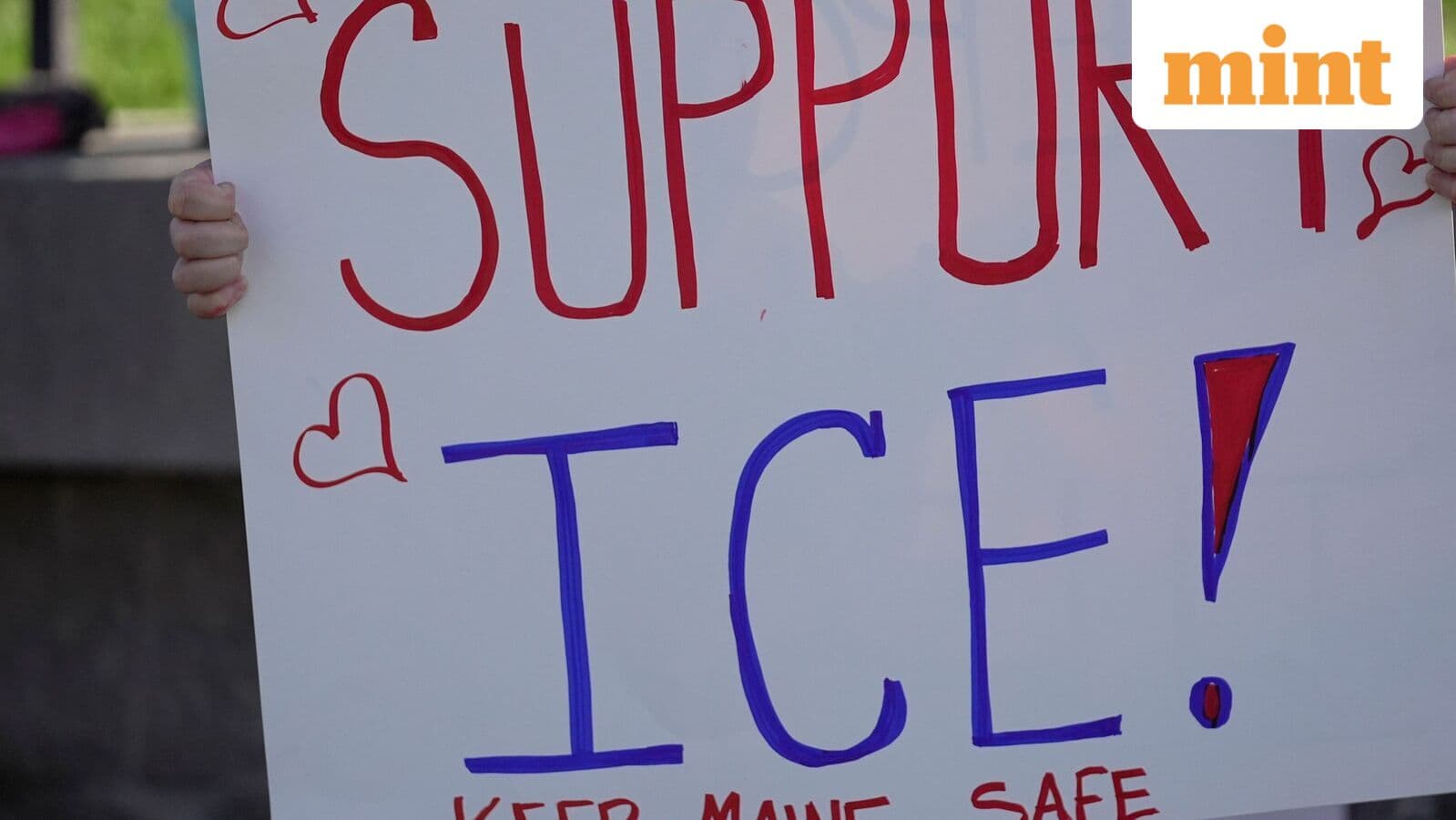
US President Donald Trump's immigration continues to be his strongest political issue compared with the economy, healthcare and Iran, according to a new AP-NORC poll.The survey found that while Americans have grown more critical of Trump's immigration policies since the start of his second term, Republican support has remained overwhelmingly strong, helping immigration remain one of his biggest political assets heading into the November midterm elections.Here's what the latest polling shows.Immigration remains Trump's strongest issueAccording to the AP-NORC poll, 39% of US adults approve of Trump's handling of immigration, down from 49% at the beginning of his second term.Despite the decline, immigration still performs better for Trump than other major issues:-Immigration: 39% approval-Economy: 32% approval-Healthcare: About 30% approvalWithin the Republican Party, support remains much stronger.About 8 in 10 Republicans approve of Trump's immigration policies, only slightly lower than the roughly 9 in 10 who approved at the beginning of his second term.The poll also found Republican voters rate Trump's handling of immigration more favorably than his management of the economy or the conflict involving Iran.Many Americans believe Trump has gone too farAlthough immigration remains Trump's strongest issue, many Americans believe his enforcement measures have become excessive.The survey found:-About half of Americans say Trump has gone too far in deporting immigrants living in the US illegally.-Around 47% believe he has exceeded his authority on deportations.-Roughly half also say he has gone too far in restricting legal immigration.Public concern is even stronger over certain enforcement tactics.Most Americans oppose:-Using traffic stops to identify and arrest undocumented immigrants.-Sending large numbers of federal immigration agents into US cities.Republicans, however, are far less likely to view these actions as excessive.ICE remains deeply divisiveThe poll also examined public attitudes toward US Immigration and Customs Enforcement (ICE).About half of Americans said they disapprove of how ICE is enforcing immigration laws, while only about three in 10 approve.The partisan divide is stark:-About 60% of Republicans approve of ICE's enforcement.-Around 20% of independents approve.-Only 4% of Democrats express approval.The findings come after several high-profile encounters involving ICE officers in July, including incidents in which three people were killed during encounters with immigration authorities.The poll suggests concerns over border security and illegal immigration continue to outweigh controversy surrounding enforcement methods among Republican voters.Economy remains a weak spotWhile immigration remains relatively resilient, Trump's economic ratings have deteriorated significantly.Only 32% of Americans approve of his handling of the economy, compared with 40% at the beginning of his second term.Among Republicans:-69% approve of Trump's economic performance.-That is down from 78% earlier in his presidency.About seven in 10 Americans also describe the US economy as either "somewhat poor" or "very poor."Even supporters acknowledge persistent inflation and rising living costs.Healthcare continues to trailHealthcare remains Trump's weakest major policy area.Only about 30% of Americans approve of his handling of healthcare.Republican support has improved—from 59% in December to 71% in the latest poll—but Democrats and independents continue to overwhelmingly disapprove.Healthcare is expected to become a major Democratic campaign issue alongside the cost of living and the conflict involving Iran ahead of the midterm elections.What the poll means politicallyThe findings suggest that immigration remains Trump's most durable political advantage even as his overall popularity declines.Although many Americans disapprove of specific immigration enforcement tactics, Republican voters continue to strongly back the president's hardline
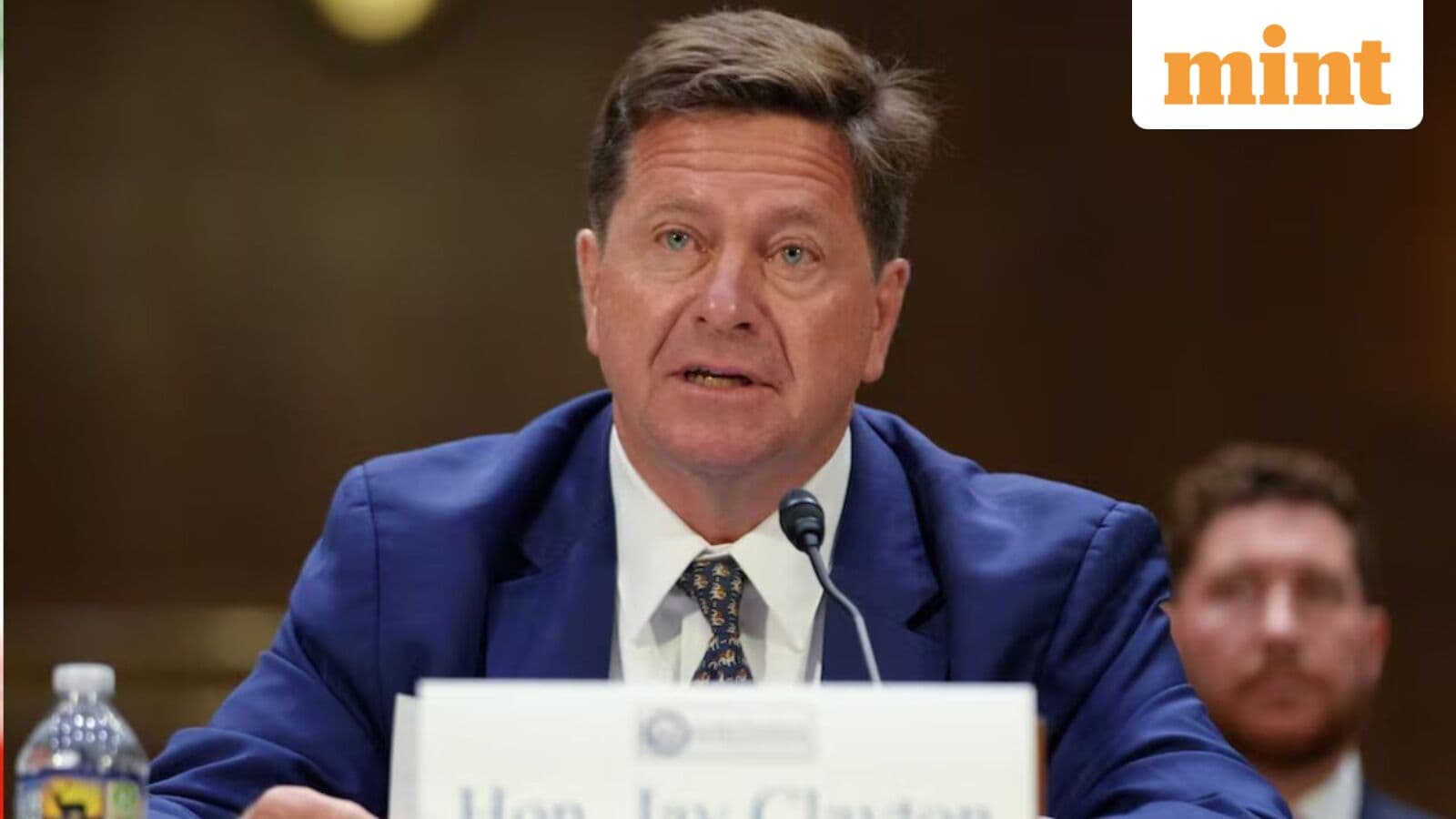
The US Senate confirmed Jay Clayton as Director of National Intelligence in a 51-47 party-line vote. Democrats opposed his nomination over his refusal to explicitly acknowledge Joe Biden's 2020 election victory and concerns about political influence on intelligence agencies.Jay Clayton testifies during a Senate Intelligence Committee confirmation hearing on Capitol Hill in Washington, D.C. earlier this month.(Reuters)The US Senate on Tuesday confirmed President Donald Trump's nominee, Jay Clayton, as the country's Director of National Intelligence (DNI), approving his nomination in a 51-47 party-line vote despite strong opposition from Democrats over his stance on the 2020 presidential election and concerns about the politicisation of the intelligence community, according to Reuters.Clayton, the former US Attorney for the Southern District of New York and former chairman of the Securities and Exchange Commission (SEC), will oversee the country's 18 intelligence agencies. He succeeds Bill Pulte, who had been serving as acting DNI after Tulsi Gabbard stepped down in June.Republicans backed Clayton's nomination, while every Democrat voted against it.Reservation in Democrats over ClaytonThe confirmation followed a contentious Senate Intelligence Committee hearing last month during which Clayton repeatedly declined to explicitly acknowledge that former President Joe Biden won the 2020 election. Instead, he said Biden had been "certified" as president, had gone through "the processes" and had received the most electoral votes.Democrats argued that his responses raised concerns about whether he would resist political pressure while leading the intelligence community.Clayton also faced scrutiny over subpoenas issued to New York Times journalists during his tenure as Manhattan US Attorney in connection with reporting on security concerns surrounding a Qatari-donated Air Force One aircraft. The Trump administration later said it would withdraw those subpoenas.His confirmation comes after weeks of political deadlock over the renewal of Section 702 of the Foreign Intelligence Surveillance Act (FISA), a surveillance authority that allows US intelligence agencies to collect electronic communications of foreign nationals outside the United States.Democrats had refused to support the renewal after Trump appointed Bill Pulte, who lacks national security experience, as acting DNI following the postponement of Clayton's original confirmation hearing.What Republican House leader saidSenate Majority Leader John Thune said he hoped Clayton's confirmation would help break the impasse over reauthorising the surveillance programme, though Senate aides indicated it remained unclear when lawmakers would take up the legislation."I hope this will encourage my colleagues to stop blocking reauthorization of the Foreign Intelligence Surveillance Act," Thune said, according to CBS News.In a statement after the vote, Senate Intelligence Committee Vice Chairman Mark Warner said Clayton now had "an opportunity -- and the responsibility -- to demonstrate that intelligence will never be shaped to fit a political narrative".Warner said he had initially welcomed Clayton's nomination but developed "serious reservations" during the confirmation process about whether he would stand up to political pressure.Clayton, 60, built his career as a corporate lawyer specialising in mergers and capital markets before serving as SEC chairman during Trump's first term. Although he has limited intelligence and national security experience, supporters argued that his work as Manhattan US Attorney included sufficient national security matters to qualify him for the role.Stay updated with the latest Trending, India, World and US news. Follow CJP Protest LIVE updates as Sonam Wangchuk ends his 26-day hunger strike following government assurances, while the Jantar Mantar protest continues. Get the latest updates on talks between the CJP delegation and the Centre, the demand for Dharmen

Brennan's filing is unusual because it comes before any indictment has been issued. Rather than challenging criminal charges, it seeks to preserve evidence that could later be used to argue that any prosecution was driven by political retaliation rather than legitimate law enforcement objectives.FILE PHOTO: Former CIA director John Brennan has denied any wrongdoing and says the investigations are politically driven. REUTERS/Joshua Roberts/File Photo(REUTERS)Former CIA Director John Brennan has filed a lawsuit against the Trump administration seeking to preserve Justice Department records linked to ongoing federal investigations into his role in the US intelligence assessment on Russian interference in the 2016 presidential election.The lawsuit, filed in federal court in Washington on Wednesday, comes before any criminal charges have been filed against Brennan. His legal team argues that preserving internal government communications is essential if he is later indicted, saying the records could help demonstrate that any prosecution was politically motivated.Why is Brennan being investigated?Federal prosecutors in Miami are investigating whether Brennan made false statements to Congress in 2023 about the US intelligence community's assessment that Russia sought to boost President Donald Trump's 2016 presidential campaign.The inquiry is also part of a broader Justice Department investigation examining whether former intelligence and law enforcement officials conspired to undermine Trump during and after the Russia investigation.Trump has repeatedly dismissed the Russia investigation as the "Russia Hoax" and has called for criminal investigations into officials involved.Brennan has denied any wrongdoing and says the investigations are politically driven.What does Brennan's lawsuit seek?Rather than asking the court to halt the investigations, Brennan is requesting an order requiring the Justice Department to preserve emails, text messages, internal memoranda, calendar entries and other communications related to the probes.His lawyers argue these materials may later be needed to challenge any indictment as unconstitutional."Given these strong indicia of vindictiveness, Director Brennan expects that he will forcefully challenge any eventual indictment as the product of an unconstitutionally vindictive and selective prosecution," the lawsuit states.The complaint also seeks preservation of communications involving Trump, White House officials and Justice Department personnel connected to the investigations.Why does Brennan believe the records are at risk?The lawsuit argues that important government communications could disappear because of alleged failures to comply with federal record-keeping requirements and the administration's use of encrypted messaging platforms such as Signal."Given the government's questionable recent history with respect to its record preservation and other legal obligations... Director Brennan has a well-founded concern that those records and communications will not be preserved until such time as the court can review them for evidence of unconstitutional vindictiveness," Brennan's lawyers wrote.How would the records help Brennan?According to the lawsuit, internal communications could reveal whether prosecutors were acting independently or responding to political pressure."A careful examination of the prosecutors' emails, texts, instant messages, internal memoranda and the like would enable a court to determine whether their decisions were based on legitimate law enforcement concerns or on a desire to selectively and/or vindictively prosecute Director Brennan," the complaint says.Brennan's legal team argues that Trump has publicly criticized him more than 100 times since 2017 and has repeatedly urged the Justice Department to investigate him, which they say supports claims of selective prosecution.The lawsuit alleges Brennan is being targeted because of Trump's "obsession with punishing him for his lawful cond
President Donald Trump announced on Saturday that he will nominate Lance Schroyer as the permanent director of US Immigration and Customs Enforcement (ICE), making him the first nominee for the role during Trump's second term.In a post on social media, Trump described Schroyer as a former US Marine and Oklahoma state trooper.“He is a PATRIOT with real operational experience, and proven leader with DECADES of experience locking up the worst of the worst,” Trump stated.Homeland Security Secretary Markwayne Mullin praised the selection, saying Schroyer brings extensive frontline experience, having led large-scale operational missions.Earlier this month, Mullin told attendees at the National Sheriffs' Association annual conference that he recruited Schroyer to the Department of Homeland Security to strengthen cooperation between federal immigration authorities and local law enforcement agencies, according to Bloomberg.Mullin also noted that Schroyer, whom he called a “good friend”, became part of the DHS shortly after retiring as a major who commanded the Oklahoma Highway Patrol's tactical unit.ICE has been without a Senate-confirmed director since 2017, when Trump selected Tom Homan, now serving as his border czar, to lead the agency. However, the Senate never voted on Homan's nomination, and he requested its withdrawal in 2018.Schroyer is the first individual Trump has nominated to permanently head ICE during his second term. Todd Lyons served as acting director for most of the current administration before stepping down on May 31. David Venturella, a former executive in the private prison industry, is currently leading the agency in an acting capacity.Trump urged the Senate to “immediately” confirm Schroyer's nomination, although lawmakers are currently on recess and are not scheduled to return until July 13.Who is Lance Schroyer?Lance Schroyer is an experienced law enforcement official from Oklahoma with a long career in public safety. He spent many years with the Oklahoma Highway Patrol (OHP), advancing through the ranks from Trooper to Lieutenant, Captain, and eventually Major, as per HT.Before joining the Highway Patrol, Schroyer served in the US Marine Corps. Following his military service, he reportedly dedicated his career to law enforcement, overseeing operations and public safety initiatives across Oklahoma.In addition to his duties with the Highway Patrol, Schroyer contributed to broader public safety efforts through advisory roles. He served on Oklahoma's Drug Dog Advisory Council and participated in discussions focused on law enforcement strategies and security planning.ICE's past actionsThe immigration agency has played a central role in carrying out the mass deportation and detention policies that have been a key part of Trump's agenda. It also faced intense criticism following its aggressive response to immigration-related protests in Minnesota in January.During his tenure, Todd Lyons oversaw a significant increase in ICE personnel and consistently defended the agency's enforcement tactics, including the use of force during raids across the country. He also supported agents wearing face coverings, arguing that concealing their identities was necessary for their protection.The deaths of two Americans during separate encounters with federal agents sparked widespread protests nationwide, prompting the Trump administration to halt its intensified enforcement operations in February. Meanwhile, US Border Patrol Chief Michael Banks stepped down from his position in May.On the same day Lyons announced his departure from ICE, two agency officers were charged with felony assault in Minnesota. Prosecutors alleged they pointed a firearm at passing motorists during an immigration enforcement operation in the state.In a separate incident, an ICE agent fatally shot Renée Good as she attempted to drive away. Less than a week later, Customs and Border Protection officers shot and killed Alex Pretti, who was participating in a pea


Discussion (0)