
Loading dispatches...
← Return to Newsroomgeneral
Knowledge Nugget Sarnath joins UNESCO World Heritage List: How it was rediscovered and other facts
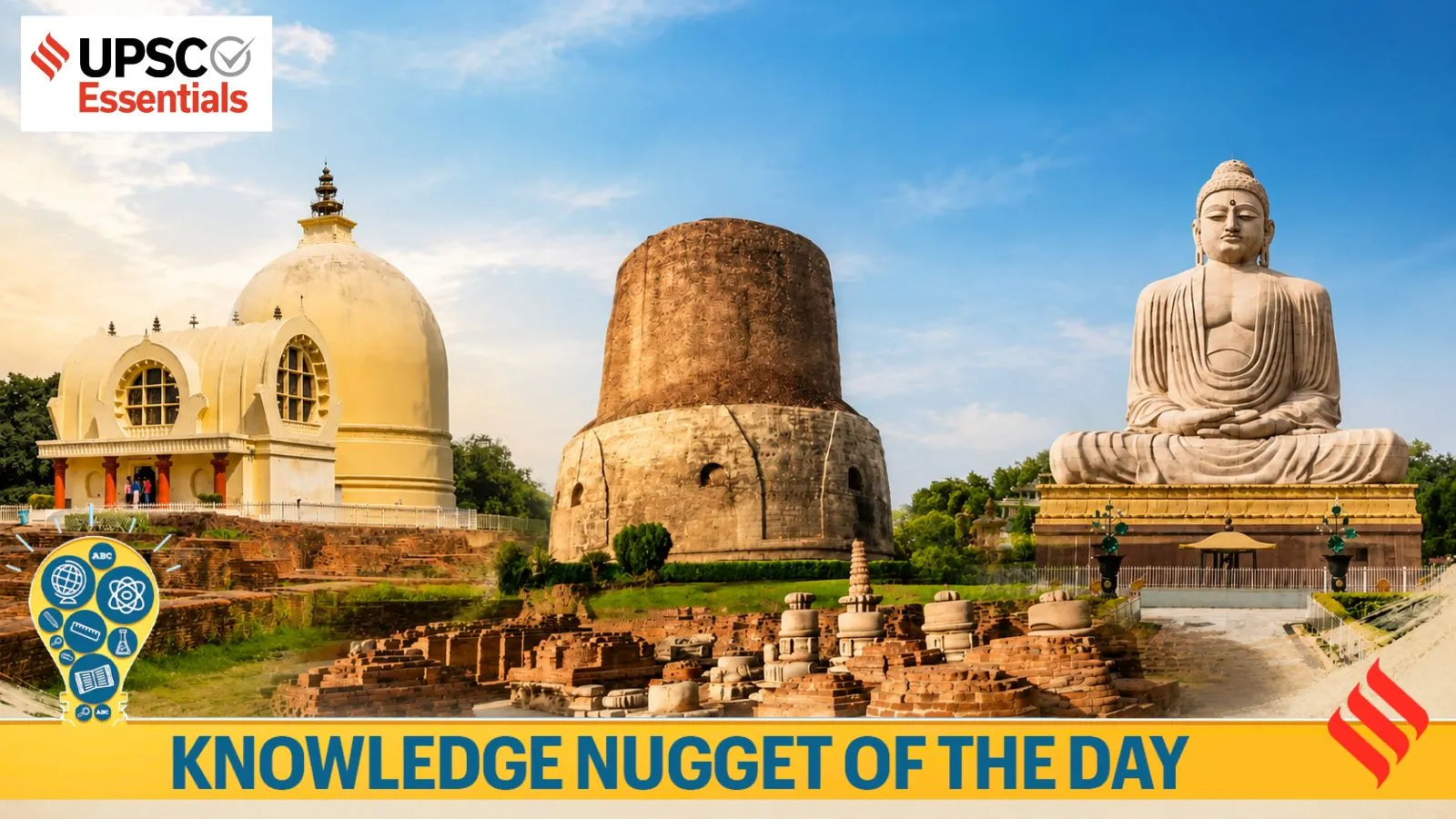
Take a look at the essential events, concepts, terms, quotes, or phenomena every day and brush up your knowledge. Here’s your UPSC Current Affairs knowledge nugget for today on Sarnath, now a UNESCO World Heritage Site.Sarnath, the ancient site where Lord Buddha delivered his first sermon after attaining enlightenment, has been inscribed on UNESCO’s World Heritage List. In this context, let’s know about Sarnath and some other important sites associated with the life of Buddha. 1. With the inscription on UNESCO’s World Heritage List, Sarnath becomes India’s 45th and Uttar Pradesh’s fourth World Heritage Site. The announcement came Saturday (July 25) during the 48th session of the UNESCO World Heritage Committee held in Busan, South Korea. 2. Sarnath, one of the holiest sites of Buddhism, has recorded its significance on the global platform for heritage recognition. The state government stated this would strengthen Uttar Pradesh’s Buddhist Circuit on the international tourism and cultural heritage map. 3. Notably, Sarnath was included in UNESCO’s tentative list on July 3, 1998. Twenty-eight years on, it has been officially designated a World Heritage Site. Until now, the state’s three World Heritage Sites were the Taj Mahal, Agra Fort and Fatehpur Sikri — all in the Agra region. 4. Sarnath is the sacred land where Lord Buddha, after attaining enlightenment, delivered his first sermon to humanity and set in motion the ‘Dharmachakra Pravartan’. Counted among the holy pilgrimage sites of Buddhism, Sarnath is described in ancient Buddhist scriptures such as Rishipattan. 5. Months ahead of its nomination, the Archaeological Survey of India (ASI) had replaced the existing plaque at the site — to “correct” its recorded history — replacing the names of colonial rulers to credit the local royal family with discovering the site.Story continues below this ad How Sarnath was Rediscovered and Excavated? 6. Sarnath was among the earliest sites explored by amateur British archaeologists and indologists, possibly due to its proximity to Varanasi, which had a strong Company presence. 7. The credit for its “rediscovery” goes to workers of Jagat Singh, the diwan of Raja Chait Singh of Benares, who were digging at the site to retrieve brick and stone for a new marketplace being built in his name. (The locality at the heart of modern Varanasi still goes by the name ‘Jagatganj’). The workers discovered the inscribed pedestal of an image of the Buddha and two stone reliquaries, the contents of which, according to historian B C Bhattacharya, “were thrown into the river Ganges” (The History of Sarnath or the Cradle of Buddhism, 1923). 8. In 1799, these findings were reported by Jonathan Dunancan, a prominent indologist who had founded the Sanskrit College at Varanasi in 1791. Duncan’s descriptions were what spurred subsequent British excavations at the site, most notably by Cunningham in 1835-36. 9. During these excavations, Cunningham discovered and removed many statues from the site, as well as the sandstone box reported by Duncan from the Dharmarajika Stupa (formerly known as the ‘Jagat Singh Stupa’). By 1836, Cunningham had conclusively identified Sarnath as the location of the Buddha’s first sermon.Story continues below this ad 10. The most significant work on Sarnath, however, was carried out by archaeologist Friedrich Oertel in 1904-05. “He was the first scholar to carry out the work of excavation systematically and on a scientific basis. As a result of his work, 476 architectural and sculptural relics and 41 inscriptions were discovered in one season,” Bhattacharya wrote. Buddhism Buddhism emerged in India around the fifth-sixth centuries BC during a period that scholars call “the second urbanisation of India”, a time of great socio-cultural change in the Gangetic plains. It emerged, along with other heterodox traditions such as Jainism, as a response to Vedic Hinduism’s highly rigid and ritualistic ways. Other Important Sites Associated with

New DelhiJul 19, 2026 10:59 AM IST Argentina's Giovani Lo Celso holds a banner with the words "The Malvinas are Argentine", referring to the Falkland Islands, while teammate Argentina's Nicolas Otamendi gestures to him, at the end of the World Cup semifinal soccer match between England and Argentina in Atlanta, Wednesday, July 15, 2026. (AP Photo) Take a look at the essential events, concepts, terms, quotes, or phenomena every day and brush up your knowledge. Here’s your UPSC Current Affairs knowledge nugget for today on the Falkland Islands dispute. Knowledge Nugget: Falkland Islands dispute Subject: International relations Why in the news? After Argentina overhauled a 1-0 deficit against England into a statement 2-1 victory in the FIFA World Cup semi-finals, some of their players made a statement of another kind. Giovani Lo Celso and Nicolas Otamendi brought a banner onto the pitch of the Mercedes Benz Arena that said ‘Las Malvinas son Argentinas’ (The Falkland Islands are Argentine). The banner was a reference to the Falkland Islands (as known in England while in Argentina the island is called Islas Malvinas) which had led to a 74-day conflict between the two countries 44 years ago. The conflict had led to over 900 people — 649 Argentinians and 255 Britons — losing their lives. In this context, let’s know what the Falkland Islands are and what the related dispute is. Key Takeaways:
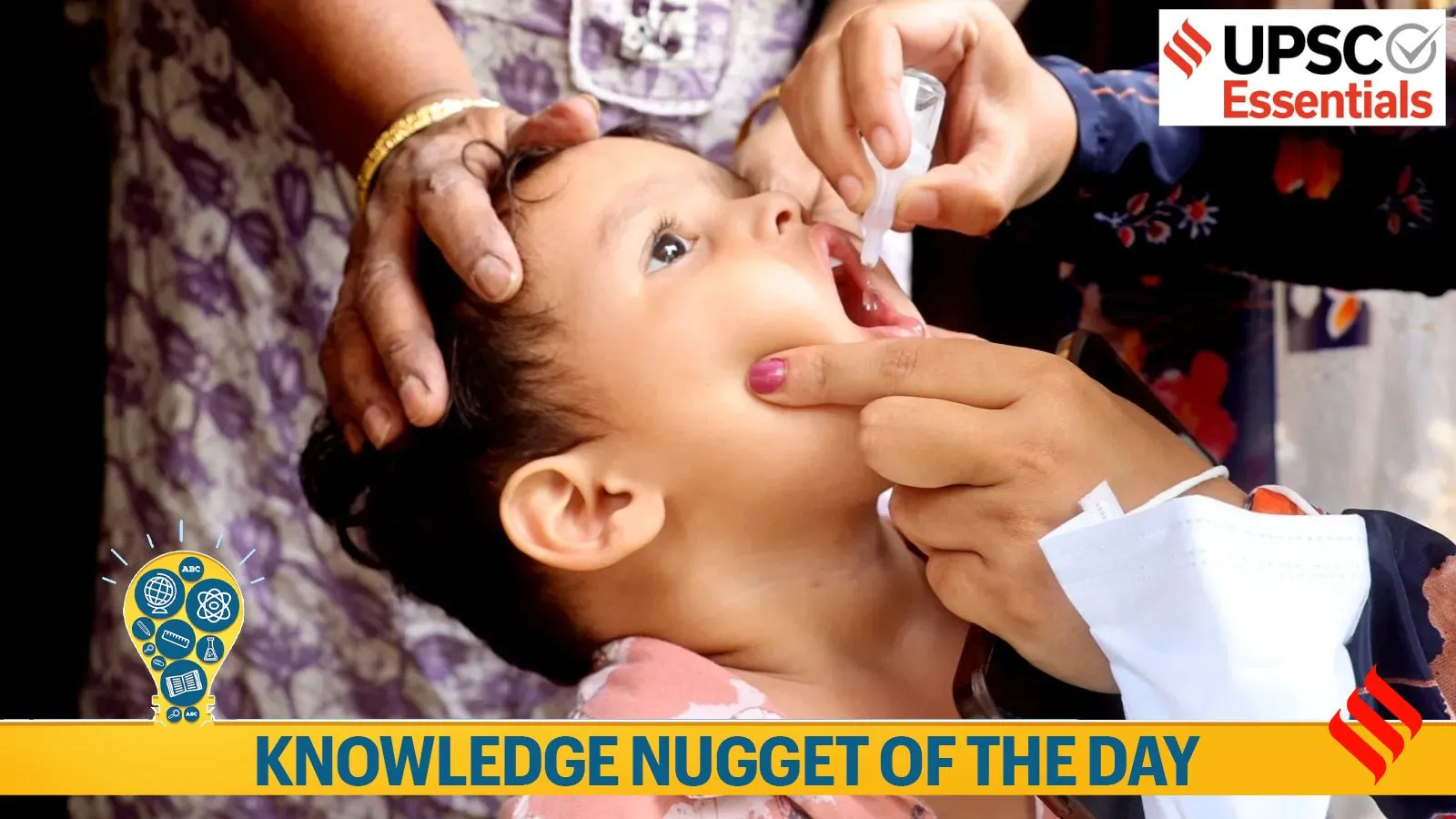
Take a look at the essential concepts, terms, quotes, or phenomena every day and brush up your knowledge. Here’s your UPSC knowledge nugget on the polio virus and why is the detection of vaccine-derived polio virus (VDPV) in Ghaziabad important for your Prelims and Mains. 1. India was declared free of wild poliovirus in 2014 after decades of mass immunisation, making it one of the 11 countries in South East Asia which have been certified free of wild poliovirus. But environmental surveillance – testing sewage for traces of the virus – continues as an early warning system. 2. After the detection in Ghaziabad, officials traced the sewage network, identified 12 neighbourhoods home to about 150,000 people as high-risk areas, and intensified vaccination efforts under the watch of the National Centre for Disease Control (NCDC) and the World Health Organisation (WHO). 3. Officials said that the detected strain is largely non-virulent and has so far remained contained. “Similar instances have been reported earlier in Varanasi and Meghalaya. Routine sample collection and tests are conducted every fortnight,” an official said. 4. The WHO defines polio or poliomyelitis as “a highly infectious viral disease, which mainly affects young children. The virus is transmitted by person-to-person, spread mainly through the faecal-oral route or, less frequently, by a common vehicle (e.g. contaminated water or food) and multiplies in the intestine, from where it can invade the nervous system and can cause paralysis. 5. Initial symptoms of polio include fever, fatigue, headache, vomiting, stiffness in the neck, and pain in the limbs. In a small proportion of cases, the disease causes paralysis, which is often permanent. There is no cure for polio; it can only be prevented by immunization.” These cases do not affect India’s polio-free status — only the detection of the wild poliovirus will change that.Story continues below this ad 6. There are three types of wild polio virus. Type 2 wild polio virus was eradicated in September 2015, while Type 3 wild polio virus has not been found since November 2012 and was certified eradicated on 24 October, 2019. As of 2022, endemic wild poliovirus type 1 remains in two countries: Pakistan and Afghanistan. What is a vaccine-derived polio infection?


Discussion (0)