
Loading dispatches...
← Return to NewsroomPolitics
What does the Centre’s Vision Document on Drug Control 2026-2029 propose?
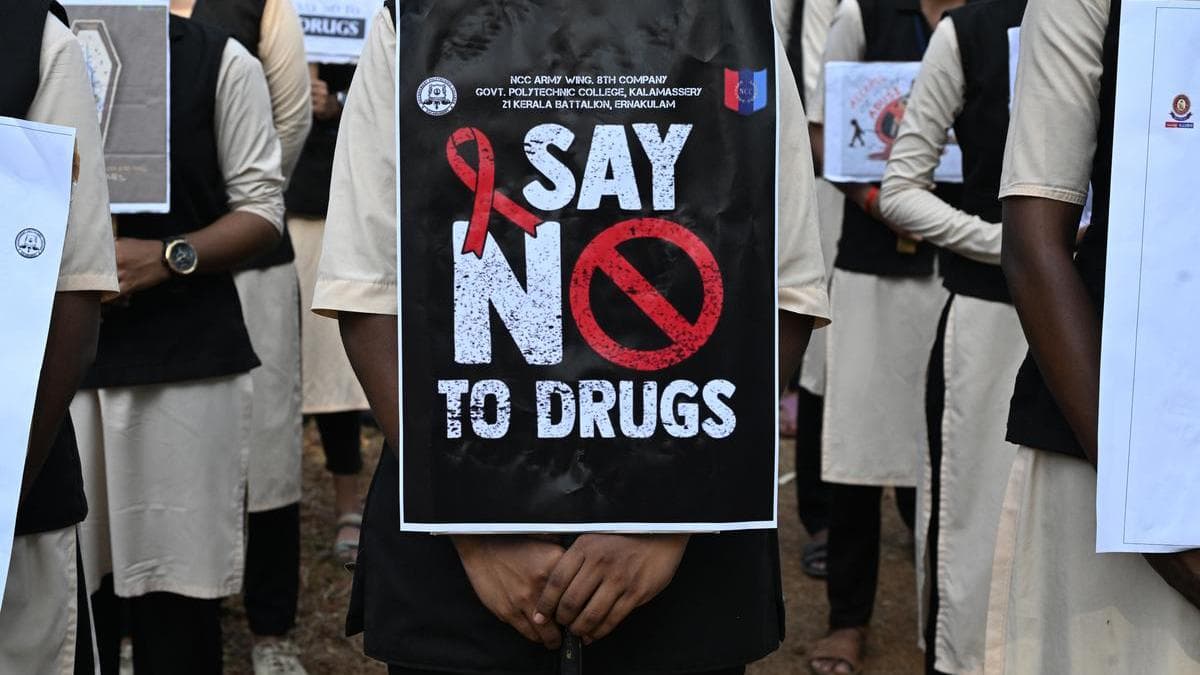
The story so far: On Friday (June 26, 2026), Union Home Minister Amit Shah launched a three-year roadmap for narcotics control in India. The Vision Document on Drug Control (2026-2029) was released at the 10th apex-level meeting of the Narco-Coordination Centre (NCORD), organised by the Narcotics Control Bureau (NCB). NCORD is a four-tier mechanism set up by the Ministry of Home Affairs (MHA) to coordinate among various stakeholders, including States, Ministries and the pharmaceutical sector, to combat the drug menace and bring all stakeholders under one umbrella.Proclamation proceedings executed against accused in narco-terror case: J&K PolicevWhat does the vision document say?According to Mr. Shah, the entire roadmap has been prepared on the foundation of “Detect, Disrupt and Destroy”. It provides a time-bound national strategy to dismantle the narcotics ecosystem through coordinated action against trafficking, drug abuse, illicit finance and organised criminal networks.The policy sets a target of identifying and dismantling 100 major interState and transnational drug cartels through intelligence-led investigations, coordinated operations, financial disruption and effective prosecution over the next three years. It also aims to bring together more than 40 Ministries, Central agencies, State governments, district administrations, educational institutions, civil society organisations and citizens under a common national framework against drugs.Drug abuse threatens India’s demographic dividend: V-PEnforcement efforts are to shift from targeting individual carriers to identifying, investigating and dismantling complete drug trafficking networks, including suppliers, financiers, handlers, facilitators and organised criminal syndicates, the document states.What are the other aspects, particularly related to preventive detention of narco-offenders?The document calls for mandatory financial investigations in major drug cases and attachment of assets acquired through the illicit drug trade. It also seeks enhanced use of the Prevention of Illicit Traffic in Narcotic Drugs and Psychotropic Substances Act, 1988.Where India is going wrong in its goal to find new drugsStates and other investigating agencies have been asked to target drug kingpins and dismantle the financial foundations of trafficking networks through the 1988 Act, which enables preventive detention of habitual drug traffickers and individuals involved in the illegal narcotics trade to prevent them from committing further offences.What about technology-led surveillance and synthetic drugs?The vision document stresses the use of advanced surveillance systems, anti-drone technologies, AI-enabled profiling, container scanning and enhanced inter-agency coordination to strengthen interdiction capabilities across land, sea and air trafficking routes.National drug survey to study indigenous substance use patterns this yearSpecial focus is to be placed on methamphetamine, mephedrone and emerging synthetic drugs through strengthened precursor controls, intelligence-led operations and disruption of clandestine manufacturing and trafficking networks. The chemical and pharmaceutical industries will be encouraged to adopt voluntary compliance measures, report suspicious transactions and actively assist authorities in preventing the diversion of prescription medicines for abuse as psychotropic substances.What about the policy towards people affected by substance abuse?De-addiction, counselling, treatment and rehabilitation are among the key focus areas of the document. It calls for expanding these facilities to improve accessibility, support recovery and facilitate the social reintegration of persons affected by substance abuse. A nationwide awareness campaign aims to reach more than 50 crore citizens through educational institutions, community organisations and public participation, with the objective of transforming drug prevention into a people’s movement.Higher educational instituti


Discussion (0)