
Loading dispatches...
← Return to NewsroomEconomy
Could ‘Trump Accounts’ Actually Close the Wealth Gap?

The New York Times Will Trump Accounts Close the Racial Wealth Gap, or Worsen It? The American Prospect U.S. families can now open $1,000 Trump Accounts. North Texans, tell us your experiences Dallas News The Dubious Rags to Riches Promise of Trump Accounts FactCheck.org As the president touts Trump Accounts, some families are still waiting for baby's $1,000 NBC4 Washington
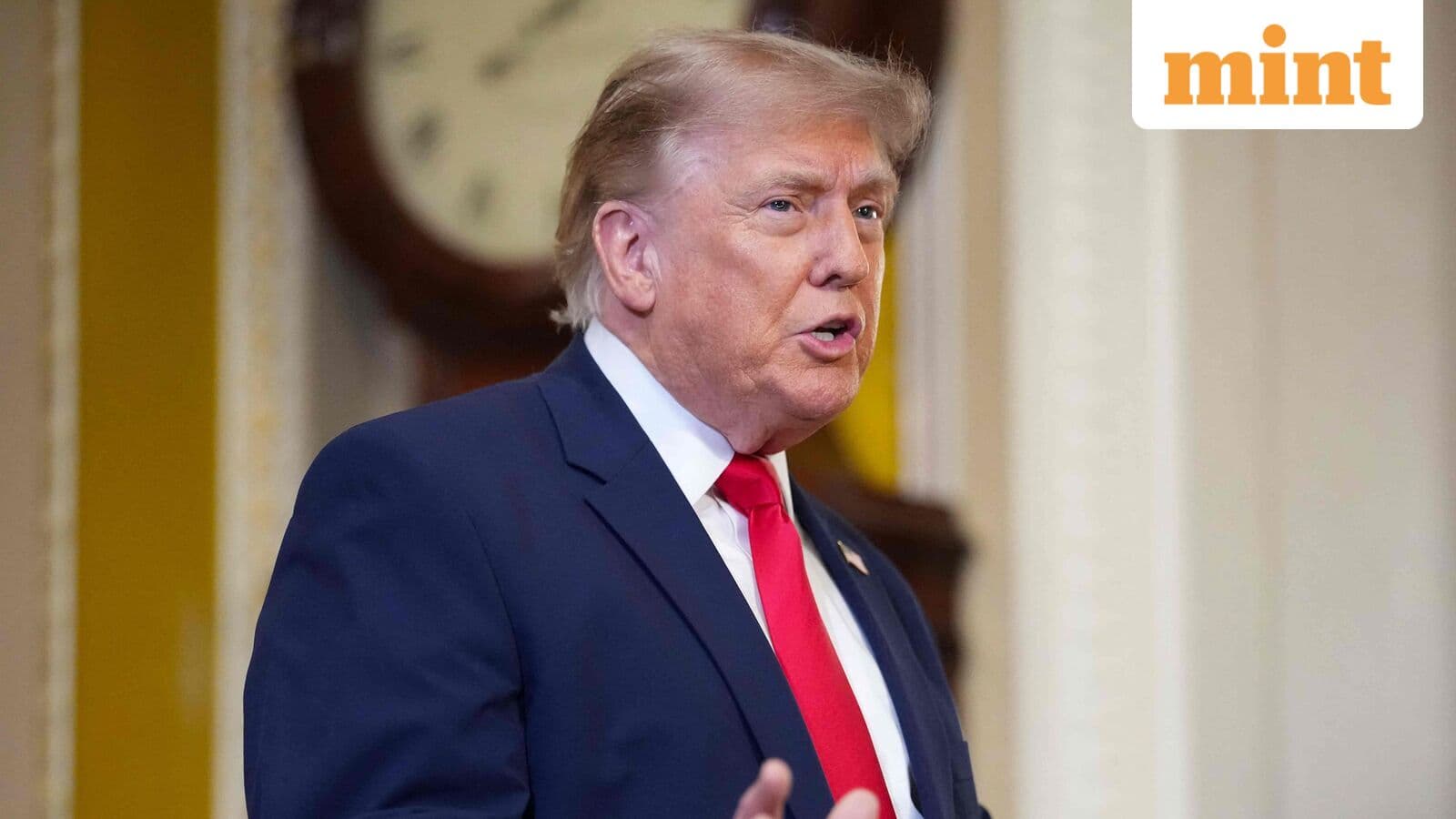
The House passed a $95 billion budget proposal focused on the Trump administration's priorities, despite opposition from Democrats and some Republicans. The bill features significant funds for the Pentagon and controversial voting law changes, including proof of citizenship requirements.WASHINGTON, DC - JUNE 24: U.S. President Donald Trump speaks to the media as he arrives at the U.S. Capitol on June 24, 2026 in Washington, DC. President Trump is visiting Capitol Hill to attend a closed-door luncheon with the Republican Senate Steering Committee to push his SAVE America Act, which would impose strict voter ID and proof-of-citizenship requirements in federal elections. Andrew Harnik/Getty Images/AFP (Photo by Andrew Harnik / GETTY IMAGES NORTH AMERICA / Getty Images via AFP)(Getty Images via AFP)The House adopted a Republican-only $95 billion budget proposal to fund the ongoing war with Iran and other top priorities of the Trump administration. The House adopted the budget resolution in a 216-214 vote, with all Democrats, two Republicans and one independent who caucuses with Republicans voting in opposition.According to The Associated Press, House Republicans were divided over the plan, with conservatives wary because there are no offsetting budget cuts. But Speaker Mike Johnson plunged ahead, viewing the go-it-alone process as the best chance to usher President Donald Trump's priorities through the split Congress, despite skepticism in the Senate.SAVE America ActThe package has $60 billion for the Pentagon and $13 billion for other national security needs, $12 billion for farmers struggling under Trump’s tariffs and $10 billion for voting law changes aligned with the SAVE America Act and proof-of-citizenship requirements that are Trump’s top priority.Quick answers to key questions•5 QUESTIONSThe SAVE America Act is a proposal by the Trump administration requiring proof of citizenship for voting. It is part of a larger $95 billion budget package adopted by House Republicans that also includes funding for the Iran war and other national security needs.House Republicans, led by Speaker Mike Johnson, believe the $95 billion package is essential to advancing President Trump's priorities, particularly in a split Congress where support for military actions is politically divisive.As of recent reports, the cost of the U.S. war with Iran has reached approximately $37.5 billion, according to U.S. Secretary of War Pete Hegseth.Critics, including Democrats, argue that the funds should be allocated to domestic needs rather than the Iran war, emphasizing the lack of support among the public and the potential financial burden on taxpayers.Current public sentiment indicates growing opposition to the war, with a significant majority of Americans believing the conflict is not worth fighting, suggesting that continuing military operations may not align with public opinion.Trump had been pushing for the Safeguard American Voter Eligibility Act, also known as the SAVE America Act, which would require proof of citizenship for voting. The measure, while popular among Trump's most ardent supporters, does not have enough support among Senate Republicans for passage.It's already against the law for noncitizens to vote in federal elections and experts warn the proposed new rules could make it more difficult for eligible Americans to cast ballots.Since 2025, the SAVE America Act has failed to pass into law multiple times through various legislative avenues, despite passing the House of Representatives three separate timesDemocrats argued the money should be spent at home, particularly on efforts to lower costs for Americans.“Republicans plan to spend tens of billions of dollars on Trump’s failed war in Iran,” said Rep. Pete Aguilar of California, chairman of the House Democratic caucus, this week. “Think about what we could spend with these resources instead.”Congress is at a standstill over the US war against Iran — unable to stop Trump's military stri

US President Donald Trump has narrowed his $10 billion legal battle against the BBC, dropping claims against two of its commercial entities while continuing his defamation case against the broadcaster.U.S. President Donald Trump speaks about election security during an address to the nation from the East Room of the White House in Washington, D.C., U.S., July 16, 2026. SAUL LOEB/Pool via REUTERS(via REUTERS)US President Donald Trump has agreed to dismiss part of his $10 billion lawsuit against the BBC, ending claims against two BBC Studios companies while maintaining his wider legal action against the British public broadcaster.Donald Trump drops part of $10 billion BBC lawsuit but pursues defamation caseAccording to court documents reported by The Telegraph, Trump has withdrawn his claims against BBC Studios Distribution and BBC Studios Productions, the BBC's commercial distribution and production arms. The move leaves the British Broadcasting Corporation itself as the sole remaining defendant in the case.The court filing states, “All claims in this action asserted against the Studios Defendants are hereby dismissed with prejudice, with each party to bear its own costs and attorney’s fees. President Trump shall continue prosecuting his causes of action against defendant British Broadcasting Corporation.”Trump filed the lawsuit in a Florida court in December, alleging defamation and violations of trade practices following the BBC's Panorama documentary about the events surrounding the 6 January 2021 attack on the US Capitol.The complaint centres on an edited excerpt of Trump's speech delivered before the Capitol riot. Trump argues the programme condensed his remarks to make it appear he had said: “We’re going to walk down to the Capitol… and I’ll be there with you. And we fight. We fight like hell.” He is seeking $10 billion in damages.The controversy surrounding the documentary prompted significant upheaval within the broadcaster. BBC Director-General Tim Davie and Head of News Deborah Turness resigned following criticism over the edit. The BBC later apologised for the segment, acknowledging that it had created “the mistaken impression” that Trump had “made a direct call for violent action.”However, the broadcaster has continued to reject Trump's claim for compensation, maintaining there is no legal basis for a defamation case. It has also argued that the documentary was neither broadcast nor made available in the United States, disputing one of the key assertions made in the lawsuit.Meanwhile, the legal dispute could take on added significance after the Financial Times reported that the US government is considering intervening in the proceedings. According to filings reviewed by the newspaper, government lawyers informed the Florida court “that it is considering participating in this litigation.”Responding to that possibility, the BBC argued in a court filing that the “conflict of interest is clear and stark” should the US government become involved in the case.The litigation against the BBC remains ongoing before the Florida court.About the AuthorTrisha BhattacharyaTrisha Bhattacharya is a Senior Content Producer at Livemint, with over two years of experience covering entertainment news from India and beyond. She spends her days tracking what’s trending, breaking down pop culture moments, and turning fast-moving entertainment stories into sharp, engaging reads that actually make people want to click — and stay. She holds a Master’s degree in English Literature from Lucknow University, a background that shapes her love for layered narratives, strong voices, and stories that linger long after they’re told. Before joining Livemint, Trisha worked with India Today as an entertainment journalist and film critic. There, she reviewed films, covered industry news, and built a strong foundation in storytelling and cultural analysis. Trisha enjoys working at the intersection of media, culture, and audience interest, always l

Live UpdatesUS-Iran war news LIVE: US President Donald Trump on Thursday (local time) reaffirmed Washington's victory in the ongoing strikes against Iran, adding that the country is winning ‘very big.’ Tune in to Live Mint to catch all the latest war-related updates.US President Donald Trump addresses the nation from the East Room of the White House in Washington, DC(via REUTERS)US-Iran war news LIVE: US President Donald Trump on Thursday (local time) reaffirmed Washington's victory in the ongoing strikes against Iran, adding that the country is winning ‘very big' and the fruits of that labour will be seen shortly.Seven killed, several injured in Tehran after latest US strikesAt least seven people have been killed after the US airstrikes targeted bridges in southern Iran, state media reported on Friday. Iranian state media outlet Islamic Republic of Iran Broadcasting (IRIB) reported that at least three people were killed and several others were injured after the US military targeted civilian infrastructure in its latest "wave of strikes" in Tehran as hostilities rise between the two sides after the collapse of the 14-point memorandum of understanding. Multiple locations in Iran's Hormozgan province were hit during Washington's latest wave of strikes, marking the sixth consecutive night of operations against the Islamic Republic.US expands airstrike campaign in IranThe United States has expanded its airstrike campaign in Iran early Friday by targeting bridges as part of Donald Trump's threats to start striking infrastructure to pressure Tehran to ease its chokehold on the Strait of Hormuz. In response, the Islamic Republic launched new missile attacks against US-allied nations in the Middle East and warned that its attacks would escalate. AP reported that officials in Qatar warned residents to take shelter as a barrage of Iranian missiles targeted the nation. People heard explosions overhead as air defenses fired to intercept the missiles.Gold prices head for weekly decline as Strait of Hormuz strikes raise Fed-hike betsGold was on track for the biggest weekly loss since early June as renewed hostilities in the Middle East raised the odds that the US Federal Reserve may need to raise interest rates to contain inflation. Bullion was trading around $3,980 an ounce, down 3.5 per cent on the week so far. The US launched its fifth straight day of attacks on Iran on Thursday, following up on the prior night’s strikes that hit an oil tanker near the Islamic Republic’s main export terminalWhite House says Trump agrees with Vance on Israel influencing US opinionThe White House on Thursday (local time) said the US President "certainly agrees" with Vice President JD Vance's assertion that foreign countries, especially Israel, seek to influence American public opinion, after Vance alleged that certain elements within the Israeli government were attempting to shape US opinion to prolong the conflict with Iran.Responding to a question during a press briefing on whether Trump agreed with Vance's remarks, White House Press Secretary Karoline Leavitt said, "I think the President would certainly agree that, yes, foreign countries certainly do try to persuade American public opinion. There's no doubt about that. I think it's just a basic fact."World should be worried about energy security if Hormuz situation doesn't improve: IEAThe head of the International Energy Agency, Fatih Birol, on Thursday said that if the US and Iran do not come together to improve flows of oil through the Strait of Hormuz soon, the world should be worried about energy security.Key Events17 Jul 2026, 06:54 AM IST17 Jul 2026, 06:54 AM IST17 Jul 2026, 06:54 AM ISTFollow updates here:17 Jul 2026, 06:54:41 AM ISTUS-Iran war news LIVE: US expands airstrike campaign in IranThe United States has expanded its airstrike campaign in Iran early Friday by targeting bridges as part of Donald Trump's threats to start striking infrastructure to pressure Tehran to ease its chokehold on t
Under the US Immigration and Nationality Act (INA), a person can be denied a visa or green card if immigration authorities determine they are likely to become a “public charge”—someone primarily dependent on government assistance.The Trump administration says the change is intended to protect taxpayers and reinforce the principle that immigrants should be financially self-sufficient.The Trump administration is riving a policy that could make it harder for some immigrants who receive government assistance to obtain permanent residency in the United States.On Thursday, the US Department of Homeland Security (DHS) announced a final rule rescinding the Biden-era 2022 Public Charge Regulation, restoring broader discretion for immigration officials when assessing green card applicants.The rule will take effect on September 18, 2026.What is the 'public charge' rule?Under the US Immigration and Nationality Act (INA), a person can be denied a visa or green card if immigration authorities determine they are likely to become a "public charge"—someone primarily dependent on government assistance.The law has existed for decades, but how the government defines a "public charge" has changed under different administrations.What has changed?The Trump administration has rescinded the 2022 Biden-era regulation, which had narrowed the types of public benefits immigration officers could consider when evaluating applicants.According to DHS, immigration officers will now once again be able to assess all relevant factors on a case-by-case basis, giving them broader authority when deciding whether an applicant is likely to depend on government assistance.The administration says the move better aligns immigration policy with Congress's intent that immigrants be self-reliant rather than dependent on taxpayer-funded benefits.What was the 2019 Trump rule?During Donald Trump's first term, the administration significantly expanded the definition of a public charge.The 2019 policy allowed immigration officials to consider applicants who had received certain public benefits—such as Medicaid, food stamps (SNAP) and some housing assistance—for more than 12 months within a 36-month period when deciding green card applications.The policy faced multiple legal challenges and was eventually abandoned by the Biden administration.What did Biden change?In 2022, the Biden administration reversed the Trump-era expansion.The revised regulation limited the benefits that could be considered and restored a narrower interpretation of "public charge," reducing the likelihood that the use of non-cash public assistance would affect green card eligibility.Immigrant rights groups argued the change prevented eligible families from avoiding healthcare and nutrition programmes out of fear of immigration consequences.Why is Trump bringing it back?The Trump administration says the change is intended to protect taxpayers and reinforce the principle that immigrants should be financially self-sufficient."The Trump administration is upholding the rule of law and protecting American taxpayers from subsidizing aliens who may become dependent on public benefits," USCIS spokesperson Zach Kahler said.US Citizenship and Immigration Services (USCIS) also said the rule reflects Congressional intent that immigrants in the United States should be self-reliant and not dependent on taxpayer-funded government benefits.Will everyone receiving benefits be denied a green card?Not necessarily.DHS says immigration officers will conduct individual, case-by-case assessments, considering the totality of an applicant's circumstances rather than relying on a single factor.However, the broader discretion means the use of certain public benefits could once again weigh against applicants seeking permanent residency.What happens next?The final rule will take effect on September 18, 2026.USCIS will also release a revised Form I-485 (Application to Register Permanent Residence or Adjust Status). Applications submitted

The New York Times has moved to block subpoenas issued by the US Justice Department to three of its journalists over reporting on security concerns involving the newly commissioned Qatari-gifted Air Force One aircraft. US President Donald Trump at the stairs of the Force One (file photo) | The New York Times has challenged Justice Department subpoenas issued to three of its journalists over reports on the security features of the newly commissioned Air Force One.(REUTERS)The New York Times on Wednesday filed a motion to quash subpoenas issued by the US Justice Department to its journalists in connection with reporting on security concerns surrounding the newly commissioned Air Force One aircraft gifted by Qatar, according to an Associated Press report. The move is expected to spark a major legal confrontation over reporters' rights to protect confidential sources.Filed under seal in the US District Court for the Southern District of New York, the motion challenges subpoenas requiring journalists to appear before a federal grand jury. The Times said the subpoenas were delivered to reporters at their homes last Friday.David McCraw, Senior Vice President and Deputy General Counsel at the Times, accused the Justice Department of attempting to punish the paper for its reporting.He argued the subpoenas violate constitutional protections for both the newspaper and its journalist, vowing to fight in court to defend press freedom and the right to report on matters of public interest.The investigation centres on an article that cited anonymous sources claiming the US Secret Service had advised President Donald Trump against using the newly retrofitted Air Force One because it lacked some advanced security systems, including anti-missile capabilities.Although the aircraft recently entered service after undergoing a reported $400 million retrofit, Trump travelled aboard an older Air Force One during last week's NATO summit in Turkey. The president later denied that security concerns influenced the decision.According to AP, the subpoenas represent a significant escalation in the Trump administration's efforts to identify government officials accused of leaking classified information. The move follows an FBI search earlier this year of the home of Washington Post reporter Hannah Natanson and the seizure of her electronic devices during a separate leak investigation.Justice Department defends leak investigationThe Justice Department has maintained that journalists themselves are not the focus of the investigation. In a statement, the department said it valued the role of the press but also had a responsibility to ensure that classified national security information is not disclosed without authorization, reported AP.Acting Attorney General Todd Blanche echoed that position during his Senate confirmation hearing on Wednesday, saying that reporters are being treated as material witnesses rather than targets of the investigation, according to AP.When Senator Peter Welch, a Vermont Democrat, asked whether prosecutors intended to compel journalists to reveal their confidential sources, Blanche replied, “No, the question we want to ask them is who provided them with classified national security information, which everybody in this body should want to protect," AP reported.Leak investigation raises press freedom questionsThe AP reported that while the Justice Department has, under previous administrations, obtained journalists' phone records during national security leak investigations, attempts to compel reporters to disclose sources before a federal grand jury remain highly unusual.The legal dispute also follows a policy change introduced by former Attorney General Pam Bondi in April 2025, which reversed protections adopted during the Biden administration. The revised policy restored prosecutors' authority to use subpoenas, search warrants and court orders during leak investigations, while requiring advance notice to journalists and limiting the
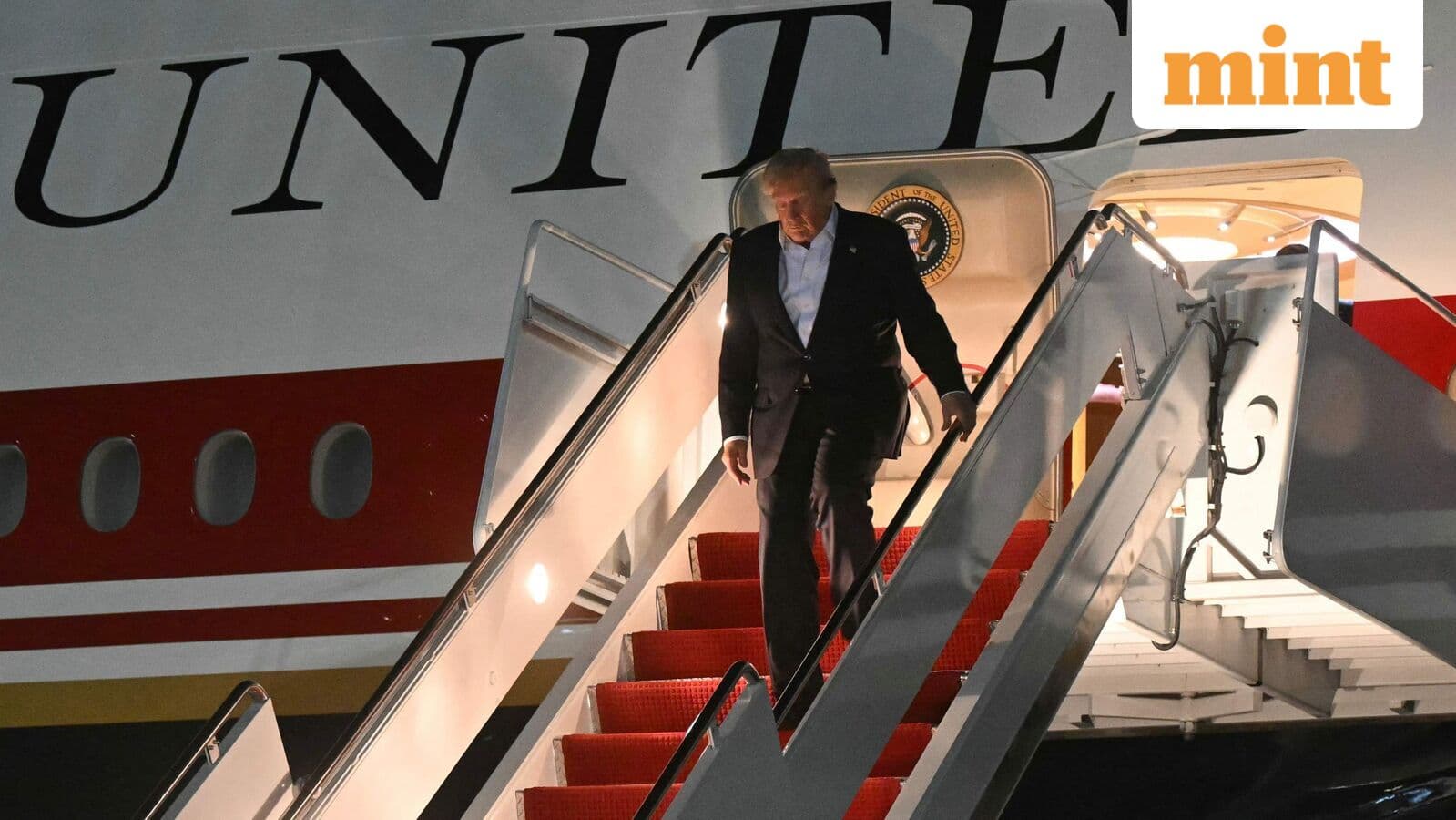
New York Times moved to quash subpoenas from the Justice Department concerning Air Force One security. This case could reshape press freedom, as government actions against journalists spark debate over their roles and rights amidst ongoing controversies involving classified information leaks.US President Donald Trump disembarks from Air Force One upon arrival at Joint Base Andrews, Maryland on July 9, 2026. Trump is returning from the NATO Summit in Turkey. (Photo by SAUL LOEB / AFP)(AFP)The New York Times filed a motion to quash subpoenas issued by the US Justice Department to its journalists on Wednesday, 16 July, over reporting on security concerns surrounding the new Air Force One aircraft gifted by Qatar to the Trump administration. The legal battle is expected to have significant implications for press freedom and the government's ability to compel journalists to reveal confidential sources.The newspaper filed its motion in the US District Court for the Southern District of New York after three of the five journalists named in the subpoenas were ordered on Friday to testify before a federal grand jury about their sources.The subpoenas were issued after a New York Times report that raised security concerns about the Boeing 747-8 gifted by Qatar. According to the report, President Donald Trump was forced to use the existing Air Force One aircraft for his return from a NATO summit in Turkey after the Secret Service reportedly raised concerns that the gifted aircraft had not yet received the security upgrades required for presidential use. The aircraft is expected to undergo roughly $400 million in modifications before entering service.David McGraw, the New York Times' senior vice president and deputy general counsel, criticised the subpoenas in a statement."As we set out in our motion, these subpoenas are brought in bad faith to punish The Times for its coverage. They violate The Times's constitutional rights and those of its journalists. We are going to court to defend our journalists' rights to report freely on the administration and to provide the public with stories that matter."The case marks the latest flashpoint in the Trump administration's efforts to crack down on anonymous sources and media leaks. Earlier this year, the FBI searched the home of Washington Post reporter Hannah Natanson as part of a leak investigation, prompting criticism from press freedom advocates, who argue that the administration is attempting to intimidate journalists and news organisations.The Justice Department has defended its actions, arguing that its focus is on government officials who leak classified information, not on journalists themselves."But DOJ also plays an important role to make sure that the people entrusted with our nation's secrets do what they're supposed to do with that information, which means not sharing classified information," the department said in a statement.Acting Attorney General Todd Blanche reiterated that position during his confirmation hearing on Wednesday."The Department of Justice requires that I authorise it, which I did. And those reporters, we're not targeting reporters. They're material witnesses," Blanche said.When Vermont Democratic Senator Peter Welch argued that prosecutors were effectively trying to force reporters to identify their sources, Blanche replied: "No, the question we want to ask them is who provided them with classified national security information, which everybody in this body should want to protect."In April 2025, then-Attorney General Pam Bondi reversed a Biden-era policy that limited prosecutors' ability to seize journalists' phone records and other communications during leak investigations. The change restored the Justice Department's authority to use subpoenas, court orders and search warrants to pursue leakers through investigations involving journalists.While the Justice Department has previously obtained journalists' phone records in national security leak investigations, this
The meeting came as the US military carried out strikes for a fourth consecutive day against targets in and around the Strait of Hormuz and Iran's southern coastline.Donald Trump is reportedly willing to escalate the conflict in an effort to inflict enough damage on Iran to force Tehran to reopen the Strait of Hormuz and accept US demands on its nuclear programme.(AP Photo/Alex Brandon)US President Donald Trump convened a Situation Room meeting on Tuesday (July 14) to discuss plans for a broader military offensive against Iran that would extend beyond the current strikes around the Strait of Hormuz, Axios reported, citing three sources familiar with the discussions.According to the report, Trump appears willing to escalate the conflict in an effort to inflict enough damage on Iran to force Tehran to reopen the Strait of Hormuz and accept US demands on its nuclear programme.The meeting came as the US military carried out strikes for a fourth consecutive day against targets in and around the Strait of Hormuz and Iran's southern coastline. US officials told Axios the operations primarily targeted air defence systems, radar installations, anti-ship missile positions and drone launch sites to weaken Iran's ability to attack commercial shipping.Iran responded by continuing missile and drone attacks on US bases in Jordan, Kuwait and Bahrain. Meanwhile, the US naval blockade on Iranian ports officially took effect on Tuesday afternoon.According to Axios, Trump's national security team, including Vice President JD Vance, Secretary of State Marco Rubio, Defense Secretary Pete Hegseth, Chairman of the Joint Chiefs Gen. Dan Caine, CIA Director John Ratcliffe and special envoy Steve Witkoff, attended the Situation Room meeting.US, Iran exchange fresh attacks as Hormuz tensions escalateThe United States and Iran launched fresh attacks against each other's interests in the Gulf on Tuesday (July 14), intensifying hostilities around the Strait of Hormuz even as President Donald Trump said a negotiated settlement remained possible.The US military carried out strikes on targets in Bushehr, Bandar Abbas and Qeshm Island, saying the operations were aimed at degrading Iran's ability to attack commercial shipping. Iranian authorities said the strikes hit multiple locations, including areas near the country's only civilian nuclear power plant in Bushehr.Iran retaliated by striking two vessels in Omani waters, killing one crew member, while Bahrain said it intercepted Iranian missiles and drones targeting US-linked facilities. Jordan also said it shot down four Iranian missiles.The latest escalation came as Washington reimposed a naval blockade on Iranian ports after accusing Tehran of attacking ships transiting the Strait of Hormuz. Iran has largely restricted shipping through the strategic waterway since February.Trump also withdrew his proposal to impose a 20% fee on ships using the Strait of Hormuz, saying it would instead be replaced with trade and investment agreements with Gulf allies.US launches fresh strikes on Iran as Trump warns of wider attacksThe United States also launched a fresh wave of airstrikes on Iran on Wednesday (July 15) after reimposing a naval blockade.US Central Command (CENTCOM) said the strikes targeted Iranian military capabilities used to threaten commercial shipping in the Strait of Hormuz. Iranian state media reported explosions near Bandar Abbas, Qeshm Island, Bandar Imam Khomeini and Bushehr, home to Iran's only civilian nuclear power plant.Iran's Revolutionary Guards said they targeted the US Fifth Fleet in Bahrain and vowed to keep the Strait of Hormuz closed until Washington ends what it called its aggression. Bahrain said it intercepted Iranian attacks, while Jordan said it shot down three missiles.President Donald Trump warned that the US would expand its campaign to include Iranian power plants and bridges unless Tehran returns to negotiations.Iran said renewed US strikes have killed at least 30 people since las


Discussion (0)