
Loading dispatches...
← Return to NewsroomEconomy
'In global turbulence, mutual trust is our greatest strategic asset': PM Modi on India-Japan partnership – Top 7 quotes
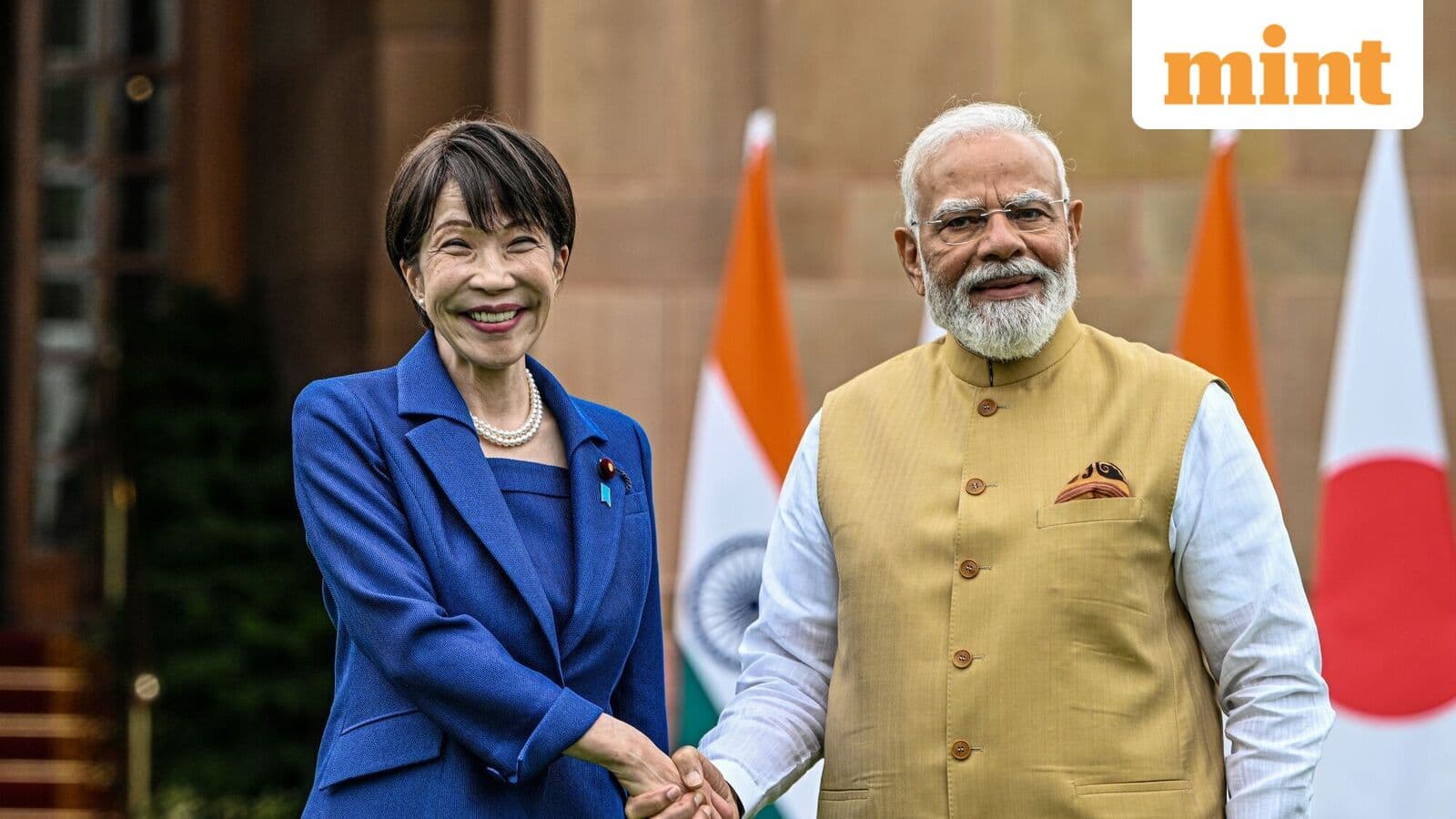
Prime Minister Narendra Modi said on Thursday that mutual trust between nations was the greatest strategic asset in times of geopolitical uncertainties. PM Modi was speaking during a joint press statement along with Japanese counterpart Sanae Takaichi in New Delhi."Just a few days ago at the G7 Summit, I remarked that in today's climate of global turbulence, mutual trust is our greatest strategic asset; I am proud that the India-Japan partnership fully lives up to this standard,” PM Modi said.Takaichi's three-day visit to India comes amid rising uncertainties in the global arena. Under these circumastances, the collaboration with India becomes even more pertinent.Quick answers to key questions•5 QUESTIONSThe main objectives include strengthening bilateral cooperation across various sectors such as trade, investment, defense, and technology, while also addressing regional and global issues of mutual interest.PM Modi highlighted mutual trust as a strategic asset in times of geopolitical uncertainty, essential for enhancing the India-Japan partnership against the backdrop of rising global challenges.India and Japan are set to strengthen their technological partnership through a joint statement focusing on AI, with key institutions from India's AI ecosystem signing agreements with Japanese partners.New initiatives discussed include an Action Plan for human resource exchange, a joint declaration on defense cooperation, and agreements in sectors such as AI, pharmaceuticals, and critical minerals.Yes, both leaders believe that prioritizing their strategic partnership is crucial for navigating economic and security challenges while promoting peace and stability in the Indo-Pacific region.PM Modi also said that over the past few decades, spanning sectors from automotive to electronics, Japan has played a pivotal role in India's growth story, building an invaluable bond of friendship and trust. “Today, with Prime Minister Takaichi's visit, we are embarking on a new chapter in our Special Strategic and Global Partnership,” he said.Earlier PM Modi held summit talks with Takaichi in New Delhi. The talks focused on expanding economic ties, enhancing resilient supply chains for semiconductors and boosting cooperation in critical technologies between the two nations.PM Modi said that the two leaders believe that a technology partnership will become the strongest pillar of our cooperation. "To realise this vision, we have also issued a joint statement today regarding the field of AI. Several key institutions within the Indian AI ecosystem have also signed agreements with their Japanese partners today. The convergence of Japan's precision technology and India's software capabilities will impart new momentum and strength to global AI development,” he said.The Indian delegation during the talks included External Affairs Minister S Jaishankar, National Security Adviser Ajit Doval and Foreign Secretary Vikram Misri, among other officials.The talks marked another step in further strengthening the special partnership built on trust. External Affairs Minister S Jaishankar and National Security Advisor Ajit Doval were also present alongside other officials.Earlier, the Japanese PM Takaichi was accorded a ceremonial welcome at Rashtrapati Bhavan. She is on a three-day visit to India.There has been an upswing in India-Japan ties. The relationship was elevated to a Special Strategic and Global Partnership in 2014.As the two countries approach the 75th anniversary of the establishment of diplomatic relations in 2027, cooperation continues to deepen across a wide range of sectors, including trade and investment, economic security, defence and security, science and technology, culture, and people-to-people ties. The bilateral framework now comprises over 70 dialogue mechanisms.PM Modi visited Japan for the 15th Annual Summit in Tokyo in August last year.The annual summit remains the flagship platform driving the strategic agenda of the partnership.The Japane
China is implementing new national security regulations for overseas investments, enabling government scrutiny and protective measures. The regulations emphasize economically vital sectors and require compliance with investigative cooperation, raising concerns among investors.A chinese flag is seen in the financial district of Shanghai on April 7, 2025 (AFP)China is intensifying its scrutiny of investments overseas with broad "national security" regulations taking effect from Wednesday. According to the State Council’s 34-article Regulation on Overseas Investment authorises “necessary and defensive measures” to protect Chinese investors and interests overseas in response to foreign trade-related barriers.Regulation on outbound direct investmentUnder the new rules, originally announced on June 1, the government will probe trade-related investment barriers imposed by foreign countries and coordinate retaliatory responses. Officials labelled the law a “milestone in the history of China’s outbound investment development”.Also known as the 2026 regulation on outbound direct investment (ODI), Beijing’s new law requires Chinese investors to cooperate with authorities during any investigations overseas, the South China Morning Post reported.Beijing sees fields such as artificial intelligence, computer chips and green technology as economically and strategically vital and has vowed to promote their domestic development.Enhance quality and level of outward investmentThe new measures are intended to "enhance the quality and level of outward investment", according to the provisions laid out by the State Council, China's cabinet.However, some investors worry they will restrict the ability of China's bustling and sprawling tech ecosystem to access global markets.Outbound investment should adhere to the "overall national security concept", the regulations state, while aiming to "balance domestic and international considerations".The new framework also authorises the government to conduct reviews of investments or transfers that could impact national security.Beijing often views cross-border transactions with suspicion, with its top economic planning body striking down in April an attempt by Facebook owner Meta to acquire AI startup Manus, which was created by a company founded in China but now based in Singapore.Under the new rules, existing curbs on cross-border transfers will extend beyond goods and data to include the export of services, through sending technical experts abroad or carrying out training overseas.The US-China Economic and Security Review Commission said on social media this week that the move reinforces a trend it has tracked for months.The bipartisan commission warned in May that, "as is often the case for China's national security-related laws, enforcement authorities have immense discretion to determine what constitutes a violation, creating further risk for foreign firms".China places Japanese entities on control listIn a related development, China's Commerce Ministry on Monday placed 20 Japanese entities, including multiple divisions of Mitsubishi Corporation, on a control list, which prohibits Chinese and foreign exporters from selling to them dual-use items made in China. Dual-use items can be used for both civilian and military purposes.Additionally, 20 other entities have been added to a watch list for dual-use items, according to the ministry. It includes Mitsui E&S, which makes engines and other equipment for ships, as well as divisions of Fujitsu and Komatsu corporations, the Associated Press reported.Chinese companies exporting to these firms will be required to apply for special licenses, submit risk assessment reports on the Japanese companies and written pledges that the dual-use items will not be used for military purposes.China imposes export controls on 10 US companiesLast week, China had also imposed export controls on 10 US companies involved in defence and rare earths mining in response to Washington's



Discussion (0)