
Loading dispatches...
← Return to NewsroomEconomy
Meta meets IT ministry on WhatsApp username concerns, to file response in 3 days

The meeting comes two days after the Centre asked WhatsApp to pause the rollout of the feature and explain how it intends to address concerns that usernames could increase the risk of online fraud, Mint reported on Wednesday.During Friday’s meeting, WhatsApp sought to explain the safety mechanisms built into the feature and its privacy benefits.(REUTERS)Mumbai: Representatives of Meta-owned WhatsApp met officials from the ministry of electronics and information technology (MeitY) on Friday to discuss the company’s proposed “usernames” feature, as the government reiterated its concerns over the potential misuse of the tool for online fraud and impersonation, two senior government officials told Mint.MeitY officials have asked the company to submit a written explanation within three days, the people said.The meeting comes two days after the Centre asked WhatsApp to pause the rollout of the feature and explain how it intends to address concerns that usernames could increase the risk of online fraud, Mint reported on Wednesday.Quick answers to key questions•5 QUESTIONSThe Indian government is concerned that WhatsApp's username feature could increase the risk of online fraud, phishing, digital arrest scams, and impersonation by enabling malicious actors to contact victims without verified phone numbers.WhatsApp proposed the username feature to enhance user privacy, allowing individuals to connect without revealing their mobile numbers, thus providing a more private communication option.The Indian government plans to review the potential risks and has asked messaging platforms, including WhatsApp, Signal, and Telegram, to provide explanations regarding how they will mitigate issues related to fraud, impersonation, and misuse of usernames.The Indian government has advised WhatsApp to pause the rollout of the username feature until it addresses the concerns regarding privacy and potential misuse comprehensively.WhatsApp claims to have built safety mechanisms into its username feature intended to protect users from impersonation and to ensure that usernames of public figures and verified accounts are reserved to minimize risks.According to the government’s communication to Meta, officials believe the feature could “materially increase the incidence of online fraud, phishing, digital arrest scams and impersonation attacks” by enabling malicious actors to contact potential victims without relying on verified phone numbers, Mint reported.During Friday’s meeting, WhatsApp sought to explain the safety mechanisms built into the feature and its privacy benefits. However, government officials maintained that the company must comprehensively address the concerns before any rollout is considered.According to a third senior government official, officials in the department of telecommunications (DoT) have also raised concerns that the feature could enable overseas fraudsters to create fake identities, impersonate legitimate users, and target Indian users with phishing and scam messages.WhatsApp announced the usernames feature on Monday, describing it as a privacy-focused update that allows users to connect without sharing their mobile numbers.“Usernames are our latest step to make WhatsApp even more private. There’s no directory to browse and no suggestions—people will need to know your exact username to contact you for the first time,” the company said in a blog post.The platform said the feature is intended to help people connect with strangers, businesses, communities and users on online marketplaces without revealing their personal phone numbers.The scrutiny extends beyond WhatsApp. This week, MeitY issued notices to WhatsApp, Telegram and Signal over privacy and security concerns arising from similar username-based communication features.In June, the government banned Telegram for a week, citing the platform’s alleged failure to prevent the circulation of leaked National Eligibility-cum-Entrance Test (NEET) question papers, misinformation, an
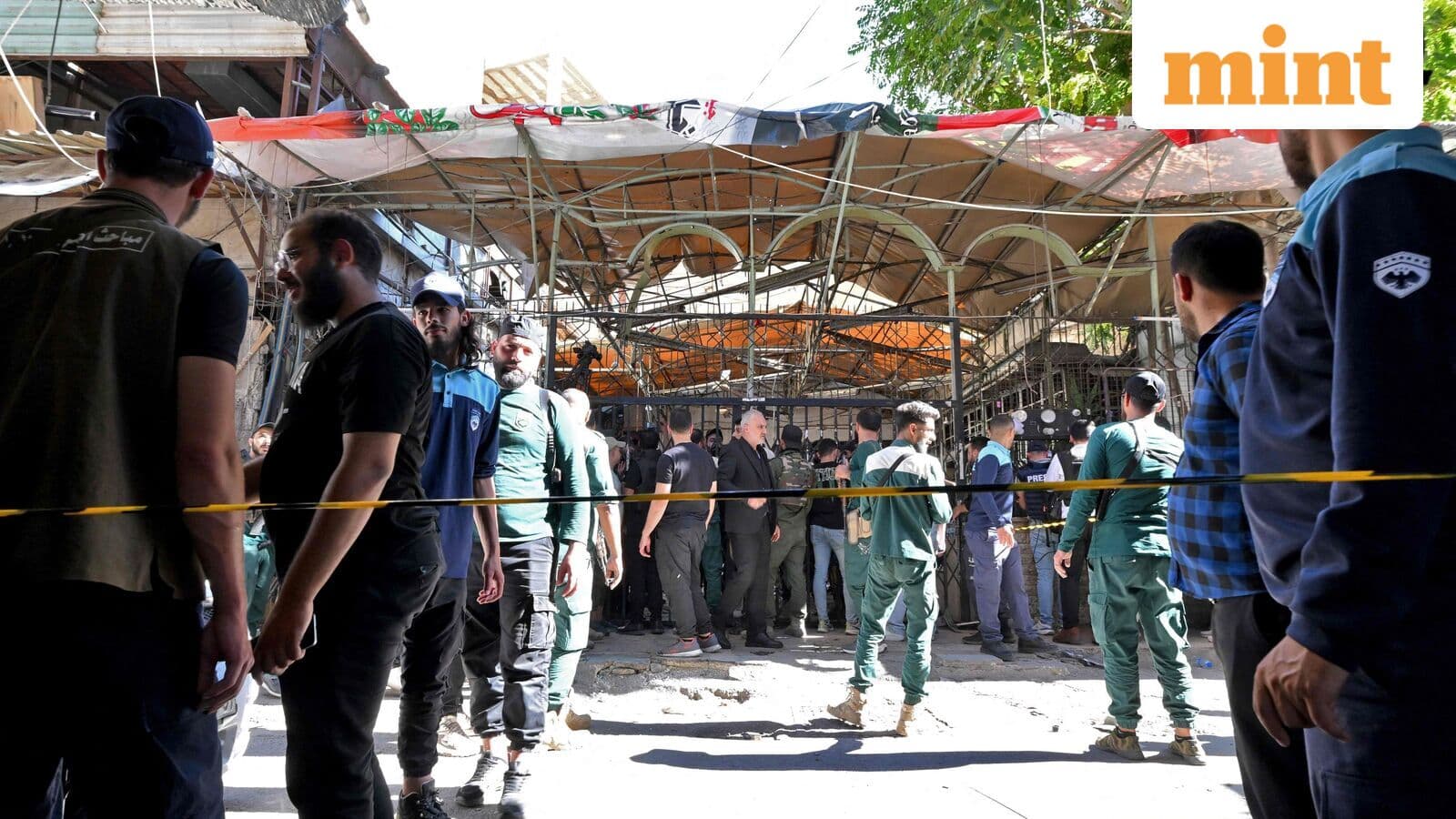
Authorities have issued an arrest warrant and requested an Interpol red notice for the suspect believed to have orchestrated the parcel bomb explosion in Monaco that injured three people earlier this week. According to Reuters, investigators believe the attack was aimed at a Ukrainian-born oligarch.Authorities have issued an arrest warrant and sought an Interpol red notice for the suspect believed to have orchestrated the parcel bomb explosion in Monaco that injured three people earlier this week, according to Reuters.(AFP)Authorities investigating the parcel bomb explosion in Monaco issued an arrest warrant on Thursday for the person suspected of orchestrating the attack. They also requested an Interpol red notice, widening the search beyond the tiny Mediterranean principality, according to Reuters.The announcement came three days after a parcel bomb exploded in Monaco, injuring three people. Investigators believe the blast was a targeted attack on a Ukrainian-born oligarch, rather than a random incident. An Interpol red notice asks police agencies around the world to locate and provisionally arrest a suspect pending extradition or other legal action. It is not an international arrest warrant and does not compel countries to make an arrest.French media, cited by Reuters, reported that the main suspect is a woman believed to be outside both Monaco and neighbouring France. Authorities have not confirmed her identity or nationality and said more details about the investigation would be shared later on Friday.Suspect believed to have fled into FranceThe explosion took place on Monday evening in Monaco, one of the world's wealthiest and smallest countries. While officials have not publicly identified the intended target, investigators believe the parcel bomb was meant for a Ukrainian-born businessman, Reuters reported.Following the blast, officials believe the suspect escaped on foot into France. Monaco shares an open border with France, with no routine border controls between the two countries, allowing people to move freely across the frontier.The ease of crossing the border has complicated the investigation, prompting authorities to expand the search internationally through Interpol. French and Monegasque investigators are now working together to trace the suspect's movements and establish the motive behind the attack.So far, officials have disclosed few details about the explosive device or the circumstances surrounding its delivery. They have also not said whether they believe anyone else was involved in planning or carrying out the bombing.Explosion prompts cross-border investigation Known for its luxury casinos, Formula One Grand Prix and affluent residents, Monaco is generally regarded as one of Europe's safest destinations. Violent incidents of this nature are rare, making Monday's explosion particularly unusual.According to Reuters, authorities have remained tight-lipped about several aspects of the investigation, including the identity of the suspected target and whether the attack may have been linked to personal, business or geopolitical motives.The decision to seek an Interpol red notice marks a significant escalation in the search for the suspect, allowing police forces across Interpol's member countries to identify and provisionally detain the individual if located.Investigators are expected to provide updates as the inquiry progresses. For now, Reuters reported that authorities are focused on locating the suspect, reconstructing the events leading up to the explosion and determining who planned the attack and why. The investigation remains ongoing, with officials yet to announce any arrests or disclose additional evidence.
Citing potential risks, the government warned the platform not to roll out the feature until consultations on the issue are completed. Here's what the government said in its notice to WhatsApp.Govt finds WhatsApp username feature problematic(REUTERS)The Centre issued a notice to Meta on Wednesday, July 1, over the controversial phased rollout of the username feature on WhatsApp in India. Citing potential risks, the government warned the platform not to roll out the feature until consultations on the issue are completed.In its notice, the Ministry of Electronics and Information Technology notes that the new usernames feature will permit existing and new users on WhatsApp to reserve unique usernames. Upon full activation, the feature allows them to initiate and conduct conversations by exchanging usernames alone, without disclosing their mobile telephone numbers, it say.Why govt finds WhatsApp username feature problematicThe ministry warned that WhatsApp's new username feature could facilitate impersonation, fraud and online scams.Quick answers to key questions•5 QUESTIONSThe Indian government has raised concerns that the username feature could enable impersonation, online scams, and fraud by allowing users to communicate without revealing their phone numbers.By allowing usernames that can resemble those of real individuals, businesses, or authorities, bad actors could easily create fake profiles to solicit or deceive unsuspecting users.The government is assessing potential risks to national security, public safety, and the increase in opportunities for cybercrime that the username feature may create.Users can reserve their usernames by navigating to 'Settings', selecting 'Account', and then 'Username' in the latest version of the WhatsApp app.While the feature is designed to enhance privacy by not disclosing phone numbers, experts warn that it may complicate identity verification and increase the risk of misuse."It is understood that once the feature is enabled, the recipient's phone number will no longer be visible to a first-time contact and that an optional 'username key' may be set as an additional control," the ministry's notice red.“It is felt that the feature may materially increase the incidence of online fraud, phishing, digital arrest scams and impersonation attacks, by enabling bad actors to solicit and message victims,” it added.The ministry said this feature may also “facilitate impersonation and identity spoofing, including impersonation of individuals, public authorities, financial institutions, and government agencies, by permitting the adoption of usernames closely resembling those of genuine persons or institutions.”Earlier, cybersecurity experts and startup founders claimed that users could create usernames resembling those of businesses, government agencies or public figures, potentially enabling impersonation, fraud and financial scams unless robust verification and anti-abuse safeguards are put in place.Paytm founder and Chief Executive Vijay Shekhar Sharma wrote on X that similar-sounding usernames could become a vector for impersonation and scams.Jasveer Singh, co-founder and Chief Executive of KnotDating, also questioned how the platform would balance user privacy with accountability.About the AuthorAkriti AnandAkriti Anand is a Deputy Chief Content Producer at LiveMint. She is a digital journalist with more than six years in the news industry. In her current role, she covers both national and international politics, and also keeps a close watch on the latest trends in science and space exploration. Akriti joined the LiveMint team in October 2023. Before this, she built a strong career at other major media houses. She worked as a senior sub-editor at India Today. Later, she moved to CNBCTV-18. There, she covered high-pressure topics like breaking news and major elections. She spent much of her time analysing Parliament bills and complex political debates. She is also a skilled editor w


Discussion (0)