
Loading dispatches...
← Return to Newsroomgeneral
The making of Haaland: How a tiny boy became footballs ultimate predator
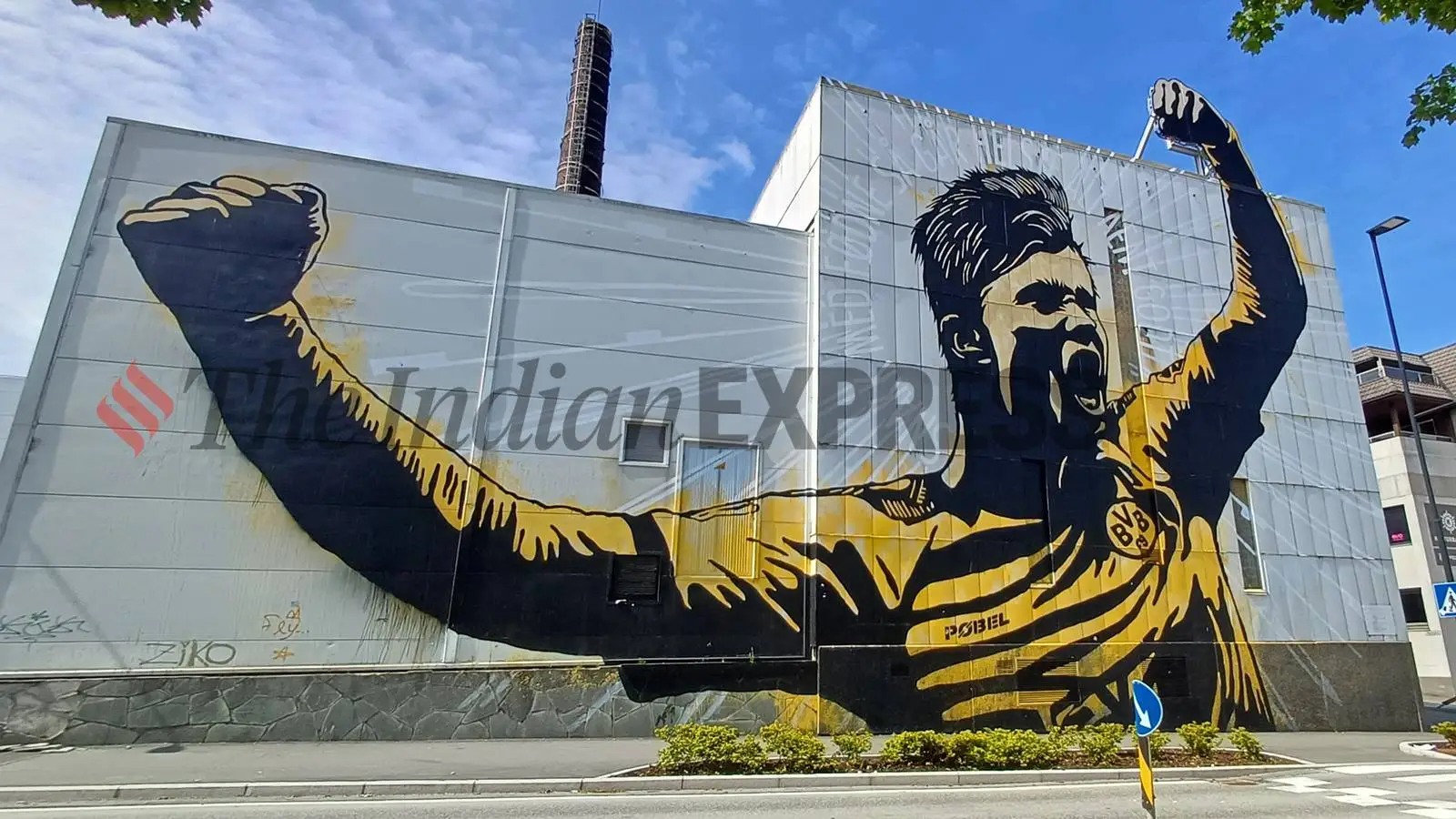
Espen Undheim has clung on to clips of a 10-year-old Erling Haaland playing football at his first club Bryne FK. The pre-teen facsimile of the present-day Haaland captured for posterity in these grainy video clips does not quite have the same signature hairdo that the Norway star rocks these days. Back then, he was tiny too — tinier than others in his age group — Undheim pointed out. But there’s something that Haaland had at the age of 10 that he still possesses: his sense of timing and his positioning on the pitch.Early on Monday, Haaland used these skills to evade Brazil defenders and stab two goals into the net, thus sending Norway to the quarter-finals of the FIFA World Cup. In doing so, Haaland also propelled himself upwards in the Golden Boot race, where he now co-habits the top spot with Lionel Messi and Kylian Mbappe.“You can see the runs that he makes now. I have videos from when he was 10 and 11. You can see the same situation and the same run,” Undheim had told The Indian Express in 2025. Undheim was Haaland’s first coach, having worked for 25 years at Norwegian football club Bryne FK. The boy arrived at the humble club in the south of Norway as an eight-year-old for an after-school football program for boys. At Bryne, not just Undheim, everyone else remembered Haaland, who currently towers at 6’5”, as someone who was physically smaller than his teammates in that age group. “Now he has power. Back then, he was not as strong or big. But he developed the ability to be at the right place,” said Sondre Norheim, who was Haaland’s teammate in his first team days at Byrne.Story continues below this ad Being a stickler for positioning almost made Haaland acutely aware of where his opponents were on the pitch. When Haaland was playing in his first game for Norway, as a 14-year-old playing for the U15 team, he scored a goal against Sweden from the kickoff because he noticed that the keeper was standing 12 metres out of his line. Espen Undheim talks while flanked by the club’s ground at the background. (Express Photo by Amit Kamath)Undheim narrated how Haaland used to be pushed around in training sessions by an older girl, who went to play as a defender for some of the biggest clubs, and a male player, who towered at 185cm. That’s why being at the right place was something Haaland obsessed over even as a 10-year-old. What he lacked in brawn, he tried to make up for with brain. “Even when he was nine years old, he would say, ‘I have to start earlier. I have to be one metre to the left.’ You don’t see that normally in kids that age. He was always thinking, ‘where should I be now?’” Undheim recollected of the boy he trained three days a week for four years before he became a club regular till the age of 15. “If he didn’t get the ball when he was in the right position or if he didn’t score when he had obvious chances, he would be very angry. He was always hungry for goals.” That hunger made the young Haaland train more than others. Before the team met for training sessions, Haaland would train alone for an hour. Just dribbling and shooting. On weekends, when everyone else was off, he would train four more hours by himself. “He practically lived in our indoor arena. His mom gave him some food and water. And that was it,” said Undheim. Erling Haaland in his youth football days for Bryne (Courtesy: Bryne FK)Haaland also hit the genetic lottery by being born to a footballer father and a mother who was Norwegian national heptathlon champion, who passed on speed to him. Under Undheim, Haaland sharpened his technical abilities. “He was not a good technical player. You can even see that today. When he was a youth player, he couldn’t use his right foot. That foot was quite dead. Only the left worked: shooting with the left, receiving with the l
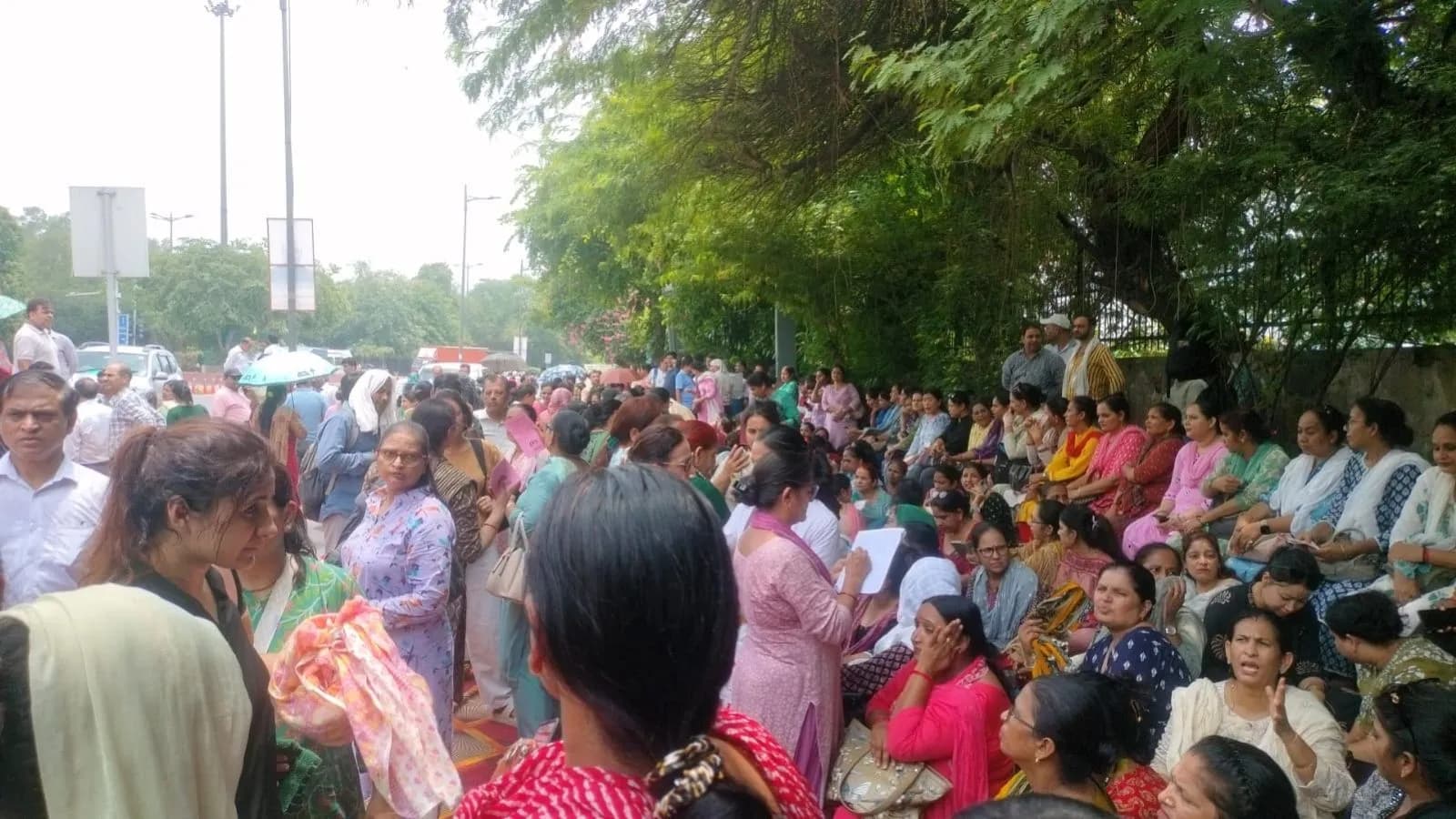
New DelhiUpdated: Jul 3, 2026 03:28 PM IST Doctors camped outside Vikas Bhawan near Sushruta Trauma Centre, Friday. (Express Photo)Around 500-550 doctors and healthcare workers employed under the Delhi State Health Mission (DSHM) sat on a one-day strike on Friday, demanding implementation of the recommendations of the 7th Pay Commission and other salary-related benefits. They camped outside Vikas Bhawan near Sushruta Trauma Centre after a delegation failed to meet either the Delhi Chief Minister or the Health Minister. Braving the sweltering heat, many protesters covered their heads with scarves, towels and caps, while others carried umbrellas.Members of the Health Mission Doctors’ Welfare Association said a delegation had sought meetings with the Chief Minister and the Health Minister but both leaders were unavailable and the strike continued. Their other demands include revision of salary ceilings to restore pending annual increments, job security for contractual employees, Delhi Government Employees Health Scheme (DGEHS) health cards, and retirement and death benefits for employees working under the National Health Mission (NHM). In a letter dated June 24, addressed to the State Programme Officer, DSHM, the association announced that NHM employees would go on a one-day token strike on July 3 if their long-pending demands remained unresolved. It warned that if its demands continue to be ignored, it may intensify its agitation in the coming days. ‘Backbone of health system, but ignored’ Association members said NHM doctors and healthcare workers form the backbone of Delhi’s public healthcare system, providing services at mohalla clinics, dispensaries, polyclinics, school health programmes, immunisation drives and several other public health initiatives across the Capital. Despite delivering frontline healthcare services for years, they alleged that thousands of contractual employees continue to work without job security or adequate service benefits.Story continues below this ad In the June 24 letter, the association claimed a proposal to extend benefits of the 7th Pay Commission to DSHM employees has remained pending for years despite completing departmental processing. It claimed the file had been forwarded for Cabinet approval but has since remained stalled without any official explanation. It also alleged that several employees have not received annual salary increments for the last three years because the maximum salary ceiling has not been revised in line with their years of service, resulting in significant financial losses. Members of the association said this is not the first time NHM employees have resorted to a strike. Similar protests have been organised in the past, but employees resumed work considering the impact on patients and after receiving assurances from the authorities. They alleged that despite repeated representations, the issues have remained unresolved, forcing them to return to the streets. There was no immediate response from the Delhi government or DSHM to the association’s claims. Sakshi Chand is an Assistant Editor at The Indian Express, based in New Delhi. With over a decade of experience in investigative journalism, she is a leading voice on crime, the prison system, and institutional governance in the National Capital. Professional Background Specialization: Her reporting focus includes high-stakes crime, national security, prison reforms, and traffic governance. Key Coverage: She has been on the frontlines of major events such as the 2G spectrum case, the 2020 North-East Delhi riots, and communal clashes across Uttar Pradesh (Kasganj, Aligarh). Earlier Career: Before joining The Indian Express, she was a reporter for The Times of India. Personal Interests: Outside of her career in journalism, Sakshi is a National-level basketball player and coach, bringing a unique sporting discipline to her professional life. Major Recent Coverage (Late 2025) Her reporting in the latter ha
New YorkJul 3, 2026 06:55 AM IST Spain defeated Austria 3-0 to qualify for Round of 16. (AP)The hair, Marc Cucurella says, is sacred. But he promises he will go bald if Spain lifts the World Cup. But when the moment arrives, the larrikin in him could deny, “Did I say that really?” He had made the promise before. A Barcelona product, as recently as April, he claimed he would rather chop the locks he had been nourishing for over a decade than join Real Madrid. Come May, he signed a 60-million pound contract to join the Spanish powerhouse. “Hair is not essential to my personality, it is my personality,” he told Spanish outlet Marca. The springy curls, girdled by a hairband that is about to burst, is part of what has made him a cult figure in Spain and England, where he played for five years. The full-back, who assisted two goals and saw a goal he scored chalked off in Spain’s dismembering of Austria, is the European champions’ wind-up merchant. The provocateur, his friends call him. When his goal was ruled out, he rushed to the referee, and commanded rather than implored him to check the VAR. Replays only justified the referee’s verdict, even though Pau Cubarsi infringement on Austria’s goalkeeper Xaver Schlager was soft. But he sought a detailed explanation from the referee, voiced his displeasure, and walked away shaking his head.Six minutes later, after Mikel Oyarzabal scored from Cucurella’s low cross and put Spain in front, he pounced in front of the referee and asked him, sarcastically, if the goal stood. The referee pointed to his pocket, suggesting he would not risk flashing a yellow card. Cucurella turned away and joined his teammates in celebration. He is an antithesis to the modern La Masia-raised footballer, the elegant, soft-spoken stylist, economical with his words and moves. He is the old-school hard tackling rogue. His manager at Eibar once summed him up precisely. “He’s not quick, he’s not strong. All those things we measure with all those machines we have, he doesn’t register on any of them; you would never sign him,” he said. “But he’s a footballer.” AS IT HAPPENED | SPAIN VS AUSTRIA WORLD CUP 2026 HIGHLIGHTS But he has become an integral part of Luis de la Fuente’s (who was a left-back with curled halo like Cucurella in his playing days) wondrously eclectic, mould-breaking side brimming with lively characters. Since the tiki taka era, the stereotype of La Rojas as a tessellation of fine-tuned technicians have clung on, as a burden first and as a convenient shield later. His orchestra is not a harmony of similar notes, but a medley of diverse tunes, but each combining perfectly to produce tuneful music. Spain struck three goals against Austria. (AP)Take for instance the brace-scorer Oyarzabal. He is not a classical nine, or a neo-classical false nine. He is not a centre forward, or a playmaker. But he does some of all their functions. He scores like a No 9; both his strikes were ripped off the classical manual. He drops back like a false nine; he wears the playmaking duties when Dani Olmo or Pedri is engaged somewhere else. He is the antithesis of Cucurella, who provided both his assists, and found time to complete his masters in business management. Lamine Yamal and Alex Baena flank him. Yamal ghosts through defences, bending flesh and bones through minuscule gaps; he is the prince of audacity, imagining inconceivable paths for the ball to travel in his mind. He didn’t score against Austria, twice the goalkeeper blocked his shots, but he lingered like a throbbing headache for the defenders. Baena, nurtured in Atletico Madrid, is a muscular, rumbustious winger, who employs the strength of his body as much as the gift of technique. He is a left-side midfielder redeployed on the flanks due to Nico Williams’ injury. He was unfortunate that his brutish free kick cannoned off the crossbar. Behind them is Dani Olmo, the invisible creator. Like Cucurella, he left Barcelona at 16, shocking his coaches, and

Discussion (0)