
Loading dispatches...
← Return to Newsroomgeneral
‘Samajhdaro ke liye ishara hi kaafi hai’: Bengal CM Suvendu Adhikari lists govt measures in address to Bhabanipur voters
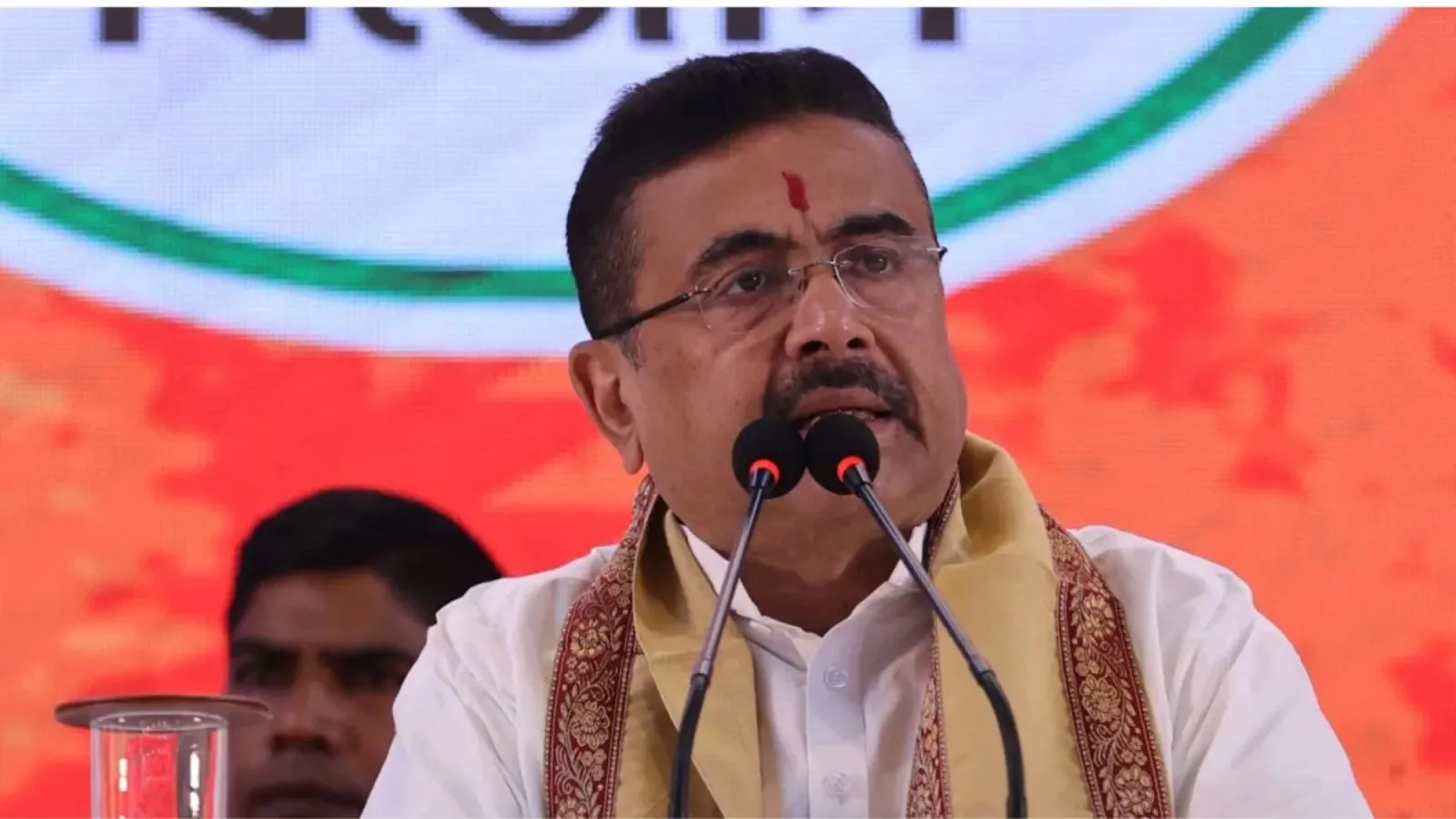
West Bengal Chief Minister Suvendu Adhikari. (Express File Photo)Addressing a section of voters in Bhabanipur, the former stronghold of ex-chief minister and TMC leader Mamata Banerjee, which he wrested for the BJP in the Assembly elections earlier this year, Chief Minister Suvendu Adhikari highlighted his government’s crackdown on public animal slaughter besides listing a slew of measures undertaken since he assumed office. In an apparent message to the Bhabanipur voters at a closed-door meeting in Alipore, Adhikari said, “We took a firm position over the old slaughter rules and asked to implement the new Act. I can’t say more than this because I am bound by the Constitution. Samajhdaro ke liye ishara hi kaafi hai (A small hint is enough for those who understand).”Adhikari was referring to the BJP government’s directives for the strict enforcement of the West Bengal Animal Slaughter Control Act, 1950, banning animal slaughter in public places and making fitness certificates mandatory before slaughter. At the same meeting, the Chief Minister also said, “Follow all religions, but do not block the roads.” Taking potshots at the previous governments, Adhikari said, “West Bengal fell behind during the Left Front regime. During the Left government’s tenure, only party offices were built. During the TMC government, politics of appeasement prevailed. Funds from the Lakshmir Bhandar scheme were being given to infiltrators.” Highlighting the steps taken to curb “infiltration”, Adhikari said the very first move by his government was to hand over land to Border Security force (BSF) to bolster border fencing. “We will not allow infiltration. Hindu refugees are welcome. We already identified infiltrators, kept them at detention centres and then pushed back,” he said.Story continues below this ad Listing out the other significant measures under his government in the last two months, Adhikari said, “The BNS has already been implemented in the state. The census work in the state has begun. The Assembly has also passed the anti-goonda bill to bring the goons to the book so that business is not disrupted. “If a goonda tries to destroy your property, a fine amounting to three times the damage will be collected from the accused,” he said. He also re-iterated his government’s stance over the implementation of Uniform Civil Code (UCC) in West Bengal. “A committee has been formed under the leadership of retired Justice Ranjana Desai, and after that report is submitted, a Uniform Civil Code will be implemented in the state,” Adhikari said.Story continues below this ad Former Chief Secretary Dushyant Nariala made School Service Commission chairman. “We had given the people of the state a firm commitment that complete transparency would be brought into the recruitment process and that the recruitment commissions would be freed from political influence and restructured on the model of the UPSC. Accordingly, when the Finance Minister announced in the budget speech that appointments would be made to vacant posts, we had pledged that there would be no political figure in any committee related to recruitment. Our government is determined to fulfill that promise to the letter,” he posted on X. “To achieve that goal, we have today taken a highly important step. To ensure transparency and impartiality in the recruitment process of the West Bengal Central School Service Commission (WBCSSC), the responsibility of the post of Chairman of the Commission has been entrusted to Shri Dushyant Nariala, a highly experienced and senior IAS officer of the state,” he added. Atri Mitra is a highly accomplished Special Correspondent for The Indian Express, bringing over 20 years of experience to his reporting. His work is characterized by deep regional knowledge and a focus on critical administrative and political developments, establishing strong Expertise and Authority in his domain. Experience Current Role: Special Correspondent
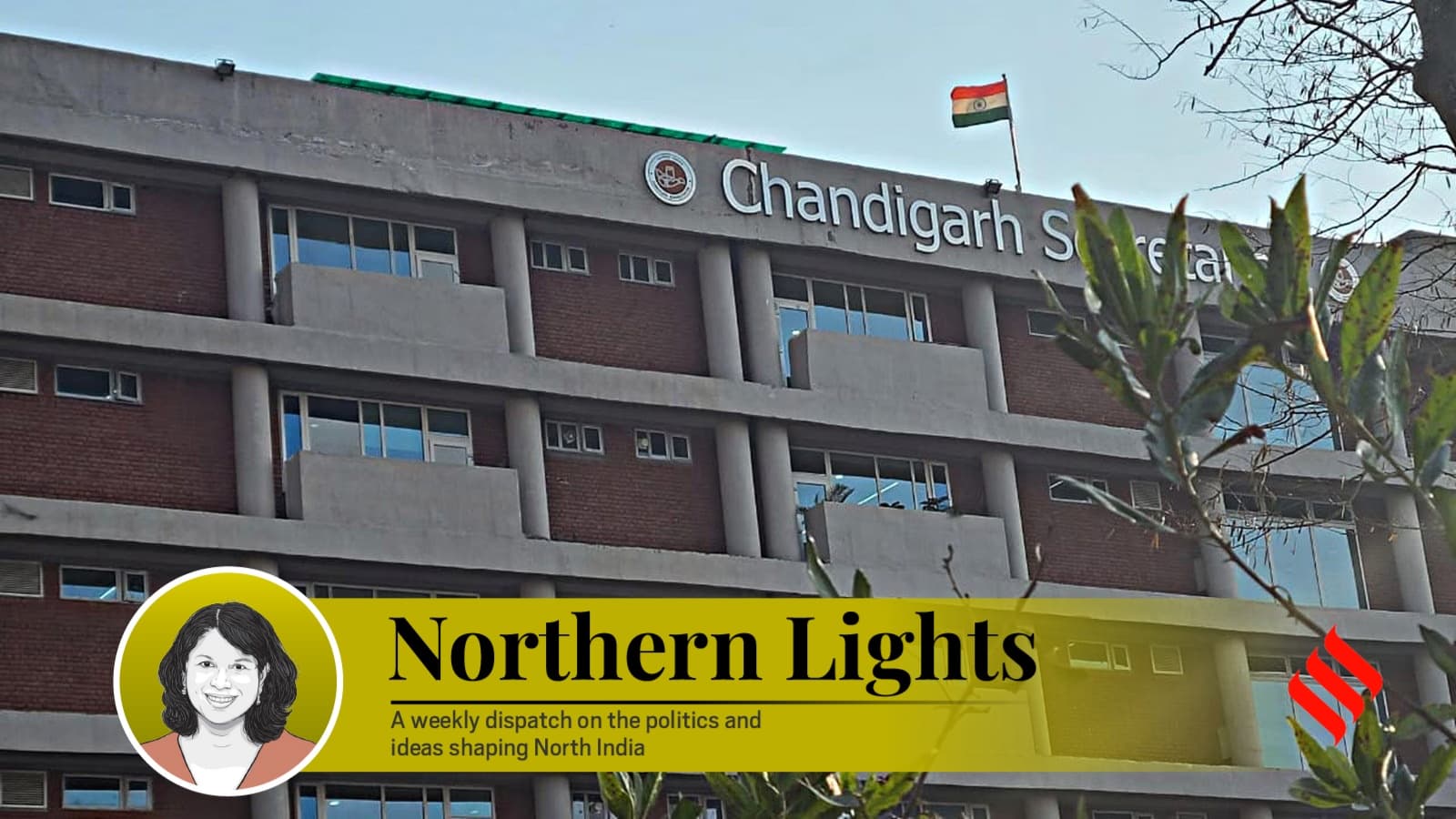
Last week, Himachal Pradesh Chief Minister Sukhvinder Singh Sukhu was in Chandigarh on a mission: he met Punjab Governor and Chandigarh Administrator Gulab Chand Kataria to seek a 7.19 per cent share in the Union Territory, arguing that Himachal, carved out of the erstwhile Punjab in 1966, was entitled to it as a successor state.Earlier this year, Punjab CM Bhagwant Mann made Chandigarh the centerpiece of his Republic Day address, reiterating that Punjab would ensure complete control over the city.This is a well-trodden arena. Four years ago, shortly after Union Home Minister Amit Shah announced that the Central civil service rules will be implemented for all employees under Chandigarh Administration, replacing Punjab’s, the AAP government convened a special Assembly session to pass a resolution seeking the city’s immediate transfer. Haryana CM Nayab Singh Saini maintains that Chandigarh remains their joint capital, while simultaneously pushing for land to build his state’s separate Assembly building in the city. Arc of a contested city Six decades after it became the joint capital of Punjab and Haryana, Chandigarh continues to be hotly contested. Yet, while governments continue to debate its ownership, the city itself has quietly evolved into something larger than a territorial prize. Conceived after Partition as Punjab’s replacement for Lahore, Chandigarh became Independent India’s first planned city, designed from scratch by Swiss-French architect Le Corbusier. Its Capitol Complex, comprising the Assembly, Secretariat and High Court, now enjoys the UNESCO World Heritage status and has been among India’s most significant architectural achievements. Chandigarh’s political future, however, was never settled. When Punjab was reorganised on the linguistic lines in 1966 into Punjab, Haryana and the hill areas that later became Himachal Pradesh, Chandigarh was designated a UT and made the joint capital of Punjab and Haryana as an interim arrangement. In 1970, then Prime Minister Indira Gandhi announced that Chandigarh would be transferred to Punjab while Haryana would receive the Fazilka tehsil, or equivalent territory, along with financial assistance to build a new capital. The proposal never took off. Fifteen years later, the Rajiv-Longowal Accord revived the promise, fixing January 26, 1986, as the date for Chandigarh’s transfer to Punjab after the exchange of certain Hindi-speaking areas. Militancy intervened, Sant Harchand Singh Longowal was assassinated, and the accord remained unimplemented. That has not stopped successive governments from reviving the issue whenever political circumstances demand it. The city, meanwhile, has moved on. Today it forms the nucleus of the Tricity, a term coined by former Punjab Governor V P Singh Badnore, nestled between Mohali in Punjab and Panchkula in Haryana. People live in one city, work in another and socialise across all three. Politically too, the region reflects India’s diversity: the AAP governs nearby Mohali, Chandigarh has a Congress MP but a BJP-dominated Municipal Corporation, while Panchkula is represented by the BJP. Civic elections here are often viewed as an early indicator of political trends in Punjab. Chandigarh has also developed a social character unlike that of most state capitals. Built over 22 villages of Punjab and sprawling mango orchards, it drew refugees, government officials, lawyers, professionals and entrepreneurs from across India. Justice M S Liberhan, who headed the Commission probing the demolition of the Babri Masjid, is among Chandigarh’s few prominent residents whose family belongs to one of its original villages. Industrialist Rajendra K Saboo, later the first Indian president of Rotary International, recalls arriving from Kolkata as a 25-year-old to meet then Punjab CM Partap Singh Kairon, who immediately resized an industrial plot to meet the requirements of his German collaborators. Soul of Chandigarh The city’s distinctive personality owes much
Discussion (0)