
Loading dispatches...
← Return to NewsroomPolitics
Andhra Pradesh’s retail inflation above national average for fifth month running
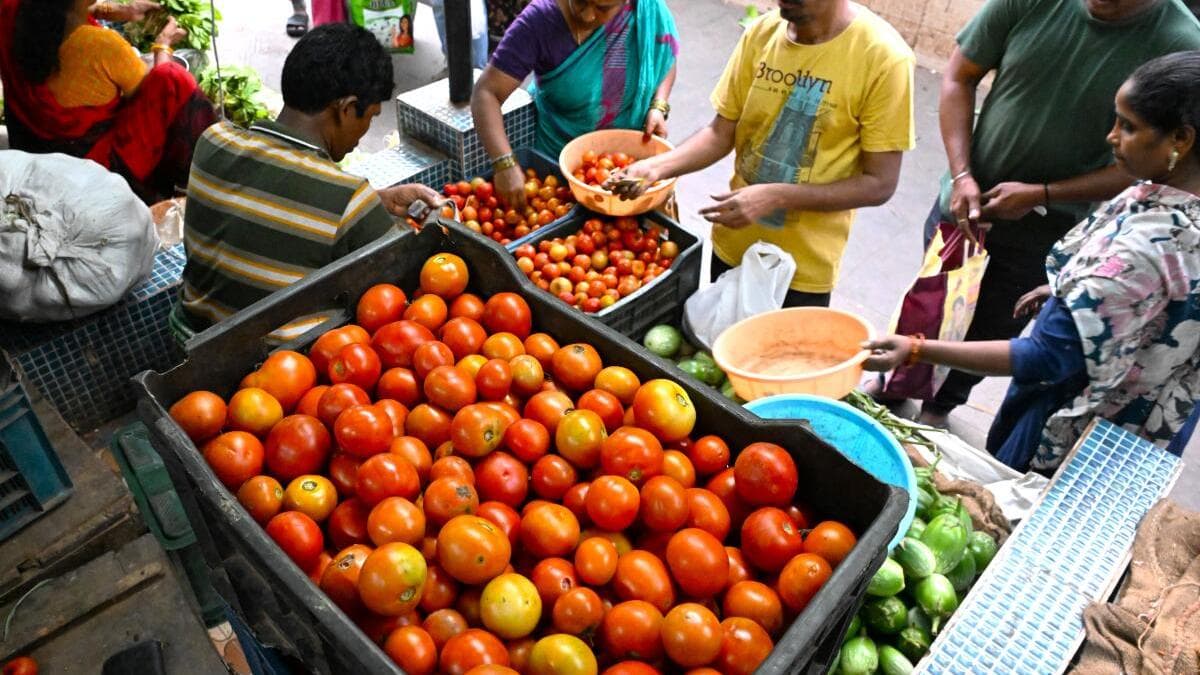
A tomato vendor sells vegetables at a Rythu Bazar in Visakhapatnam. | Raju Rising prices are putting increasing pressure on household budgets across Andhra Pradesh, with the State’s retail inflation staying above the national average for the fifth month running. From groceries and school fees to personal care and everyday services, families are spending significantly more than they did a year ago.According to the State government’s latest economic scorecard, Andhra Pradesh recorded retail inflation of 4.9% in May 2026, against the national average of 3.9%. The State’s inflation has stayed above the national rate since January this year.The increase marks a sharp turnaround from October 2025, when inflation in the State was just 0.2%. In seven months, prices have risen steadily, affecting households in both rural and urban areas.What it means to the common manFor an average family, the impact is becoming visible. A household that spent ₹10,000 a month on essential goods and services last year would now need to spend nearly ₹10,490 to buy the same items. Many families are forced to either spend more or reduce their purchases.The burden is heavier in rural Andhra Pradesh, where inflation has reached 5.09%, against 4.61% in urban areas. The main reason is the sharp increase in food prices, according to a presentation made by Principal Secretary (Finance and Planning) Peeyush Kumar at a recent meeting of secretaries and heads of department.Food and beverages recorded annual inflation of 6.91% in rural areas, while urban areas saw a lower increase of 5.44%. For example, groceries costing ₹1,000 last year now cost around ₹1,070 in rural markets, and about ₹1,054 in cities. Since rural households spend a larger share of their income on food, the increase has had a greater impact on their monthly budgets.Minister for Health, Family Welfare and Medical Education Satya Kumar Yadav and Dhanvantari Sahasraayu Peetam chairman Ravi Varma inspect an exhibition stall at the State-level workshop on medicinal and aromatic plants cultivation in Vijayawada on Wednesday.Video: G.N. Rao pic.twitter.com/TJGpZohNLR— The Hindu - Andhra Pradesh (@THAndhra) July 15, 2026Urban families, meanwhile, are facing rising costs in education and services. Education services recorded an inflation rate of 7.36%, making school fees, books and related expenses more expensive. A family that previously spent ₹20,000 on a child’s education now has to spend nearly ₹21,500 for the same academic requirements.Similarly, restaurants and accommodation services saw inflation of 7.47%, raising the cost of eating out and other hospitality-related expenses.“The steepest rise, however, has been recorded under personal care and miscellaneous services. Inflation in this category reached 24.79% in rural areas and 25.71% in urban areas,” officials said.The impact is evident in everyday expenses. A haircut that once cost around ₹120 now costs more than ₹150, while toiletries such as soap, toothpaste and detergent that cost ₹400 last year now cost nearly ₹500. Tailoring charges, household services and other routine expenses have also become significantly costlier.Recognising the sustained rise in prices, the State government has placed the current inflation trend on its official “Needs Attention” watchlist, signalling the need for close monitoring as households continue to grapple with rising living costs. “Inflation remains moderate but requires monitoring to ensure rising prices do not affect household consumption and business costs,” officials said. Published - July 16, 2026 03:57 pm IST

Civil Supplies Minister Nadendla Manohar chairs a performance review meeting on paddy procurement in Vijayawada on Thursday. | N. Rao :Andhra Pradesh has procured a record 74 lakh metric tonnes of paddy over the past two years and introduced a series of reforms aimed at making procurement faster, more transparent and farmer-friendly, said Food, Civil Supplies and Consumer Affairs Minister Nadendla Manohar on Thursday.Reviewing paddy procurement and preparations for the upcoming Kharif and Rabi seasons, the Minister said the coalition government had purchased paddy worth ₹31,000 crore, with 95% of payments to 11.53 lakh farmers credited to their bank accounts within 24 hours. He noted that procurement had risen sharply from 42 lakh metric tonnes during the previous government to 74 lakh metric tonnes under the present dispensation.Broken rice policyMr. Manohar said Andhra Pradesh’s 10% broken rice policy had received national recognition, with the Centre deciding to adopt the model across the country. He highlighted reforms such as QR code-based tracking, a track-and-trace system and WhatsApp-based farmer registration, which have enhanced transparency.For the coming Kharif season, the government will supply gunny bags directly at Rythu Seva Kendras, while transportation charges incurred by farmers will be credited within 48 hours. Uniform moisture meters are also being installed across the State to eliminate disputes over moisture content.The Minister cautioned that El Niño could affect paddy production in some regions and said the government was coordinating with the Agriculture Department and scientists to minimise its impact.Special Chief Secretary K. Kannababu and Civil Supplies Commissioner S. Dilli Rao said Andhra Pradesh had emerged as a national model in paddy procurement through coordinated efforts by officials, rice millers and transport agencies. FCI Regional General Manager Vijay Kumar Yadav praised the State’s reforms, including the successful implementation of QR code-based tracking, which are now being replicated by other States.Farmers also raised procurement-related issues, following which the Minister assured them that the government would address their concerns. Published - July 09, 2026 08:55 pm IST
Civil Supplies Minister Nadendla Manohar inaugurates a ‘Mee Mart’ outlet at Lalupuram, near Guntur, on Monday. Prathipadu MLA B. Ramanjaneyulu and others are seen | VIJAY KUMAR Andhra Pradesh has launched its ambitious ‘Mee Mart’ initiative to modernise the public distribution system and provide quality consumer goods at prices lower than those in the open market. The first of the proposed 1,000 Mee Marts across the State was inaugurated by Food and Civil Supplies Minister Nadendla Manohar at Lalupuram, on the outskirts of Guntur city, on Monday.Speaking on the occasion, the Minister said the initiative was designed to benefit both consumers and nearly 30,000 fair price shop dealers by creating an additional source of income while ensuring affordable access to quality household essentials. Unlike conventional ration shops, Mee Marts will stock more than 250 daily-use products, to be sold at ₹3 to ₹5 below prevailing market prices without compromising on quality.The project is being implemented by the State Civil Supplies Department in partnership with the National Cooperative Consumers Federation of India Ltd.. Of the proposed 1,000 Mee Marts, 553 are ready for launch, with nine outlets inaugurated on Monday.Mr. Manohar said the government also planned to integrate the outlets with the Central Bank Digital Currency (Digital Rupee) platform, enabling beneficiaries to use digital subsidies to purchase essential commodities. He added that fair price shops would be modernised and kept open throughout the month, transforming them into community retail centres that offer greater convenience, transparency and economic security for both consumers and dealers. Published - July 06, 2026 08:25 pm IST

Discussion (0)