
Loading dispatches...
← Return to NewsroomEconomy
Argentine Football Association under FBI investigation for money laundering: Here is what we know so far
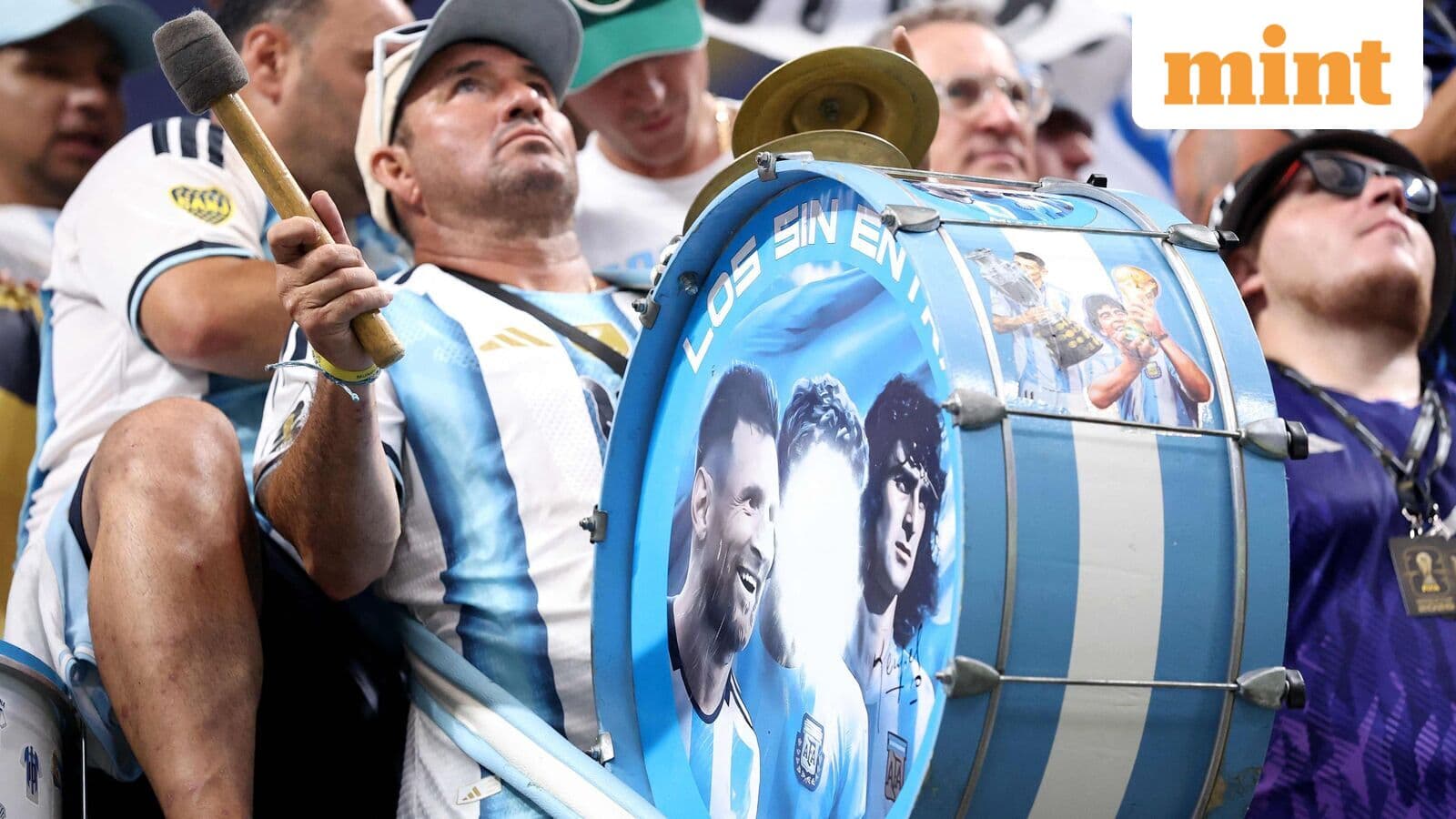
Argentine Football Association is under FBI investigation for alleged money laundering involving over $300 million. The probe focuses on financial activities linked to President Claudio Tapia and suspicious transactions, including payments to individuals connected to the AFA.A fan plays a drum with the face of Lionel Messi of Argentina on during the FIFA World Cup 2026 Round of 16 match between Argentina and Egypt at Atlanta Stadium on July 07, 2026 in Atlanta, Georgia. (Getty Images via AFP)Even as defending champions Argentina continue their impressive run in the ongoing FIFA World Cup 2026, jointly hosted by the US, Canada, and Mexico, the country’s football governing body is making headlines for the wrong reasons. Argentine Football Association (AFA) is reportedly under investigation by the Federal Bureau of Investigation (FBI) for alleged money laundering.According to Argentine newspaper La Nación, the FBI is probing how the AFA moved more than $300 million to banks and companies in the US. The activities of Claudio Tapia, the President of the AFA, are under the scanner of the investigators, the report said.Quick answers to key questions•5 QUESTIONSThe Argentine Football Association (AFA) is under investigation by the FBI for alleged money laundering involving over $300 million in transactions to banks and companies in the US.TourProdEnter LLC is a South Florida-based company that managed the AFA's contracts abroad, and its financial activities are being scrutinized to determine if they involve money laundering or bank fraud.One suspicious transaction under investigation includes a $340,000 payment made to the family of a so-called 'spiritual guide' who accompanied the national team to major tournaments.Guillermo Tofoni was questioned by the FBI in connection with the financial activities and transactions of the Argentine Football Association being investigated for potential money laundering.The AFA has not officially responded to the investigation report, but Tomas Regalado, an ambassador for the AFA, noted that investigative measures do not determine guilt or responsibility.The investigation revolves around whether the flow of over $300 million through TourProdEnter LLC, a South Florida-based company that administered the collection of AFA's contracts abroad, could be classified as money laundering or bank fraud under American jurisdiction. The transactions were channelled through accounts at Citibank, Bank of America, and JP Morgan.The report added that during Argentina’s match against Cape Verde, FBI agents and Justice Department prosecutors questioned Argentine sports businessman Guillermo Tofoni in connection with the allegations.Documents accessed by La Nación show that TourProdEnter LLC managed at least $260 million in revenue from the AFA, though only a small portion of this can be directly linked to the football body’s operating expenses.Another $57 million has reportedly been distributed to various people and companies, though the documentation doesn't outline any specific reason. The report also added that some of these wire transfers appear to have been sent to companies that were controlled by individuals who have received social welfare benefits and have resided in either Buenos Aires or Bariloche.Other financial transfers made have been linked to Pablo Toviggino, the Executive Secretary and Treasurer of AFA.$340,000 paid to ‘spiritual guide’One of the suspicious transactions under investigation is the $340,000 paid to the family of a so-called “spiritual guide” who traveled with the national team to major tournaments, including the Copa América in 2024 and this year’s World Cup. The payments, involving 17 transfers of $20,000 each, were made to the son of José Almaraz, a former player described as a spiritual guide close to AFA leadership.While the AFA has not officially responded to the report, Tomas Regalado, who is acting as an ambassador for the AFA in North America, recently stated that “Investigativ
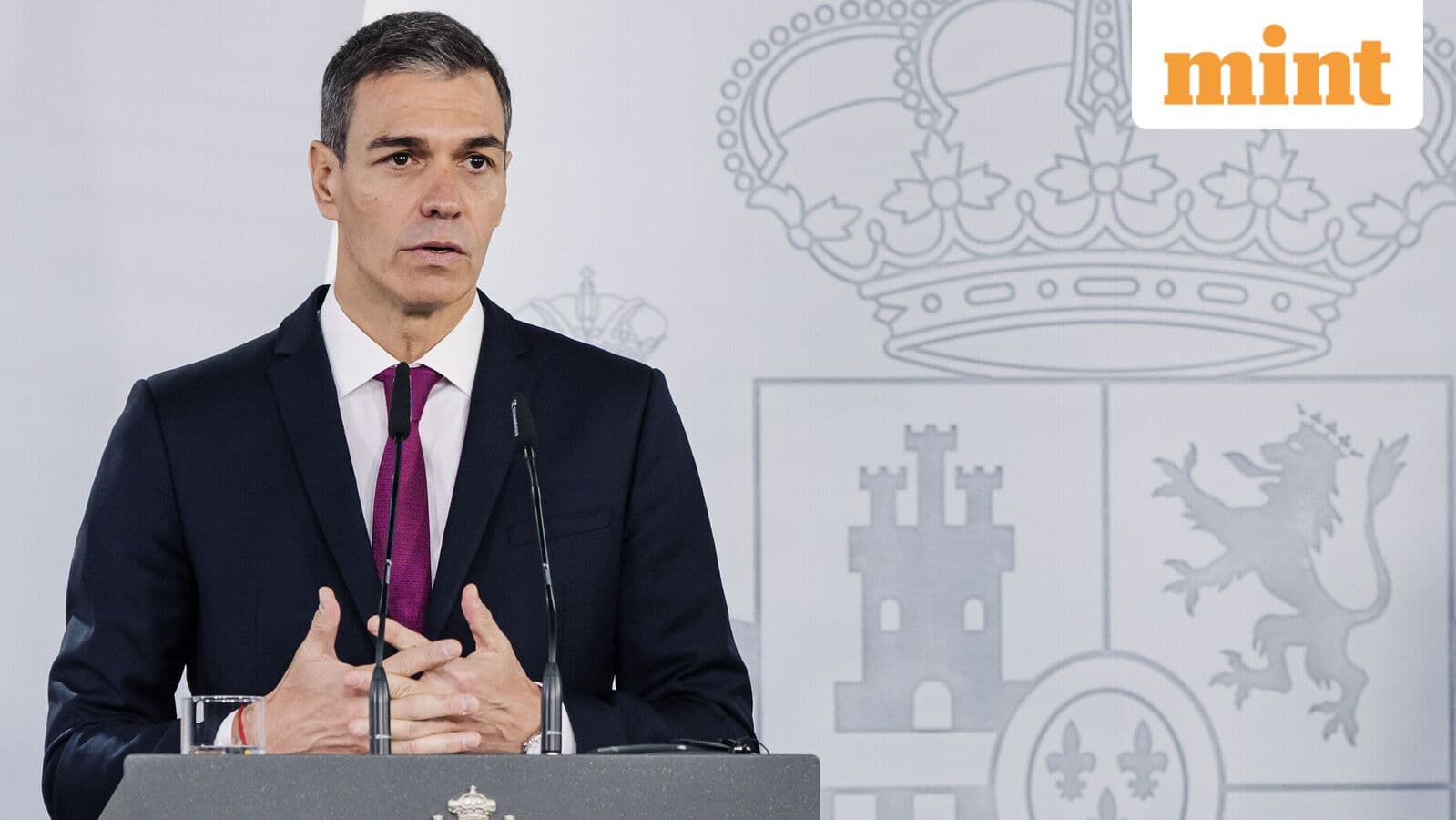
Spain's Prime Minister Sánchez's Office downplayed Trump's trade threats, emphasising strong bilateral relations in trade and defence. Amid NATO tensions, Spain rejects increased military spending demands and maintains its commitment to social and economic ties with the US.Spain's PM Downplays Trump's Trade Threat, Emphasizes Strong Bilateral Ties(AP)Responding to US President Donald Trump's threat to cut off trade, Spain's Prime Minister Pedro Sánchez's Office said it was treating the remarks as "business as usual," noting that bilateral ties remain beneficial in both trade and defence. The office also said that Spain enjoys excellent social, cultural, and economic relations with the United States and has no intention of changing that.Speaking at a summit of NATO leaders in Ankara, Trump also said he had ordered his Treasury Secretary Scott Bessent to cut off trade ties with Spain, calling Madrid a "terrible partner" in NATO.Washington and Madrid have been at loggerheads, with Spain explicitly rejecting Trump's demands for European countries to sharply increase military spending to pay for their own defence.Quick answers to key questions•5 QUESTIONSSpain's Prime Minister Pedro Sánchez's Office stated they are treating Trump's remarks as 'business as usual' and emphasized the continued benefits of trade and defense relations with the United States.Trump criticized Spain for not participating adequately in NATO obligations, particularly mentioning the country's stance on military spending and its refusal to support U.S. operations against Iran.Despite Trump's negative comments, Spain maintains a strong social, cultural, and economic relationship with the U.S., emphasizing that they do not intend to alter these ties.Spain has explicitly rejected Trump's demands to increase military spending, believing their current level of commitment is sufficient for their defense needs.Spain has denied the U.S. access to its military bases for operations against Iran and closed its airspace to U.S. planes involved in the conflict, reflecting its independent defense policy."Spain is a wasted cause. We don't want to do any trade business with Spain anymore," Trump said. “By the way, I'd like to cut it off. Spain is a terrible partner in NATO. They don't participate, they don't pay. I don't want anything to do with Spain. Cut off all trade with Spain, including visits.”In March, Spain had told the US that it will not allow them to use joint military bases on its territory for operations against Iran and also closed its airspace to US planes involved in the war.About the AuthorSanchari GhoshSanchari Ghosh is an Assistant Editor at Mint with over 12 years of experience in journalism, specialising in personal finance, DLT & DeFi, geopolitics and foreign policy, with a particular emphasis on how these areas intersect. She writes extensively about how money works in everyday life—helping readers navigate personal finance decisions. As AI reshapes investing behaviour, capital is increasingly flowing into decentralized ecosystems, redefining how assets are managed, traded, and valued. She focuses on explaining how money flows within frameworks like Distributed Ledger Technology (DLT), DeFi protocols, and crypto markets—while also exploring what the future of money could look like in a trustless, programmable financial world. She also focuses on immigration-related issues, simplifying complex topics around visas, passports, overseas financial planning, and the many practical challenges Indians face while moving or living abroad. Alongside personal finance, Sanchari has a strong understanding of international politics, contemporary and historical conflicts, and global state decisions. She closely tracks how geopolitical developments influence economies, markets, and individual financial choices, bringing together finance and global affairs in her reporting. She began her career as a desk editor, which gave her a strong foundation
A US federal judge on Monday rejected a motion to dismiss criminal charges against Brian Cole, who is accused of planting pipe bombs on the eve of the Capitol attack.FILE - Violent protesters gather outside the U.S. Capitol, Jan 6, 2021.(AP Photo/Andrew Harnik)A federal judge in the US has refused a plea to dismiss criminal charges against Brian Cole Jr, the man accused of planting pipe bombs outside the Republican National Committee and Democratic National Committee on the eve of the 6 January 2021 attack on the US Capitol.District Judge Amir Ali said that US President Donald Trump's pardons for Capitol rioters were "expressly limited" to individuals convicted of offences committed during the attack that day, CBS News reported Monday (local time).What did Brian Cole's lawyers say?His lawyers cited prosecutors' court filings, which said he had told the Federal Bureau of Investigation (FBI) that he travelled to Washington, DC, to attend a protest related to the 2020 election. They argued that this showed he was part of "the same political controversy that animated the January 6 crowd." The defence also said that although the pipe bombs were allegedly planted on 5 January, they were not discovered until the following afternoon.His lawyers wrote, “The Pardon—like it or not—applies to Mr. Cole, based on the ordinary and plain meaning of the Pardon's language as applied to the relevant facts in this case.”What did federal judge say?Judge Amir Ali denied the motion put forth by Cole's lawyers, who argued that his actions were "inextricably and demonstrably tethered" to the events of the 6 January attack on the US Capitol and that the charges should be dismissed.In a three-page opinion, Ali wrote, "Even assuming that the conduct Cole is charged with is 'related to events that occurred at or near the United States Capitol on January 6, 2021,' the pardon is expressly limited to people who had been 'convicted of offenses' related to those events." He added, "Cole had not been convicted of the conduct at issue when the President issued the pardon; indeed, he was not charged until many months after the President's proclamation."What is case against Brian Cole?In 2025, Cole was charged with interstate transportation of explosives and malicious attempt to use explosives, nearly five years after the pipe bombs were allegedly planted. Although the devices did not explode, the FBI said they were capable of detonating. Earlier in April this year, federal prosecutors filed additional charges against him, including terrorism and use of a weapon of mass destruction.Cole was arrested in Virginia in December 2025, a day before his initial hearing in the District of Columbia District Court, and is facing two charges in connection with a pair of explosive devices that were left outside the parties' headquarters on the eve of the 6 January assault on the US Capitol.Citing an affidavit, CBS News reported in December that cellphone records placed Cole's phone near the Democratic National Committee (DNC) and Republican National Committee (RNC) headquarters on 5 January, when surveillance cameras captured a person allegedly planting the pipe bombs. The document also states that Cole's car was detected by a license plate reader less than half a mile from the location where the individual was seen. Investigators said they have records showing that Cole purchased components allegedly used to assemble the explosive devices.He has pleaded not guilty to the allegations levelled against him.About the AuthorSwati GandhiSwati Gandhi is a digital journalist with over four years of experience, specialising in international and geopolitical issues. Her work focuses on foreign policy, global power shifts, and the political and economic forces shaping international relations, with a particular emphasis on how global developments affect India. She approaches journalism with a strong belief in context-driven reporting, aiming to break down complex global events into clear



Discussion (0)