
Loading dispatches...
← Return to NewsroomEconomy
Elon Musk’s xAI challenges Minnesota law targeting AI ‘nudify’ apps

The legislation, which takes effect on Saturday, targets websites and applications that enable users to create non-consensual sexually explicit AI-generated imagesThe lawsuit follows a similar legal challenge filed by the company against a California law aimed at curbing AI-generated deepfakes.(REUTERS)Elon Musk’s artificial intelligence company xAI, now owned by SpaceX, has filed a lawsuit against Minnesota Attorney General Keith Ellison, challenging a new state law that seeks to ban so-called “nudify” apps, CNBC reported.The legislation, which takes effect on Saturday, targets websites and applications that enable users to create non-consensual sexually explicit AI-generated images. It imposes fines of $500,000 for every explicit deepfake created through such platforms. Passed in April, the law was championed by Minnesota state Senator Erin Maye Quade after learning that a man had used social media photos of more than 80 women he knew to generate sexualized images and videos without their permission.In their complaint, attorneys for xAI wrote: the statute “imposes an overbroad, content-based ban on free speech and the tools of visual expression in a clumsy attempt to prohibit ‘nudification.’”xAI contends that the law violates First Amendment protections and imposes excessive financial penalties. The company argued that if users generated 100,000 prohibited images, a platform could face fines totalling an “eye-popping $50 billion.”Maye Quade previously told CNBC that the legislation is comparable to long-standing laws banning voyeuristic acts such as secretly taking explicit photographs through windows, arguing that the law is designed to address a modern technological equivalent.The AI company, now operating under the name SpaceXAI, is also facing a proposed class-action lawsuit alleging that its Grok chatbot and image-generation tools were used to create and distribute child sexual abuse material (CSAM) by manipulating real photos and videos of the plaintiffs. The lawsuit further claims the company failed to provide authorities with information about individuals who allegedly used Grok to "nudify" victims' images.In response, Musk’s company said it strictly prohibits the creation of nude or sexualized images of individuals without their consent. It added in its Minnesota complaint that it has taken legal action against users who bypass its technological safeguards to generate such content.The lawsuit follows a similar legal challenge filed by the company against a California law aimed at curbing AI-generated deepfakes. In that case, a federal judge partially sided with the company by striking down provisions that restricted the use of AI-generated deepfakes during election campaigns.UK MP sues xAI, seeks court order to block AI-generated fake sexual imagesA British lawmaker who is suing Elon Musk's xAI over fake sexualised images allegedly created using its Grok AI platform is seeking a court order to prevent the chatbot from generating any non-consensual sexualised images of her, Reuters reported on Tuesday.Jess Asato, a member of the UK's governing Labour Party, said last month that users produced fabricated images of her after she publicly criticised Musk and Grok. Among the AI-generated content was a video that allegedly depicted her "being chloroformed and prepared for a sexual assault."Asato has filed a lawsuit in London's High Court accusing xAI of misuse of private information and violations of data protection laws. She argues that the design and training of the Grok chatbot enabled the creation of sexualised content featuring her without consent.According to court filings, Asato is asking the court to direct xAI to "implement effective and permanent technical measures" that would prevent Grok from generating manipulated images of her in the future.Her legal team said the case could have far-reaching implications for the artificial intelligence industry, arguing that no previous lawsuit has applied UK privacy and da

The revised draft drops proposals for government nominees and a ₹5 lakh fine for disciplinary lapses, as these were strongly opposed by the BCI.The draft seeks to empower the BCI and state bar councils to administer welfare funds for insurance, pensions, medical relief and support for advocates' disabled and dependent family members.The Bar Council of India (BCI) has proposed a revised Draft Advocates Act Amendment Bill, 2026, which introduces changes to Section 47 to ensure that Indian courts remain the exclusive domain of Indian advocates and that foreign lawyers and law firms are not permitted to appear before any Indian court.The proposals also state that draft rules governing foreign law firms and lawyers must be framed with prior approval from the central government, as the Centre is best placed to take into account the country's diplomatic and bilateral relations with foreign countries.They also propose increasing women's representation in the apex statutory body from 25 to 33, including four elected and three co-opted members.The draft seeks to empower the BCI and state bar councils to administer welfare funds for insurance, pensions, medical relief and support for advocates' disabled and dependent family members, to be funded through subscriptions that the councils may now legally collect.It also proposed increasing the Legal Education Committee to 25 members, up from 10. They can bring in former judges, the attorney general, solicitor general, vice-chancellors and law deans.The BCI has proposed to raise the enrolment fee for new advocates to ₹18,000 for the State Bar Council and an additional ₹4,500 for the BCI, citing the Supreme Court's 2024 ruling in Gaurav Kumar v. Union of India, which flagged the old fee as badly out of step with inflation.The BCI circulated the draft on 18 July and invited recommendations until 31 July.Second attemptThis is the second attempt to amend the six-decade-old law governing India’s legal profession. The draft of 2025, brought in by the law ministry, sought government nominees on the BCI and threatened advocates with heavy fines and disciplinary action for participating in strikes.The revised draft drops proposals for government nominees and a ₹5 lakh fine for disciplinary lapses, as these were strongly opposed by the BCI, which said the legal profession should continue to be regulated by the statutory body rather than the government.“The BCI should regulate and not prohibit foreign lawyers in arbitration. The competition will improve the quality of advocacy," said retired Justice Hemant Gupta.The government said in a statement that the amendments are aimed at modernizing the Act, strengthening legal education and improving professional standards while preserving the independence of the legal profession.About the AuthorsYash TiwariYash Tiwari is a Mumbai-based journalist who reports on corporate and regulatory developments, with a focus on court-driven policy shifts and the intersection of law and public policy. He has been in the profession for two years. Before joining Mint, he worked at NDTV Profit as an assistant producer on the TV desk while also reporting, gaining experience across television and print journalism and combining reporting with production expertise. Born in Kolkata, a city he remains deeply connected to, Yash has a keen interest in the technicalities of Indian law and aims to decode complex legal developments in a clear and accessible manner for readers. He is a graduate of the Asian College of Journalism, Chennai, where he completed his postgraduate diploma in journalism. He closely follows politics and government policies, and has covered several state elections as a freelance journalist. His work is driven by the idea of making law less intimidating and more understandable for the general public. When not at work, Yash can be found playing cricket, revisiting classic matches, or engaging in conversations about the evolving landscape o

The PFRDA panel will suggest measures to enable Indian pension funds to collaborate with leading global pension funds through co-investment platforms, strategic partnerships and innovative investment structures.Pension funds under the NPS currently manage assets worth about $185 billion.The Pension Fund Regulatory and Development Authority (PFRDA) on Wednesday said it has appointed Dinesh Khara, chairman of NPS Trust, to head a high-level committee that will draw up a roadmap to attract long-term global pension capital into India. This will be done through partnerships between overseas pension funds and Indian pension funds under the National Pension System (NPS), as the regulator looks to deepen the country's long-term investment base for infrastructure and economic growth.The committee, named ASCEND (Accelerated Scaling of Global Capital Ecosystem and NPS Development), will recommend measures to enable Indian pension funds to collaborate with leading global pension funds through co-investment platforms, strategic partnerships and innovative investment structures. PFRDA said such collaborations are expected to channel stable, patient capital into infrastructure and other nation-building assets while offering diversification and better long-term risk-adjusted returns to NPS subscribers.The panel will also recommend a policy, regulatory and governance framework to facilitate greater participation by global pension investors while safeguarding subscriber interests and financial stability. According to the regulator, the initiative is aimed at strengthening Indian pension funds as trusted domestic partners for global institutional investors, accelerating NPS asset growth and positioning India as a preferred destination for long-term capital.Apart from Khara, the committee comprises Narayan Ramachandran, chairman of TeamLease Services Ltd; Ananth Narayan, former whole-time member of Sebi; Ashvin Parekh, managing partner at Ashvin Parekh Advisory Services; Arvind Gupta, trustee of NPS Trust; and Suparna Tandon, chief executive officer of NPS Trust, who will serve as the member secretary.The regulator said the committee's recommendations are expected to lay the foundation for a globally competitive pension ecosystem that supports India's long-term infrastructure financing needs. Pension funds under the NPS currently manage assets worth about $185 billion ( ₹17.5 trillion)—equivalent to around 5% of India's GDP—for nearly 100 million subscribers.The PFRDA is the statutory regulator for India's pension sector, established under the PFRDA Act, 2013. It oversees the National Pension System (NPS), a voluntary, defined-contribution retirement savings scheme launched by the Government of India on 1 January 2004 for new central government employees (except the armed forces). The scheme was opened to all Indian citizens on a voluntary basis in May 2009, and later extended to Non-Resident Indians (NRIs) and Overseas Citizens of India (OCIs). As of June 2026, NPS manages assets of over ₹17.5 trillion (about $185 billion) for nearly 10 crore subscribers, making it one of India's fastest-growing long-term savings platforms.About the AuthorHarsh KumarHarsh Kumar is a policy reporter at Mint (HT Media Group), where he covers the Ministry of Commerce and Industry along with key departments of the Ministry of Finance, including the Department of Economic Affairs (DEA) and the Department of Financial Services (DFS). With over five years of experience in business and economic journalism, he has developed strong expertise in tracking policy developments and their wider economic impact. He has previously worked with Business Standard, Moneycontrol, and Outlook Money, where he reported extensively on banking, financial services, and the broader economy. Over the years, he has built a reputation for delivering accurate, insightful, and impactful stories, supported by a keen eye for detail and a consistent track record of breaking exclusive news.<b
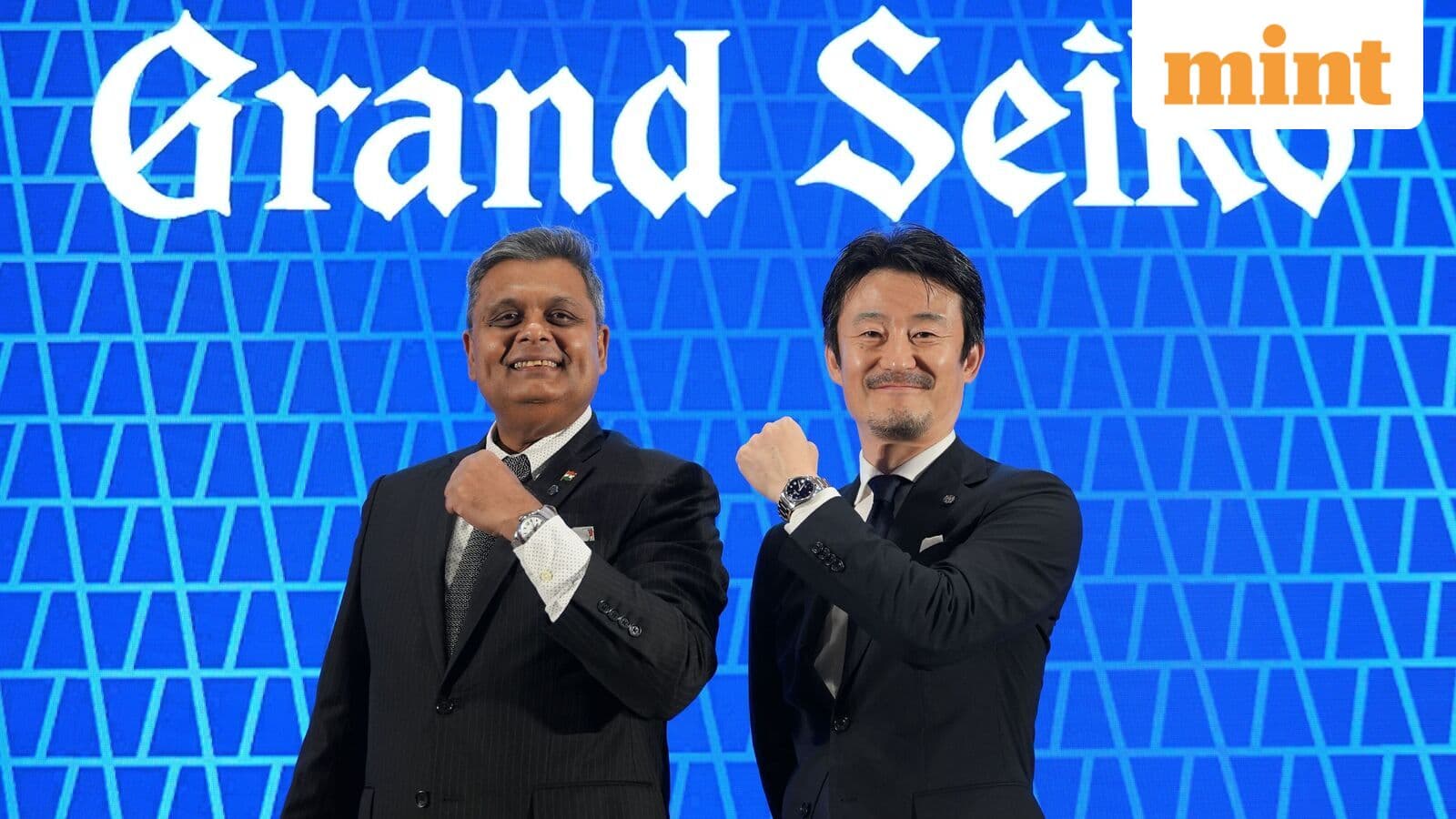
(From left) Niladri Mazumder, president and COO of Seiko India, and Tatsuya Asami, director and senior vice-president, Grand Seiko global division.SummaryGrand Seiko’s India buyers have grown younger and richer simultaneously, even as supply constraints—not demand—cap growth, pushing the brand to fight for larger allocations from Japan’s limited craftsmen.Japanese watchmaker Seiko is sharpening its India strategy for luxury label Grand Seiko, expanding retail presence and betting on rising demand from younger affluent consumers as the country's premium watch market gathers pace."We want to make Grand Seiko India the third-largest market for the brand in the world because there is good growth potential in the luxury segment," Niladri Mazumder, president and chief operating officer (COO) of Seiko India, told Mint in an interview.The expansion comes as luxury watchmakers intensify their focus on India, one of the world's fastest-growing premium watch markets. Grand Seiko is looking to strengthen its position against established rivals such as Rolex, Omega and Patek Philippe by capitalizing on rising demand for luxury mechanical timepieces among younger Indian buyers.According to an October 2025 report by market intelligence firm SOIC Research, India's luxury watch market is expected to grow 11-12% annually, supported by a rising affluent population and increasing wealth among high-net-worth individuals (HNIs).Luxury ambitionThe company opened its second Grand Seiko Salon in Bengaluru on Wednesday, taking its total exclusive salon count in India to four.The expansion builds on Seiko's remarkable rise in India. Seiko Watch Corporation, which operates across more than 100 countries through about 15 subsidiaries, has seen India climb from its 14th-largest market before the pandemic to its third-largest globally, outside Japan and the US.Mazumder attributed the rise partly to Russia dropping out of the rankings following the war, but said the bigger driver has been sustained growth in Indian demand.Globally, Seiko Group Corporation reported consolidated net sales of ¥335.7 billion for the financial year ended March 2026, up 10.2% year-on-year. Its watches business—which includes Grand Seiko and Seiko's other global brands—generated ¥203.1 billion in revenue.The company does not disclose India-specific revenues.Younger buyersGrand Seiko's India business is drawing close attention from its global headquarters because of the changing profile of its customers.According to company executives, the average buyer age has declined to 25-40 years from 40-55 years just four years ago. At the same time, the average selling price of a Grand Seiko watch in India has increased to about ₹6.5 lakh from ₹5 lakh.The company said the increase reflects consumers opting for more premium models rather than price hikes, noting that prices have been raised only once in the past four years.Grand Seiko and Seiko have posted compound annual growth rates (CAGR) of more than 50% and 56.5%, respectively, in India over the past five years, according to the company.That combination—younger buyers spending more without being pushed there by higher prices—has convinced the company that India is now a market it can aggressively scale rather than merely sustain. As a result, headquarters is allocating more inventory to the country, Mazumder said.The shift is also creating an internal upgrade cycle. Buyers entering the Seiko ecosystem through collections such as Prospex, priced at around ₹4 lakh, are increasingly moving up to Grand Seiko's Spring Drive models instead of switching to rival luxury brands.Spring Drive watches are typically priced between ₹6-7 lakh at the entry level and ₹40-45 lakh for flagship models.Changing tastesTatsuya Asami, director and senior vice-president at Grand Seiko global division, said that the broader industry context has shifted since the pandemic, when demand for high-priced watches surged and long waiting lists became common."I belie
Since January 2025, the Rupee has depreciated by ~9%. INR was amongst the weakest currencies in Asia during May 2026 when it weakened to 96.96. The currency has faced headwinds over the last ~2 years: expensive equity valuations, India not being in the AI theme, tariff challenges, uncertainty due to the impact of agentic AI on India's $160 billion software exports, high energy prices due to geopolitical tensions, and tepid net FDI over the past two years.Above all, the narrow interest rate differentials vis-a-vis the US and expectations of INR depreciation have led to greater importer hedging (importer leads) and subdued exporter hedging (exporter lags). Indian equity markets witnessed FPI outflows of ~$30 billion, in addition to ~$19 billion from last year.RBI's headline reserves are ~$685 billion. RBI, due to its FX intervention, has a short forward book of ~$100 billion. Adjusting for this and gold valuation, usable reserves are ~$460 billion.In the above backdrop, GOI and RBI came up with measures to augment capital flows - removal of withholding tax and capital gains on government bonds, bearing full hedging cost for incremental FCNR (B) deposits, concessional swap window for ECBs raised by PSUs, expansion of bonds to be included in the Fully Accessible Route (FAR) for FPIs, simplifying various investment categories for FPI investment, permitting Persons Resident Outside India (PROI) to invest in Indian equities. These measures will likely bring in capital flows in the region of ~$70 billion.A similar FCNR (B) scheme was announced in 2013. In September 2013, prior to the FCNR announcement, the INR was 65.70, and the 40-country Real Effective Exchange Rate indicated an 11.50% undervaluation. Following the FCNR announcement in September 2013 until June 2014, the INR appreciated by approximately 10%, moving from 65.70 to 59.10. Consequently, the REER undervaluation corrected to 4.5%. While FCNR was a necessary catalyst for this appreciation, the sufficient condition was an expectation of a stable government in 2014 that triggered capital inflows.Fast forward to 2026, and the USD/INR was at 95.70 when the recent FCNR announcement was made, with the 40-country REER being ~10% undervalued. The FCNR announcement provides the necessary condition for INR appreciation; the sufficient condition could materialise from an unwind of importer leads and exporter lags, estimated at ~$185 billion.For FY24-25 and FY25-26, Balance of Payments (BoP) data suggests a net reserve drawdown of ~$29 billion. This number does not fully capture the extent of the RBI's FX intervention. RBI sold $87 billion in the spot market over these two years, $34 billion in 2025 and $53 billion in 2026. Further, RBI increased its net short USD position in the forward market to $103 billion from a long position of $24 billion in FY23, swinging by $127 billion.Combining the above spot sales and the change in the forward book, which is ~$214 billion, and comparing this to the reserve drawdown from the BoP data of ~$29 billion indicates an unexplained difference of $185 billion. This number highlights intervention to accommodate importer leads and exporter lags.Will INR appreciate by 10%, like in 2013? Here, INR needs to navigate a short forward book at the RBI (mirror of leads and lags). Also important will be RBI's intervention reaction function and implications for CNH/INR (INR has depreciated by close to 20% against the CNH since 2025 - to be seen in the context of India running a bilateral trade deficit of ~$100 billion with China). Important for INR appreciation would be an unwind of importer leads and exporter lags.A suggestion to RBI for solving leads and lags, driven by narrow interest differentials without resorting to increasing policy rates, would be to consider a Cash Reserve Ratio on banks when their importer constituents buy foreign currency through forwards. This FX CRR can be at 20%. At an exchange rate of 94.50/$, this would entail a CRR amount of ~R



Discussion (0)