
Loading dispatches...
← Return to Newsroomgeneral
After farm loan waiver, Maharashtra to write off Rs 48,000-crore farm electricity dues
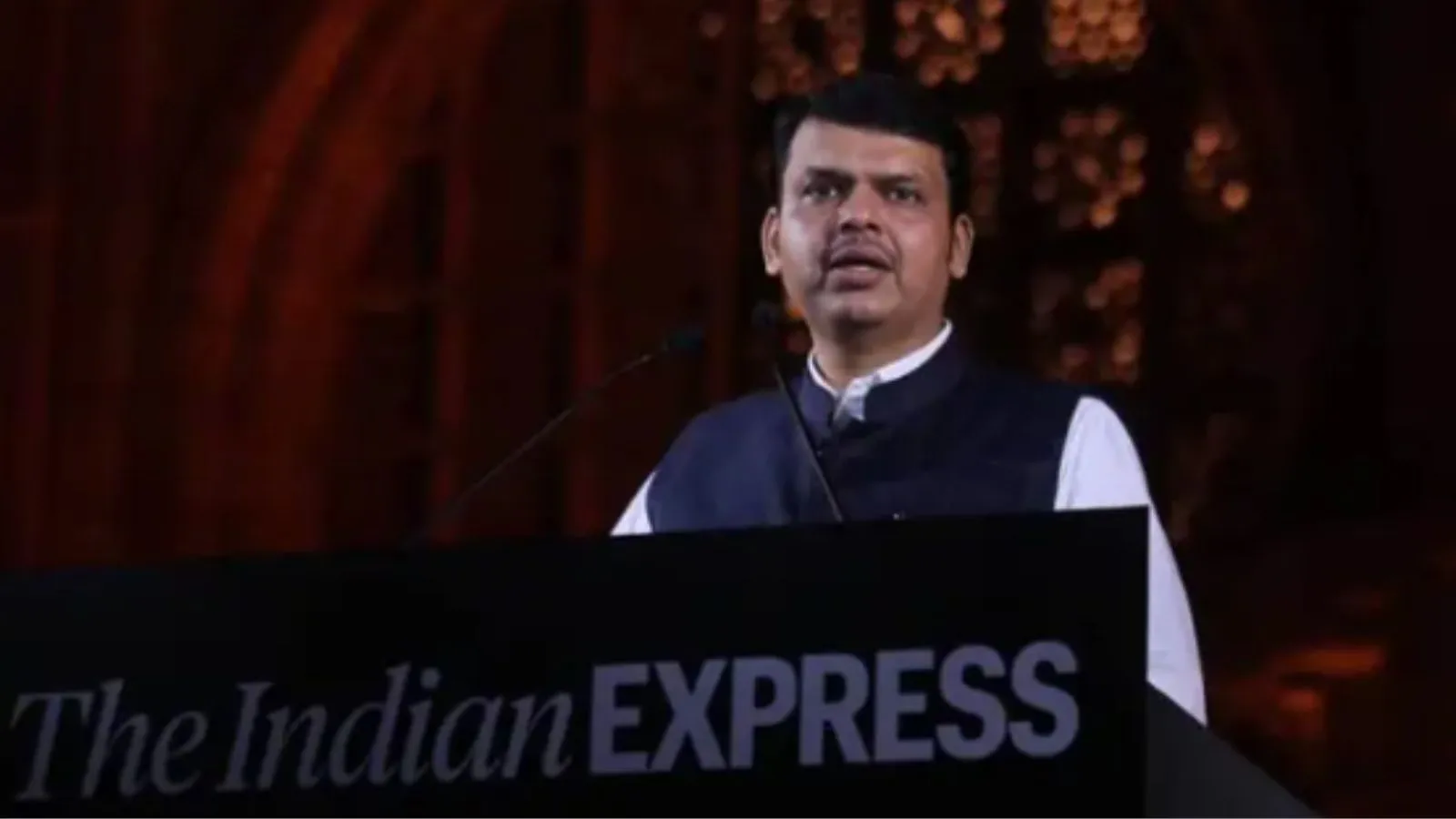
“The government is making efforts to increase revenue through industry and the services sector. As our revenue grows, we will be able to make greater allocations for the agriculture sector,” Fadnavis said. (File image) Nearly a month after announcing a farm loan waiver that is estimated to cost the exchequer over Rs 36,500 crore, the Maharashtra government on Wednesday announced a one-time waiver of Rs 48,000 crore in pending electricity dues of farmers. Chief Minister Devendra Fadnavis made the announcement at a function organised by the BJP in Mumbai to felicitate him for the recently announced farm loan waiver. Declaring that his government was committed to easing the burden on farmers, Fadnavis said all pending electricity bills of farmers using agricultural pumps of up to 7 HP would be written off.“Since our government came to power, we have given free electricity to farmers using agriculture pumps up to seven HP. For this, we make an annual budgetary allocation of Rs 25,000 crore to compensate power companies. But old pending bills continue to remain in every farmer’s name and they are asked to clear these dues when they seek a new electricity connection. To ensure farmers are not subjected to such pending bills, I announce a complete electricity waiver,” Fadnavis said. The decision effectively clears the backlog of unpaid electricity dues accumulated over the years while continuing the state’s existing policy of providing free electricity to agricultural pump consumers through an annual subsidy. With this scheme, the government will not only bear farmers’ future electricity bills but will also absorb the entire stock of old dues, estimated at Rs 48,000 crore. This is not the first time the state has announced relief on farm electricity bills. In the 2024-’25 budget that was presented ahead of the elections, the then Mahayuti government introduced free electricity for agricultural pump connections up to 7.5 HP, benefiting around 44 lakh farmers, while promising to take over the cost of their electricity consumption through a budgetary subsidy. The government also indicated that pending electricity dues of such consumers would be addressed. With Wednesday’s announcement, the government is writing off these legacy dues completely. The announcement adds another huge financial commitment to the state, coming close on the heels of the expanded Punyashlok Ahilyadevi Holkar farm loan waiver scheme. The Cabinet on July 10 approved changes to the scheme by removing the earlier Rs 50,000 cap for beneficiaries of the 2019 loan waiver programme. The revised scheme is expected to benefit 56 lakh farmers at an estimated cost of Rs 36,585 crore, with Fadnavis indicating that the outlay could eventually increase to around Rs 42,000 crore after the expanded eligibility criteria. The Mukhyamantri Majhi Ladki Bahin Yojana — state’s flagship cash assistance scheme for women — has already cost the exchequer more than Rs 60,000 crore since its launch. The scheme covers over 1.5 crore women, down from a peak of around 2.43 crore after a verification drive identified more than 92 lakh ineligible beneficiaries. Payments made to beneficiaries later found to be ineligible are estimated at nearly Rs 14,000 crore.Story continues below this ad “The government is making efforts to increase revenue through industry and the services sector. As our revenue grows, we will be able to make greater allocations for the agriculture sector,” Fadnavis said. © The Indian Express Pvt Ltd
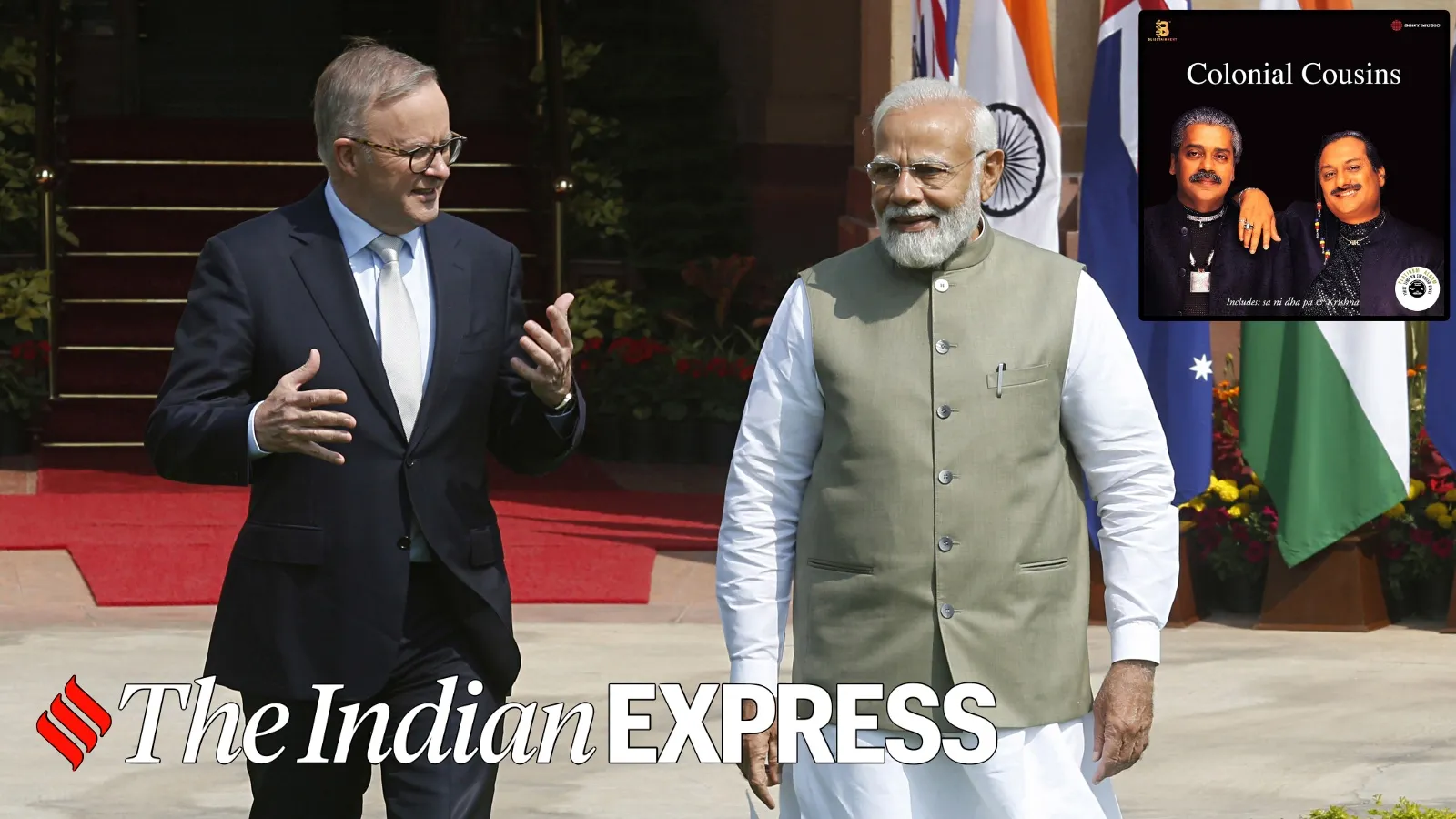
New DelhiUpdated: Jul 14, 2026 03:28 PM IST PM Modi gifts 1996 fusion album, Colonial Cousins to the Australian PM (Images: Express Archive, Amazon) On his recent visit to Australia, PM Narendra Modi presented a selection of gifts to his Australian counterpart, Anthony Albanese. Often reflecting India’s artisanal and cultural traditions, the gifts on this trip included a coffee box, a Dhokra boat, and one unexpected item: the vinyl edition of the 1996 fusion album, Colonial Cousins. For Albanese, an avid record collector who deejayed as ‘DJ Albo’ once, and is passionate about alternative rock, post-punk, and classic Australian pub rock, it seemed like a fitting gift. Albanese, who often quotes songs in his public appearances, is a fan of English singer and political activist Billy Bragg, American rock ‘n’ roll icon Bruce Springsteen, as well as global popstar Taylor Swift, among others.“Music has always been India’s soft power and it is heartening to see an album that celebrated cultural harmony continues to represent our country decades later,” said Hariharan in a statement. He added that he was glad that there was recognition of the power of Indian music as a bridge between cultures. PM Modi’s gift also put the focus back on an album that emerged during India’s indipop boom and was one of the defining albums during the vibrant independent music scene of the 90s. It was an interesting time to be a musician in India. After liberalisation, the scope of private and foreign investments had scaled up, paving the way for the entry of foreign broadcasters such as MTV and Channel V in the country. These gave people a taste of contemporary music from around the world, from a range of artists such as Madonna, Michael Jackson and bands like Backstreet Boys, Spice Girls and Michael Learns to Rock. There was an explosion of choices and a talented bunch of artistes grasped it with both hands. It was the time that gave India Alisha Chinai’s Made in India, Lucky Ali’s Sunoh, Baba Sehgal’s rap experiments, Daler Mehndi’s bhangra-pop and bands such as Euphoria, among others. This is when Colonial Cousins came about. At the helm of the album were ghazal and playback singer Hariharan and composer and producer Leslie Lewis, who in the album attempted to blend Indian classical music with Western pop, rock and folk to deliver tracks such as Krishna, Indian Rain and Sa ni dha pa, combining Hindustani influences with acoustic guitars, layered harmonies and contemporary production, creating a sound that appealed to both mainstream listeners as well as classical music acolytes. Together, the two artistes also managed to showcase that Indian independent musicians could produce music with international influences without abandoning Indian musical traditions. The duo adopted the name from a colloquial phrase that is often used to describe culturally hybrid or Westernised South Asians in Britain, reflecting the album’s own blend of Indian and Western musical traditions. Hariharan figured this out while sitting in a posh London club with a Parsi friend. © The Indian Express Pvt Ltd Suanshu Khurana is an award-winning journalist and music critic currently serving as a Senior Assistant Editor at The Indian Express. She is best known for her nuanced writing on Indian culture, with a specific focus on classical music, cinema, and the arts. Expertise & Focus Areas Khurana specializes in the intersection of culture and society. Her beat involves deep-dive reporting on: Indian Classical Music: She is regarded as a definitive voice in documenting the lineages (Gharanas) and evolution of Hindustani classical music. Cinema & Theatre: Her critiques extend beyond reviews to analyze the socio-political narratives within Indian cinema and theater. Cultural Heritage: She frequently profiles legendary artists and unearths stories about India’s tangible and intangible cultural heritage. Professional Experience At The Indian Express, Khurana is responsibl
Railway Board’s new decision: The Railway Board (RB) has approved the stoppages for five train services across Uttar Pradesh, Uttarakhand, Andhra Pradesh and Tamil Nadu. The move is aimed at improving rail connectivity between several cities and providing passengers with more travel options across the Indian Railways (IR) network. However, the concerned railway zones will issue separate notifications with details of the stoppage dates and other information. Here is the complete list of new stoppages of trains approved by the Railway Board that are set to be implemented on the IR network soon: Hazur Sahib Nanded-Tanakpur Express The Railway Board has approved the stoppage of train number 17631/17632 Hazur Sahib Nanded-Tanakpur Express at Uttarakhand’s Khatima station. Visakhapatnam-Lokmanya Tilak (T) Express According to the Railway Board circular dated July 3, the new stoppage for train number 18519/18520 Visakhapatnam-Lokmanya Tilak (T) Express will halt at Nidadavolu Junction in Andhra Pradesh. Patliputra-Gorakhpur Express The RB has also approved a new stoppage for train number 15079/15080 Patliputra-Gorakhpur Express at Kath Kuiyan railway station in Uttar Pradesh. Tambaram-Kollam Express According to the Railway Board circular dated July 2, the stoppage of train number 16101/16102 Tambaram-Kollam Express has been revised. The train will now halt at Pamba Kovil Shandy railway station in Tamil Nadu.Story continues below this ad Kota-Dehradun Nanda Devi Express The RB also approved a new stop for train number 12401/12402 Kota-Dehradun Nanda Devi Express at Deoband railway station in Uttar Pradesh. It is one of the key station on Delhi-Saharanpur railway route. Last month, the Railway Board approved the stoppages for several trains including train number: 12935/12936 Bandra (T)-Surat Express at Palghar, 54085/54086 Delhi-Satrod Passenger at Patuwas Mehrana, 14717/14718 Bikaner-Howrah Express at Hansi, 12981/12982 Jaipur-Asarva Express at Bijainagar, and 15649/15650 Agartala-Narangi Express at Mungiakami, among others. Anish Mondal is a journalist with over nine years of experience covering the railways and roadways. Currently a member of the Indianexpress.com editorial team, Anish specializes in high-impact sectors. Professional Journey Anish began his career at the public broadcaster Rajya Sabha Television (now Sansad TV), where he developed a foundational understanding of legislative processes and national governance. In 2018, he transitioned to digital financial journalism at FinancialExpress.com, spending nearly six years refining his expertise in market trends and corporate reporting. Before joining The Indian Express in 2025, he served as a key contributor at ETNowNews.com. Education & Expertise Anish’s reporting is backed by a rigorous academic background in communication and the humanities: Master of Journalism and Mass Communication (MJMC) – Apeejay Stya University Post Graduate Diploma in Journalism and Production (PGTVRJP) – Apeejay Institute of Mass Communication Bachelor of Arts (English Honours) – University of Calcutta Areas of Coverage Connectivity: Detailed reporting on the expansion of Indian Railways and National Highway networks. ... Read More Tags: Indian Railways Indian Railways news Ministry of Railways Railway Board railways
Every night, about 8 lakh AC passengers across the Indian Railways network tuck themselves into linen bedrolls, typically two bedsheets, a blanket, a pillow, a pillow cover and a face towel — a service that comes with the ticket. And as every trip ends, some of them, about one in every 1,000 passengers, walk away with at least one bedroll item, an investigation by The Indian Express reveals.The newspaper filed Right to Information (RTI) applications with all 69 divisions of the Indian Railways. Replies were obtained from 54 divisions across 16 of 18 Railway zones, some shared partial information. These records show that from January 2022, when bedroll services had fully resumed after the pandemic, to May 2026, at least 1.27 crore bedroll pieces were stolen — mainly by passengers, officials said. The data, when compiled year-wise, shows a 56% rise in such thefts from 2022 to 2025.Set against the sheer scale of what the Railways hands out every single day, it’s a drop in the ocean. But that’s exactly what makes the numbers interesting: call it theft or temptation, the data is less an indictment of the housekeeping staff than a snapshot of passenger behaviour too. The theft has cost bedroll contractors an estimated Rs 104.51 crore in the over four-year period, the RTI data suggests — money that coach attendants employed by the contractors say is mostly recovered from their salaries. Railways went back to providing bedrolls after Covid. (Express Archive)A Ministry of Railways spokesperson said the issue is of “serious concern” and “efforts are being made to prevent linen theft and take action against offenders”. The spokesperson also said the Railways “cannot establish” any evidence of staff collusion in the theft. A compilation of the data shows that 10 divisions across seven zones account for most of the overall linen theft — 67% of the total. They include Bikaner, Jodhpur and Jaipur (covering Rajasthan); Ranchi; Delhi; Mumbai; Ahmedabad; Sonpur and Danapur (covering Bihar); and Bilaspur. The numbers point to telling trends:



Discussion (0)