
Loading dispatches...
← Return to Newsroomgeneral
What are the emerging problems associated with chemical disinfection of water?
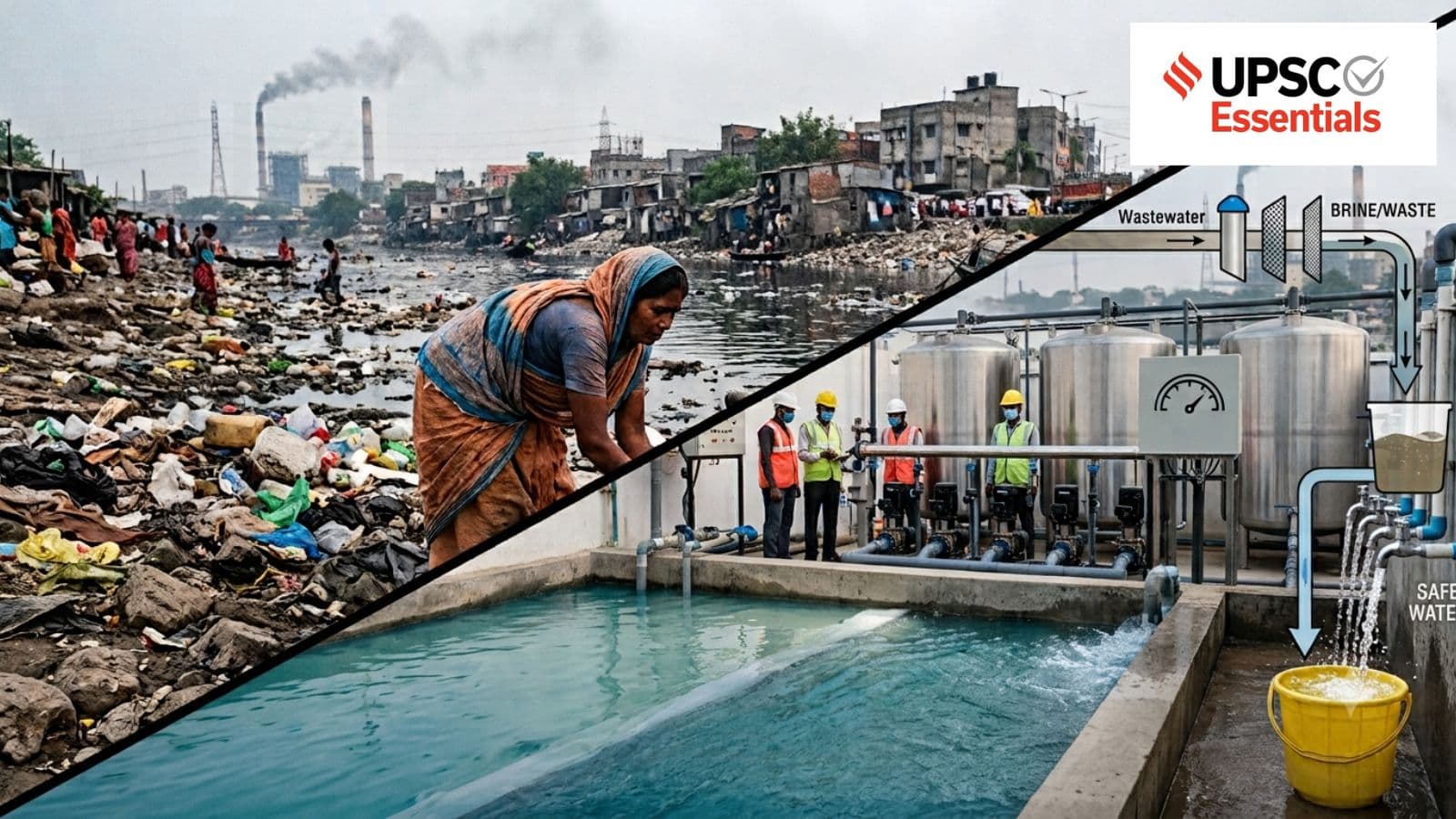
Recurring episodes of water contamination in Delhi and other states have drawn attention to the efficacy of water disinfection systems. Although chemical disinfection is designed to eliminate harmful microorganisms, it can also create conditions that favour the survival of microbes adapted to stress. Therefore, it becomes important to identify and limit adaptations that allow microorganisms to recover and thrive more readily after treatment. But what is important to understand is what mechanisms enable microorganisms to survive disinfection and chemical stress. Are there microbial populations capable of adapting in ways that allow them to be active even after treatment? Finding answers to these questions is crucial for improving the reliability of water disinfection systems and reducing public health risks. A recent study sought to address these challenges by examining metagenomes and metatranscriptomes at both intracellular and extracellular levels. What are metagenomes and metatranscriptomes techniques used in the study? What happens to microbes after water disinfection The metagenome identifies which organisms are present within a microbial community, whereas the metatranscriptome reveals what these microorganisms are actively doing at the molecular level to counter disinfection stress due to added chemicals. Metagenomics involves the study of DNA recovered directly from samples. It helps provide a holistic view of microbial communities to analyse their genetic diversity, functional potential, and population dynamics. Metatranscriptomics focuses on the analysis of RNA transcripts present in a sample. It offers insights into gene expression patterns, metabolic activities, and cellular functions within complex microbial populations.Story continues below this ad The study finds that bacteria dominate wastewater nucleic acid content, accounting for 55 per cent of DNA and 99 per cent of RNA. The enrichment of intracellular nucleic acid (DNA and RNA) fraction from bacteria like Methylobacterium, Sphingomonas, Hyphomicrobium, Novosphingobium, Sphingobium, Rhizorhabdus, and Sphingopyxis suggest that these organisms have a high degree of survival chances against chlorination. Q1. Why is the study of microbial gene expression important in the context of water disinfection? (a) It helps identify only the total number of microorganisms present. (b) It reveals how microorganisms respond and adapt to disinfectant stress. (c) It eliminates all microbial contamination from wastewater. (d) It prevents the formation of any microbial communities. Some common microbes associated significantly with hygiene include Mycobacterium, Mycolicibacterium, Mycobacteroides, Streptococcus, and Pseudomonas have enriched extracellular DNA and intracellular RNA pointing towards disinfectant resistant biofilm formation. It is also important to note that wastewater disinfection does not eliminate nucleic acid contamination, which may originate from microbial populations in wastewater as well as non-microbial sources, including a substantial fraction of human-derived DNA.Story continues below this ad How do bacteria adapt to disinfection stress? Bacteria acquire genetic material either through vertical transmission from parent to daughter cells or through horizontal gene transfer (HGT), in which foreign DNA is acquired and incorporated into the genome. In 1928, the English microbiologist Frederick Griffith first demonstrated bacterial transformation. His experiment discovered the “process of bacterial transformation”, which suggested that nonvirulent bacteria could acquire virulence through horizontal transfer of genetic material from dead virulent bacteria. This finding established the principle of bacterial transformation and highlighted the evolutionary importance of HGT HGT is a major concern, as studies have shown horizontal gene transfer due to enhanced transformation of bacteria during disinfection treatment. This also largely helps bacteria acquire


Discussion (0)