
Loading dispatches...
← Return to NewsroomPolitics
Chhattisgarh govt. to table UCC Bill during Winter Session: CM Sai
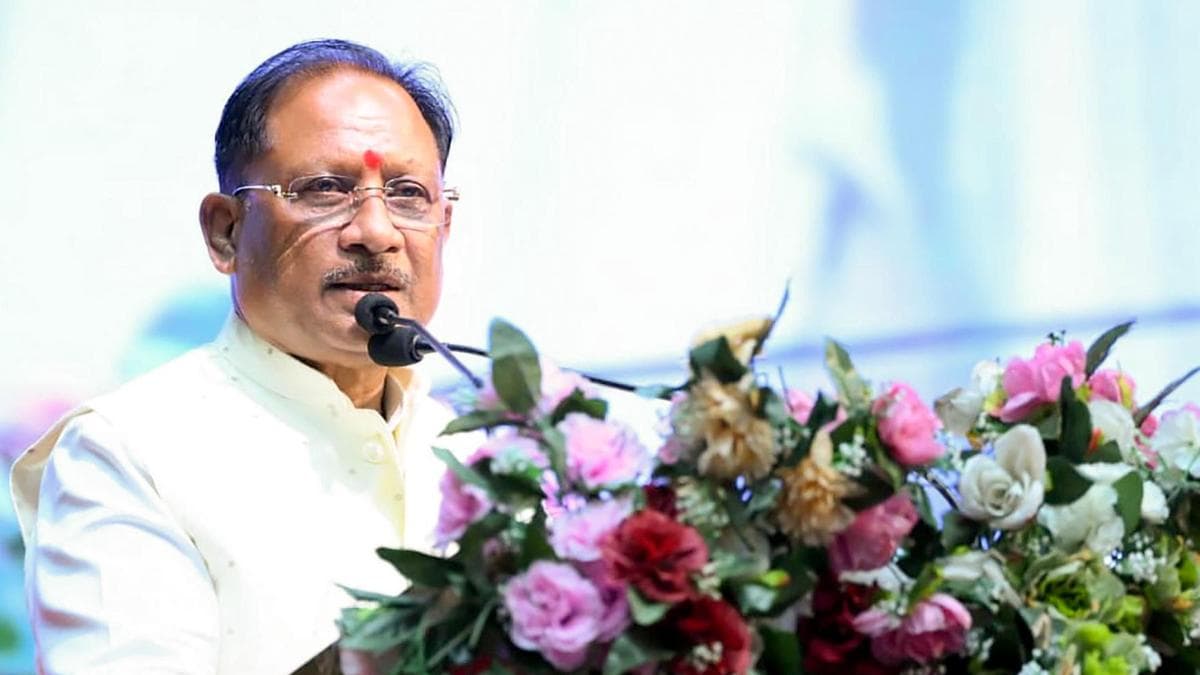
Chhattisgarh Chief Minister Vishnu Deo Sai. File | Speaking to reporters at the Raipur airport, Mr. Sai said the government was committed to implementing the UCC.The statement comes nearly a month after the State government formally started the implementation process for the UCC guide in Chhattisgarh by appointing a five-member committee headed by Supreme Court Justice (Retd) Ranjana Prakash Desai.Since 2024, States such as Uttarakhand, Gujarat and Assam have implemented the UCCs that largely regulate areas of personal law such as marriage, divorce, succession and inheritance, and live-in relationships. Earlier this week, the Madhya Pradesh legislative assembly passed a UCC Bill with provisions to ban polygamy and make the registration of live-in relationships mandatory, while excluding the tribal community from its scope.A committee headed by Justice Desai drafted the Bill in the neighbouring State too. In Chhattisgarh, the Committee – that also comprise retired IAS officers Shatrughan Singh and MK Raut, senior advocate Mohan Pawar and former principal Jyoti Rani Singh besides Justice Desai – has been tasked with examining the existing legal framework relating to the implementation of a Uniform Civil Code in Chhattisgarh and making recommendations on issues such as marriage, divorce, maintenance, inheritance, adoption and other related matters.The members will also seek suggestions from citizens, social organisations, legal experts and other stakeholders apart from studying UCC-related legal frameworks adopted by other States. Published - July 25, 2026 10:54 am IST

Pallikaranai marshland. File | Jothi Ramalingam The Madras High Court on Friday (July 24, 2026) directed the Tamil Nadu State Environment Impact Assessment Authority (SEIAA) to explain, by July 28 how could it unilaterally revoke the environmental clearance (EC) issued to Brigade Enterprises Limited for constructing high-rise residential towers near the Pallikaranai marshland, a designated Ramsar wetland site.Justice Mohammed Shaffiq issued the direction after senior counsel P.S. Raman complained that the EC had been revoked without following the principles of natural justice and issuing any notice to the realtor. The counsel also claimed that the construction site was located well outside the prohibited area around the marshland and that its parent title deed dates back to 1935.The submissions were made during the hearing of a writ petition filed by the construction company, challenging the revocation order passed by the SEIAA on May 12, 2026. Mr. Raman said, the SEIAA had actually issued the EC on January 20, 2025, after being satisfied that the property in question, which was being developed through a joint venture with the landowner, was not within the prohibited area.It was on the strength of the EC that the realtor had obtained the layout plan approval from the Chennai Metropolitan Development Authority (CMDA) and other clearances from the Tamil Nadu Pollution Control Board (TNPCB) before commencing the construction. Thereafter, Arappor Iyakkam, an anti-corruption organisation, had filed a public interest litigation (PIL) petition alleging that the property was within the prohibited area.A Division Bench of the High Court had entertained the PIL petition and stalled the construction by way of an interim order. However, after the dismissal of the PIL petition, Brigade recommenced the construction only to stop it again because of the unilateral revocation of the EC on the ground that the realtor had failed to obtain permission from the Tamil Nadu State Wetland Authority, Mr. Raman said.Contending that the permission from the Weland Authority needs to be obtained only “if applicable” and not otherwise, the senior counsel said, no such permission was required for the project in question because the authority had filed a categorical counter affidavit before the Division Bench that the ‘zone of influence’ around the 1,247.54 hectare Pallikaranai marshland was yet to be determined.Mr. Raman also told Justice Shaffiq that Brigade Enterprises had decided not to recommence the construction until the issue gets resolved. He, however, urged the court to stay the SEIAA’s EC revocation order as well as all further proceedings, since the CMDA had subsequently issued a show-cause notice to the realtor seeking an explanation as to why the plan approval should also not be revoked.Stating that the TNPCB, too, had withdrawn its consent, the senior counsel said: “The SEIAA’s unilateral order has led to consequential proceedings by other authorities. Therefore, they must be restrained from taking any such action.” After hearing him, the judge suo motu impleaded the CMDA, as well as the TNPCB, as respondents to the writ petition and adjourned the hearing to July 28. Published - July 24, 2026 01:04 pm IST

Image for representational purposes only. | The objective of the year-long nationwide exercise is to create a Campus Biodiversity Register (CBR) for each higher education institution.According to the NCF, the CBR has been inspired by the People’s Biodiversity Register (PBR), which contains comprehensive information on locally available bio-resources, including the landscape and demography of a particular area, and traditional knowledge.“The CBR project enables educational institutions to document the biodiversity found within their campuses. While the PBRs document the biodiversity of villages, towns, and cities, the focus of the CBRs is on educational institutions, bringing together students, faculty, and other staff to explore nature around them,” a statement from the organisation said.Conservationists have underlined the importance of college and university campuses as green spaces in India’s expanding urban landscape. Many such institutions harbour a diversity of trees, birds, butterflies, insects, reptiles, mammals, fungi, and countless other organisms.“These campuses often serve as biodiversity hotspots and refuges within urban landscapes, yet surprisingly little is known about the species they support. Without this knowledge, it is difficult to appreciate, conserve and manage these valuable ecosystems,” the statement read.The organisation said colleges and universities can register for the initiative until November 2026, and the documentation will be concluded in June 2027.Specific platformsOver the course of a year, participating institutions will document biodiversity using the recognised platforms iNaturalist, eBird, and SeasonWatch. “Whether through organised biodiversity surveys, campus walks, or everyday observations, participants will record the plants, animals, fungi, and other life forms they encounter. By the end of the project, each institution will have the information, skills and resources needed to compile its own CBR,” the NCF said.The biodiversity observations generated through the project are envisaged to contribute to global biodiversity databases while also helping institutions better understand and manage their own campuses. The initiative also aims to foster curiosity about the natural world and encourage a deeper connection between students and the biodiversity that surrounds them.“This is an opportunity to notice the biodiversity that often goes unnoticed geckos on classroom walls, moths around campus lights, ants around us, and countless other organisms that quietly share our campuses,” NCF’s programme manager Devica Ranade said on Tuesday (July 21, 2026).NBA Chairperson Virendra Tiwary said India’s youth have a crucial role in fulfilling the nation’s commitment to conservation and sustainable use of biodiversity. “Documenting the biodiversity around them is the first step towards conservation,” he said. Published - July 22, 2026 08:28 am IST
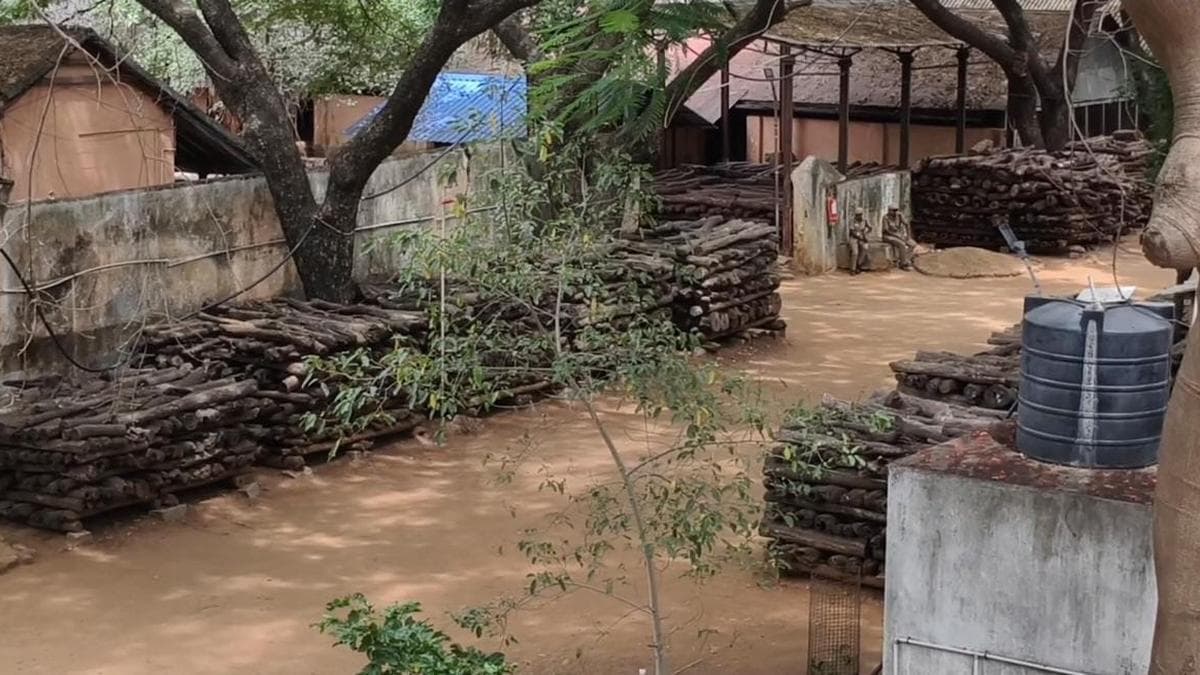
Forest officials said that stocks at the government depot were mostly sandalwood and red sanders that were seized from smugglers. | 75 tonnes of red sanders that is worth around ₹50 lakh at the Government Sandalwood Depot in Tirupattur town on Tuesday.Forest officials said that it was during a routine inspection of stocks of wooden logs in the depot on July 18 that a team of forest officials found that 1.75 tonnes of red sanders were missing in one of the storehouses at the depot, which usually had around 100 tonnes of seized red sanders for many years.Forest officials said that stocks at the government depot were mostly sandalwood and red sanders that were seized from smugglers during surprise checks in areas along Tamil Nadu - Andhra Pradesh border. The seized logs were used to make incense sticks. Forest officials said that based on a complaint by Jothi Lingam who was in charge of the depot, a case was registered by Tirupattur Town police. A probe is under way. Published - July 22, 2026 12:58 am IST

Just 40 days after returning to sea with dreams of coming home next April to marry his fiancée, 26-year-old merchant navy officer Akhil Joyan from Kerala was killed in an alleged Russian missile strike on the cargo vessel MV Golden Leo near Ukraine’s Odessa port, shattering the aspirations of a family that had invested everything in his future.The confirmation of Akhil’s death reached his family in stages — first as uncertainty, then as devastating certainty.“We first received a call from the Mumbai-based agency around 10 or 11 in the morning, saying there had been a missile attack and the ship had suffered damage,” said Shaji Valipalackal, Akhil’s paternal uncle, told The Hindu.“An email letter said several Indians were among the dead but none had been identified. It was only around 4 pm that the company confirmed Akhil’s death after his body was identified.”The attack on the Guinea-Bissau-flagged cargo vessel near Odessa claimed 10 lives, including four Indians. Akhil, the ship’s chief officer, was among those killed.For Joyan and Saly, who struggled financially to educate their only son, Akhil’s journey to the merchant navy represented years of sacrifice finally bearing fruit.“He always wanted to join the merchant navy. Even though we couldn’t afford it, the family took loans to educate him because it was his dream,” Mr. Shaji said. “Whatever savings the family had were spent on his education.”Joyan, who works as a salesman in a private establishment, managed to build the family’s new house only after Akhil secured his job. The family moved into the house barely a year ago, believing their hardship were finally behind them.Akhil had completed his plus two at St. Jude’s Higher Secondary School, Vellarikundu, before graduating in Marine Engineering from Chennai with distinction. He had been serving aboard merchant vessels for the past four years. Only two months ago, Akhil had returned home on leave to finalise his engagement with a woman from Idukki. The engagement was held on May 24 and the wedding was planned for April next year, when he was expected to return on leave.“He had gone back to sea only about 40 days ago. Everything was planned around his next vacation,” his uncle recalled.The family’s last contact with Akhil was a missed call and a brief WhatsApp message reading “Hi” on Sunday evening.“We couldn’t reconnect after that. We believe he may have tried to contact home after the first missile strike. After that, there was a complete silence,” Mr. Shaji said.The family says information from the shipping company has been limited. According to the company, repatriating Akhil’s body could take at least 10 to 15 days, he said. “The only update we have now is that the body has been shifted to a hospital. Beyond that, we have no official information,” Mr. Shaji said.The Kerala government has assured the family of full support. The District Collector, senior officials and Home Minister Ramesh Chennithala have contacted the family, while the Centre and NORKA have initiated efforts to facilitate the return of the body.“They have promised that the government will coordinate everything, including the expenses,” Mr. Shaji said.Beyond his maritime career, Akhil was a talented sportsman who had earned recognition for his extraordinary physical fitness. He held a Worldwide Book of Records title for completing 25 rope pull-ups in 30 seconds, reclaiming a record he had earlier lost.Teachers and neighbours remember him as a disciplined, cheerful young man whose achievement inspired many in the village.His parents, overwhelmed by grief, require medical attention after the news broke. His mother Saly has struggled to cope with the loss of her only child.District Collector Arjun Pandian said they are yet to receive official details regarding the repatriation of the body. “We have not received complete official information yet. NORKA is coordinating the process through the Indian Embassy, but even they do not have clarity on how many day


Discussion (0)