
Loading dispatches...
← Return to NewsroomEconomy
Higher pay, faster growth: Why more than 100 scientists quit ISRO in recent months
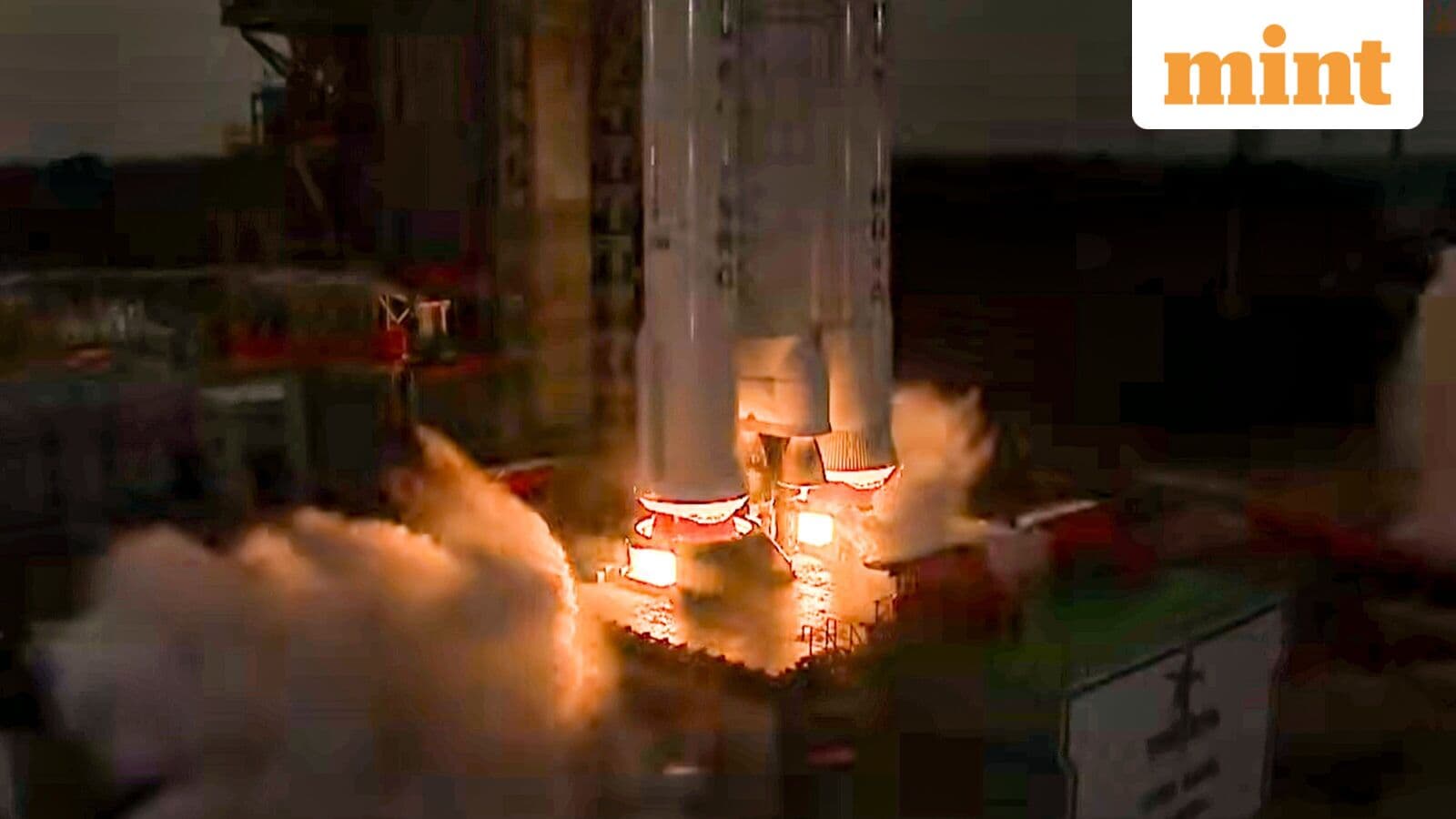
India's space programme has long been associated with landmark achievements—from Chandrayaan-3's successful Moon landing to ambitious plans for human spaceflight. But even as the country's space ambitions continue to expand, the Indian Space Research Organisation (ISRO) is facing a different kind of challenge: holding on to its experienced scientists.According to a report by NDTV, more than 100 scientists have either resigned or taken voluntary retirement from Isro over the past few months. The development has prompted the Department of Space (DoS) to tighten the rules governing resignations for scientists working on some of India's most important space missions.Department Of Space Moves To Retain ScientistsThe India Today report said the Department of Space has issued a fresh directive restricting resignations and voluntary retirement of scientists associated with flagship programmes such as Gaganyaan.Quick answers to key questions•5 QUESTIONSScientists are leaving ISRO primarily due to higher salaries, stock options, and quicker career growth offered by the expanding private space industry, alongside organizational challenges and delays in ISRO missions.The government has tightened exit rules, requiring all resignations and voluntary retirement requests from scientists involved in critical missions to receive clearance from the Department of Space.The rise of the private space sector since 2020 has created competitive job opportunities that attract ISRO scientists away from government roles, offering them better pay and work conditions.Experts suggest ISRO could benefit from adopting a hybrid employment model similar to NASA, combining permanent staff with contractors to enhance flexibility and retention of critical expertise.While the resignations could pose temporary setbacks for critical missions due to the loss of experienced personnel, officials maintain that ISRO is prepared to manage these transitions without jeopardizing mission progress.The decision highlights the government's effort to retain specialised talent at a time when several high-profile missions are in the pipeline. It has also brought renewed attention to a key question: why are scientists choosing to leave Isro when India's space sector is growing faster than ever?Private Space Industry Offering New OpportunitiesAccording to the India Today report, industry experts and senior Isro officials attribute the departures to several factors, including the rapid growth of India's private space ecosystem, organisational challenges and delays in mission execution.Since the space sector was opened to private participation in 2020, companies such as Skyroot Aerospace, Agnikul Cosmos, Pixxel, Bellatrix Aerospace, Dhruva Space and Digantara have emerged as major players, developing rockets, satellites, propulsion systems and space-based technologies.For many scientists, the attraction is straightforward. The report noted that private firms often offer higher salaries, stock options, greater flexibility and quicker career progression than traditional government organisations. Scientists are also able to take on leadership responsibilities earlier in their careers and work in environments where projects move rapidly from concept to execution.The trend has been strengthened by former Isro veterans who have gone on to establish or mentor aerospace startups, creating career opportunities that barely existed a few years ago, according to the report.Mission Delays And Organisational ChallengesThe India Today report said the departures have also come at a time when several major Isro missions have experienced delays.Projects including the Gaganyaan G1 test flight, SSLV-L1, GSLV-F17 and the industry-built PSLV-N1 have slipped beyond their announced schedules.The report further noted that twin PSLV setbacks earlier this year slowed launch activities, with the agency yet to publicly release a detailed failure assessment.It also cited multiple current and former officials, speak
Union Minister of State (Independent Charge) for Science and Technology Dr Jitendra Singh reacted to reports about mass resignation at the Indian Space Research Organisation (ISRO) and said there was “no controversy” surrounding the matter.He said on Thursday, according to India Today, “Many have gone, many have come", but the agency continues to induct new talent even as some employees leave. “ISRO has a very large workforce. As people leave, many also join," the minister reportedly said.Quick answers to key questions•5 QUESTIONSThe recent resignations at ISRO, involving more than 100 scientists, have been attributed to various factors, including better opportunities in the private sector and normal attrition rates within a large organization.In response to the wave of resignations, the Indian government has tightened rules governing voluntary retirement and resignation of scientists associated with critical missions like Gaganyaan, requiring more scrutiny for such requests.Union Minister Jitendra Singh stated that the Gaganyaan mission will not be halted by these resignations, as ISRO maintains continuity through a capable team and the involvement of ex-scientists.Many former ISRO scientists are reportedly leaving for the private sector due to expanding opportunities, better salaries, and the chance to contribute to innovative projects post-2020 when the space sector opened to private players.The tightening of exit rules aims to prevent disruption of critical projects at ISRO, ensuring that ongoing missions, especially the Gaganyaan mission, remain unaffected by sudden departures of key personnel.Singh's statement came after sources told the Times of India that at least 100 scientists resigned from ISRO's flagship programmes. The report claimed that the departures included key personnel like LVM-3 project Director Victor Joseph from Vikram Sarabhai Space Centre (VSSC)."Spadex project director quit from UR Rao Satellite Centre (URSC). A very bright young person who was part of Chandrayaan-3 has also quit,” the source was quoted as saying.After the incident, the Department of Space issued a memorandum to major ISRO centres for tightening the rules governing the resignation and voluntary retirement of scientists and engineers working in critical missions of national importance such as the Gaganyaan Mission.Responding to a question about this ISRO memo, Singh said it was "for administrative reasons" and not because of any other factor."No, that is because... that is for administrative reasons so that the decision can be taken at a much mature level," the Union Minister of State for Science and Technology told reporters, as per NDTV.Will resignation impact Gaganyaan and other ISRO missions?When asked about India's future space missions, Union Minister Jitendra Singh reportedly recalled what the space agency's former chairman Dr Somanath S had remarked.Singh was quoted by NDTV as saying, "In one of the very early meetings about 10 years back, he [Somanath] said sending up a man is easier, getting him back is equally difficult. And that's how, you know, this crew module thing started.""Now Somanath is no longer in the picture. It doesn't mean the Gaganyaan mission has stopped. It doesn't happen. And moreover, in ISRO, they work in continuity. Even retired and ex-scientists are very much part of the projects. So it's a different kind of work culture there," Singh added.Meanwhile, Former ISRO scientist Sandeep Ojha, in an interview with ANI, explained the project structure, and said, "There is a hierarchy involving Project Managers and Deputy Project Managers. There is also an administrative track leading to roles like Division Head, Group Director, Deputy Director, and Director...," he said."Yes, if someone leaves a role they’ve been deeply involved with, it can certainly be a setback — albeit a temporary one. It might slow things down a bit, especially when a veteran of 20 or 25 years departs...While the team is capable enough to b



Discussion (0)