
Loading dispatches...
← Return to NewsroomScience
On this day in space! Aug. 15, 1977: Mysterious 'Wow!' Signal boosts search for E.T.
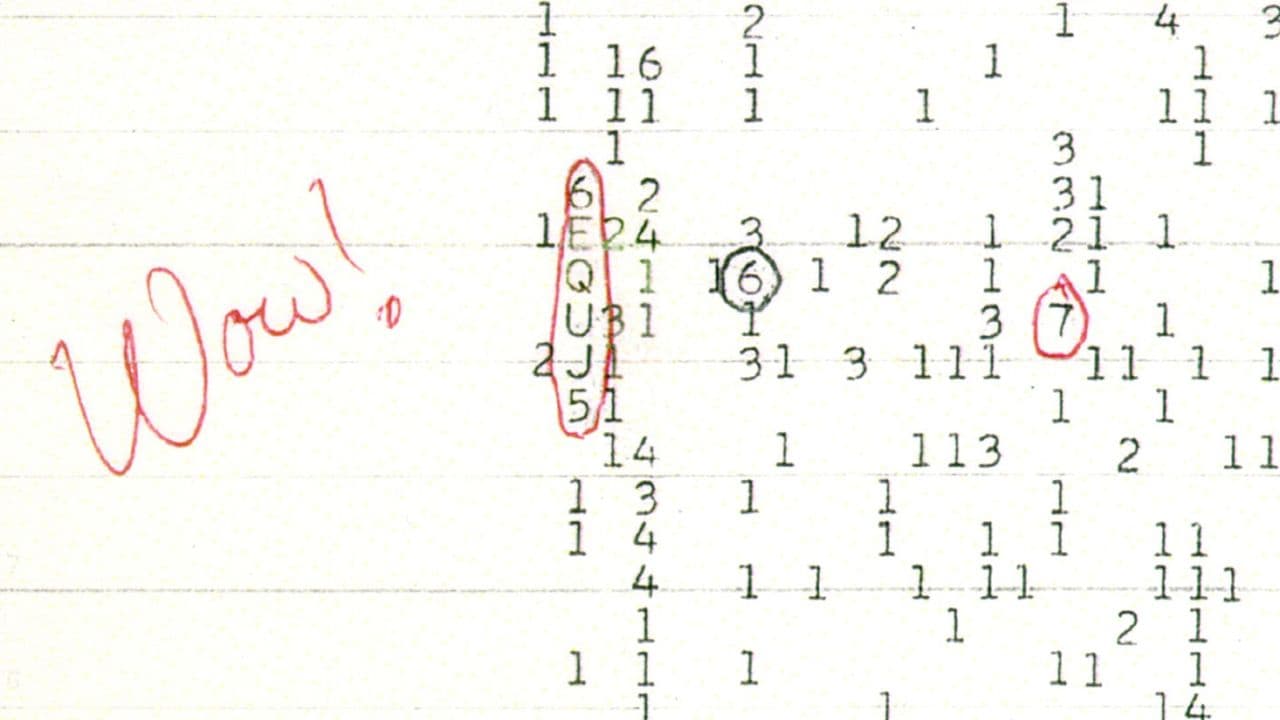
On Aug. 15, 1977, astronomers using Ohio State University's Big Ear radio telescope detected the famous "Wow!" signal, which to this day is one of the strongest pieces of evidence that we are not alone in the universe.Astronomer Jerry Ehman was using the telescope to scan a region in the constellation Sagittarius when it detected a weird, 72-second-long radio burst. The signal was too strong to be explained by background noise, and researchers determined that it was very unlikely that this signal came from anything on Earth.Despite their best efforts, astronomers have not been able to detect any other signals like it. The now-famous "Wow!" signal. (" This question remains one of the biggest mysteries across not just science but for humanity as a whole. The "Wow" signal remains an iconic and important finding in the search for life out in the cosmos.Nearly 50 years since the "Wow!" signal, scientists have made incredible progress in the search for alien life. We have landed rovers on Mars that have found possible signs of life on the Red Planet, for example, and discovered thousands of exoplanets, or planets outside of our solar system.The "Wow!" signal was detected nearly two decades before scientists first confirmed the existence of exoplanets. Today, we have found more than 6,000 of them and are using cutting-edge technologies to explore further and see if any of these far-off planets might contain signs of life.
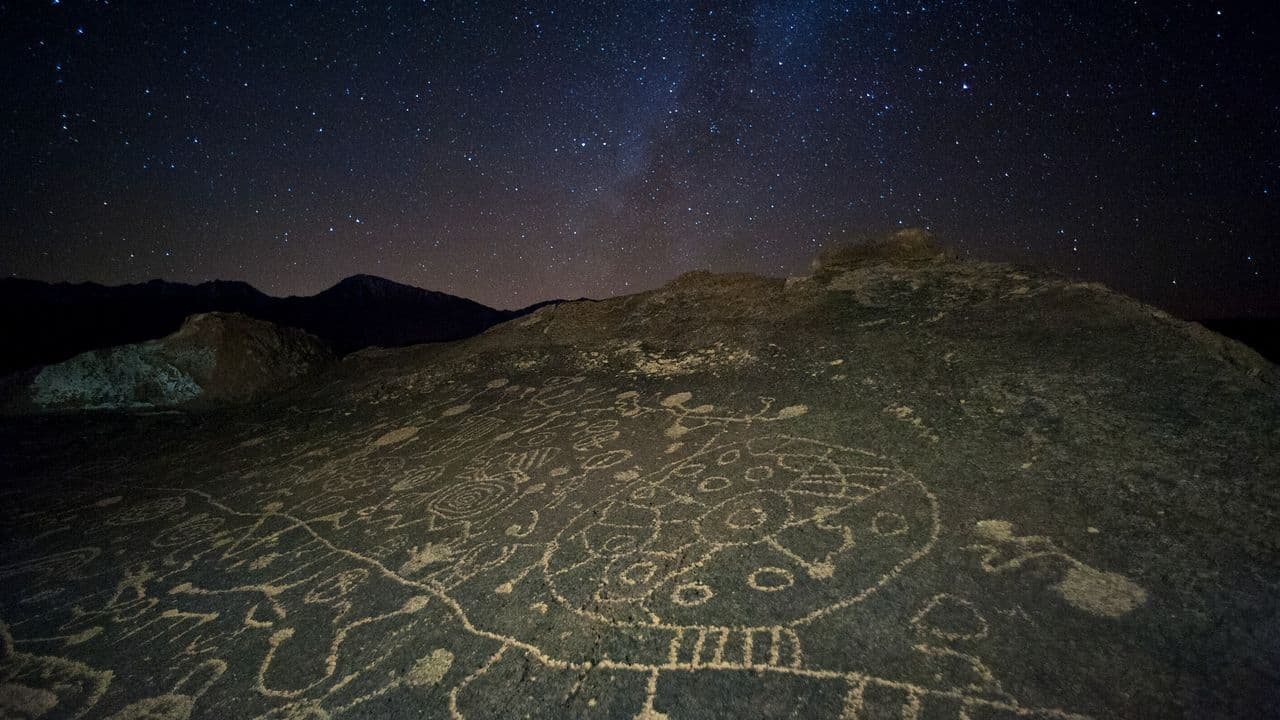
Between biosignatures and technosignatures lie noosignatures, and some scientists think they could help us find alien life someday. ( But new and ongoing research suggests that scientists should start considering signs of intelligence that are not necessarily technological, but which are sufficiently complex as to be evidence of a conscious mind at work.Biosignatures are possible signs of biology on other planets, whereas technosignatures are clues to the presence of advanced technology that might be detectable across light-years. What, though, of everything that comes between these two extremes? How do we detect life that is more complex than simple microbes and which displays intelligence that is not highly technological?This is where the field of noosemiotics comes in, says Julia DeMarines, an American astrobiologist who has been involved in both biosignature and technosignature research. "We want to figure out if we can detect signatures of intelligence that occur before the invention of radio communication," DeMarines told Space.com. "We're looking at the ways that mind can be imprinted on matter."Noosemiotics is derived from the Ancient Greek concept of 'nous', which refers to the theory of mind. In the 1920s the Soviet biochemist Vladimir and the French Jesuit priest Pierre Teilhard de Chardin developed the idea of the noosphere as being the sphere of human reason or thought encapsulating the Earth.More recently, Adam Frank, David Grinspoon and Sara Imari Walker applied the noosphere to SETI by considering the collective intelligence of all the beings on a planet acting as a kind of combined planetary scale intelligence.Therefore, according to DeMarines, a noosignature would be a sign of a noosphere, of conscious minds at work."Bread doesn't just pop out of a molecular cloud"Technology is, of course, a major imprint of mind on matter, and DeMarines acknowledges that just as technosignatures can be biosignatures since they can originate from biological entities, they can also be noosignatures — for instance, gases such as nitrogen released into the atmosphere by agricultural practices. But noosignatures can be something other than biosignatures and technosignatures, too.Which is where DeMarines’ work comes in. She had been working for a company who were looking to apply the concept of Assembly Theory, which is a chemistry theory originated by Sara Walker and Glasgow-based chemist Lee Cronin, to online data and artificial intelligence to search for thresholds that denote complex signatures of intelligence.Assembly Theory describes the minimum number of steps required to assemble something. In chemistry it is the steps taken to assemble, for example, important biomolecules, or to facilitate evolutionary processes. The number of steps taken is referred to as the Assembly Index. As part of her work on this, as a thought exercise, DeMarines was given the task of applying assembly theory to 'bread as a technosignature'."I know how that sounds," she laughed. "I get weird looks when I tell people about it!" There is archaeological evidence that humans have been making bread for nearly 14,000 years. ( At first DeMarines approached it as a proto-technosignature before realizing that it was more appropriate to describe it as a noosignature."Bread doesn't just pop out of a molecular cloud, it requires technology, it requires history, it requires intelligence," said DeMarines. "Say that you have samples of bread at different human and hominin archaeological sites throughout time, dating back 14,000 years – the bread would be a signature of intelligence changing
An artist's impression of the Habitable Worlds Observatory that will search spectroscopically for biosignatures on exoplanets. () Artificial intelligence could easily fall into the trap of identifying non-life as life on other worlds, claim two researchers from Michigan State University who have tested AI on simulated life in a computer program."We had previously seen that AI has a big Achilles heel when it is trying to classify things that are unlike the things in its training examples," Michigan's Christoph Adami told Space.com. "We call these 'out-of-distribution' samples and it is just incredibly easy to get AI to misclassify."Adami is a computational biologist who uses computers to apply information theory to the study of evolution and biology. One of his leading tenets is that life can be defined by its ability to encode information and replicate it. To this end, he devised the Avida computer program in 1993. It runs digital organisms written as code that can replicate by copying themselves and competing for resources — in this case, CPU time — just like real life organisms. Although the use of digital life in evolutionary studies remains controversial, what it does provide Adami with is a huge dataset of simulated lifeforms that AI can be tested on.Spending three months of computer analysis on a thousand parallel machines, Adami and his student Ankit Gupta asked AI to determine which programs in Avida had the properties of life, and which didn't. The life and non-life programs have very similar coding, so the difference is not obvious — and this might very well be the case on another planet where life could have differences in biology to Earth life.Adami and Gupta started out with programs representing a random sequence of molecules and asked the AI to classify them. They then set about tweaking that sequence of molecules to try and fool the AI into thinking it was seeing life, one change at a time, each time checking whether there had been a change in how confident the AI was that it was life or non-life."Within about 15 changes or so we can get AI to be perfectly confident of a life classification when in fact not a single time when it was being 100% confident was it actually life," said Adami.Furthermore, no matter the sequence they started with, the AI was constantly fooled.Many in the scientific community stand by AI as an invaluable tool because it can process huge amounts of data and search for patterns in that data. Adami himself believes that AI has an important role to play, but as we see in everyday life, AI is prone to making things up and identifying patterns that don't exist.Digital organisms replicating and mutating over time in the Avida program. Each colored dot represents an organism of a particular genotype, and each time they mutate into a different type, they change color. ( If you ask an AI about data it has been trained on, it usually provides a correct answer. For example, if you train AI to identify pictures of apples and then ask it to pick out the fruit from a dataset that also includes pictures of non-food items, it will answer correctly virtually all the time. However, if you replace the apple pictures with photos of bananas and ask it to identify the fruit, it will struggle and start to misidentify things.That's because the bananas represent "out of distribution" data. The AI wasn't trained on bananas, which are a very different shape to apples, and therefore the AI doesn't know what to make of them.Similarly, we don't know what alien microbes will look like, and they could be quite different to the terrestrial microbes that the AI has been trained on. In other words, the alien life would be out of distribution, and the AI would have no context for saying whether any particular collection of molecules
Discussion (0)