
Loading dispatches...
← Return to Newsroomgeneral
Why Anthropic is watermarking text generated by Claude AI, how it will work

New DelhiAug 11, 2026 06:55 PM IST Anthropic researchers began the experiment by identifying 3,307 values. (Image: Unsplash)As AI-generated content continues to flood the internet, Anthropic has said that content created using Claude will now carry machine-readable watermarks, including for text, text files, and images. The watermarks attached to Claude-generated content will be imperceptible and will not affect the meaning, quality, or readability of the popular AI chatbot’s responses, Anthropic said in a Claude support page updated on Tuesday, August 11.Besides embedding watermarks invisible to the human eye in Claude-generated text, Anthropic said it will also attach certain file types with cryptographically signed provenance metadata to indicate whether the file was processed using Claude and has been tampered with. Anthropic’s move to add watermarks and other provenance signals to its AI-generated content is to aimed at complying with the European Union’s AI Act, specifically Article 50(2) of ‘Code of Practice on Transparency of AI-Generated Content’ which went into effect from August 2, 2026. Under the EU’s AI Act, Anthropic is classified as a provider of both generative AI models and generative AI systems. As a result, it has to comply with legal requirements pertaining to the marking and detection of AI-generated content. The rise of AI-generated, synthetic content has threatened to disrupt online information ecosystems and cause tangible harm such as fraud, misrepresentation, and harassment. This has pushed policymakers worldwide to search for solutions that could mitigate such risks and empower users. But how does Anthropic plan to comply with the obligations under the EU Transparency Code? How will watermarking work for AI-generated content? And how effective are these measures likely to be in detecting such content?Story continues below this ad How will Claude-generated content be marked? Anthropic has broadly outlined two complementary steps to mark content generated and processed by Claude: watermarks embedded in text and signed provenance metadata attached to files. As part of the first step, Anthropic said that the watermarks will be imperceptibly woven directly into the text itself. This means that human users will not be able to see it. The watermarks will be applied at the model level. Text generated by any of Anthropic’s Claude family of models will carry these watermarks, as will content produced through various Claude-powered tools and interfaces. Since the machine-readable watermark will be embedded directly into the text, it will be carried over when users copy and paste the text elsewhere. Anthropic has only said that the text-based watermark “may persist” after the content has been edited. Under the second technique, Anthropic said it will attach signed provenance metadata for various file types such as .svg, .png, or .jpg. Essentially, will help indicate whether content such as images, graphics, and documents was generated by Claude.Story continues below this ad The cryptographically signed metadata, which includes information such as the origin, context, and the history of a piece of text or image, will appear in accordance with the open standards stipulated by the Coalition for Content Provenance and Authenticity (C2PA), a cross-industry initiative to record information about content provenance. The signed metadata label not only lets users know whether a file has been generated or processed using AI, but also makes it easier to tell whether the file has been tampered with. Anthropic further said it will be rolling out AI detection tools to help users and third parties detect embedded watermarks and signed metadata on their own. What are the limitations of watermarks? While machine-readable marks provide important signals about content, they also carry limitations across all content types. In the case of images, visual labels can be cropped or edited out while watermarks embedded in met

The Karnataka High Court said, “Watching child pornography is the allegation; even if the FIR is after 10 years",While refusing to cancel a criminal case registered against a 26-year-old man from Bihar, charged with allegedly watching and uploading obscene videos of children on Facebook, the Karnataka High Court on Tuesday said, “These are offences against society and unpardonable.” Though the petitioner, Shyam Praveen Singh, submitted that the complaint against him was registered only in 2025, five years after the alleged incident, Justice Nagaprasanna refused to accept the contention.The judge said, “The said submission is said to be rejected as uploading of obscene videos of a child and keeping it there or even storing it in a phone is an offence under section 67B (of the Information Technology (IT) Act, 2000) albeit prima facie.” Singh had approached the court to cancel the suo motu First Information Report (FIR) filed against him by the Whitefield police station in November 2025. The police had found that Singh’s phone number was linked to the Facebook account that had uploaded the alleged child pornography videos on April 29, 2020, and the material continued to be available on social media. The court said, “Watching child pornography is the allegation; even if the FIR is after 10 years, I will entertain it; five years is nothing.” Dismissing the petition, the court said, “The matter has to be investigated into, and cannot be terminated at this nascent stage; permitting investigation in the case at hand, the petition stands dismissed.”
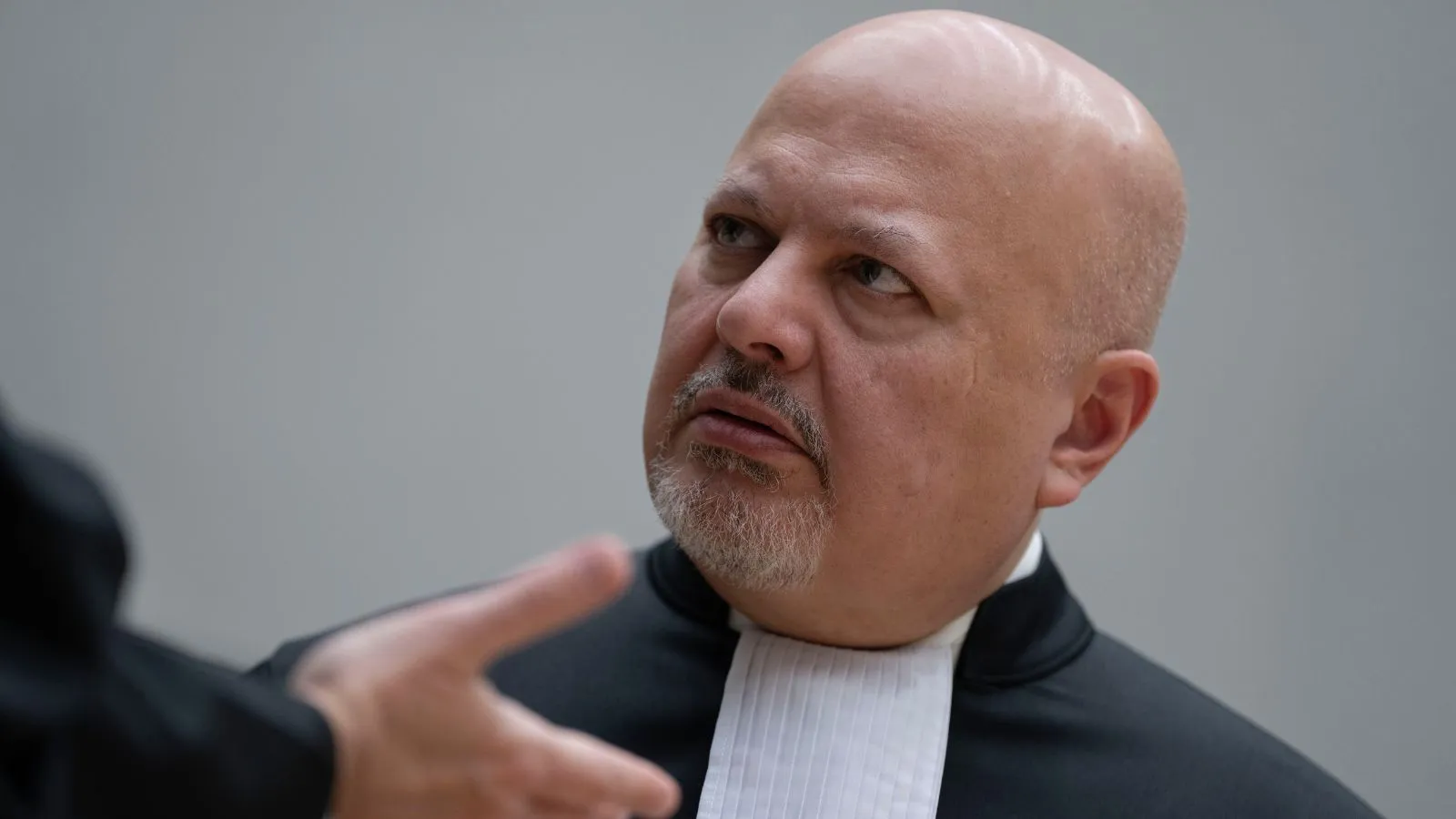
NewsWorldWho is Karim Khan? The ICC prosecutor ousted after sexual abuse allegations Member states vote to remove British barrister after allegations of sexual abuse 4 min readJul 25, 2026 05:28 AM IST First published on: Jul 25, 2026 at 05:16 AM IST Chief Prosecutor Karim Khan talks before convening the International Criminal Court (ICC) in The Hague, Netherlands. (Photo: AP) The International Criminal Court’s chief prosecutor, Karim Khan, has been removed from office after the court’s governing body found he had committed serious misconduct linked to allegations of sexual abuse, The Guardian reported. Member states voted on Friday to oust the British barrister, closing out a damaging episode that has hung over the court for two years since the allegations first surfaced.Who is Karim Khan? Khan is a British barrister who was elected in 2021 to a nine-year term leading the ICC’s prosecution division, the body responsible for investigating and bringing individuals accused of atrocities to trial. Karim Khan, Prosecutor of the International Criminal Court, looks up prior to a press conference in The Hague, Netherlands. (Photo: AP) During his time in office, his decisions to seek arrest warrants for Russian President Vladimir Putin and Israeli Prime Minister Benjamin Netanyahu raised the court’s global profile and drew it into confrontation with major powers. Those warrants, issued by ICC judges, remain unaffected by his removal. How did the vote unfold According to sources cited by The Guardian, 82 of the ICC’s 125 member states voted to remove Khan at a special session held at the UN’s headquarters in New York, following a long disciplinary process examining the abuse claims made by a woman who had worked for him at the court. Story continues below this ad Thirteen states voted against his removal, while 11 abstained. Diplomats made their decision after reviewing findings from the court’s executive committee, a fact-finding report by a UN watchdog, and a legal review carried out by a panel of judges. What has Khan said in response Khan has consistently denied all the allegations against him, which include claims of coercive and non-consensual sexual behaviour over an extended period. His lawyers have argued the disciplinary process was procedurally unfair, and his lawyer Tayab Ali said the removal decision lacked any lawful or properly reasoned basis. Following the vote, Khan’s legal team said he intends to challenge the decision through every available legal route. What did the complainant say? The ICC’s governing body found no evidence to support claims that the woman behind the complaint was being used by outside parties, including intelligence agencies. Speaking to CNN’s Christiane Amanpour last week, she pushed back on suggestions she was acting as a “state agent,” saying, “My complaint was because of what happened to me, not for any other reason.” Danya Chaikel of the International Federation for Human Rights described the vote as recognition of the complainant’s courage in coming forward despite the risks involved.Story continues below this ad A second woman had separately accused Khan of mistreating her while she worked for him as an intern earlier in his career, telling The Guardian about the allegations last year. Khan’s lawyers have said he categorically denies mistreating or harassing anyone. Khan’s removal comes as the court faces mounting external pressure, including from the United States. The Trump administration has sanctioned several ICC judges and prosecutors and recently vowed to disable the court’s ability to function. Court officials in The Hague reportedly do not expect that hostility to ease with a change in prosecutor. With Khan having stepped aside last year pending the outcome of the disciplinary case, his two deputies have been overseeing the prosecution office in the meantime.Member states must now choose a new prosecutor, with some in the division favouring one of the current dep
BengaluruUpdated: Jul 24, 2026 01:57 PM IST Mohammad Ayyaz A Mulla, in his trademark suit, stated that his firm, Anthropic Software, and Anthropic PBC both operate in the same technology industry, and alleged that the US company deliberately adopted and used an identical name to benefit from its goodwill, reputation and market recognition in India. American AI firm Anthropic PBC, which recently opened its office in Bengaluru, on Thursday told a civil court in Belagavi district hearing a trademark suit filed against it that the court lacks the jurisdiction to take up the case. The company urged the court to return the plea by Belagavi-based Anthropic Software to be presented before a competent court, as the startup does not carry on business or have a registered office in the district. In its application, the US firm has claimed that “As per Section 20 of the Civil Procedure Code, the plaintiff (Anthropic Software Pvt Ltd) herein can either file a suit for passing off at the place where the defendant company carries on business (i.e in the United States) or where the cause of action arises.”Additional District and Session Judge, hence, directed Mohammad Ayyaz A Mulla, director of the Belagavi firm, which has filed the trademark suit, to file its objection to the application. Mulla, in his trademark suit, stated that his firm, Anthropic Software, and Anthropic PBC both operate in the same technology industry, and alleged that the US company deliberately adopted and used an identical name to benefit from its goodwill, reputation and market recognition in India. He alleged that the US company has deliberately used a deceptively similar mark, causing confusion and unfair competition. The US company stated that its mark, ‘Anthropic’, has acquired tremendous reputation, goodwill and trans-border reputation in India, and its goods and services have also acquired substantial goodwill and reputation in India. It pointed out that the Belgavi firm has been reportedly using the name ‘Anthropic’ since 2017, but has applied for its registration on October 18, 2025 — about 10-days after the US company made a public announcement of its entry into the Indian market. “This clearly vitiates its bona fides,” the US firm submitted. Anthropic PBC, in the application also submitted that a “Plaintiff’s belated application for registration of ‘Anthropic’ mark is nothing, but a mere afterthought aimed at frustrating the operations and create a barrier for defendant’s legitimate entry into Indian market and the instant is filed with a sole intention of harassing the defendant (US-based Anthropic) allegedly make wrongful gains at the cost and expense of the defendant.” ‘Allegations of confusion are illusory’Story continues below this ad Rejecting the allegations of the Belagavi startup that use of the ‘Anthropic’ mark by the defendant is ‘likely to cause damage, the US company argued that these allegations are entirely illusory and premised on mere apprehensions rather than demonstrable instances of actual confusion among the customers. “In any case, it is not the plaintiff’s case that the Defendant Company is rendering/marketing or providing its goods and services in Belagavi which may lead to confusion to its customers in Belagavi,” the plea stated. Mulla says he suffered business loss Mulla, in his trademark suit, has said he started his company in 2017, and it has been recognised as a startup by the Centre and the Karnataka Government under the Startup India Programme. He contended that the defendant’s use of the impugned mark is likely to damage and dilute his company’s goodwill and reputation, as third parties may erroneously associate the defendant’s services with those of his.Story continues below this ad It is also claimed that the US company’s name is being prominently suggested on AI-based platforms and standard Google search results in place of his firm’s name. As a consequence, his company’s name has been completely removed or di



Discussion (0)