
Loading dispatches...
← Return to Newsroomgeneral
Rajesh Khanna was in a huge shock after he learnt he was adopted, says Anita Advani
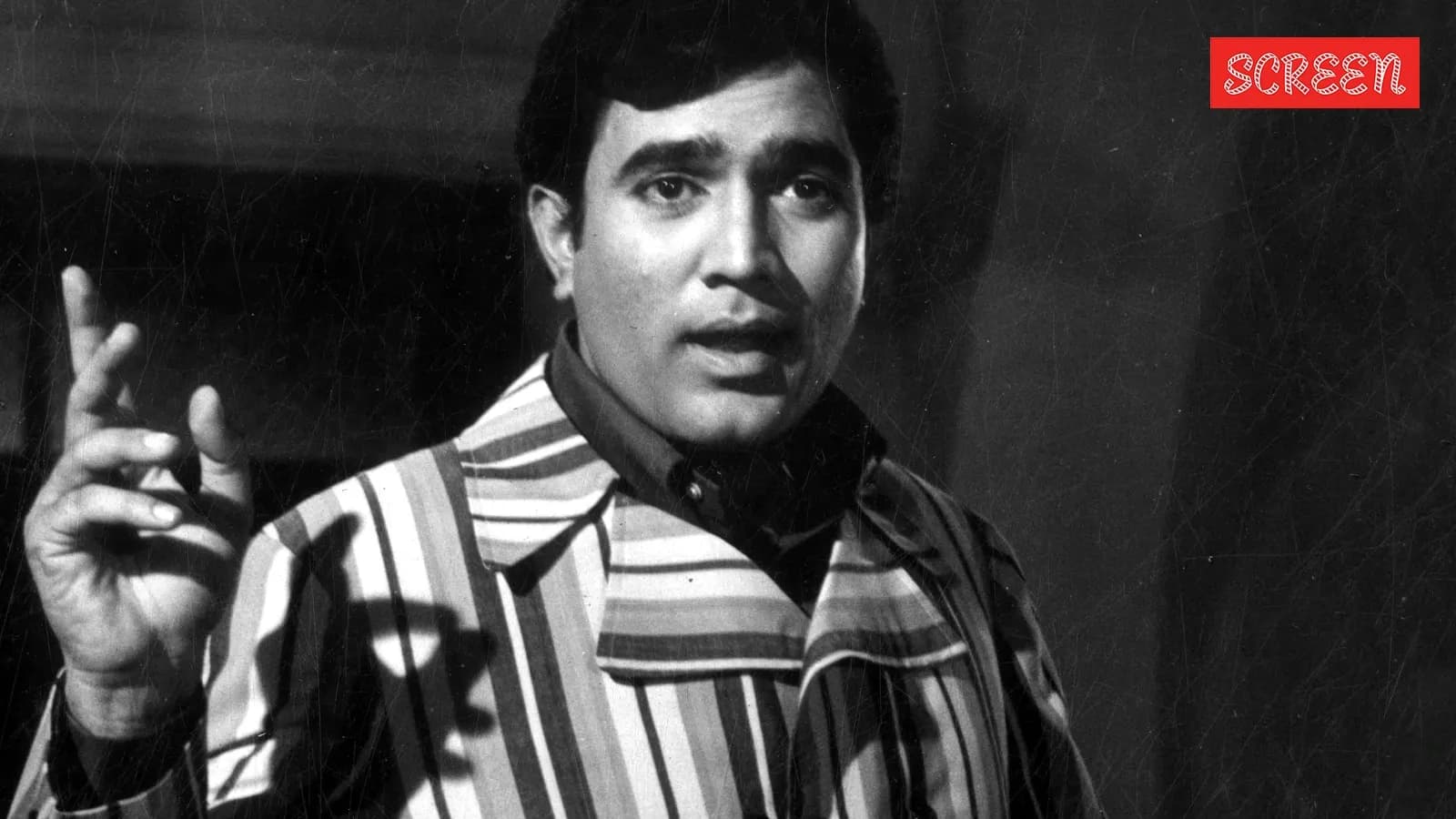
Anita Advani has claimed that Rajesh Khanna's adoption left him deeply distrustful of people. (Photo: Express Archive)For millions, Rajesh Khanna was Hindi cinema’s first superstar. Fans wrote him letters in blood, married his photographs and queued outside his bungalow just to catch a glimpse of him. But behind that larger-than-life image, says Anita Advani, was a man carrying emotional wounds long before fame found him. Speaking about the late actor, rumoured girlfriend Anita claimed that childhood, failed relationships and betrayals by people he trusted gradually turned him into someone who struggled to believe anyone around him. ‘He lost faith in people’ Speaking on the Meri Saheli podcast, Anita said Khanna’s trust in people slowly eroded over the years.“He was suspicious of everyone. If you ask me psychologically, I think he lost his trust in people. First, he was adopted. Then he was betrayed in relationships. Friends in the industry also betrayed him. Even those whom he had helped and made successful eventually went against him. He became suspicious of everyone.” Anita, who has maintained that she shared a close relationship with Khanna for over a decade during the later years of his life, said the actor was repeatedly taken advantage of by people around him. “Many people exploited him. During political campaigns, he would go wherever he was asked, but people in between would pocket the money. Kakaji himself never took any money.” ALSO READ: Rajesh Khanna bought star’s ‘lucky’ home; was furious when Salman Khan bid for his Aashirwad ‘His childhood never left him’ According to Anita, many people wondered why Khanna appeared increasingly withdrawn and difficult in his later years, but few understood the experiences that shaped him.Story continues below this ad “People ask why there were so many changes in his personality, why he became so difficult. His life itself began on a complicated note. He was adopted, and when he came to know about it, it was a huge shock for him.” Born as Jatin Khanna in 1942, the actor was adopted by his childless relatives, Chunnilal and Leelawati Khanna, who raised him as their own. Anita believes the revelation left a lasting impact on him. “He wasn’t close to his biological sisters or family. Once his sister came to meet him and he asked, ‘Who is she?’ There wasn’t much of an emotional connection.” From unbelievable highs to painful lows Rajesh Khanna‘s rise remains unmatched in Hindi cinema. After Aradhana (1969), he delivered an unprecedented streak of 15 consecutive hit films and became the country’s first bona fide superstar. Producers waited outside his home with signing amounts, while his fans turned their admiration into near-religious devotion.Story continues below this ad But Hindi cinema changed rapidly in the mid-1970s. As Amitabh Bachchan’s angry young man resonated with audiences, the era of the romantic superstar began to fade. The man who had once seemed invincible suddenly found himself confronting failure. Years later, Khanna himself admitted he wasn’t prepared for that fall. ‘When I started dipping, I hit the bottle’ In a 1990 interview with Movie magazine, Rajesh Khanna spoke about how success transformed him and how failure nearly broke him. “I still remember the exact moment when for the first time I became aware of how mind-blowing super-success can be. It psyches you totally — or you’re not human,” he said.Story continues below this ad The actor admitted that as his films stopped working, he turned to alcohol to cope. “Later, when I started dipping, I hit the bottle. I mean, I am not a superhuman being. You are not Jesus Christ and I am not Mahatma Gandhi.” He recalled the night when seven of his films had failed one after another, a moment that left him questioning everything. “It was three in the morning. I was pretty high on spirits… it was my first taste of failure. Seven films had flopped in a row. It was raining, pitch-dark, and I was alone on my terrace. I lost
PuneUpdated: Jul 25, 2026 12:21 PM IST According to PMC, the mechanised steel structure of the parking facility has become risky, and the expenditure on repair exceeds its use, (File photo) The Pune civic body on Thursday decided to demolish the city’s first fully automated multi-level parking facility on the Sambhaji Garden premises. Launched with much fanfare in 2007, the 20-storey ‘Vertipark’ suffered a major technical snag five years later and has since been lying defunct. The Rs 2.5-crore facility that could accommodate 60 cars was designed to maximise parking area using minimum urban space.“It was decided to dismantle the mechanised parking facility, which is beyond repair. The facility has not been in use for years, and the civic body is unable to find an expert agency to repair, maintain and operate it skillfully,” said Srinath Bhimale, chairperson of the Pune Municipal Corporation (PMC) standing committee. The mechanised steel structure of the facility on JM Road has become risky, and the expenditure on repair exceeds its use, Bhimale said, adding that the parking is not financially feasible. “The PMC has decided to dismantle it for Rs 29,000 per metric tonne,” said Additional Municipal Commissioner Omprakash Divate, adding that the total cost will only be known after the actual work. The officials are yet to finalise the date of demolition. © The Indian Express Pvt Ltd Ajay Jadhav is an Assistant Editor at The Indian Express, Pune. With over 22 years of experience in the industry, he is a highly specialized journalist whose work focuses on the intersection of urban infrastructure, governance, and sustainability. Professional Background Role: As Assistant Editor, he plays a key role in the editorial direction of the Pune bureau, specializing in urban policy and its direct impact on citizens. Education: He holds a Master’s degree in Communication and Journalism from Savitribai Phule Pune University and a PG Diploma in Corporate Social Responsibility (CSR). He also studied at the prestigious Fergusson College. Impactful Reporting: He is credited with research-based articles on conservancy staff (waste workers) that influenced national policy for better working conditions. He is also known for exposing the contrast between high-end infrastructure (like helipads for leaders) and the lack of basic amenities like schools in their home districts. Personal Interests: An avid trekker and sports enthusiast, his personal interest in the outdoors often informs his reporting on environmental protection and sustainable development. Recent Notable Articles (December 2025) His reporting in late 2025 has been dominated by the upcoming January 2026 Civic Polls in Pune and Pimpri-Chinchwad, and the city's infrastructure boom: 1. Political Analysis (Civic Elections 2026) "Not friendly but a bitter fight lies ahead between BJP and NCP for PMC, PCMC" (Dec 22, 2025): A detailed look at the intense rivalry between the Mahayuti partners as they prepare for the January 15 municipal elections. "Pune civic polls: Big blow to NCP, NCP(SP) as leaders switch to BJP" (Dec 20, 2025): Reporting on high-profile poaching and party-hopping ahead of the elections. "Ajit Pawar's NCP continues domination in Pune, wins 10 of 17 local bodies" (Dec 21, 2025): Analyzing the results of the local self-government body elections as a precursor to the main civic polls. 2. Infrastructure & Urban Development "Looking Ahead at 2026: Pune to see inauguration of much-awaited Hinjewadi to Shivajinagar metro route" (Dec 22, 2025): An "outlook" piece on the critical Metro Line 3 project expected to finish by March 2026. "Building Pune: PMC to construct double-decker bridge over Mula-Mutha River" (Dec 18, 2025): Detailing a major project aimed at easing traffic between Hadapsar and Kharadi. "Condition of highway from Pune to Kolhapur to improve in a year: Gadkari" (Dec 4, 2025): Reporting on the Union Minister’s assurances regarding one of the s

Discussion (0)