Telangana SIR: Why will 92 lakh electors receive notices? | Explained


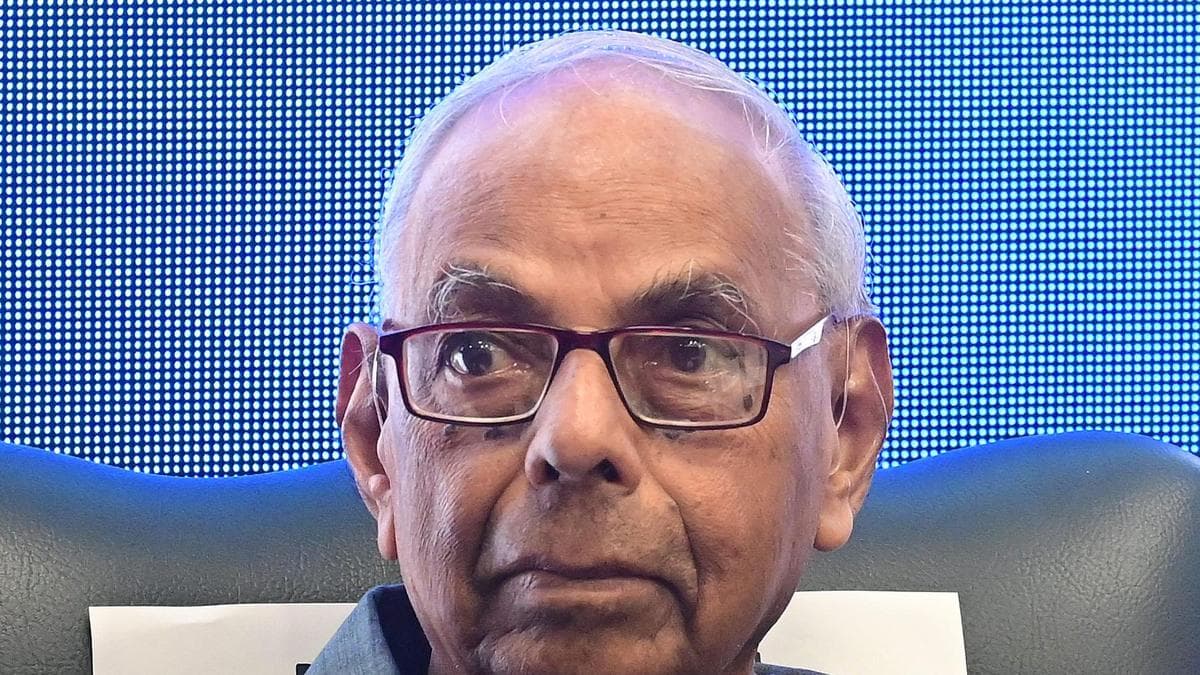
What has happened so far?The Special Intensive Revision (SIR) of Electoral Rolls began in Telangana on June 15, 2026. After 10 days of preparation, training and printing of Enumeration Forms (EFs), the Enumeration Phase was officially kick-started on June 25, 2026, with the initial deadline of July 24, 2026.Post two extensions, first up to August 3, and then up to August 10, the draft electoral rolls were published on August 17.Only 2,64,87,213 electors (78.3%) could make it to the draft electoral rolls. A total of 73,39,235 (21.7%) names were deleted from the list, under Absent, Shifted, Deceased, and Duplicate (ASDD) categories, besides others.Of the electors who have figured on the draft rolls, a total 92,87,577 (35%) are set to receive notices from the EROs, as revealed by the Chief Electoral Officer C.Sudharshan Reddy on August 17, 2026. Of these, 60,50,918 will receive notices for anomalies/logical discrepancies, while 32,36,659 will receive them for not being mapped with the 2002 SIR.Why is the number of notices so high?The CEO, Telangana has listed 11 kinds of anomalies/ logical discrepancies. They are: Less than 9 months gap between progeny Less than 15 years gap between parent and progeny Greater than 50 years age gap between progeny and parent Less than 40 years age gap between elector and grandparent Different parent name in current roll when compared with last SIR Mapping with different relative type between both rolls Mapping with father in the current roll and husband in the last SIR Different father in current roll and last SIR Incorrect age difference between current and last SIR Zero documents Only Aadhaar One prominent reason for high number of anomalies/logical discrepancies is unofficial addition of another anomaly. The name mismatch of the actual elector between draft rolls and previous SIR is not mentioned in this list, but it is being considered as a significant anomaly by the CEO’s office. During 2002 SIR, names of several electors were allegedly misspelt or shortened. Over several Special Summary Revisions, and introduction of full names on Aadhaar cards later, the names mentioned in the current list have undergone modifications. Many allege that the list still has mistakes in names and ages, besides discrepancies when compared with 2002 SIR rolls. The CEO stated that even minor differences such as initials instead of full name will invite notices.Several voters also filled in the top two sections of the EF, which seek details of the electors and relatives from 2002 SIR, with the details available on current Electoral Photo Identity Cards. BLOs in urban areas, unlike their rural counterparts, were not very active on field to explain the process or help the electors with the mapping.Of the unmapped voters, a total 23,05,799 (71%), are from the 24 constituencies in four districts forming part of the capital region.What is the Absent, Shifted, Deceased, Duplicate voters category?Of the 73,39,235 electors marked as ASDD, the figures of death, at 9,22,229 are reliable as they are supported by death certificates uploaded as proof. Duplicates were identified by running a software, which has scope for errors.Doubts are being cast about Absent and Shifted voters, because the BLOs in urban areas mostly did not conduct house to house visits as mandated. Staff from departments which had no public connect also were recruited as BLOs, who stayed at a central location, and distributed and collected the forms from there. Mr.Sudharshan Reddy requested the voters who might have been mistakenly added to the ASDD list, to approach the officials con
Tamil Nadu had sought the court to direct Karnataka to release the balance quantity of 21.357 TMC due as on August 12. Representational file image. | Murali Kumar The Supreme Court on Monday (August 17, 2026) decided to wait and watch the progress in Cauvery water sharing between Karnataka and Tamil Nadu, even as Karnataka said that over 12,000 cusecs was released by 8 a.m. on August 17.A Bench headed by Justice Vikram Nath addressed Tamil Nadu, saying “it is not that the State [Karnataka] is not giving water to you”. Tamil Nadu, represented by senior advocate C.S. Vaidyanthan, emphasised that the court must ensure that Karnataka should strictly follow the Cauvery Water Management Authority (CWMA) directions on water allocation.The court said it would watch the progress while seeking a fresh status report. It posted the case to August 24.Senior advocates Shyam Divan and Mohan V. Katarki, for Karnataka, submitted it was “erroneous” to allege that it had not complied with the CWMA directions.“We have complied in full, especially considering the fact that this is a distress year,” Mr. Divan submitted.Karnataka affidavit had submitted it was able to overcome the challenges of a distress year and worsening El Nino conditions to ensure the supply of water from its Kabini reservoir due to large inflows owing to good rainfall in the Wayanad area above the Kabini catchment which lies in Kerala.“The releases from the KRS and Kabini reservoirs have already been reflected at the inter-State border at Biligundlu. From July 29 to August 10, Karnataka has released 1,64,080 cusecs from its reservoirs, and after a time lag of two days, the flows have reached the inter-State border Biligundlu measured by the Central Water Commission gauge station,” Karnataka had maintained in the affidavit.However, Tamil Nadu had filed an additional affidavit in the Supreme Court recently, arguing that Karnataka’s release of water was “never voluntary compliance”.Tamil Nadu had sought the court to direct Karnataka to release the balance quantity of 21.357 TMC due as on August 12. It had also sought the release of 37 TMC of Cauvery water from August 12 to August 31. Published - August 17, 2026 02:19 pm IST
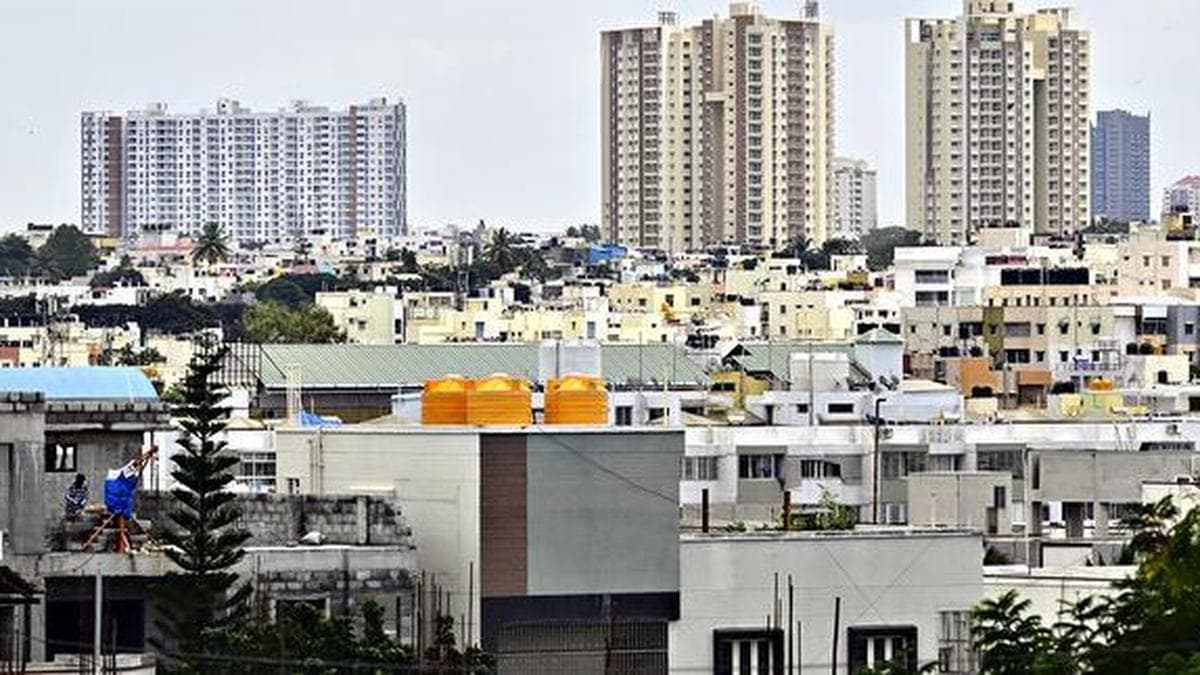
BWSSB will enter into MoUs with apartment communities to provide regular water supply under the Sanchari Cauvery scheme. | Many apartment communities that had come out of the dependence on private water tankers after Cauvery V Stage being commissioned in 2024 are being coerced into signing long-term contracts of two years with private water tanker businesses to get water.To address this, Manjula N., chairperson, Bangalore Water Supply and Sewerage Board (BWSSB), on Tuesday (July 28) announced that the board will enter into MoUs with apartment communities to provide regular water supply under the Sanchari Cauvery scheme.She said the bulk water supply feature was available earlier as well, but not digitised, which will be done now.Water tankers make a killing“We are back in business mid-way through the monsoon season, which we never expected. The demand has gone up over the last three weeks. Many apartment communities are coming back to us seeking regular supply,” said Ramesh Reddy, a water tanker supplier in Whitefield.While Ajay Kumar, another private supplier in Marathahalli area, said a 12,000 litre tanker was being sold at ₹1,600-₹1,800, and prices will be revised to nearly ₹2,200 soon, Mr. Reddy said that the demand was so high that it had already touched ₹2,500.The same quantity of water is available for ₹1,300 under the Sanchari Cauvery scheme, but is said to be “not easy to get or always reliable”.A multifold crisisNot all apartment communities have taken Cauvery V Stage connections yet. Even those who have availed a connection recently say the supply is not sufficient to meet all their needs.Moreover, yield in many borewells in these apartments have either come down or dried up. “We have four borewells in our community, of which two have dried up. The yield is low in another. The Cauvery water supply is not enough. So, we are back to buying water from private tankers,” said Sunil Kumar, an apartment resident in Kalkere.“Private water suppliers are saying they will supply water only if apartments sign a long-term contract for two years, with a mid-term exit clause of at least three months. We raised this issue during the meeting with BWSSB on Tuesday (July 28), and the board will now sign MoUs with apartment communities directly. We will publicise and promote this,” said Satish Mallya, president, Bangalore Apartments’ Federation.BWSSB to match bulk users to apartment STPsFor better utilisation of treated water produced at Sewage Treatment Plants (STPs) at apartments, Bangalore Water Supply and Sewerage Board (BWSSB) will create an action plan to connect potential bulk users of treated water like industries, ongoing construction projects, educational institutions and commercial complexes, with STPs in apartments. Published - July 28, 2026 11:07 pm IST
Discussion (0)