Keep visiting Kolkata, your safety is my responsibility, West Bengal CM tells Taslima


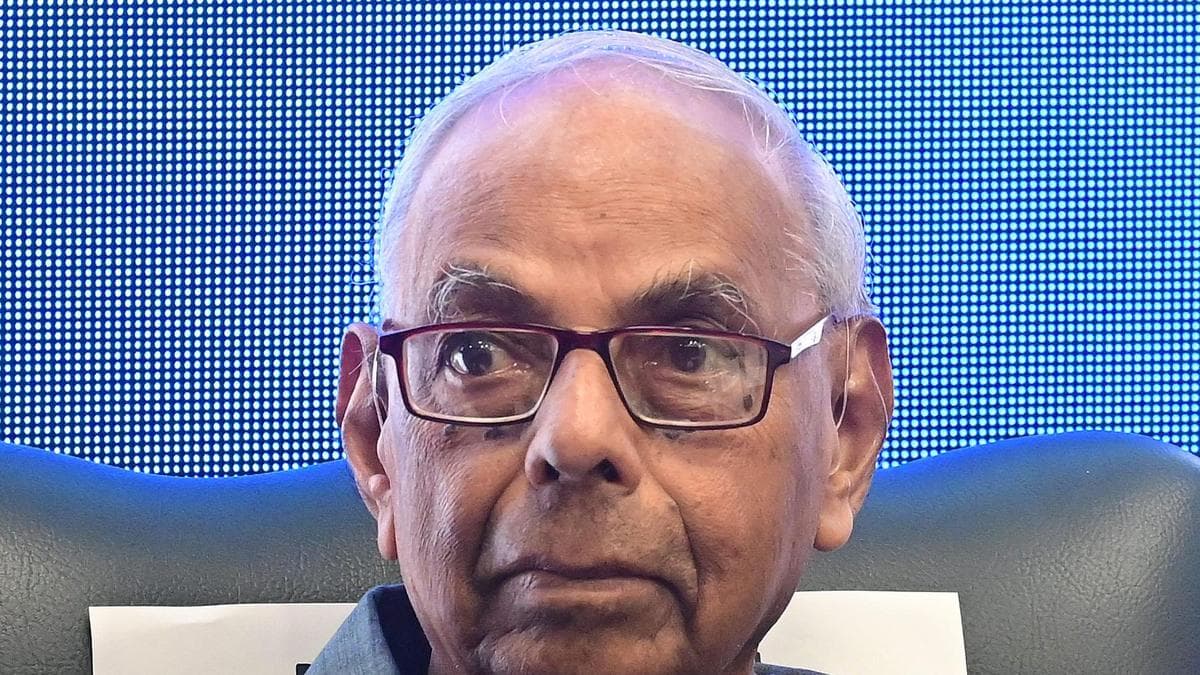
West Bengal Chief Minister Suvendu Adhikari felicitates Bangladeshi writer Taslima Nasrin in Kolkata on Saturday. | Sharing the stage with Ms. Nasrin at Kolkata’s Rabindra Sadan at an event that marked the writer’s return to the city after 19 years, Ms. Adhikari said: “You are most welcome to Bengal. Please come here whenever you want and as many times as you wish. Your safety is my responsibility.”Ms. Nasrin was exiled from Bangladesh in 1994 over her writings after which she started living in Europe and then in Kolkata. But she had to leave Kolkata in November 2007, when violence erupted in the city after some organisations called for action against the author over her books. The violence reached such alarming proportions that the Army had to be deployed in the city to contain the situation. She had blamed the Left Front government and the Trinamool Congress government for not allowing her to return to the city.She reached Kolkata on Friday (July 31, 2026) to attend the event at Rabindra Sadan.The Chief Minister said Ms. Nasrin’s return indicated that not only had the face of the government changed but the entire system too. “This Bengal is free from any barriers and chains. Every single pillar of the Constitution is safe here. We all have the righteous opportunity for freedom of speech,” said Mr. Adhikari, welcoming the writer with a portrait of Bankim Chandra Chatterjee, the writer of national song Vande Mataram.Veteran BJP leader and former Tripura Governor Tathagata Roy also shared the stage with the writer. The audience comprised a number of State Ministers, including Swapan Dasgupta, Agnimitra Paul, and Kalyan Chakrabarti.Thanks CM“I have always questioned this city. Did I ever harm you [Kolkata]? I haven’t come for any answer today. I have come back to Kolkata with tears in my eyes and also immense love in my heart. This was my dream for the last 19 years. History remembers who shut this door. Now, history will also remember who opened this door again,” said Ms. Nasrin, expressing gratitude to the West Bengal Chief Minister for facilitating her return.“It is still painful that a writer had to return to the city of her own language with such high security. I am thankful to the government. But my gratitude is not my allegiance to any party. I have not come here for any political party. I came here to express my voice over women’s liberty and freedom of speech,” the 63-year-old writer said at the event. Published - August 01, 2026 10:35 pm IST

Exiled Bangladeshi author Taslima Nasrin on Friday (July 31, 2026) returned to Kolkata after nearly 19 years, describing the visit as an emotional homecoming to a city she still considers her own.Her arrival comes ahead of a literary event on Saturday (August 1, 2026) that has acquired political resonance under West Bengal's new BJP government.With folded hands, Ms. Nasrin greeted those waiting to receive her at the Netaji Subhas Chandra Bose International Airport and said, "I am feeling very good to be back."Her return marks her first visit to Kolkata since November 2007, as she was compelled to leave the city following violent protests over her writings, ending what she had often described as the closest thing to home after her exile from Bangladesh.The author will make her first public appearance here at an anti-fundamentalism literary programme at Rabindra Sadan, where she is expected to recite poetry.Chief Minister Suvendu Adhikari and renowned author Shirshendu Mukhopadhyay are among those expected to attend.Though conceived as a literary gathering, the event has inevitably assumed political significance, coming months after the BJP formed the government in West Bengal and amid renewed debate over freedom of expression, secularism and the state's approach towards religious sensitivities."I feel as though I am returning to my own country. Bengal has never been divided in my heart by a border or a barbed-wire fence. The door to the eastern part of Bengal remains closed to me, so for now, this part of Bengal is my home," she had said.She said she was returning ‘with joy, but also with pain’, recalling that Kolkata had given her a home, friends, readers and a sense of belonging before she was forced to leave.Calling the visit more than a personal homecoming, Ms. Nasrin said it symbolised the return of a voice that religious fundamentalists had once tried to silence.She also thanked the organisers and the present West Bengal government for facilitating her visit and providing security, while asserting that a writer's freedom should remain a fundamental right irrespective of the ideology of the government in power.Ms. Nasrin's return revives one of the most debated chapters in the state's contemporary political and cultural history.After fleeing Bangladesh in 1994 following death threats over her novel 'Lajja', she settled in Kolkata in 2004, embracing the Bengali-speaking city as her cultural refuge in exile.That association ended abruptly in November 2007 after violent protests erupted over portions of her memoir 'Dwikhandito', which had already been banned by the then Left Front government in 2003 for allegedly hurting the sentiments of sections of the Muslim community.As the protests escalated and the Army had to be deployed to restore order in parts of Kolkata, the Buddhadeb Bhattacharjee government asked Ms. Nasrin to leave the city.She was shifted to Jaipur and later Delhi before eventually moving abroad, though she repeatedly expressed her desire to return to Kolkata, if only to participate in literary events.For nearly two decades, that return remained elusive despite periodic appeals from writers and civil society and occasional political interventions.The issue resurfaced nationally last year when BJP Rajya Sabha MP and current West Bengal BJP president Samik Bhattacharya urged the Centre in Parliament to facilitate her return, describing Ms. Nasrin as a fearless voice against Islamist fundamentalism.The BJP has since sought to portray her homecoming as the correction of what it calls a long-standing failure of successive Left Front and Trinamool Congress governments to defend free speech in the face of religious pressure.Those governments, however, had maintained that administrative decisions taken in 2007 were dictated by the need to preserve public order amid escalating communal tensions.Organisers have maintained that Saturday's (August 1, 2026), programme is intended to celebrate Nasrin's lifelong opposition to
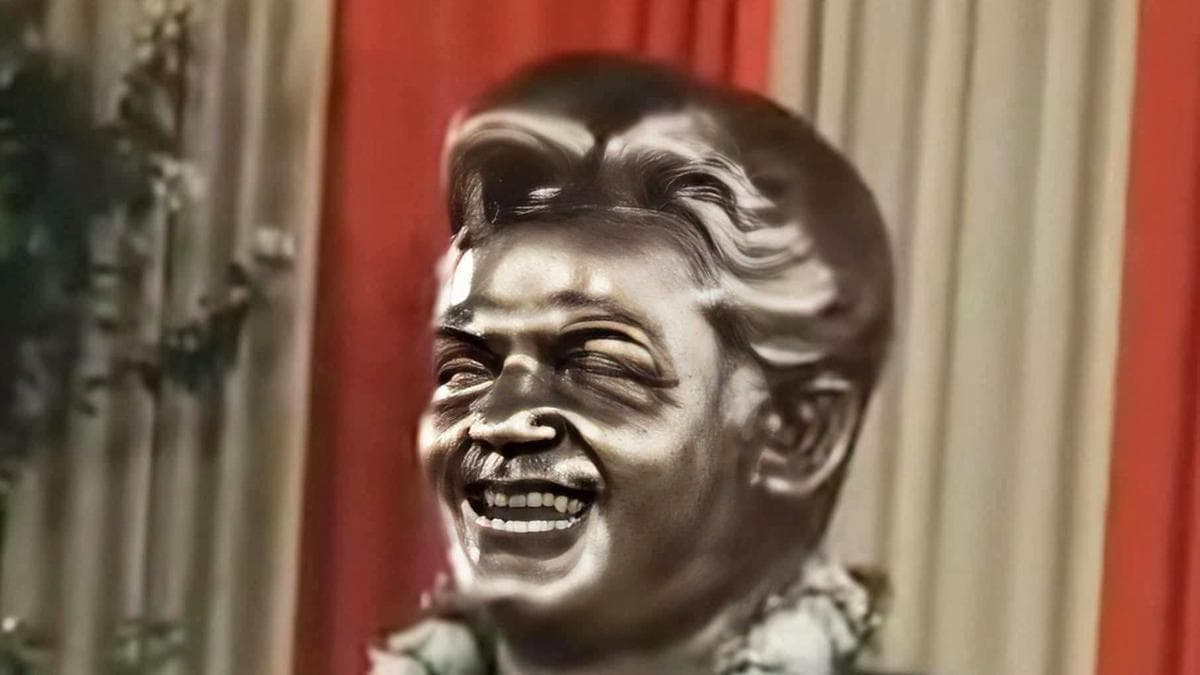
Statue of Bengali cinema icon Uttam Kumar. Photo: X/@KunalGhoshAgain Artists in West Bengal have expressed outrage over a statue of Bengali cinema icon Uttam Kumar, which was recently unveiled at Keoratala Crematorium in Kolkata by Chief Minister Suvendu Adhikari. “Neither does the statue have any resemblance to the yesteryear superstar, nor is it a work of art,” said critics. Uttam Kumar, who is known as the “Mahanayak“ (superstar) of Bengali cinema, is held in high regard in the cultural circles of Bengal. However, this recently unveiled statue of the artist has left artists in the State unsettled. “This is very ugly; the people who do this work are incompetent, and the people who commission it are equally incompetent. They do not understand art. People who are close to politicians are becoming artists now. This work is done through tenders; but artwork through tenders is absurd, and this is the result. Artists are low-paid. They work on short deadlines; how will they deliver?“ celebrated senior artist and sculptor Sanatan Dinda told The Hindu. Mr. Dinda also said Kolkata is becoming a jungle of fibreglass artwork and that it shows very badly on Bengalis who were once highly regarded for their understanding of art and culture. He added that artists are not asked for suggestions when such pieces are commissioned and are done on the freewill of politicians, leading to these badly done artwork across the city. “No one has ever insulted Uttam Kumar more than this. This man had walked out of Bollywood because he said artists are not respected there, and they did this to him. Any artist who has loved the work of Uttam Kumar will say that he did not deserve this,” veteran playwright and artist Chandan Sen said. He also called for immediate removal of the sculpture. Not only artists but political parties in the Opposition have criticised the move. Trinamool Congress MLA Kunal Ghosh urged the State government not to install this statue and suggested that it be replaced with something better. “Everyone who sees it is saying that whatever else it may be, it cannot be the Mahanayak’s statue. Perhaps it was inaugurated in haste,” Mr. Ghosh wrote on his social media. .@SuvenduWB মহানায়ক উত্তমকুমারের একজন অনুরাগী হিসেবে আপনার কাছে একান্ত অনুরোধ, দয়া করে উত্তমবাবুর মূর্তির নামে এই মূর্তিটিকে রাখবেন না। মহানায়কেরযথাযথ মূর্তি তৈরির নির্দেশ দিন। যাঁরাই দেখছেন, প্রত্যেকে বলছেন এটা আর যাই হোক, মহানায়কের মূর্তি হতে পারে না। হয়ত তাড়াহুড়োয়… pic.twitter.com/2R00Dz4l9T— Kunal Ghosh (@KunalGhoshAgain) July 27, 2026Since the unveiling on July 24 on the 47th death anniversary of Uttam Kumar, the statue has gone viral on social media as netizens criticised the artwork and said that it has no resemblance to the late actor. However, there is one more massive sculpture of the late actor in the Tollygunge area where the film studios reside and where the actor spent most of his working days. That was inaugurated in 1993 and was highly appreciated by artists for its quality artwork. When the Bharatiya Janta Party came to power in Bengal, sports minister Nisith Pramanik ordered an immediate removal of a sculpture outside the Salt Lake Stadium and said that it was ugly. An emotion that was shared by many across the city. The structure was of a lower body of a football player with two footballs on his two feet. It was designed by former CM Mamata Banerjee. During Ms Banerjee’s tenure, many such structures and sculptures were commissioned, several of which were highly criticised for their quality. Published - July 29, 2026 10:49 am IST
Discussion (0)