
Loading dispatches...
← Return to NewsroomPolitics
Protectors turn predators: how son preference fuels female foeticide rackets in Maharashtra
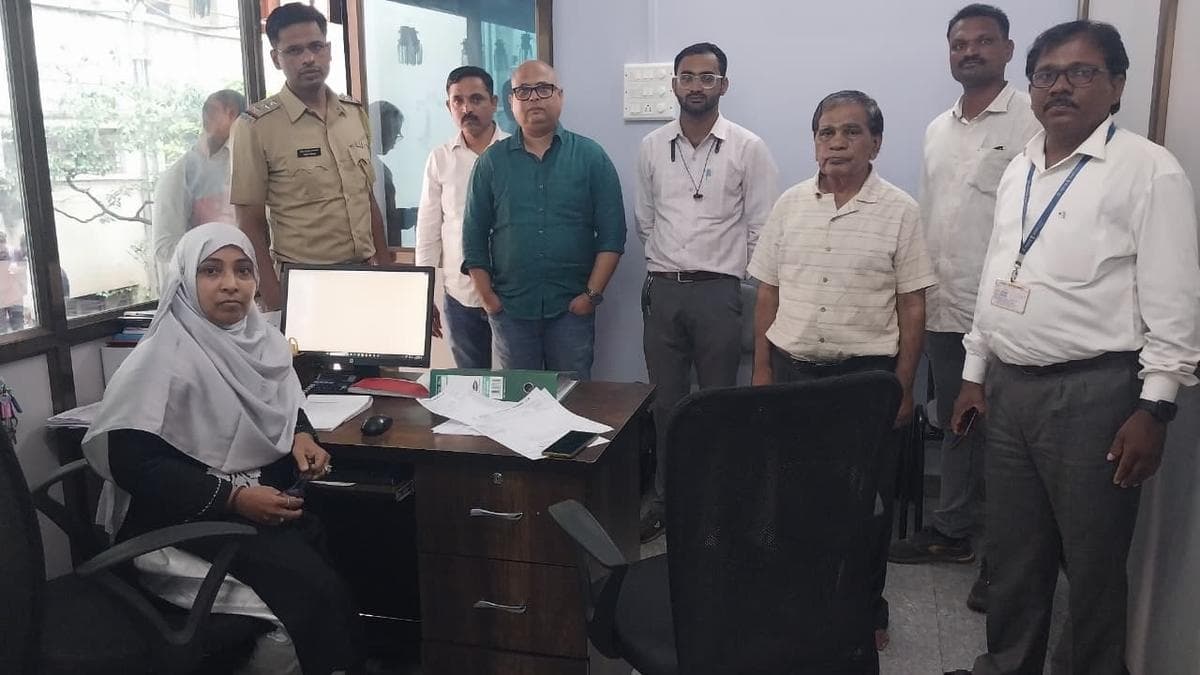
A man once tasked with saving Maharashtra’s daughters has now been unmasked as one of their most prolific predators.For decades, Dr. Chandrakant Gunda Gaikwad sat comfortably within the upper echelons of the State health establishment, serving as a district civil surgeon and assistant director. He was also part of the government’s ‘Save the Girls’ campaign for years.How a Telangana government doctor’s absence from duty exposed a web of violations at his private hospitalRetirement did not signal an end to his medical career, but marked the expansion of a dark underground enterprise. Dr. Gaikwad was arrested by the Kolhapur police on July 31 for allegedly orchestrating a sophisticated female foeticide ring. During interrogation, he allegedly admitted to performing around 200 to 250 illegal abortions, the police said.The racket operated out of Kolhapur in western Maharashtra, the home district of State Health Minister Prakash Abitkar. The Minister called it a “serious matter” that a former health official was involved in such a crime. He announced that the State will soon introduce a new law to invoke the stringent Maharashtra Control of Organised Crime Act against female foeticide, ensuring that doctors, family members, pharmacists, and anyone else supporting the crime face prosecution.From 2025: Leave the kids aloneHowever, when mediapersons pressed the Minister about how implicated doctors and individuals routinely escape punishment and continue running their rackets after securing bail, he had no concrete answer. It underscored a grim reality: culprits easily slip through the cracks and accountability remains elusive.According to Sunanda Patil, an octogenarian and resident of Kolhapur, female foeticide “is nothing new”. She said women face two choices: empty their wombs if it is a girl, or keep giving birth until a son is born. She chose the second option, delivering three daughters before finally having a son. She considers herself lucky that her husband stopped there.Quiet tragediesFor daily wage worker Maloji Kharat and his agricultural worker wife Lankabai, the reality was starkly different. By 38, Ms. Lankabai had 21 pregnancies and struggled to recall the names of all her children. Of her 11 surviving children, nine are girls. The other 10 died either shortly after birth or during delivery. When their story was reported a few years ago, the couple vanished from public view.Beed district in the Marathwada region has long carried a dark reputation for illegal abortion rings. The most notorious was run by Dr. Sudam Munde and Dr. Saraswati Munde from Parali who operated a sex determination racket for years.In one of the most chilling revelations, investigators found that the Mundes fed aborted female foetuses to a pack of dogs to hide the evidence, reportedly aborting up to 20 female foetuses a day for decades.Beed-based activist Manisha Tokale noted that it has been over a decade since the Munde case, yet illegal abortion networks continue to operate in secret. The issue makes headlines briefly when a case is uncovered, she said, before things slip right back to normal.This generational pressure drives quiet tragedies across the State. After delivering two sons, Renu (name changed) became pregnant a third time. Her husband, a daily wage worker, expected another boy. Fearing that her family history of having only daughters meant she would carry the same genes, he routinely took her for ultrasound tests.“We went, had a sonography, and the family suggested abortion,” Ms. Renu said, without needing to specify that the third child was a girl. Phrases like “khali karun ye (empty it and come back)” or “tapasun baghu (let us check)” echo across both rural and urban Maharashtra. When she went to a private clinic in Beed for the abortion, the doctor botched the procedure. She said the clean-up was not done properly, leaving her with lasting physical pain and nowhere to turn for justice.According to Roopa Shah, founder of the Kolhapu
Identities of all sex workers, former sex workers, and their families have been changed to maintain privacySitting in her older daughter’s room, where one corner is covered with maps and math formula sheets, Savitri, a 40-year-old former sex worker, recalls when she began hating her profession. “It was when my girls turned five and seven,” she says. “I had decided that my daughters would never live the life I had. They would live with dignity.”Although she continued in the profession for a few more years due to family responsibilities — her husband, who was one of her clients, abandoned the family years ago — Savitri eventually quit. Now, about 10 years later, her elder daughter works with an NGO and is preparing to write the police exam, while her younger daughter is preparing for medical entrance tests in Indore.The family belongs to the Banchhada community, a de-notified tribe with an estimated population of 25,000 spread across 78 villages in the districts of Mandsaur, Neemuch, and Ratlam in western Madhya Pradesh.Unlike Savitri’s daughters, most girls in the community are born into a system in which their families expect them to enter sex work — a practice passed down over generations. According to several members of the community and NGOs in the region, while many Indians celebrate the birth of a boy over a girl, the Banchhadas welcome a girl with sweets and firecrackers. As girls grow up, they receive better nutrition than boys. They are given expensive clothes and, unlike in much of India, are not told that they will have to marry one day and leave the nest.The reason, however, is disturbing: for generations, the Banchhada girls have been pushed into sex work upon hitting puberty and given the responsibility of earning. Their family members function as pimps and live off their money.Akash Chouhan, founder of the Jan Shaurya Social Welfare and Development Society, an NGO based in Neemuch, estimates that at least 10,000 women of the community, including about 3,000 girls, remain trapped in this form of exploitation. “Girls are forced to drop out of school after Class 8 or 9 and are pushed into sex work by their families,” says Akash, who is from the community. “Community elders protect the practice in the name of tradition.”Radhika, a sex worker, says girls are conditioned from childhood to believe in the tradition. They are told it is their responsibility to ease the family’s financial woes. “I quit school on my own after Class 9 and began working,” she says. “But if a girl refuses to quit, her family forces her into sex work through physical or emotional abuse.”Abuse along the highwayA drive along State Highway 156, which connects the three districts, passes through several villages of the community. Girls wearing bright lipstick stand along the way, while older women sit on cots outside their houses and shanties, watching children playing nearby. As evening approaches, they gesture to men to come in.In Neemuch’s Jaitpura village, an elderly woman approaches a car parked on the roadside and asks if anyone would like to come in. She points to three girls sitting outside her house; two of them are her granddaughters. “You can pick either of them and go into the house,” she tells them. “It will cost you ₹300 for 10 minutes, but I will take ₹100 as my tip. The room has a fan; you will be comfortable.”Most girls along the highway, including those who look underage, say that they are around 20; some say they recently turned 18. Conversations with them reveal that they have been involved in sex work for about four years.Multiple dhabas along the highway are also involved in brokering deals between prospective clients and sex workers. The owner of a highway dhaba in Ratlam’s Dhodar village claims he can “arrange girls” and lists different price brackets based on location, duration, and the girl’s age. Standing near a toll booth, he lists the facilities available, including an air-conditioned room, car parking, and assurances o

Discussion (0)