
Loading dispatches...
← Return to NewsroomPolitics
NALSAR row: Can BCI freeze enrolment of an entire graduating batch?
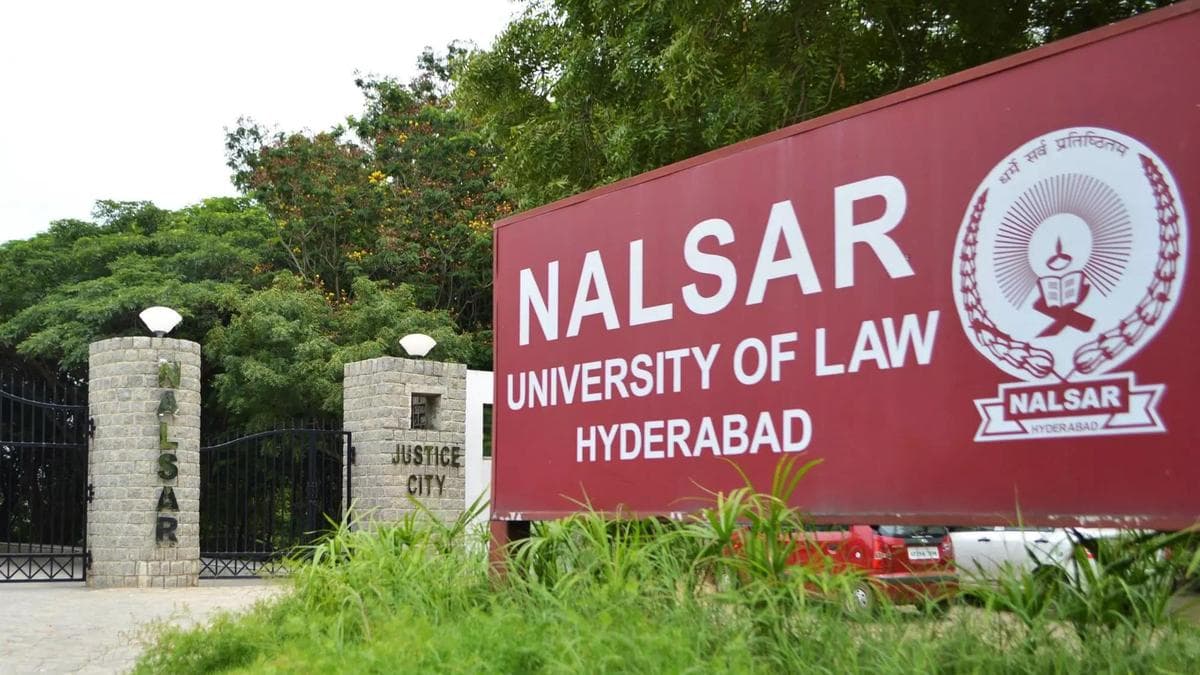
The story so far: On 13 August, Bar Council of India (BCI) Chairman Manan Kumar Mishra issued a direction to all State Bar Councils not to enrol any NALSAR (National Academy of Legal Studies and Research) 2026 graduate until further orders. The direction came amid an inquiry into a campaign by some students opposing Chief Justice of India (CJI) Surya Kant’s participation in NALSAR’s convocation. The Chairman sought a factual report from NALSAR identifying those who initiated, organised, coordinated or mobilised the campaign.“A student of Law, having no regard or respect for the highest Judicial Office of the country, is not expected to be a responsible or sensible advocate, teacher or a judge. Such persons shall always be a liability on the profession...Our experience is that such people are always indulged in strikes and boycotts and tarnish the image of the Legal Profession.” the letter said.Subsequently, the BCI modified the direction and said all NALSAR 2026 graduates could enrol with the State Bar Council of their choice, while the inquiry would continue.This raises several questions about the statutory powers of the BCI, the authority of its Chairman and the legality of imposing a batch-wide restriction when individual responsibility has not yet been established.What powers does the BCI have over State Bar Councils?The Bar Council of India is a statutory body constituted under the Advocates Act, 1961. Section 7(1)(b) entrusts the BCI with laying down standards of professional conduct and etiquette for advocates, while Section 7(1)(g) entrusts it with general supervision and control over State Bar Councils. Sections 7(1)(h) and 7(1)(i) concern the promotion and standards of legal education and recognition and inspection of universities whose law degrees qualify for enrolment, respectively. Section 49 empowers the BCI to frame Rules concerning, inter alia, professional conduct and etiquette and standards of legal education.Section 48B is the power to give directions. It states, “For the proper and efficient discharge of the functions of a State Bar Council or any committee thereof, the Bar Council of India may, in the exercise of its powers of general supervision and control, give such directions to the State Bar Council or any committee thereof as may appear to it to be necessary, and the State Bar Council or the committee shall comply with such directions.”Rule 15 of the Bar Council of India Rules provides that, subject to the resolutions of the Council, the Chairman shall exercise general control and supervision over the affairs of the Council. Rule 18 further provides that the Chairman has the power to pass interim orders in revisional and other matters arising out of the supervisory jurisdiction of the Council.“The blanket direction stopping the entire 2026 NALSAR batch from enrolling has no statutory basis. Enrolment is primarily the statutory function of the State Bar Councils under the Advocates Act, and there appears to be no specific provision empowering the BCI Chairman, acting individually, to suspend the enrolment of an entire batch.” said advocate N. Manoj Kumar, BCI and Bar Council of Kerala member.What does the law say about enrolment?Section 6(1)(a) entrusts the State Bar Councils with admitting persons as advocates on their rolls. Section 24 of the Advocates Act sets out the qualifications for admission to a State roll, while Section 24A provides for certain disqualifications for enrolment. Sections 25 and 26 deal with the authority and procedure for admission as an advocate, while Section 26A empowers a State Bar Council to remove a name from its roll.“No blanket restrictions can be imposed by the BCI. Every application has to be dealt with independently and if they meet the statutory requirements, they are entitled to be enrolled,” said advocate Yeshwanth Shenoy, member of Bar Council of Kerala.“The conduct of a person has nothing to do with his eligibility to be enrolled as an advocate. The Bar Council
A.L Hek. | A.L Hek, BJP MLA from Pynthorumkhrah in Meghalaya’s East Khasi Hills district, told The Hindu that Christian institutions are the “largest providers of charity in remote and tribal areas”, and their work should not be curtailed.“The main concern is whether the proposed law strikes the right balance between regulations and the constitutional freedom of the charitable and religious institutions,” Mr. Hek said, citing the work of the Missionaries of Charity founded by Mother Teresa among the vulnerable communities in India and abroad.Mr. Hek said that he is one of the oldest members of the party in the entire North-East, and by voicing his opinion over the Bill, he is neither deviating from the party line nor working against the interests of the party.“I am not doing anything against the party. Why should I fear? Tell me. In a democratic set-up, internal discussion is healthy. Raising concerns does not mean opposing the government or the party. It means helping improve the legislation. Christian institutions are not merely religious bodies. They are among the largest providers of education, healthcare and social services, particularly in remote and tribal areas. Their contribution should be recognised while ensuring full compliance with the law,” Mr. Hek added.“Religion-neutral” BillOn Thursday, Mr. Shah met an 18-member delegation representing all Christian denominations—Catholic, Orthodox and Protestant—and assured them that the proposed legislation is “religion-neutral” and that the “government has no intention to harass the Christian community, or any faith community for that matter.”Asked if the assurances were enough to assuage the concerns of the community, Mr.Hek said, “The assurance is appreciated. However, the Christian community is looking not only for assurances but also for legal clarity and fair implementation of the law. Confidence grows when the law is applied uniformly, without any discrimination, and when the genuine charitable institutions continue serving the society without uncertainty.”The BJP leader said a wider consultation is required with all stakeholders before the Bill is taken up for passage in Parliament. He said he has sought an appointment with the Home Minister but yet to get one.“I have written several letters to the Home Minister and even called his office three-four times, but I am yet to get an appointment. I have also written to the Prime Minister and received a response from the Law Ministry that they are examining the concerns,” he added.One of the key provisions in the FCRA Bill, 2026, introduced in the Lok Sabha on March 25, but not passed following protests by Opposition parties, is the appointment of a "designated authority" to take over, manage, or dispose of assets created from foreign funds when an NGO’s FCRA registration is suspended, cancelled, or not renewed.This authority will have the powers of a civil court and can order the transfer or sale of assets owned by NGOs to either the government or any other body. The Bill was initially listed for passage in the ongoing Monsoon Session, but did not feature in this week’s list of business.Mr. Shah has held a series of interactions with members of the Christian community, including the Chief Ministers of Christian-majority States of Meghalaya and Mizoram, to assuage their concerns over the Bill. Published - August 07, 2026 09:53 pm IST



Discussion (0)