
Loading dispatches...
← Return to NewsroomPolitics
Parliamentary panel recommends ‘integrated security and surveillance framework’ for tourist spots in Jammu and Kashmir
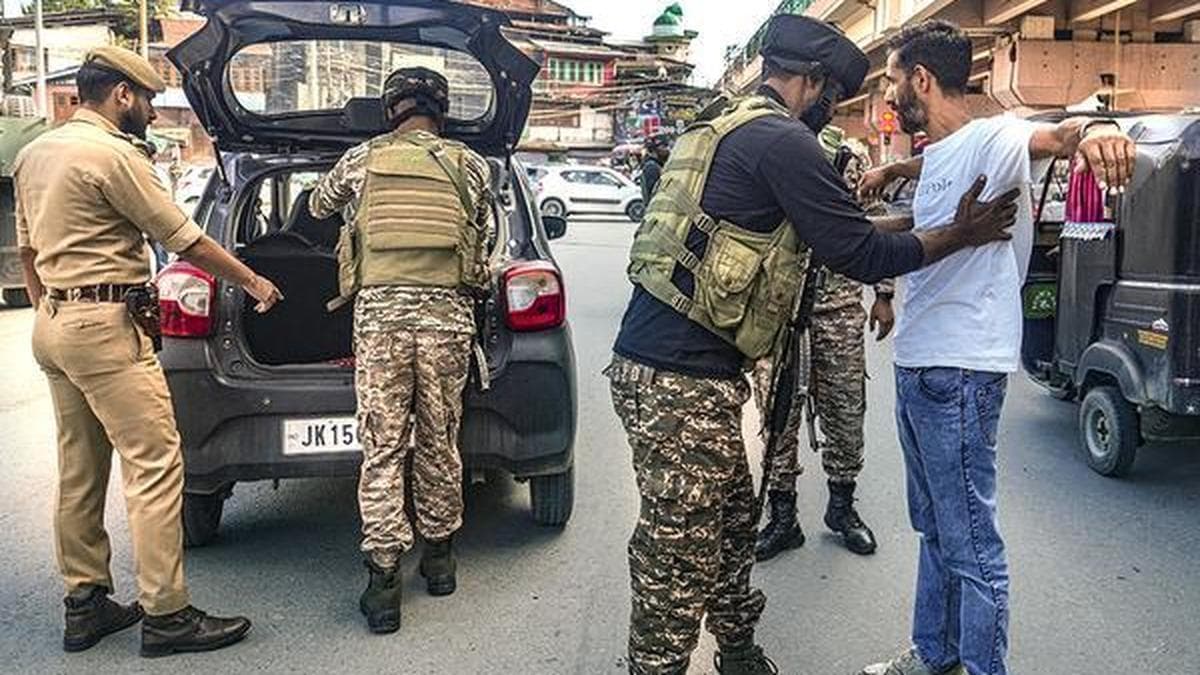
Security personnel inspect a man and a vehicle following the recent terrorist attack in the Kelam area of Kulgam district, in Srinagar, Jammu and Kashmir. File | The recommendations came in the backdrop of the terror attack on tourists on April 22 last year in the scenic Baisaran valley of Pahalgam, where 26 people, mostly tourists, were killed by terrorists who had taken shelter in the higher locations.The committee recommended that an integrated security and surveillance framework be developed for all major tourist destinations, incorporating comprehensive CCTV coverage, centralised monitoring facilities, regular vulnerability assessments and periodic security audits.The committee further recommended that clear inter-agency standard operating procedures be prescribed and reviewed before every peak tourist season to ensure a coordinated and timely response to any security-related incident.The committee had undertaken a study visit to Jammu, Srinagar, Gulmarg, Sonmarg and Kargil from May 11 to 15, 2026.It undertook an "on-the-spot assessment" of the security arrangements at the tourist destination of Gulmarg; interacted with the representatives of the Jammu and Kashmir Police regarding the law and order situation in Sonmarg and assessed the border security establishments and operational preparedness in Kargil through interactions with the representatives of the Indian Army.Noting that there is a steady rise in the number of tourists in Jammu and Kashmir, the panel said security management at tourist destinations assumes special importance, in this context, as it directly affects the perception of safety, the quality of visitor experience and the continued growth of the tourism sector."The Committee recommends that dedicated emergency response units, adequately equipped ambulances, trauma-care facilities and clearly identified evacuation routes be made available at all high-footfall destinations," the report said while appreciating overall security and preparedness of security forces.The panel also said that emergency contact numbers and safety instructions should be prominently displayed at hotels, transport points and tourist facilities in multiple languages.The Parliamentary Standing Committee on Home Affairs has also recommended that periodic joint security audits and vulnerability assessments should be conducted, particularly before the commencement of the tourist season and the Amarnath Yatra, to identify and address emerging security concerns.In Ladakh, the panel expressed satisfaction with the induction of advanced weapon systems, Unmanned Aerial Systems, Counter-UAS technologies, modern surveillance equipment, specialist mobility platforms and all-terrain vehicles.It recommended sustained investment in integrated intelligence, surveillance and reconnaissance capabilities, counter-drone systems, secure communication networks and indigenous high-altitude technologies."The Committee further recommends that the Ministry of Defence should ensure their timely procurement, deployment and periodic technological upgradation in all strategically important sectors," the report said. Published - August 10, 2026 09:52 am IST
Image used for representational purposes only. | 5 crore tender to secure round-the-clock professional security services for its critical infrastructure.The Request for Proposal, issued on July 25, 2026 targets comprehensive security deployment across the agency’s headquarters on Minto Road, regional offices in Okhla, and other designated storage and record facilities in New Delhi.The selected security partner will be tasked with safeguarding high-risk zones, including confidential examination material storage, server rooms, strong rooms, warehouses, and record rooms, according to the tender documents. The mandate covers continuous access control, visitor tracking, asset safeguarding, and protection of NTA personnel.The ₹7.5 crore contract will initially span two years, with provisions for a two-year extension (one year at a time), depending on satisfactory performance.Breaking away from the conventional lowest-bidder (L1) procurement norms, the NTA has opted for a Quality-and-Cost-Based Selection (QCBS) model. Citing the high-stakes confidentiality required for national entrance examinations, the evaluation structure assigns 70% weightage to technical capabilities and 30% weightage to financial bids. Bidders must secure a minimum threshold of 70 out of 100 marks in the technical evaluation round to qualify for the financial opening.The NTA has laid down parameters to filter experienced applicants. Agencies must possess a minimum of five years of demonstrated experience in providing professional security services to high-security zones, including Central government Ministries, public sector undertakings, airports, universities, metro rail systems, or major examination bodies. Applicants are required to display an average annual turnover of at least ₹10 crore over the past three financial years. Bidders must furnish an earnest money deposit of ₹15 lakh, alongside a performance security equivalent to 5% of the total contract value, the NTA has said. Interested agencies can submit their bids through the GeM (Government e Marketplace) portal until 3 p.m. on August 17, 2026, following which technical bids will be unlocked the same day, the NTA has said. Alongside security, the NTA’s ongoing procurement drive also encompasses tenders for comprehensive printing services, housekeeping, and specialised waste management as part of a wider administrative overhaul. Published - August 03, 2026 05:00 pm IST


Discussion (0)