
Loading dispatches...
← Return to NewsroomPolitics
Census 2027 questionnaire seeks parents’ religion, place of birth up to village level
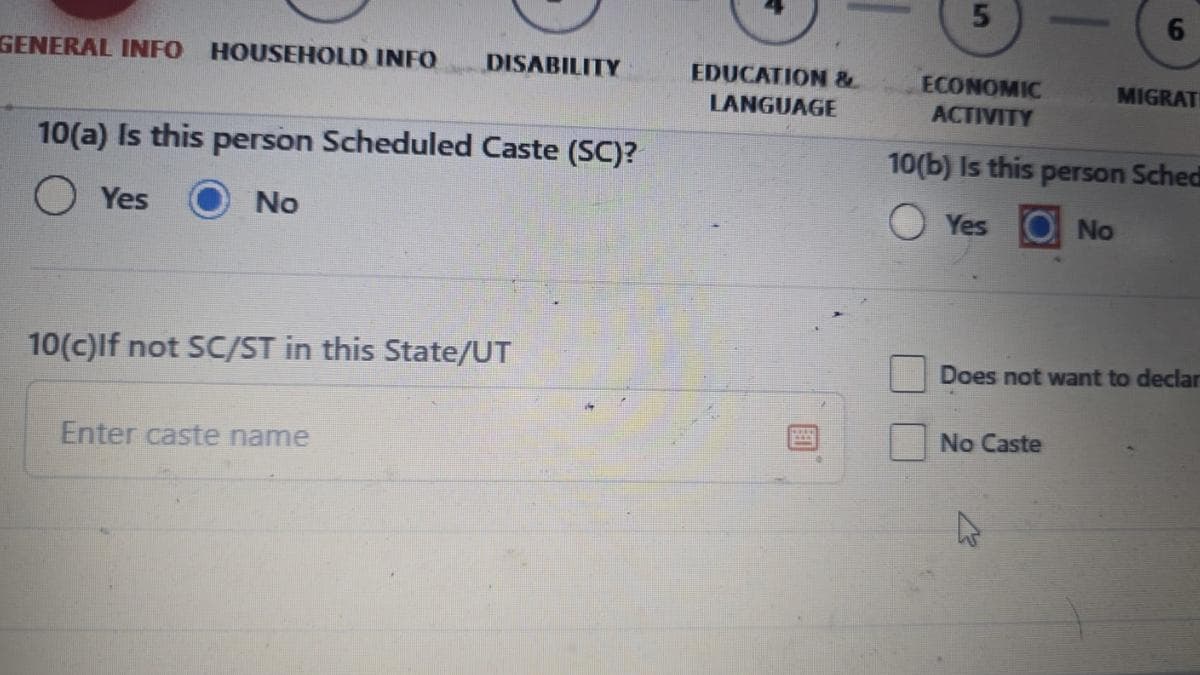
The questionnaire or the schedule for the population enumeration phase of Census 2027, which has gone live in Ladakh and snow-bound areas of three other States ahead of the rest of the country, seeks information on religion, date of birth and place of birth up to the village level of both the father and mother, according to the questions seen by The Hindu.Under the data head “Family Particulars,” the questionnaire also has an option to record the place of birth of the father and mother if they were born outside India. Other than the six religions—Hindu, Christian, Sikh, Buddhist, Muslim and Jain—respondents can record “other religion” in a separate column.Caste enumerationScheduled Caste and Scheduled Tribe respondents can choose their caste from a predetermined drop-down menu, while all others will have to type the caste name in an open field. This is Independent India’s first caste enumeration. Question 10 (C) says: “If not SC/ST in this State/UT-Enter Caste name.” There are two other options besides the caste field: “Does not want to declare Caste” and “No Caste.” The data fields are marked “mandatory.”Only the Union Government can issue the SC/ST list after being ratified by Parliament.New questionsThe Registrar General and Census Commissioner of India (RG&CCI) on August 14 notified a set of 40 questions to be asked during the population enumeration phase, or the second phase of the Census, adding 13 new questions or data fields that were not part of the Census 2011 questionnaire., which had 29 questions.The questions added for the first time include spouse’s name, nationality, father’s particulars and mother’s particulars, digital literacy, permanent residential address, place of COVID-19 vaccination, number of bank accounts, passport number, driving licence availability and mobile, Aadhaar and voter ID numbers, if available.NPR overlapSome of the additional questions, such as particulars of mother and father, Aadhaar, mobile, voter ID and driving license details, mirror those asked in the rehearsal form for the National Population Register (NPR) in 2019. The NPR, which was initially proposed to be updated with the first phase of the Census, has been put on the back burner amid opposition from political parties and civil society members, over concerns that the data can be used to create a countrywide National Register of Citizens (NRC).The NPR, first prepared in 2011 and updated in 2015, already has a family-wise database of 119 crore residents.Unlike Census data, which can only be released in an aggregate form up to the village level, the NPR database can be shared with States and other government departments.The Census schedule, which was made available to respondents in Ladakh, parts of Jammu and Kashmir, Uttarakhand and Himachal Pradesh on August 17 through a self-enumeration portal, ahead of the rest of the country, further expands the data fields notified in the Gazette of India.Door-to-door enumerationDoor-to-door enumeration in these States will begin on September 1, and conclude on September 30. In the rest of the country, the second phase will be conducted in February 2027.The question on the place of COVID-19 vaccination gives two options—within India or outside India. The names of the State and district where the vaccination was administered are to be provided if the jab was taken in India.The open-field methodology to record caste has been questioned by the Congress. On Tuesday, Congress leader Jairam Ramesh, in a post on X, accused the government of sabotaging the caste Census. “The conclusion is clear: the Modi Govt wants to simply sabotage the caste census. The PM had made a complete U-turn on April 30, 2025 and announced that a caste census - which he had earlier attacked as an “urban naxal” idea - would take place. Now he has done another U-turn on his earlier U-turn and without saying so has buried the idea of a caste census. He is an U-turn ustad,” Mr. Ramesh said.He said that on September 21, 2021, th
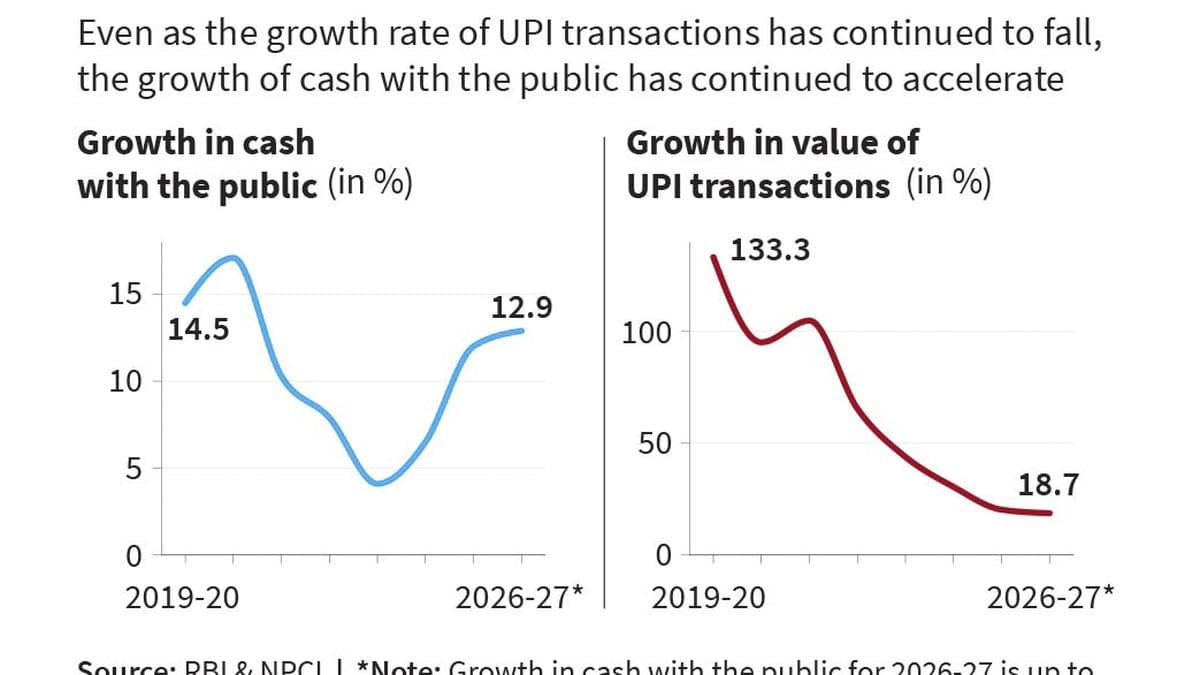
At a time when the government is proposing to allow the levy of a charge on UPI transactions, an analysis shows that the growth in the value of UPI transactions has been slowing for the last five years, while the growth of cash with the public has been quickening over this period. Paywall: On a charge on UPI transactionsWhile slowing, the growth of UPI transactions remains faster than the growth of cash among the public, but this margin is shrinking. Experts say this is both a sign of higher economic activity and higher price levels than are being reflected in the official inflation data. UPI and RuPay debit card transactions are currently free, like cash transactions. However, the government passed the Taxation and Other Laws (Amendment) Bill, 2026 in the recently-concluded Monsoon session of Parliament, which enables it to allow a Merchant Discount Rate (MDR) charge to be levied on these electronic transactions. Cash is backAn analysis by The Hindu of data from the Reserve Bank of India shows that the growth rate of cash with the public reached a recent high of about 17% in the COVID-19 pandemic year of 2020-21. Thereafter, the growth of cash with the public fell consistently until 2023-24, where it hit about 4%. Cash with the public is the total cash in circulation minus what is sitting in banks. Since then, the growth of cash with the public has been quickening. That is, this growth rate rose to 6.5% in 2024-25 and further to 12% in 2025-26. In 2026-27, cash with the public, at ₹41.8 lakh crore as of July 31, 2026, was nearly 13% higher than in the same period of the previous year. Finance Minister Nirmala Sitharaman and the Payments Corporation of India have made assurances that the general public would not have to pay the MDR charge on UPI transactions and that it would only be levied on certain high value merchants and transactions. However, the Opposition has said that the merchants who do have to pay this charge would pass that higher cost onto their customers in the form of higher prices and that this could push people back to using cash. UPI slowing but highUPI transactions, on the other hand, have seen their growth slowing over the last few years, as per data with the National Payments Corporation of India (NPCI). The value of UPI transactions conducted in the country grew 133% in 2019-20, which then slowed to a relatively robust 95% in 2020-21 as the economy locked down. It then quickened again to 105% in 2021-22 as the economy opened up and pent-up demand combined with health fears over handling cash to push up UPI usage. Since then, however, the growth in the value of transactions done on the UPI platform has consistently been slowing, with growth hitting 20.3% in 2025-26. In 2026-27, this has further slowed to 18.7% as of August 2026, as compared to the April-August period of last year. However, this 18.7% growth in UPI transactions is still higher than the 13% growth in cash with the public in the same period. Inflation likely understatedAccording to Pronab Sen, former Chief Statistician of India and former Chairman of the Standing Committee on Statistics, the fact that both cash and UPI are growing should be showing itself in the form of higher inflation rates than what the official numbers are currently showing. “This would imply that we are undercounting inflation, because that’s where this should show up,” Mr. Sen told The Hindu. “If there is more money being transacted, both digitally and in cash, then that should show up in inflation. The first effect would be there.” “A lot of this could be explained if the official data showed prices were rising faster than they are,” he added.The latest official retail inflation data for July 2026 stood at 4.45%, slightly higher than in June, while the wholesale data showed inflation had slowed marginally to 9.8% in July from 9.9% in June.Signs of robust economyD.K. Srivastava, chief policy advisor at EY India, says that simultaneous cash and UPI growth is a sign o
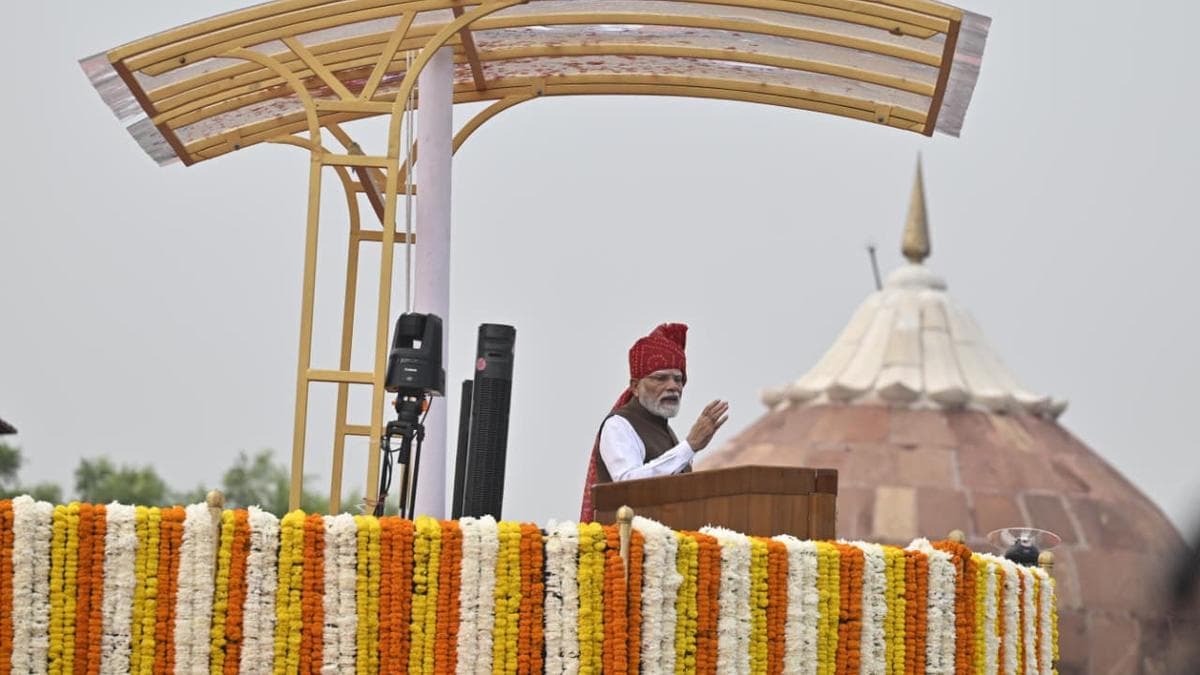
Prime Minister Narendra Modi on Saturday (August 15, 2026) laid out a seven-point reform framework, 'Sapta Dhara', aimed at accelerating India's journey towards becoming a developed nation by 2047, with a focus on manufacturing, agro-food production and food processing, technology and innovation, logistics, defence, green and blue economy, and soft power.Independence Day LIVE updatesAddressing the nation from the ramparts of the Red Fort on the 80th Independence Day, Mr. Modi recalled the era when India's might was known through the "Sapta Sindhu" and said the country now needs new streams of strength to build a developed India."Now, to build a developed India, we need a new stream," he said."Today, from the ramparts of the Red Fort, I invoke the seven streams of power before the nation," Mr. Modi said."In the coming 5-7 years, with the strength and power of these seven streams, we will give the country new heights, new momentum, and the capacity to achieve new goals," he said, adding that the full potential of the nation's youth power will be utilised in nation-building.Freedom’s Progress Through the YearsThe first strength of the 'Sapta Dhara' is manufacturing power, Mr. Modi said, stressing the need to take the manufacturing sector forward and produce both small components and large products."We must build a complete value chain. From design to manufacturing, India must establish itself as a trusted global supply chain partner for the world," he said."We must rise to global standards of cost, quality and scale," Mr. Modi said.He said Indian manufacturers must meet global benchmarks on cost, quality and scale, while factories should be competitive, products user-friendly and packaging attractive."For every manufacturer, every entrepreneur, every MSME, I want to say that in the global market, our identity should be based on trust and quality," Mr. Modi said, stressing that there should be "no compromise" on quality.The second stream is agriculture and food processing, with Mr. Modi calling for Indian farmers to access global markets.Modi on trade deals"The world's markets are now open for our farmers. Due to FTAs, we are gaining access to a very large market. We must reach there," Mr. Modi said, stressing the need to go "from the farm to the export market".The Prime Minister said traditional cuisine, millets, spices, fruits and flowers and chemical-free agricultural produce could become global brands, provided they meet international parameters.“The third stream, he said, is technology and innovation. India must become an innovation hub as emerging technologies such as artificial intelligence, quantum technology, space, robotics and data centres create new opportunities,” Mr. Modi said.Modi on digital public technologies"We have made our mark in UPI and digital public infrastructure," Mr. Modi said, calling for India's digital public technologies to be taken to every corner of the world."India must lead in next-generation communication technology. Made in India 6G should reach every corner; this should be our goal," Mr. Modi said.The fourth strength of the 'Sapta Dhara' is Gati Shakti, with Mr. Modi stressing the need for seamless and high-speed connectivity. "Our cities must be connected through high speed rail," he said.Modi on port-led development and defenceMr. Modi also called for a focus on port-led development, saying ports should not remain merely places for loading and unloading goods but should become engines of growth.The PM highlighted defence power as the fifth strength, stressing the need for self-reliance in the defence sector and for India to emerge as a global supplier of next-generation defence technologies."When the world is thinking about itself, India cannot remain merely a market for the world," he said."We have to become global suppliers. We have to take leadership in hypersonic defence technologies," Mr. Modi said.He also called for developing drones, counter-drone systems and hypersonic defence techno
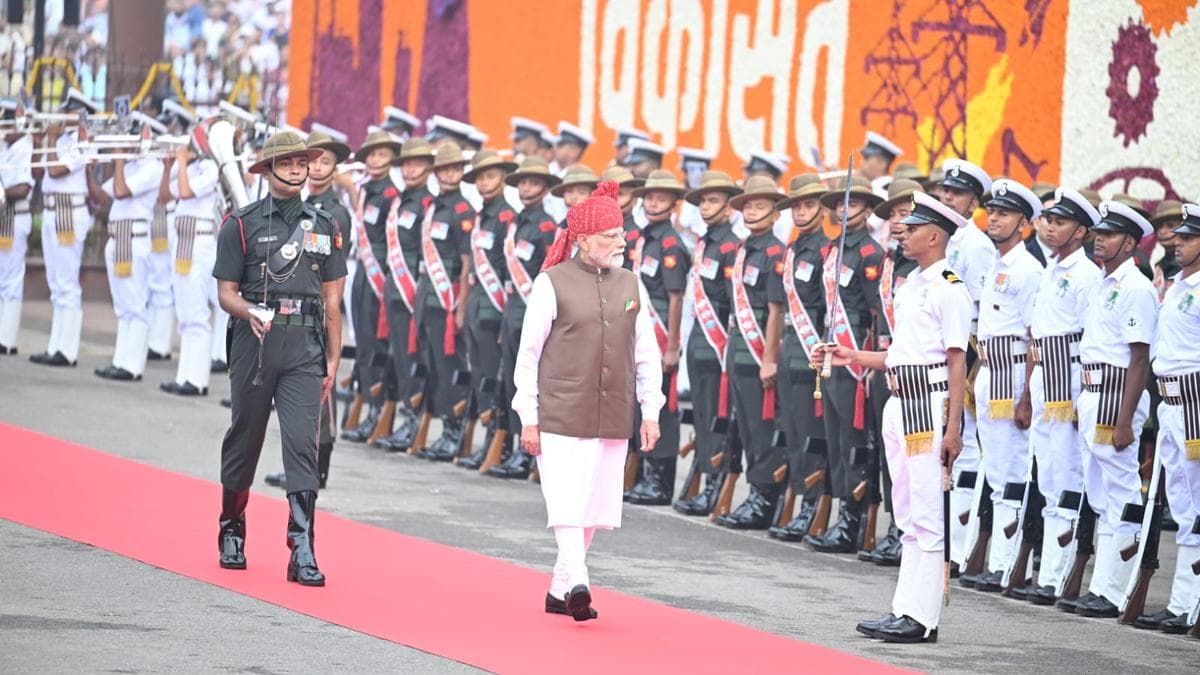
Prime Minister Narendra Modi inspecting the Guard of Honour during the 80th Independence Day celebrations at the Red Fort in New Delhi on Saturday, August 15, 2026 | Addressing the nation from the ramparts of the Red Fort on India's 80th Independence Day, Mr. Modi said India needed to strengthen domestic capacity in critical areas, including energy and minerals, as geopolitical tensions increasingly exposed the risks of dependence on external sources.Without naming any country, Mr. Modi said resources ranging from fuel and medicines to technology were increasingly being used as instruments of geopolitical pressure, while strategic geographical routes were also being weaponised.His remarks come against the backdrop of the U.S.-Israeli war with Iran and Tehran's retaliation, which has severely disrupted shipping through the Strait of Hormuz, a key conduit for global energy supplies.The narrow waterway between Iran and Oman handled about 20 million barrels per day of oil and petroleum products in 2025, equivalent to roughly a quarter of global seaborne oil trade, according to the International Energy Agency. It also carried almost 20% of global LNG trade, leaving major Asian importers particularly exposed to any prolonged disruption.The conflict has sharply reduced maritime traffic through the strait and pushed up energy and shipping costs. Renewed tanker attacks have stalled efforts to resolve the conflict.For India, the disruption has highlighted the risks posed by its dependence on imported energy. The country has had to seek alternative LNG supplies from countries including Oman, the United States, Nigeria and Angola after uncertainty over Gulf shipments, while Indian refiners have also moved to diversify crude purchases.India has already broadened its energy sourcing, importing crude from 41 countries and LNG from 15, up from 27 and six respectively, as New Delhi seeks to insulate the economy from geopolitical shocks.The Strait of Hormuz is particularly important to India because much of the energy passing through it is bound for Asia. The IEA estimates that India received nearly half of its crude oil that transited the strait in 2025. It also obtained almost two-thirds of its LNG supplies through the waterway.Modi on becoming self-reliant in energyMr. Modi said the geopolitical conflicts have underscored the importance of becoming self-reliant in energy.India, which imports nearly 90% of its crude oil requirements and about half of its natural gas needs, is seeking to tap its largely underexplored offshore reserves as part of a broader push to strengthen energy security, he said, citing the recently approved the ₹84,084-crore Samudra Manthan National Offshore Exploration Scheme, aimed at accelerating exploration for oil and gas in deepwater and ultra-deepwater areas over the next five years.The programme will support seismic surveys, exploratory drilling and shared offshore infrastructure, with the government seeking to attract greater investment and technology into India's offshore basins.Mr. Modi said the government has also opened up 99% of India's sedimentary basins for oil and gas exploration and production, expanding access to areas that were previously largely off-limits to commercial exploration. The move is intended to unlock domestic hydrocarbon resources and reduce India's exposure to global energy-price and supply shocks.The Prime Minister went on to list achievements of his government in the last 12 years - expansion of piped cooking gas coverage from 70 cities to 700 cities, with the fuel - an alternate to LPG which is largely imported from the West Asia - now being supplied to 1.75 crore ho
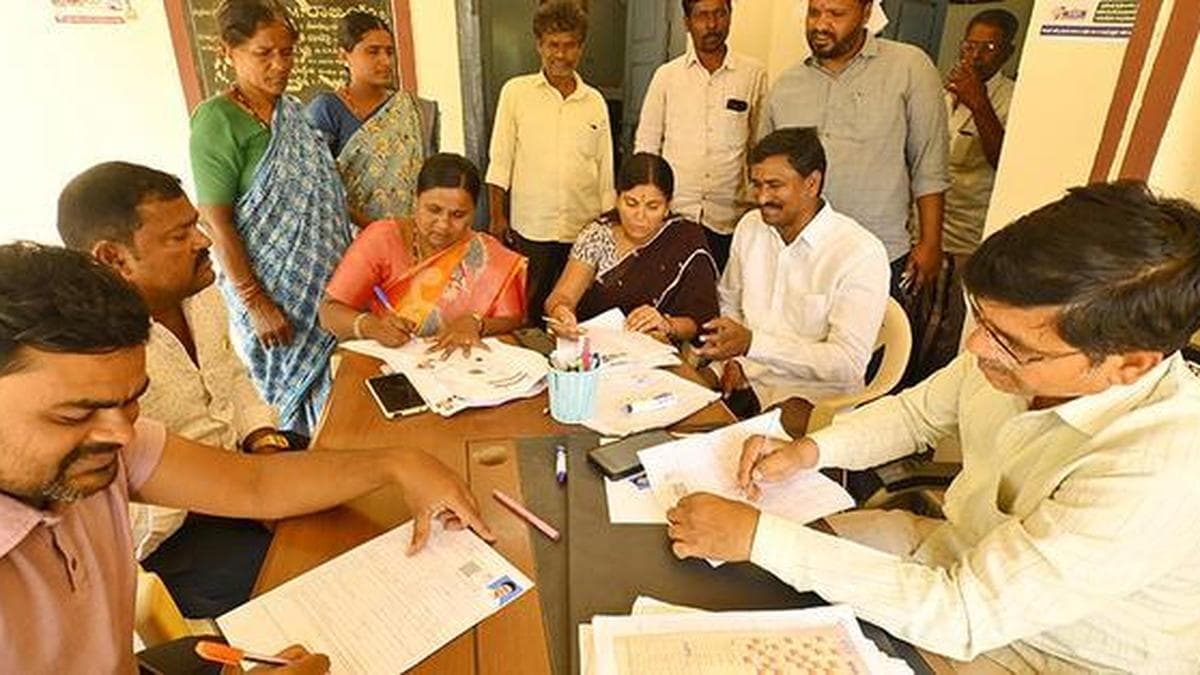
Booth Level Officers (BLO) verify voter details during the Special Intensive Revision (SIR) of electoral rolls at Aroor Village, Sadashivpet Mandal, Sangareddy District. File | With a large number of voters not filling in their details from the final electoral rolls of 2002 SIR as required in the Enumeration Forms, the work for the Electoral Registration Officers (EROs) has increased that much.3% voters enrolled in Telangana SIR; draft rolls to be published on August 17After August 17, the date of publication of draft electoral rolls, the EROs will have to conduct hearings for verification of close to 94 lakh voters within two months’ time, which is next to impossible in practical terms.Of the 94 lakh, more than 32 lakh are those who did not fill in their details in the first section pertaining to their entries in the rolls of 2002 SIR, or of their parents’ details from 2002 in the second section. They have all been categorised as unmapped voters, officials informed.Many voters, not knowing the format, entered the current details as available on the Electoral Photo Identity Cards in the first section, leaving out the Polling Station numbers and Part Numbers blank.Door-to-door visits by Booth Level Officers, which could have helped them understand the process, did not happen in many instances. BLOs in a large number of localities confined their roles to distributing the forms and collecting them back, sitting at a central location, instead of going from house to house.Electoral officials, before the start of the Enumeration Phase, repeatedly asserted that the BLOs must visit each household at least thrice during the phase, once for distribution, a second time to explain how to fill in, and one last time to collect the forms back. However, the targets given were impossible for the BLOs, which became evident at the start of the distribution. Eventually, the officials made it the electors’ duty to return the filled in forms, extending the Enumeration phase twice to make that happen.Of the total forms submitted at the end of the Enumeration Phase, a total of 61.4 lakh logical discrepancies/anomalies were reportedly discovered. When clubbed with the number of unmapped electors, nearly 94 lakh electors will have to be served notices to attend hearings before the EROs concerned, as per the directions from the Election Commission of India.The notice period would begin on August 17, 2026, and continue up to October 15, 2026, leaving the EROs exactly 60 days to issue notices and conduct hearings. Even if the notices are served within the first fortnight, it would leave 45 days for hearings. With 119 EROs endowed with quasi-judicial powers set to adjudicate over 94 lakh cases in this short window, they would get less than a minute’s time to verify each elector even if they worked 24 hours a day. In a reasonable eight-hour workday with/without weekends and holidays, each elector would get just about 16-28 seconds!Completion of the process with any reasonable time allocation, say 15 minutes per elector, will need seven to eight years’ time when done with utmost rigour.EROs will also have to settle claims and objections simultaneously, apart from accepting fresh applications by electors deleted from the rolls.With the number of anomalies/discrepancies uneven across constituencies, a few EROs will be more burdened than the rest, even with support from the Assistant EROs. Published - August 15,
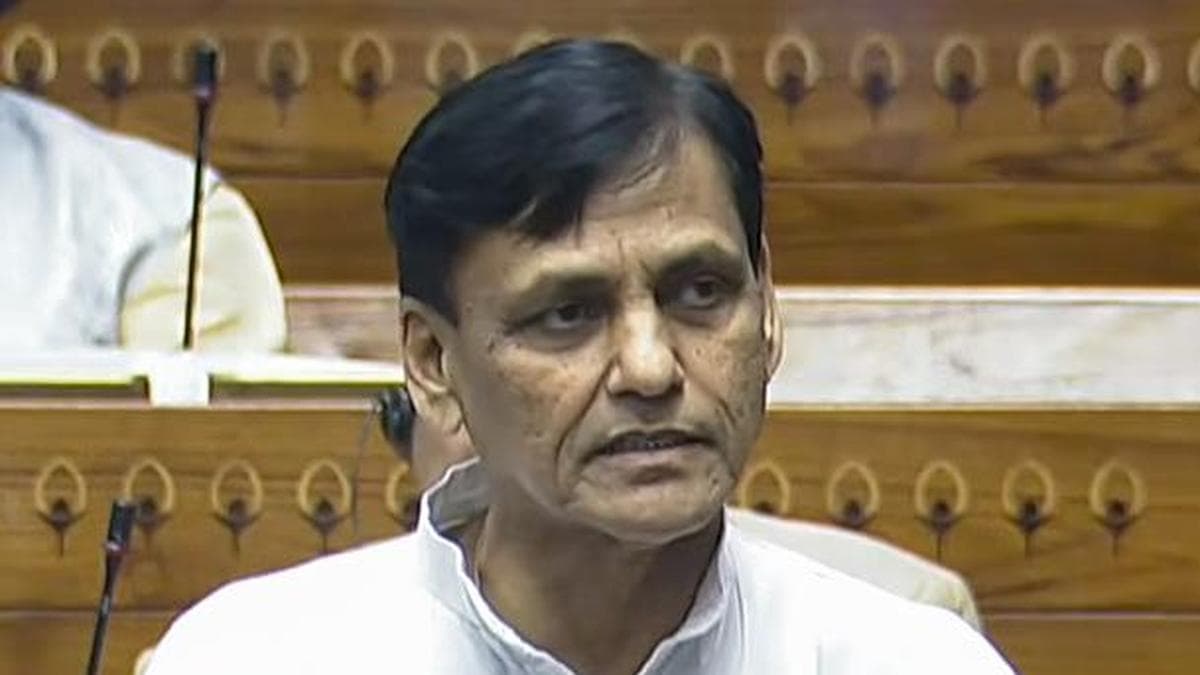
Union MoS Nityanand Rai speaks in Parliament during the ongoing Budget Session. Photo: ANI via Sansad TV The upcoming Census will collect data on sex of head of household— Male, Female and Transgender, the Rajya Sabha was informed on Wednesday (March 11, 2026).Minister of State for Home Affairs Nityanand Rai, in a written response, said Census 2027 will be conducted in two phases. The questions for the first phase, which covers Houselisting and Housing Census, have been notified."Information on Housing condition, Household particulars including name and sex of the head of the household, amenities available and assets possessed by household will be collected in this phase. Three categories of sex of head of household viz. Male/Female/Transgender will be collected," Mr. Rai said.Questions for the second phase, which is Population Enumeration where information of each individual will be collected, will be notified in due course, he added.Australia adds optional gender identity, sexual orientation questions to censusThe Minister said enumerators shall undertake house-to-house field visits in the entire enumeration area for the collection of Census data to avoid any exclusion on any ground."Provision of self-enumeration is an additional facility for the respondents to submit data. Enumerators will confirm self-enumeration data before final submission. Further, FAQs, necessary 'Tool Tips' and validation checks for questions are provided in the self-enumeration Portal itself to ensure accuracy of data," he said.The Minister said all suitable measures have been taken for data security while collecting data on mobile, during data transmission and at the server level."Adequate training is being provided to all field functionaries appointed for Census work including enumerators and supervisors. Validation rules are incorporated in the mobile app itself to ensure data consistency and accuracy. Further, Data collected by enumerators will also be monitored and checked by supervisors," he said.The Union Cabinet has approved ₹11,718 crore for conducting the Census of India, 2027, which would include the caste enumeration for the first time.The 16th Census since Independence will be a fully digital exercise and will offer citizens the option of self-enumeration. The decadal exercise, scheduled for 2021, was postponed due to the COVID-19 pandemic across the country. Published - March 11, 2026 04:51 pm IST
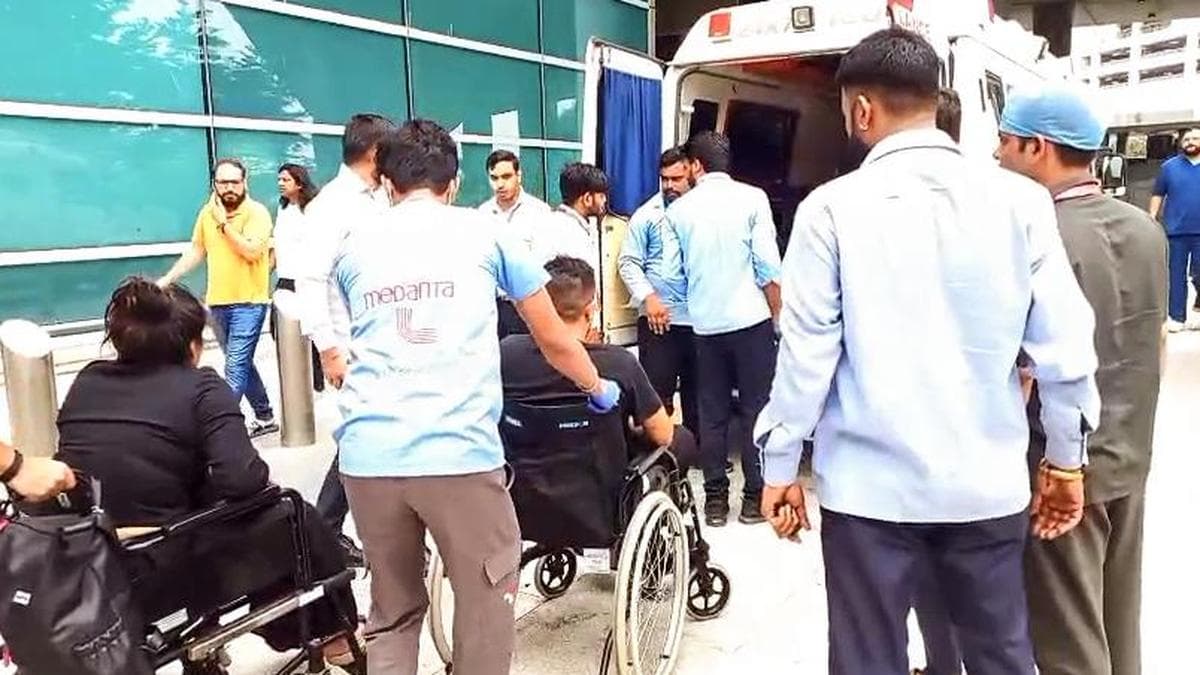
Medical personnel present with injured passengers of Air India Phuket–Delhi flight, in New Delhi on Tuesday, August 4, 2026. | Nearly 2.5 hours after taking off from Phuket at 6.56 a.m., Air India flight AI 2379 operated on Airbus A320 neo was hit by a cascade of technical failures at 9.32 a.m. IST, involving the aircraft’s hydraulic and flight-control systems.The sequence involved low-pressure indications and failures affecting one or two hydraulic systems at a time, with different combinations appearing as the failures cascaded. This was followed by an autopilot disconnect and simultaneous fault indications affecting both the left and right elevators, which are the control surfaces that move the aircraft’s nose up or down.Automated post-flight maintenance reportThe A320 neo has three independent hydraulic systems that power critical functions including the primary flight controls, landing gear, nose-wheel steering, thrust reversers, flaps and slats, and braking systems. The automated post-flight maintenance report records failures and warning indications in different hydraulic systems, occurring either individually or in combinations of two systems, according to a source who has seen a copy of the report. An inside view of the Air India flight from Phuket to Delhi after passengers were injured, in New Delhi on Tuesday, August 4, 2026 | As the aircraft pitched up and a stall warning was triggered, one of the pilots took manual control and attempted to push the nose down, according to another Air India source familiar with the sequence of events. The pilot may have applied significant control input while attempting to recover the aircraft, the source said, causing the aircraft to lose around 300 feet of altitude in a matter of moments and throwing passengers and crew upward.The available technical records do not show further fault messages after this sequence. Sources said this indicates that the flight-control systems were recovered following the pilots’ intervention, although the precise relationship between the technical failures, the flight-control response and the subsequent altitude excursion remains subject to investigation.The pilots decided to continue to Delhi rather than divert to a nearby airport due to the availability of better medical facilities for the injured passengers as well as aircraft engineering support.While the Ministry of Civil Aviation said in a press statement that the pilot-in-command’s psychoactive substance screening test requires confirmatory testing, the result of which is awaited, sources said the commander was not at the controls when the incident occurred and had momentarily left his seat.The incident has been classified as a serious incident and is being investigated by the Aircraft Accident Investigation Bureau (AAIB). Neither Air India nor the Ministry of Civil Aviation has mentioned the technical fault indications in their respective press statements.Air India’s initial statement attributed the momentary loss of altitude to “in-flight turbulence”, but subsequent statements did not repeat the reference to turbulence. The Ministry’s statement, too, made no mention of turbulence. Neither Air India nor the Ministry statement mentioned any snags encountered during the flight.Air India has also sought a technical assessment from Airbus and is awaiting the manufacturer’s response to a questionnaire relating to the incident, according to sources familiar with the matter. The nature of the technical issues referred to Airbus cou
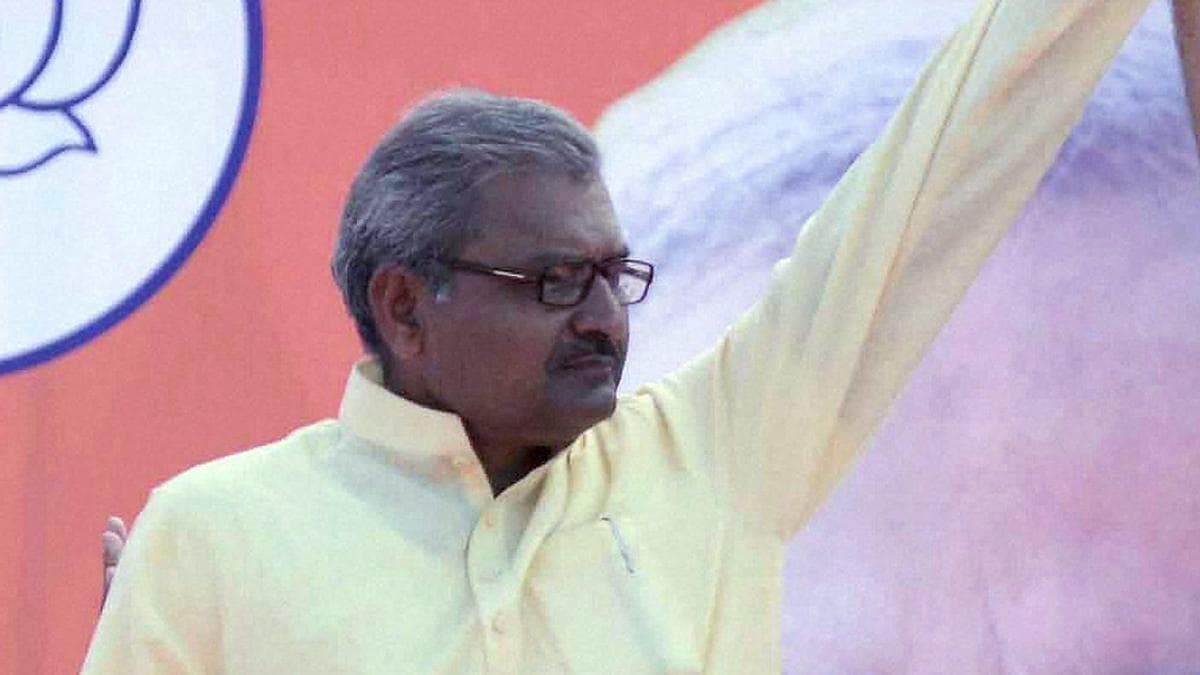
Janardan Mishra. File | ” Mishra said that India produces only 20% of crude oil, while 80% has to be imported from abroad.Citing the global geopolitical situation, the BJP MP claimed that ships have to travel an additional distance of approximately 18,000 k.m. to supply oil.“In such a situation, when Prime Minister Narendra Modi talks about blending 20% ethanol in petrol, some people start protesting.”“A movement is underway claiming that ethanol won't work, pure petrol will. Will pure petrol come from your father's house? If there's no pure petrol in the country, where will it come from?" he said.Mr. Mishra also said that vehicles in India can run on ethanol blending, but some people are saying don’t use it.“If ethanol is not produced, where will petrol come from, where will diesel come from?”Defending ethanol blending in petrol, he claimed that in Brazil, vehicles run on 100% ethanol, and there are no problems with vehicles there.Brazil produces maximum ethanol in the world, which is why vehicles there run on 100% ethanol, he said.Mr. Mishra, who often makes headlines for his controversial comments, said that experts in India also believe that ethanol does not harm vehicle engines, yet there is “unnecessary” opposition to it.He also claimed that if there is any place in the world today where inflation is the lowest and employment is highest, it is in India. Published - August 10, 2026 11:00 am IST
Ladakh, one of the country’s two youngest Union Territories, is set to lead the way in demonstrating how caste will be enumerated for the first time in independent India. The second phase of the Census—the Population Enumeration (PE)—which starts on August 17 in Ladakh and other snow-bound areas, is likely to ask questions on 40 parameters and provide an open-ended column for caste enumeration.Open-column methodologyAs reported by The Hindu on July 6, the rehearsal, or the “pre-test” for the PE phase, was conducted from July 1 to 20 in 16 States and Union Territories, where respondents, other than Scheduled Caste and Scheduled Tribes, recorded their castes in an “open column”, or the enumerator noted a resident’s caste as declared by them. The methodology is likely to be retained in the final form.While the ongoing Census is India’s first digital Census, officials are making an exception for Ladakh by printing a sufficient number of paper schedules. The move takes into account the presence of large defence establishments in the region bordering China and Pakistan, whose locations cannot be geo-tagged because of security concerns. The digital Census mandatorily requires enumerators to geo-locate the structures on a mobile App. Respondents who self-enumerate on Census portal are also required to do the same.Though the questionnaire or the schedule is yet to be notified by the Registrar General and Census Commissioner of India (RG&CCI), preparations have begun in Ladakh and snow-bound areas of Jammu and Kashmir, Himachal Pradesh and Uttarakhand to conduct Population Enumeration—the second phase of Census—from August 17-September 30, ahead of the rest of the country, where the exercise will be conducted in February 2027.The Directorate of Census Operations, Jammu & Kashmir and Ladakh, has concluded a three-day Master Trainers’ Training Programme for Census 2027 population enumeration, marking the next phase of field preparedness ahead of operations scheduled to begin on August 17 with the self-enumeration phase.According to Chief Principal Census Officer Amit Sharma, the three-day programme provided comprehensive training on all aspects of Census 2027 population enumeration, covering census concepts, caste and demographic data collection, digital tools, self-enumeration, interviewing techniques and hands-on use of the mobile application.Ladakh’s case is peculiar as it was not among the 16 States and UTs where a “pre-test” or rehearsal of the questions to be asked during the second phase, was held in July.A senior government official said that, in the absence of the pre-test, the master-trainers are being trained based on tentative questions, around 40, which are likely to be notified this week.“The broad contours have been conveyed to us. This time the questions are descriptive and will also include caste. The caste column will be open-ended, and enumerators will record the name of the caste as provided by the respondent,” said the official.The official added that since the Census envisages counting all structures and buildings, enumerators are being told to exercise caution and record defence structures along the Line of Actual Control (LAC) as “special charges” on paper schedules.The open-column methodology had resulted in the 2011 Socio-Economic Caste Census (SECC) returning over 46 lakh different “caste names”, largely owing to the differences in what people understand by caste. Significantly, the Prime Minister Narendra Modi-led government has consistently maintained over the last decade that the 2011 SECC’s caste data was unreliable because of “errors” in data collection.The total number of castes recorded during the 1931 Census was 4,147. The SECC was conducted as a survey and was outside the purview of the Census Act, 1948, and had no statutory backing. The data was never released by the government.On August 3, the Registrar General and Census Commissioner of India notified in the gazette of India that “the conduct of Cens
Discussion (0)