
Loading dispatches...
← Return to NewsroomPolitics
AP State Climate Change Cell suggests steps to mitigate impact on energy sector
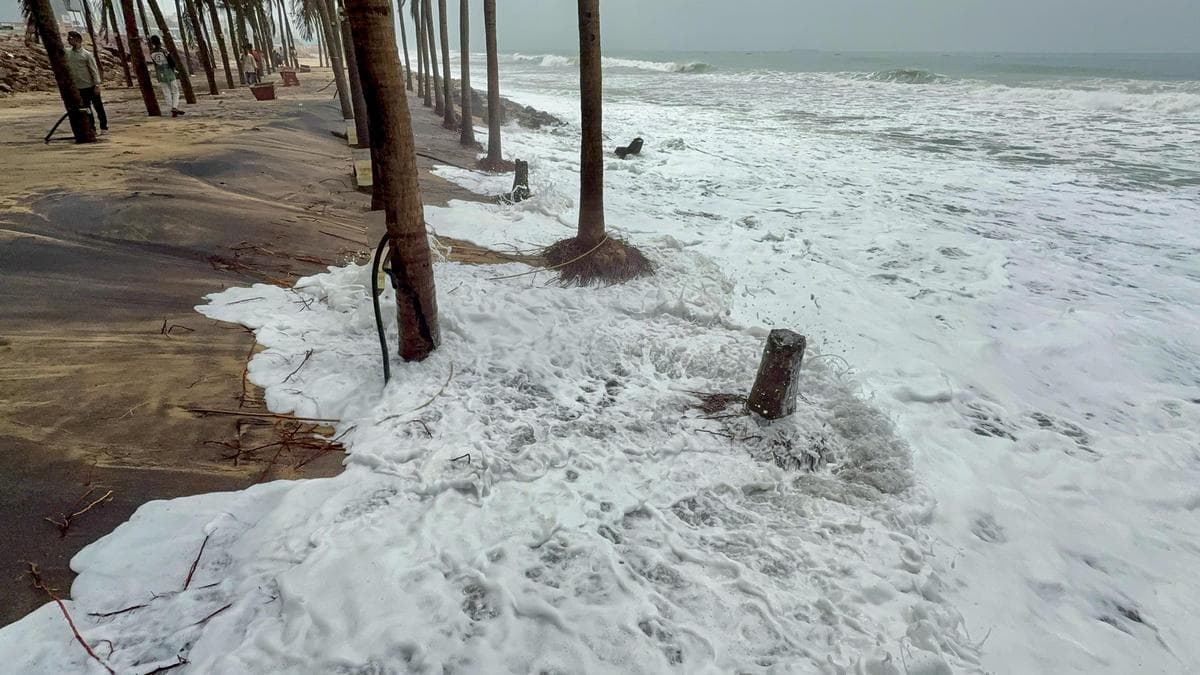
It is anticipated that the extreme weather events and increasing sea levels will have an impact on power plants, particularly those located in the coastal areas. File | R. DEEPAK The AP State Climate Change Cell (APSCCC) of the Department of Environment, Forests and Science & Technology has prescribed eight adaptation measures in the energy sector as part of the A.P. State Action Plan on Climate Change for 2025-30 (SAPCC), keeping in view its susceptibility to climate change and the resultant long-term effects.Some of these measures have already been taken by the AP-Genco, New & Renewable Energy Development Corporation of A.P., and A.P. Green Energy Corporation Limited, among other agencies.It has been mentioned, on the basis of a detailed vulnerability assessment, that climate change-induced rise in temperatures and variable rainfall are likely to have a significant impact on the State’s energy requirement, and energy production and delivery are also bound to be affected by temperature increases, increase in frequency and intensity of extreme weather events, and shifting patterns of precipitation.Besides, the APSCCC has predicted that fossil fuel supplies, and production and transmission of thermal and hydroelectricity will be affected and the sector’s Greenhouse Gas (GHG) emissions will increase as the energy demand goes up.Also, climate change is expected to have a negative influence on the infrastructure and methods used to produce and transfer energy, and it is anticipated that the extreme weather events and increasing sea levels will have an impact on power plants, particularly those located in the coastal areas.The APSCCC has discovered that the energy sector in a majority of the State’s northern and central regions is very highly vulnerable to climate change, and coastal regions in the South and a few areas in the North and central regions are moderately vulnerable to climate change. The south-western areas of the State are found to have relatively low vulnerability to climate change.The major adaptation measures suggested by the APSCCC are increasing renewable energy generation to 40% of the total energy mix, primarily from solar and wind energy, establishment of 120 Gigawatts of renewable power projects, and two environment-friendly hydrogen hubs with a combined capacity of 60 MW.The other steps are installation of one lakh fast and slow electric vehicle charging stations, implementation of energy efficiency measures in existing buildings through retrofit, and creation of enabling environment for market penetration of efficient cooling systems, energy efficient street lighting, 100% coverage of Energy Conservation Cells in commercial, industrial, agriculture, and domestic sectors, and increasing energy efficiency in drinking water pumping and lift irrigation systems.The APSCCC’s proposals, which are over and above the Central government’s interventions, are in pursuit of UN’s Sustainable Development Goal No. 7 (Affordable and Clean Energy) as the problems to be caused by climate change to the energy sector and its contribution to climate change on account of GHG emissions resulting from burning of fossil fuels necessitate a comprehensive mitigation strategy. Published - August 16, 2026 07:51 pm IST



Discussion (0)