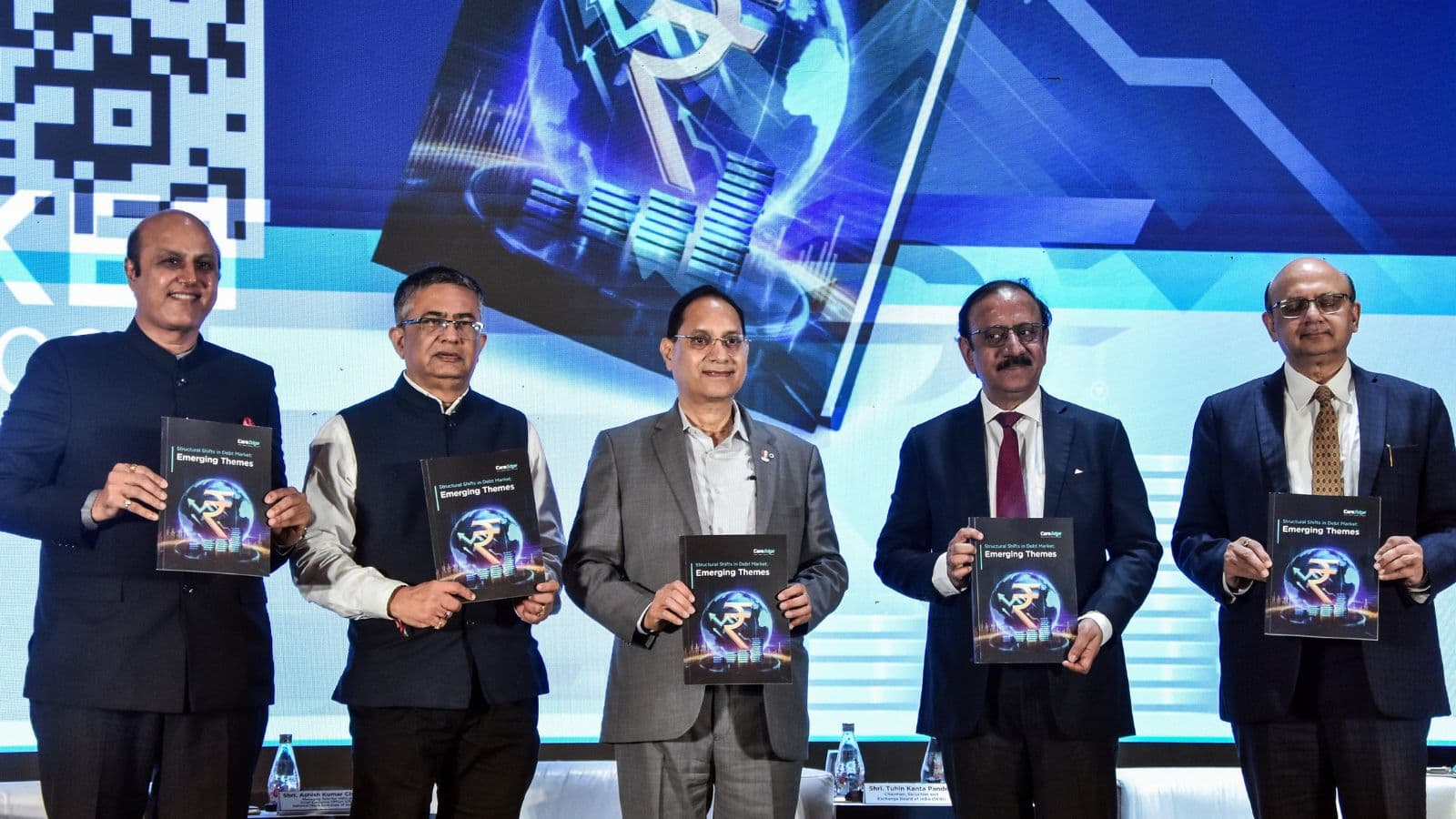
SEBI currently mulling changes to deepen debt markets, make it more accessible: Chairman Tuhin Kanta Pandey
4 min readMay 26, 2026 03:26 PM IST SEBI is mulling a host of changes to the debt-market architecture to simplify it and make it more accessible. (ANI Photo)The Securities and Exchange Board of India (SEBI) is currently exploring a host of measures to deepen the debt markets and improve the market architecture to make it more accessible for the retail audience, Chairman Tuhin Kanta Pandey said on Tuesday. Labeling the corporate bond market as the economy’s “second engine” for credit, Pandey said a deeper bond market is essential for financing economic growth. “India’s financing model for businesses is still predominantly bank-led. A growing economy needs patient debt capital – for infrastructure, capacity expansion, refinancing, and long-gestation projects. It needs price discovery across tenures and credit profiles. That is why the corporate debt market is central to India’s journey of sustained economic growth,” said Pandey. He was speaking at CareEdge Ratings’ Debt Summit in Mumbai.SEBI is mulling a host of changes to the debt-market architecture to simplify it and make it more accessible. The regulator is currently exploring a pilot to tokenize corporate bonds, which would involve converting traditional corporate bonds into smaller and more accessible digital tokens. “The pilot will test whether tokenization can deliver faster settlement, better traceability, automated servicing, and greater transparency. We must move carefully – but we must remain open to useful innovation,” the SEBI chair said. SEBI is also exploring a distinct regulatory classification for debt brokers, which could lower costs, reduce entry barriers, and encourage dedicated intermediaries for the debt market. The regulator is also working to further develop bond exchange-traded funds and derivatives on corporate bond indices, which could help in improving liquidity, allow retail investors with smaller ticket sizes to explore the market, and help institutions hedge against interest-rate risks. As the war in West Asia has dragged on, market participants have increasingly dived into the debt markets in order to hedge against heightened geopolitical risks. Overnight index swaps, a type of interest rate derivative, have particularly helped market participants hedge against interest rate risks as inflationary pressures due to the ongoing war have revved up discussions of potential hikes in interest rates by the central bank in the upcoming months. “There is also a need to review whether debt-only listed entities need the same rigour under LODR regulations as equity-listed companies. We will take up this review in due course,” Pandey added. Alongside these, Pandey said the regulator is also looking to run bond market awareness campaigns for retail audiences, work to widen the base of bond issuers, and deepen the municipal bond market. “The way ahead is not one road. It is a network of reforms – market making, municipal bonds, securitization, bond ETFs and derivatives, tokenization, and investor education. Together, these reforms can build a bond market that finances India’s growth at scale – with transparency and trust,” Pandey said.Story continues below this ad However, he also underlined the need for caution while implementing these changes. “SEBI will facilitate market development, support innovation, and simplify where possible. But we will not compromise on investor protection or market integrity. Our goal is not merely a bigger bond market. Our goal is a better bond market – one that finances growth, supports resilience, protects trust, and serves Viksit Bharat,” said Pandey. He also reiterated the potential risks for investors delving into the bond market. “For investors, corporate bonds can offer income and diversification. But they are not risk-free. They carry credit risk, interest-rate risk, and liquidity risk. Growth must therefore be anchored in transparency, suitability, and investor education,” he said. © The Indian Express Pvt Ltd Tags: Se