
general
3updates
India’s goods and services exports increased by 5.4 % in June to 65.47 billion dollars
India’s Goods Exports Expected to Grow by 4.2% in Q2 FY24-25: EXIM Bank Report News On AIR
2 stories
India’s Goods Exports Expected to Grow by 4.2% in Q2 FY24-25: EXIM Bank Report News On AIR
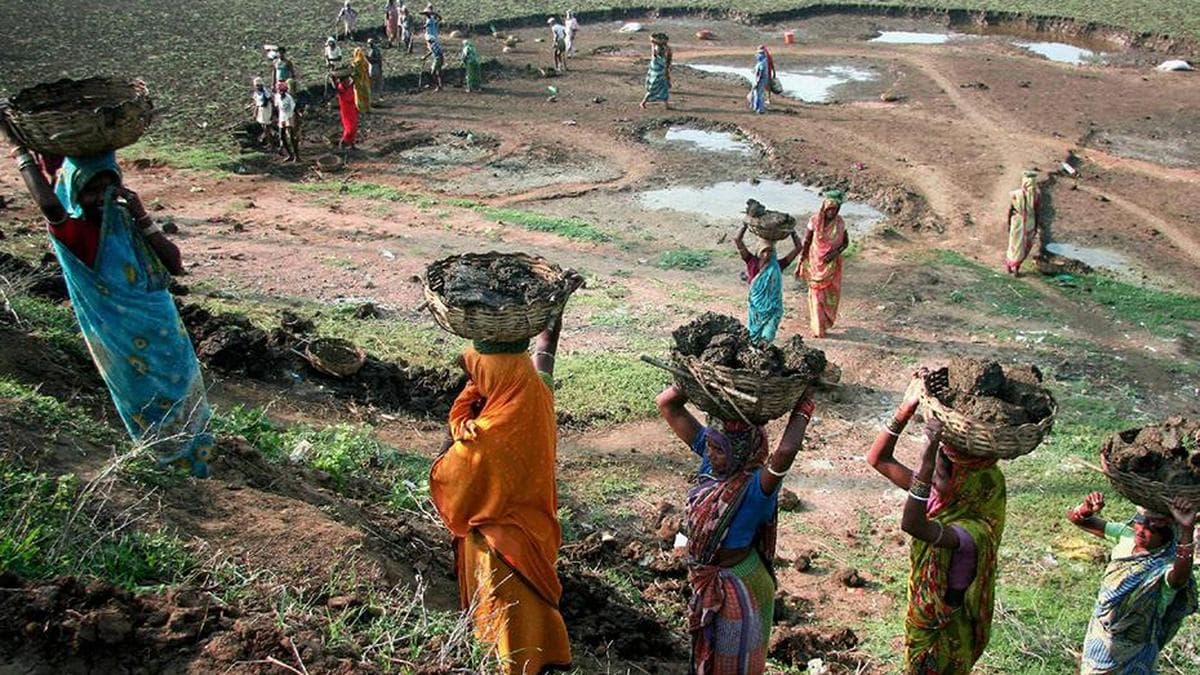
Village women work under MGNREGA scheme at Jagannath Prasad village in Ganjam district, Odisha. | Photo Credit: PTI The Mahatma Gandhi National Rural Employment Guarantee Scheme (MGNREGS) witnessed a sharp contraction in its scale and reach in 2025–26, according to a report on the final operational year of the scheme introduced by the Congress-led UPA era.The report points to a paradoxical trend where the number of registered households rose marginally, but fewer households and workers found employment, total workdays declined significantly, and fewer families completed the guaranteed 100 days of work. The report was released by the NREGA Sangharsh Morcha, a coalition of non-profit bodies working with MGNREGS workers, and was prepared by LibTech India, a consortium of academics and activists.LibTech estimates that the contraction resulted in an average income loss of ₹1,221 for each MGNREGS household during the financial year. Uncertain transitionThe Viksit Bharat - Guarantee for Rozgar and Ajeevika Mission (Gramin) Act 2025, which was passed in Parliament last December, is expected to come into force soon, replacing MGNREGS. The Union government has allocated only ₹30,000 crore for MGNREGS for the transitional period.This decline is deeply worrying, the NREGA Sangarsh Morcha said, especially since the new employment scheme was brought in with no public consultation. “The employment guarantee programmes play a critical role in rural livelihood security and any major restructuring of such programmes must involve meaningful consultation,” it said in a statement. The activists have urged the government to ensure that during the transition period, employment opportunities will continue to be provided unhindered.Fewer working daysThe number of registered households under the scheme increased by 3.2%, from 14.98 crore in 2024–25 to 15.46 crore in 2025–26. However, this did not translate into greater employment. The report notes that 44 lakh fewer households and 67 lakh fewer workers were employed compared to the previous year, representing declines of 8.2% and 9.1% respectively.The number of persondays of work generated under the programme fell sharply by 21.5%, from 268.44 crore in 2024–25 to 210.73 crore in 2025–26. Average persondays per household dropped by 14.5%, from 50.18 to 42.92. The impact of this decline is evident in the sharp fall in the number of households completing the full 100 days of guaranteed employment, which declined by 40.5%, from 0.37 crore to 0.22 crore.The contraction was geographically widespread. Fifteen out of 20 States recorded a fall in persondays during the year. West Bengal generated no persondays in either 2024–25 or 2025–26 and was excluded from the comparative analysis. Only four States registered an increase in persondays.Tamil Nadu recorded the steepest decline at 42.8%, followed by Haryana at 41.7%, Himachal Pradesh at 41%, and Telangana at 40.2%. Jharkhand saw the highest increase in persondays at 12.9%, followed by Jammu and Kashmir at 7.3% and Odisha at 6.7%. Madhya Pradesh registered a marginal increase of 0.5%. Lower incomeWage expenditure under the scheme declined sharply by almost ₹11,570 crore, from ₹67,835 crore in 2024–25 to ₹56,265 crore in 2025–26. This fall occurred despite an increase in the average daily wage from ₹252.7 to ₹267, as the reduction in persondays outweighed the effect of higher wages.LibTech estimates that if persondays had remained at 2024–25 levels, workers could have earned an additional ₹15,409 crore during the year. Average household income fell from ₹12,681 to ₹11,460. Had average persondays per household remained unchanged, average income would have been ₹13,398, implying a potential income loss of ₹1,938 per household. Published - May 08, 2026 09:51 pm IST
You’ve read everything. Check back for new stories.