They really launched this tiny spacecraft (Well, sort of.) | Space photo of the day for May 11, 2026
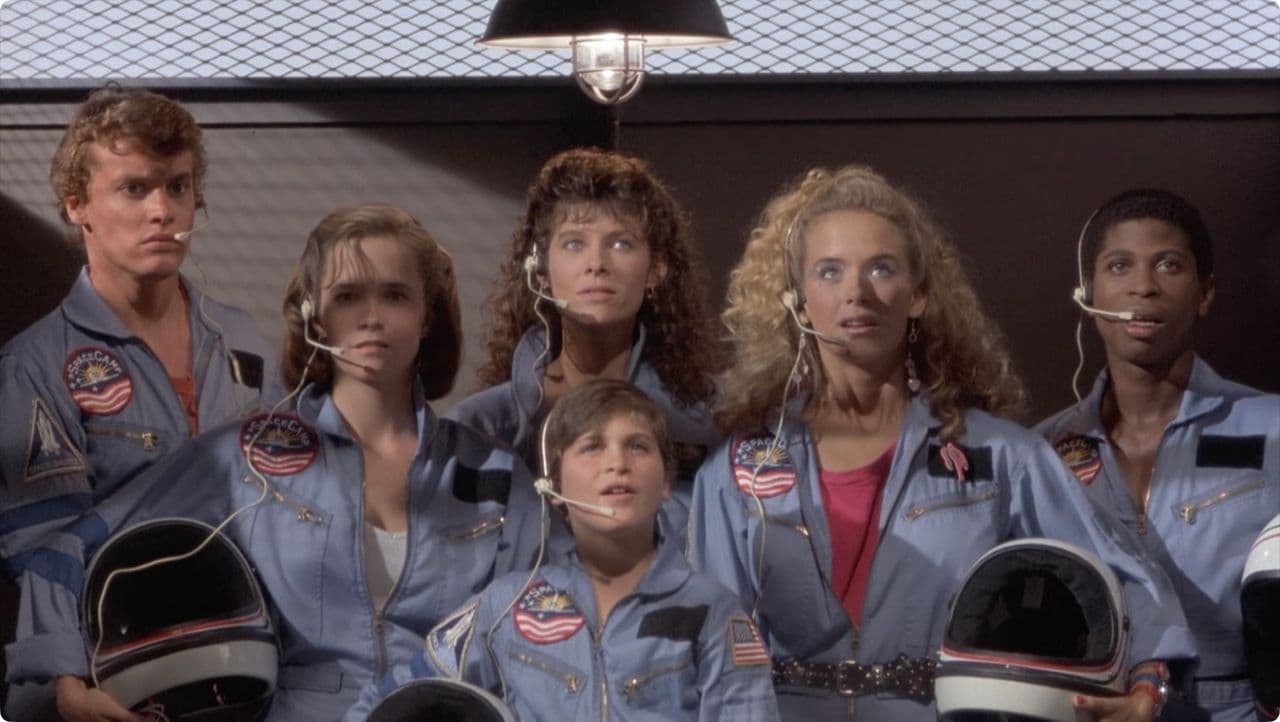
(Image credit: 20th Century Fox) When "SpaceCamp" landed in theaters in June 1986, it should have been the ultimate wish-fulfillment movie, as if "The Goonies" had cashed in their hard-earned pirate treasure in return for a spin in an actual Space Shuttle.It boasted a bigger budget than "Top Gun", a cast of up-and-coming young stars — including a future Oscar-winner — and a score by Hollywood's most famous composer. Twentieth Century Fox had bet big on a blockbuster hit, but a real-life tragedy four months earlier ensured the film was doomed to be an also-ran at the box office.The real-life Space Camp at the US Space & Rocket Center in Huntsville, Alabama, was a dream destination for any kid with an interest in science, math, and space exploration — the ultimate trip for tweens and teens with a passion for science and technology. (Image credit: 20th Century Fox)The brainchild of original Space & Rocket Center director Edward O Buckbee and Apollo rocket engineer Wernher von Braun, the facility opened in 1982. It has since welcomed over a million wannabes through its doors, including Elon Musk, Chelsea Clinton, and several attendees who went on to become actual astronauts.Patrick Bailey, who wrote the original "SpaceCamp" story, got the idea from his wife, who'd spotted a news story about the camp while working as a researcher on American variety show "That's Incredible!"He developed the idea alongside Buckbee, and the duo successfully pitched the project to producer Leonard Goldberg, who'd had a major hit with "WarGames" a few years earlier. (It's easy to see why Goldberg saw the potential in SpaceCamp, seeing as WarGames was based on a similar scenario of ordinary kids being thrown into a dangerous and improbable situation.) (Image credit: 20th Century Fox)NASA also approved the script, and — rather surprisingly — wasn’t put off by the fact that the whole plot revolved around a colossal screw-up on the launchpad.The film focuses on a quintet of bickering camp attendees as they try out various training simulators, and learn — repeatedly and exhaustingly — the value of teamwork. It's all set to be a standard, barely postcard-worthy week away from home, until a totally implausible sequence of events sees them blasting off into orbit (with a single instructor to look after them) on the Space Shuttle Atlantis.First, 12-year-old Max persuades management that he should be allowed into Big Kid camp, even though he's too young. Then he befriends a sentient, but worryingly glitchy, robot janitor named Jinx, who wants to make "Star Wars"-obsessed Max's dream of going into space a reality. (Image credit: 20th Century Fox)Jinx's scheme gets a convenient helping hand when NASA — for the benefit of the plot — allows the kids to sit in an actual shuttle during an actual engine test. That questionable decision gives Jinx all the window he needs to initiate a "thermal curtain failure" in one of the solid rocket boosters, leaving mission control no choice but to blast the kids into space.Once the initial excitement of weightlessness has worn off, the kids realize the true extent of their predicament. While instructor Andie is a qualified astronaut who'd been patiently waiting for her first mission, it turns out that the unprepared Shuttle wasn't rigged for long-range radio communications. And — shock horror! — there isn't enough oxygen to get them to their re-entry window for landing at Edwards Air Force Base.Suddenly, these rookie kids are forced into roles real-life astronauts spend years training for, going on spacewalks and landing state-of-the-art spacecraft as if it's as straightforward as playing a video game. (Image credit: 20th Century Fox)But as ridiculous as the premise is, it's kept grounded by an extremely likable ensemble, one of Hollywood's most impressive examples of pre-fame casting. While Lea Thompson (Kathryn) and Larry B Scott (Rudy) were familiar from "Back to the Future" and "Revenge of the Nerds", respectively, Tate D