
Loading dispatches...
← Return to NewsroomScience
A seed that flew around the moon grew into this tree in NYC

The moon tree at Madison Square Park in Manhattan. ( And on a Thursday afternoon blanketed in wildfire smoke, a small crowd gathered to see one in particular. The slender American sweet gum looked unassuming, especially compared to the enormous English elm neighboring it. But this tree had a secret: it had traveled 1.3 million miles before landing in New York.The sapling was germinated from one of 1,000 seeds NASA sent aboard the uncrewed Artemis I mission, which saw a space capsule orbit the moon in 2022. Just a few years later, the same kind of capsule would take the famous Artemis II crewmembers on the same journey. Hundreds of these "moon trees" have been planted across the U.S. in the last two years as the space agency drums up excitement for future Artemis missions, which aim to return humans — and not just seeds — to the lunar surface by 2028.Steph Lucas, director of horticulture for the Madison Square Park Conservancy, applied with NASA for a moon tree seedling in 2023. The request was finally granted in 2025. "We were so thrilled," Lucas told Space.com. The tree grew quietly for a year before the conservancy unveiled its presence with a "birthday party" extravaganza on Thursday (July 16).Madison Square Park's moon tree is part of a legacy spanning back to NASA's original lunar program. In 1971, astronaut Stuart "Smoky" Roosa brought about 500 seeds aboard the Apollo 14 moon mission. These seeds later grew into saplings that NASA distributed to parks, arboretums and historic sites across the globe. A seed from one of these first-generation moon trees even attended the new tree's birthday party.The event also featured a celestial-themed garden, poetry reading, a gallery of children's artwork, launch-able foam rockets and, of course, birthday cake — enough for about 100 people.However, the party had fewer guests than expected. A thick plume of smoke from wildfires raging in Canada blew southward and tinted the sky above New York orange. The air quality plummeted, and many people chose to remain indoors for their health. Some of those who did turn up wore KN95 masks. There were many ways to celebrate the moon tree's birthday. ( ( The specter of climate change hung heavy over the city, and it was very much on Lucas' mind as she was vying for the conservancy's moon tree selection. NASA offered five different species of moon tree: Douglas fir, Loblolly pine, Sequoia, London plane and American sweet gum. Lucas requested an American sweet gum over a more cold-hardy London plane tree, even though its current range falls slightly south of New York City. Sweet gums are well-adapted to wet, temperate conditions, and as the climate warms in the coming decades they will likely feel right at home in Manhattan. "We think that this will be a better selection as the future goes on," said Lucas.Stuart Roosa himself was a former smokejumper for the US Forest Service, a job that involves dropping from a helicopter into the heart of an active wildfire to fight it. He agreed to bring along those first moon seeds as a love letter to future generations on Earth. That's the spirit the Madison Square Park Conservancy hopes to channel."Space inspires us, right? And plants can be inspiring too," Lucas said. After a year of growth, the park's moon tree is now firmly rooted and standing tall without supports. Gazing at it through the wildfire haze, Lucas mentioned that the young tree seems by all accounts to be thriving. Its progress, she said, brings her hope. "We can always work towards a better future." Joanna Thompson is a science journalist and runner based in New York. She holds a B.S. in Zoology and a B.A. in
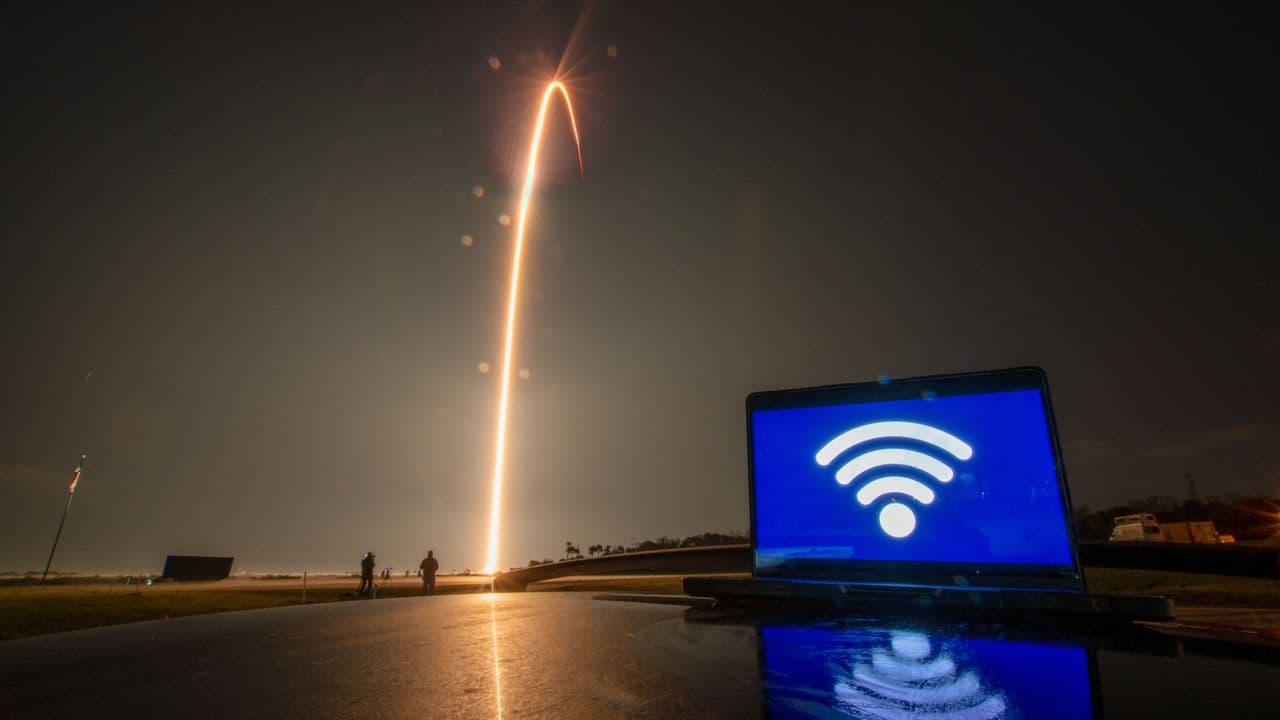
(com / Josh Dinner) Orion is getting an upgrade on Artemis III, and the astronauts aboard are getting WiFi (sort of).NASA is partnering with SpaceX to equip the Orion spacecraft for Artemis III with a pair of Starlink mini laser terminals, designed to operate on SpaceX's existing Starlink network. The two panels will be installed on Orion's exterior, and will augment the spacecraft's existing communications systems.The added capability is expected to provide a greater data capacity from Orion to NASA's mission control in Houston, which may include high-definition live video from orbit. The mission is currently scheduled for the second half of 2027, and will also include another sizable contribution from SpaceX: a Starship rocket.SpaceX currently operates more than 10,000 Starlink spacecraft in LEO, which provide satellite internet coverage across nearly the entire globe to commercially-available wireless terminals about the size of a laptop. Combined, those more than 10,000 and counting satellites are equipped with over 25,000 lasers currently in operation in LEO to maintain the network's interconnectedness, according to a NASA update.The company previously demonstrated the Starlink constellation's use as a communication relay network during the privately funded Fram2 mission that launched the first human into a polar orbit around Earth in 2025. SpaceX frequently utilizes its high-data capabilities to stream high-definition live views of its Falcon 9 and Starship rocket launches from orbit.Artemis III is the third in a program of NASA missions with the goal of returning astronauts to the moon and establishing a permanent base on its surface. Artemis III is designed as a practice run for NASA's Orion capsule to rendezvous and dock with the program's commercial lunar lander vehicles, Starship, and Blue Origin's Blue Moon spacecraft, in low Earth orbit (LEO). That's a lot closer to home compared to the Artemis II mission that NASA launched in April of this year.Artemis II was Orion's first flight with astronauts onboard, and flew a 10-day mission around the far side of the moon. NASA used laser communications during Artemis II as well, using terminals on Orion and ground stations at NASA's Jet Propulsion Lab in California and White Sands Complex in New Mexico to transmit data loads too big for the agency's Near Space and Deep Space radio networks. With flight sticking to LEO during Artemis III, communication limitations become a lot easier to surmount.If all goes according to plan during Artemis III, NASA has scheduled the first Artemis moon landing on the following mission, Artemis IV. NASA is targeting 2028 to launch Artemis IV, and has selected Starship as the lunar lander that will return astronauts to the lunar surface. Josh Dinner is Space.com's Spaceflight Staff Writer. He is a writer and photographer with a passion for science and space exploration, and has been working the space beat since 2016. Josh has covered the evolution of NASA's commercial spaceflight partnerships and crewed missions from the Space Coast, NASA science missions and more. He also enjoys building 1:144-scale model rockets and spacecraft. Find some of Josh's launch photography on Instagram, and follow him on X, where he mostly posts in haiku.

A large depression discovered on Google Maps in 2024 turned out to be a 390 million-year-old meteor impact crater. (Amateur astronomer Joël Lapointe, using Google Maps to figure out his route for the 2024 vacation, saw some odd terrain in Quebec's Côte-Nord region centered on Lake Marsal. Lapointe suspected it was an impact crater from a meteorite, and made a report on Impact Earth — a crowdsourcing website for craters with Canada's Western University in London, Ontario near Toronto. Western planetary geologist Gordon Osinski made a visit to the region in 2025, provisionally not only confirming the crater, but saying it's probably one of the biggest discovered in recent years. The 390-million-year old feature is roughly 15 miles (25 kilometers) wide.In an email interview with Space.com while on travel in Scotland, Osinski — known as "Oz" by the space community — said to his knowledge the last discovery of that scale was the approximately 31-km (19-mile) Hiawatha structure, also possibly a crater, spotted in Greenland in 2018. "However, that structure is completely buried by ice, so its diameter is uncertain and there is still some controversy about its origin," Oz said.But in the case of the new crater, called Uhackatik with approval from the Innu Council of Ekuanitshit in whose traditional lands the crater lies, there is no doubt at all where the crater came from. Oz's expedition to the area revealed "shock metamorphic effects", which are deformations to the rocks induced by the shock waves and heating produced by a meteorite impact."Impact melt rocks are like they sound: large volumes of rock that are melted by the impact event, but then cool and crystallize to look a lot like volcanic rocks," he said. "Finding these preserved — as they are usually some of the first parts of a crater to be eroded — was a big surprise."While most of the features are microscopic, Oz said in the field he and his collaborators could easily see "shatter cones", which are branching features in rock layers produced by the shockwave of impact. The research is not yet peer-reviewed, but it will be presented at the 88th Annual Meeting of the Meteoritical Society in Frankfurt, Germany in August. A shatter cone seen in rocks found at the center of the structure (left); melt rock found 2.5 miles (4 kilometers) west of the structure's center. ( et al.)While 400-million-year-old impact craters on Earth are hard to find, as geologic activity as well as erosion change their features over time, the precious evidence is helpful for scientists to better understand meteorite impacts on the moon, Mars and other rocky extraterrestrial bodies.In terms of age, Oz noted, the moon's prominent Tycho crater best represents what Uhackatik probably looked like 390 million years ago. But On Earth, one of the best comparisons to Uhackatik is a moon-like crater used to help the Artemis II astronauts get ready for their moon mission this year.That Earth crater is called Kamestastin (also known as Mistastin) in northern Labrador, Canada. Oz regularly runs expeditions there in consultation with the Mushuau Innu First Nation, as the crater lies within their traditional hunting grounds. Kamestastin includes anorthosite, a common mineral found in craters at the moon's south pole, where NASA hopes to land astronauts under the US-led Artemis program.Artemis II astronauts Jeremy Hansen (from the Canadian Space Agency or CSA) and Christina Koch (NASA), as well as CSA backup astronaut and lunar-flyby capcom Jenni Gibbons, did an expedition to Kamestastin crater in 2023 alongside Oz and collaborators."For comparative craters [to Uhackatik], Kamestastin is actually a great one as the size is very similar," Oz said. "Kamestastin is well-preserved and I've worked there a lot … so in my mind,

( This was a movie that defined a whole new sub-genre of outer-space horror, a perfectly structured scarefest that also introduced one of cinema's greatest-ever monsters to the world.Luckily, James Cameron — then one of Hollywood's hottest properties off the back of "The Terminator" — has never been a shrinking violet, and was brave enough to face the Xenomorph challenge head-on. Reinventing the franchise as a muscular sci-fi action movie, he created a whole new sub-genre of his own with a film every bit as memorable as its predecessor.So, as the peerless "Aliens" turns 40, here — in honour of LV-426, the moon where the movie takes place — are 26 reasons it's still the greatest sci-fi action movie of all time.1. James Cameron’$ original pitch ( His subsequent meeting with studio execs has since become the stuff of Hollywood legend.The story goes that he turned over a copy of the script, wrote "ALIEN", added an S to the end, and then scrawled a couple of lines through the final letter. "ALIEN$" was a language the bigwigs understood, and you know what? Cameron was kinda right.2. A new genre (But while Ridley Scott's original film was already the definitive outer-space horror, Cameron boldly shifted genres to make the definitive outer-space action movie. Forty years on, fans are still debating which one is best.3. Nothing is wasted ( It's lean, it's efficient, and every line and moment is integral to the all-time classic whole.It's no accident that Ripley shows off her Power Loader skills in the opening act — it's Cameron's version of Chekhov's gun.4. The time jump ( But by leaving Ellen Ripley in hypersleep for 57 years, the universe has a chance to evolve around her. Indeed, that's enough time for Weyland-Yutani to colonize LV-426 and — just maybe — pay a visit to that mysterious spaceship with all those eggs in its cargo hold.What could possibly go wrong?5. Ellen Ripley ( At the beginning of the movie, she's still traumatized by her experience on the Nostromo, and her employers at Weyland-Yutani are doing little to help. But her cool head in a high-pressure situation puts highly trained Colonial Marines to shame, and by the final act, she's grown into one of cinema's greatest heroes.Sigourney Weaver rightly earned herself an Academy Award nomination for her tour de force performance.6. The Colonial Marines ( It's a genius move, their real-life familiarity helping to establish a convincing camaraderie between these elite soldiers.Even though most are lucky if they speak more than a line or two, Cameron's writing is so tight that we already know plenty — and care — about them when they inevitably become Xenomorph fodder. (Top fact: with the exception of Lt Gorman and Corporal Hicks, the Marines all share a first initial with the actor who plays them.)7. The Dropship ( A wonderfully utilitarian example of pre-CG model w
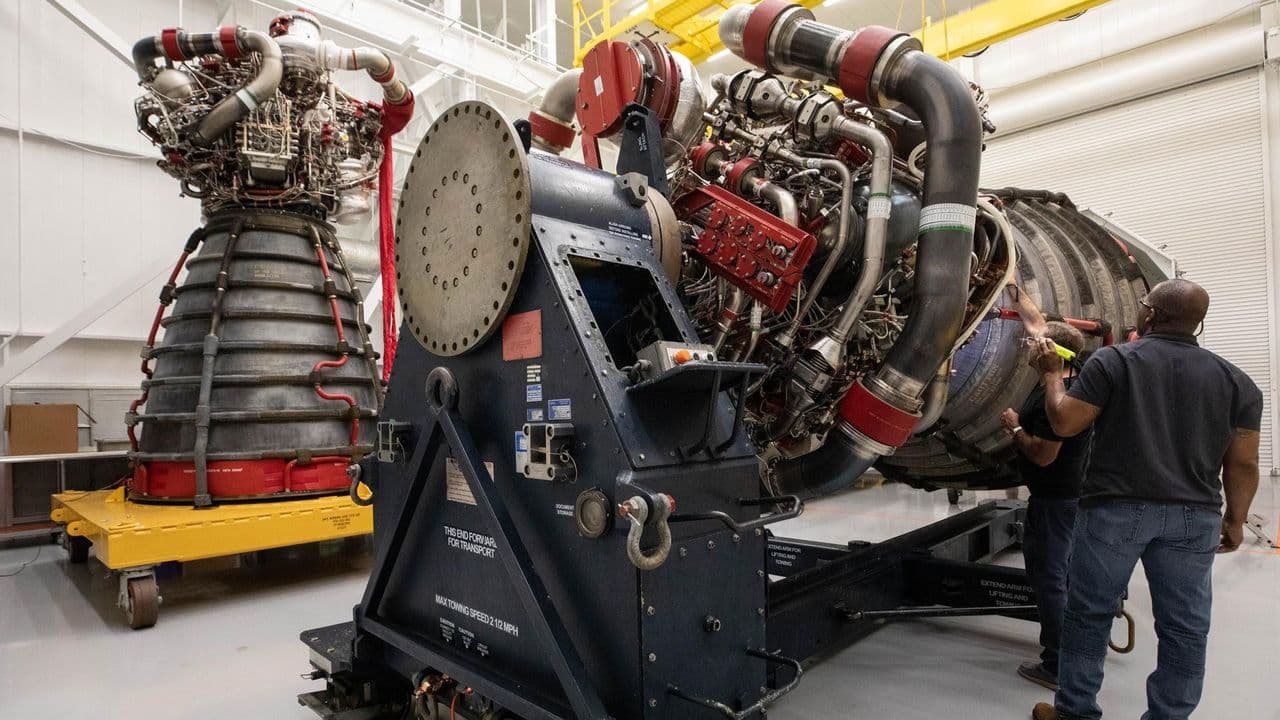
Two of the four RS-25 engines that will power the core stage of Artemis III's Space Launch System rocket. (The agency is "full steam ahead," according to a July 13 NASA update. Across Kennedy Space Center (KSC) in Florida, components of Artemis III's Space Launch System (SLS) rocket are coming together, undergoing tests and awaiting transportation for final integration ahead of next year's launch. NASA is targeting mid-to-late 2027 for Artemis III, which will launch four astronauts into low Earth orbit (LEO) aboard the Orion spacecraft. It will be the second crewed mission of NASA's Artemis program, which aims to establish a permanent human presence on the moon.Artemis III will be a critical stepping stone in NASA's lunar landing architecture, despite the mission not actually flying to the moon. Instead, SLS will launch Orion and its four-person crew into LEO for rendezvous and docking operations with the program's two commercial lunar lander vehicles: SpaceX's Starship and Blue Origin's Blue Moon spacecraft.With the completion of the massively successful Artemis II mission that flew astronauts around the moon in April and the second half of 2026 beginning to count down, NASA has shifted into full gear to complete assembly and testing of the hardware that will launch Artemis III.Several components for the mission's SLS rocket have arrived in the Vehicle Assembly Building (VAB) at KSC. The SLS core stage was delivered at the end of April, and it was connected with the rocket's engine block section in May. The first two of the core stage's four RS-25 engines arrived in June and will be installed on the SLS engine block once the remaining two are delivered, after which NASA plans to begin integration with the mobile launch platform (MLP) and launch operations tests. A temporary weather cap was also delivered in June, which will protect the stage when NASA transports it to the launch pad for tests before the full vehicle is stacked.The bottom segments of both SLS solid rocket boosters (SRBs) were delivered over the last week, and they have been mounted on the MLP, according to NASA's update. The upper SRB segments arrived at KSC via train in June and will undergo inspection and testing before the twin boosters are fully stacked. Per NASA: Artemis launch director Charlie Blackwell-Thompson participates in the launch countdown simulation on July 2, 2026, in Firing Room 1 of the Launch Control Center. Artemis III will be the first Orion mission to use an upgraded heat shield, featuring design improvements gleaned from analysis of unexpected wear on the heat shield flown on Artemis I. Orion's service module is also currently inside the Operations and Checkout Building and recently completed acoustic testing. Both the service module and Orion capsule are now being prepared f
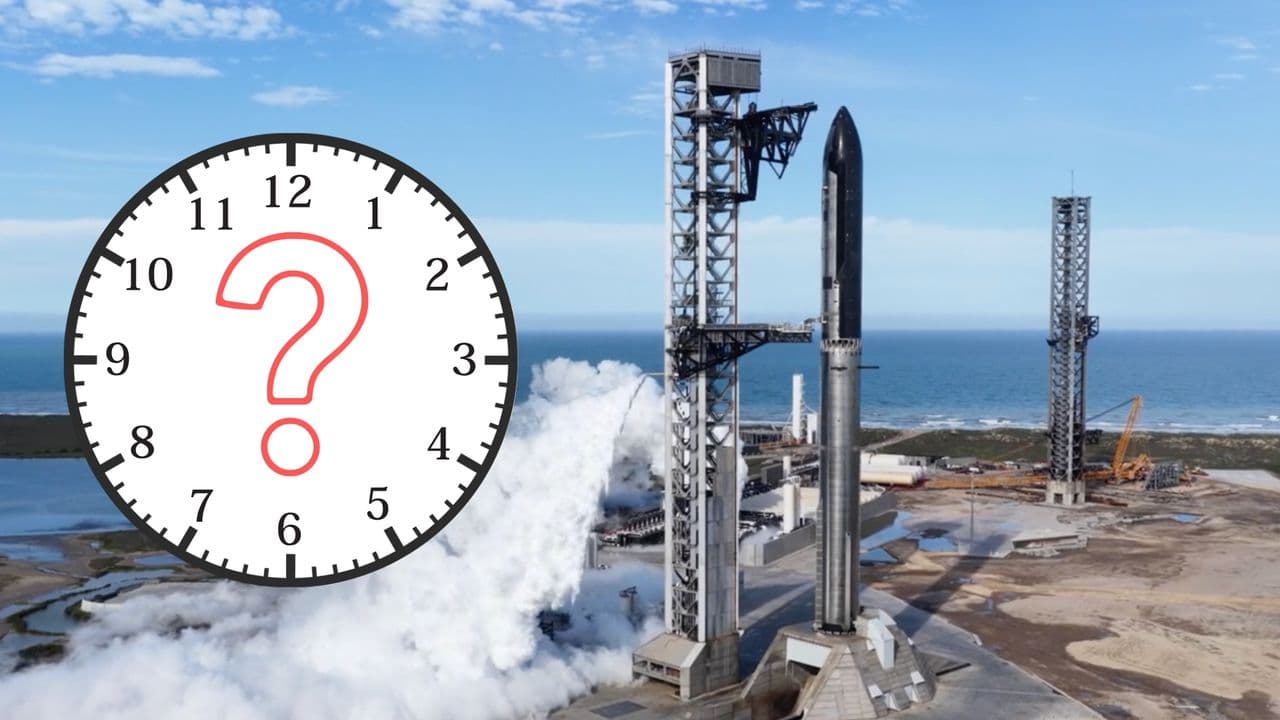
SpaceX is just a day away from its first Starship test flight of the summer, and if you're hoping to watch the world's largest rocket lift off, you'll need to know where and when to tune in. But don't worry — we've got you covered.The next Starship test flight, called Flight 13 (SpaceX doesn't appear to be superstitious), is scheduled to launch from the company's test site in Starbase, Texas near Boca Chica Beach on Thursday, July 16. Liftoff is set for 6:45 p.m. EDT (2245 GMT).As its name suggests, the upcoming flight will be the 13th test launch overall of SpaceX's Starship megarocket. It will be the second such flight this year, after the May 22 launch of Starship Flight 12. SpaceX is designing Starship, which stands more than 400 feet (121 meters) tall, to be a fully reusable rocket capable of launching missions to the moon, Mars or beyond.NASA picked Starship to land its Artemis IV astronauts on the moon by 2028, and SpaceX has sold at least one Starship passenger flight to Mars as well. But before SpaceX can carry astronauts to other worlds with Starship, it has to complete a series of suborbital flights and, eventually, reach Earth orbit for in-flight fueling tests, docking demonstrations and more.SpaceX's Starship Flight 13 is a suborbital test that will be the second flight of SpaceX's new V3 Starship. Below you'll find details on what time Flight 13 will launch, what the mission will do and a full timeline for the mission.What time is SpaceX's Starship Flight 13 launch? (m. EDT (2245 GMT) on Thursday, July 16. However, the exact timing of the launch could change.That's because SpaceX has a 90-minute window in which to launch Flight 13 from Starbase Pad 2. Liftoff could occur anytime between 6:45 p.m. and 8:15 p.m. EDT (2245 to 0015 GMT). SpaceX's launch webcast will begin 30 minutes before liftoff.And remember, SpaceX has at least one backup day, so the launch could slip to July 17 if needed. In that case, it would likely lift off at the same time — 6:45 p.m. EDT — and have a 90-minute window, as on the first attempt.Related: Read our SpaceX Starship and Super Heavy guide for a detailed lookCan I watch SpaceX's Starship Flight 13 launch? Watch Live! SpaceX launches Starship megarocket on Flight 13 - YouTube Watch On Yes, you'll be able to watch SpaceX's Starship Flight 13 launch online, but you'll have your pick on where to watch.SpaceX will provide its own livestream of the launch via its X account and the official Flight 13 mission page. If everything is on time, that livestream will begin at 6:15 p.m. EDT (2215 GMT) — 30 minutes before the planned Flight 13 liftoff.Space.com will simulcast the SpaceX Flight 13 launch webcast on this page, as well as an our homepage and YouTube channel.A prelaunch showNow, if you need to get your Starship Flight 13 fix earlier than SpaceX's stream, a good place to look is the NASASpaceflight preshow. They'll have a livestream the day before launch, then constant live views of the pad on launch day many hours ahead of SpaceX's livestream.The NASASpaceflight preflight show will begin on July 15 at 3 p.m. EDT (1900 GMT). NASASpaceflight has a wealth of cameras installed around SpaceX's Starbase test facility, and the company will share up-close views and live commentary for all preflight activities. The day before launch - Starship Flight 13 - Countdown to Launch - YouTube Watch On In-person launch optionsWhile SpaceX does not have an official Starship launch viewing site, there are several places where you can see the launch in person around the Starbase area.For first-time spectators, I recommend watching Starship launch from near the Cameron County Amphitheater at Isla Blanca Park on South Padre Island, which is just across the bay from Starbase. The rocky beaches around the amphitheater offer a clear line of sight of the Starship launch pad, and there are often spe
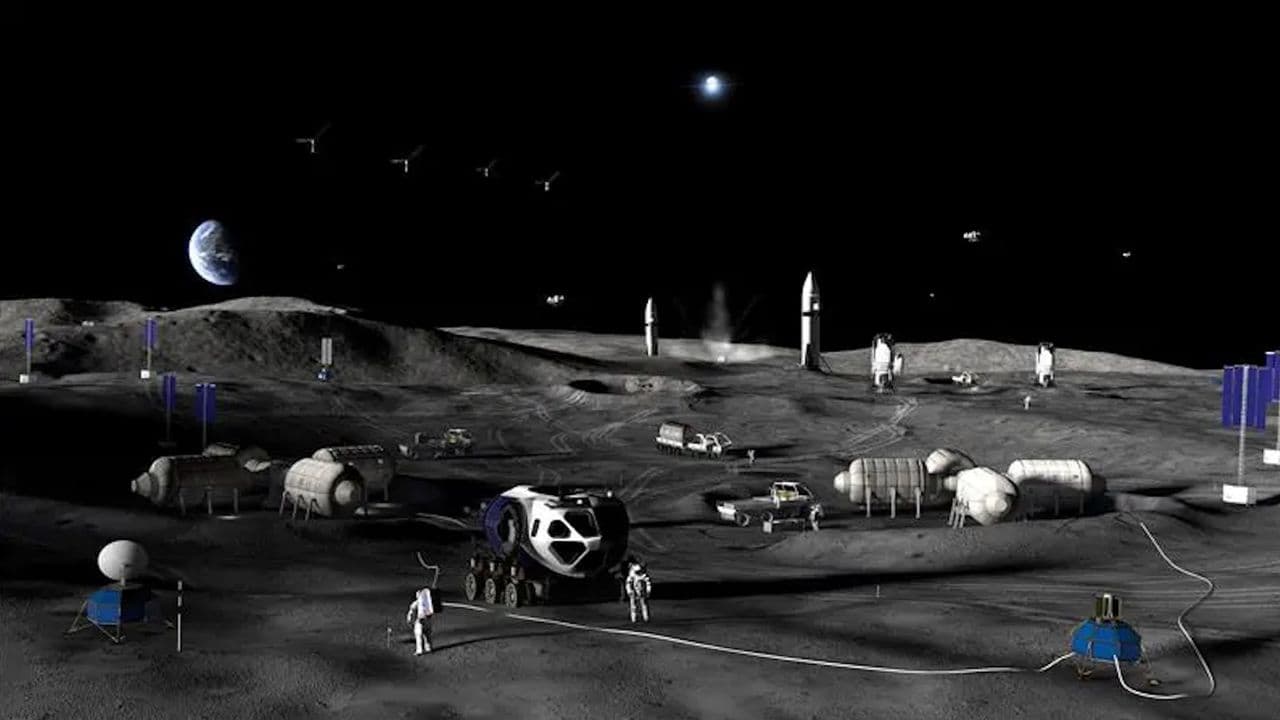
NASA plans a to build a permanent base near the moon's south pole via its Artemis program. (The goal of the study was to identify "specific conditions" for mission success and to look for any "red flags" that may stand in the way, lead investigator Anamaria Berea, a computational social scientist at George Mason University (GMU), told Space.com via email. (The first author of the PLOS ONE study, which was published in May, was GMU's Raymond Vera.)The team conducted the research using agent-based models, which are tools for computational simulations in fields ranging from the study of bird flocks to the spread of disease, Berea said. While a lot of modern-day AI "trains" or "learns" to extrapolate from information provided in a data set, agent-based modeling instead uses a data set to "understand emergent phenomena that don't have one single cause or direct cause," she said.The study team considered scenarios for how many astronauts would be on the moon base and how often resupply missions would occur. In an "initial case," for example, the assumed mission duration was three months, with a single resupply run at Month 2 with food, water, air and a fresh group of astronauts.Using a complex probability analysis known as a Monte Carlo simulation, the model astronauts in this scenario showed a productivity rate of about 20% against their expected tasks, "which is acceptable for a typical manufacturing process," the authors noted.This productivity rate doesn't take into account anything unexpected that may crop up during the mission, the authors added. "The low task completion rate suggests that, on average, teams are having challenges to overcoming psychological stressors and environmental disruptions," they wrote.Lessons from the International Space StationNASA tracks productivity a little differently on the International Space Station (ISS). The agency uses a metric called "utilization," which largely refers to the amount of crew time and number of scientific investigations that are performed on the space station during an increment or expedition. As of 2014, the ISS program suggested that ideal utilization should be 35 hours per crew per week when there are three people working on the U.S. part of the space station, and 68.5 hours if there are four or more. (The Russian side of the ISS works largely independently in this respect.)"NASA has generally met or exceeded this goal and set a high of 120 average hours per week devoted to research from October 2019 to April 2020," NASA's Office of the Inspector General (OIG), which has been tracking all of these productivity figures, stated in a report published in September 2024."Starting March 2022 through March 2023, the latest published data, we have seen utilization near 90 hours per week," the OIG noted. "In addition to the hours spent per week on research, the number of scientific investigations performed on-orbit has increased."Figure 1 of the OIG report also shows both crew time and scientific investigations increasing, as a trend, between 2000 and 2023, suggesting that utilization of the space station is continuing to grow. And this is despite periodic and documented disruptions that required astronauts to take a step back from being productive, such as emergency ammonia leaks requiring spacewalks, the 9/11 disaster, or sheltering in place during brief contingencies such as space debris passing within a few miles of the station.Not all crew time can be used for utilization even if all goes well, however, as the station requires normal maintenance like cleaning, and astronauts also need daily time for sleep, meals and a little relaxation. Additionally, utilization tends to increase with larger crews on the space station compared with smaller ones, as maintenan
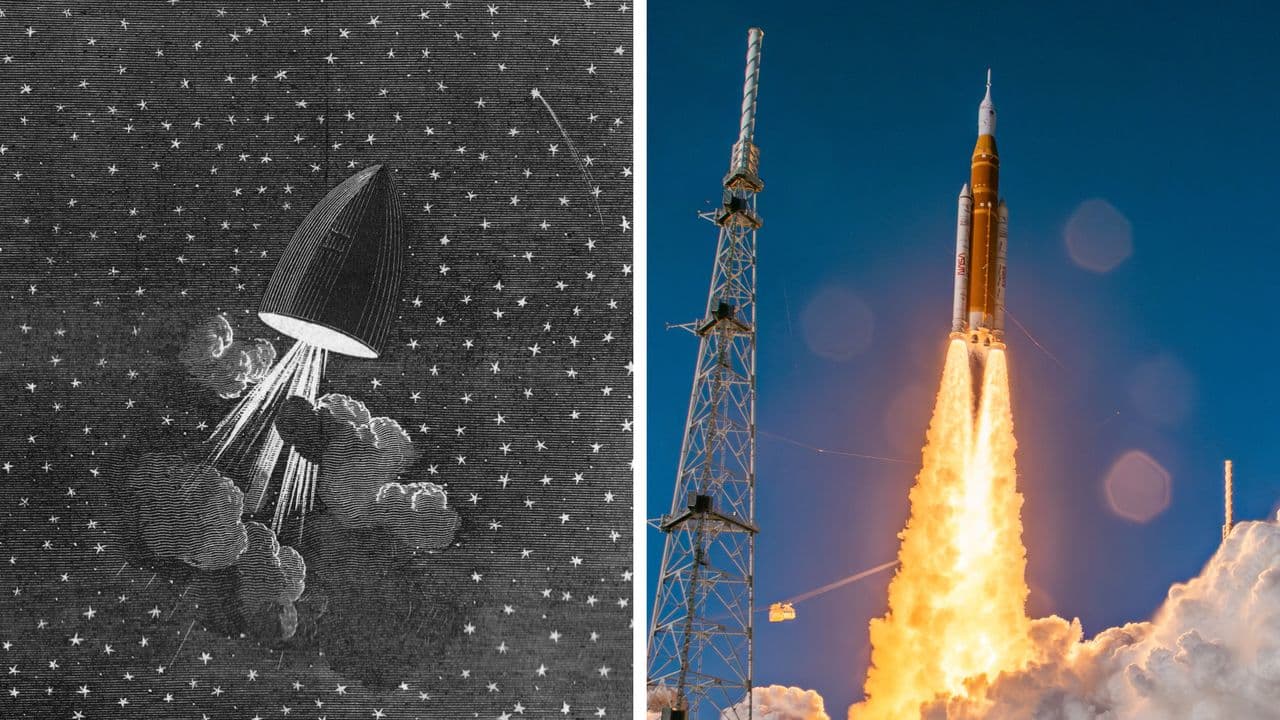
(" So said NASA commentator Rob Navias as Artemis 2’s Integrity spacecraft landed safely in the Pacific this past April.It is striking just how similar the mission profile of Artemis 2 was to the journey described by the French author in the mid-19th century. At a time when his peers were writing about fanciful balloon trips to other planets, Jules Verne dealt realistically with escape velocity, orbital slingshots, and course-correction burns. Yes, he made mistakes — some of them laughably obvious to the modern reader — but many aspects of his stories were eerily prescient of the real space missions that were still a century or more away.Often called the father of science fiction, the prolific Verne wrote of extraordinary voyages on modes of transport that did not yet exist, like the submarine in "Twenty Thousand Leagues Under the Sea", and took readers to unexplored regions, such as "Journey to the Center of the Earth".Verne’s fourth novel, "From the Earth to the Moon", was published in 1865. Its darkly comic opening chapters describe how the members of the Baltimore Gun Club find their ballistic talents surplus to requirements at the conclusion of the American Civil War (a conflict still ongoing as Verne wrote). Club president Impey Barbicane proposes a new outlet for their skills: "I began to wonder whether, with a sufficiently large cannon, it might be possible to shoot a projectile to the moon."Verne was obsessed with facts and figures. He explains the math and science of Barbicane’s 900 ft (274 m) cannon, or "Columbiad", in great detail, including the trajectory of its projectile.His reasoning about where to locate the Columbiad was sound enough to be replicated by NASA decades later: launch from as close to the equator as possible to get a speed boost from the Earth’s rotation. Verne picked a spot near Fort Myers, on the opposite side of the Floridian peninsula to Cape Canaveral, but at a very similar latitude.G-force extremes com / Josh Dinner As "From the Earth to the Moon" proceeds, French adventurer Michael Ardan volunteers to man the Columbiad’s hollow projectile. Barbicane and his nemesis, Captain Nicholl, soon agree to join him.But here we hit the first major problem in Verne’s vision. Unlike a rocket, which accelerates to escape velocity over a few minutes, subjecting its crew to strong but survivable g-forces, a projectile fired from a cannon accelerates almost instantaneously. Barbicane, Nicholl, and Ardan would have been crushed to a paste.Nonetheless, the fictional launch is successful, and "All Around the Moon", published four years later in 1869, picks up the story. Instead of hitting the moon, as Barbicane had rather recklessly intended, the projectile turns out to be on a free-return trajectory, taking it around the far side of our natural satellite.Some of the sequel’s details are charmingly naive. Although Verne equips his travelers with chemical apparatus to produce oxygen and scrub carbon dioxide, he has no qualms about them opening portholes on several occasions, as long as they’re quick! His projectile’s interior is spacious and richly appointed like a Victorian study, and its occupants enjoy gourmet meals with fine wines, a far cry from the rehydrated rations that Reid Wiseman and company munched on during Artemis 2.Verne also has his crew mostly bound to the capsule’s floor by gravity. He mistakenly has them experience weightlessness only at the "neutral point", the spot where the Earth's and moon’s gravitational pulls are equally balanced. Still, it is quite amazing to read zero g imagined at a time when it was completely beyond all human experience (except perhaps briefly, if one of the recently invented "saf
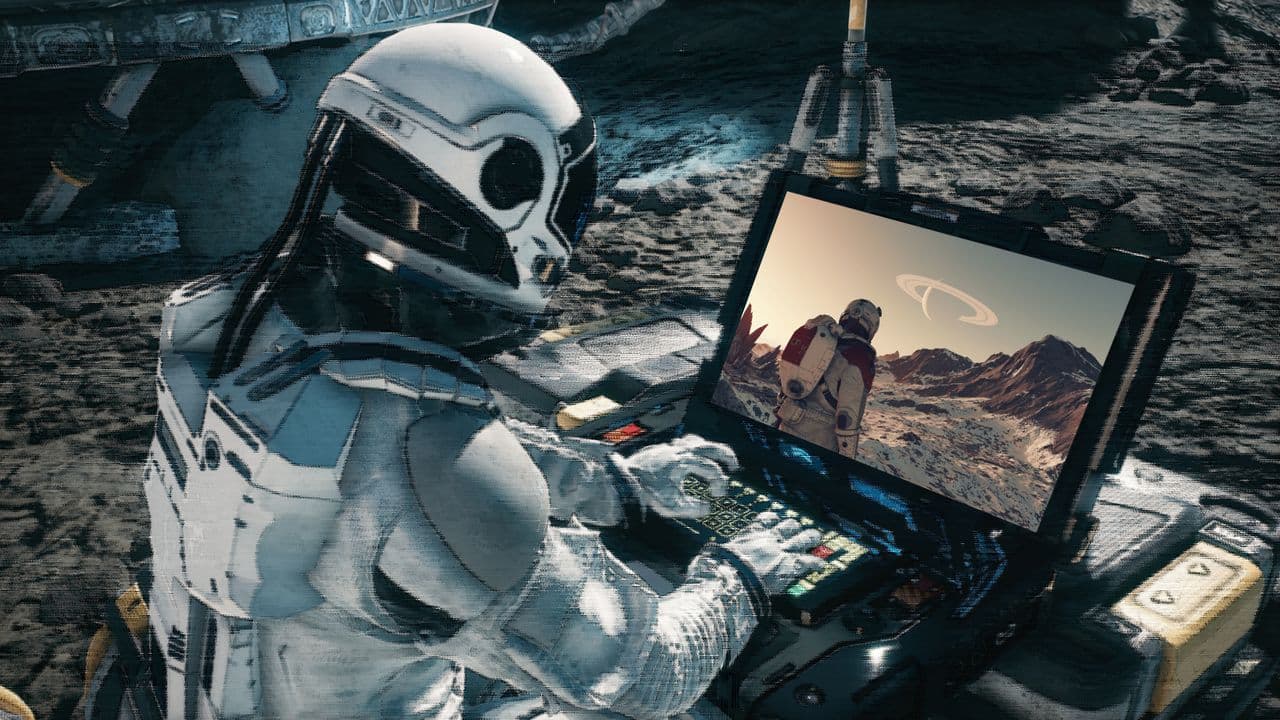
( No, we're not talking about video games set in space; these actually went into space.From individual missions to tours aboard the ISS, video games have featured surprisingly often in the inky blackness of space. Astronauts are pretty busy when they're on a mission — it's quite expensive to get them into orbit, and the taxpayers don't want to spend millions of dollars so Victor Glover can play Halo in orbit — but they do occasionally get to take games into space.So strap in and prepare to blast off as we look at our brief history of sending video games to space.1993 — Tetris becomes the 1st game In space (that we know of) (One of the brave cosmonauts tasked with a 196-day mission aboard the world’s pre-eminent space station was Aleksander Serebrov. When Serebrov wasn’t busy setting the world record for the number of space walks (a record later surpassed by Anatoly Solovyev), he found time to enjoy his Game Boy with a copy of the seminal Russian puzzle game, Tetris.Not only does this make Serebrov the first person to play video games in space, but it also marks a spectacular piece of technological patriotism.In 2011, Serebrov’s Game Boy and copy of Tetris were auctioned off in New York for $1220 USD, along with a note of provenance reading: "Like all cosmonauts, I love sport. My particular favourites are football and swimming. During flight, in rare minutes of leisure, I enjoyed playing Game Boy."1998 — And now for something completely different (Onboard was a crew of American astronauts, including mission specialist Andy Thomas. Alongside being an excellent mechanical engineer, aerodynamic scientist, and mission specialist, he’s also a bit of a gamer — at least, if his choice of entertainment aboard the Russian space station is anything to go by. Andy bought with him a PC game called ‘Monty Python’s Complete Waste of Time’.If you haven't heard of it, consider yourself lucky. It’s basically an FMV mini-game collection that is, aptly, a complete waste of time. We’re not 100% sure why someone would want to lock themselves in a cramped, ageing space station for 6 months with this terrible game, but it cemented itself in history as the second game played in space.1999 — Folks, we’re going international ( Along with a host of astronauts, it's also briefly been home to one of the greatest space strategy games ever made.In 1999, space mission STS-96 delivered the first crew to inhabit the station, including Daniel Barry, who brought with him a copy of StarCraft because he happened to be a big fan of the franchise. Where better to enjoy a sci-fi RTS than the cold vacuum of space?While his mission aboard the ISS only lasted around 30 days, in an interview in 2017, Barry said that part of the reason he chose Starcraft as a way of connecting with his far-flung family.Barry used to Zerg-rush his partner and daughter back on Earth, so this was a way of taking that bond into orbit. Sadly, he wasn't able to actually play the game, but the copy he took to space now resides in Blizzard’s headquarters.2001-2005 — A mystery gameSometimes, kids are given the chance to speak to real astronauts and ask them questions, and even more rarely, they’re allowed to do it with the President of the United States.Back in 2009, a bunch of school kids and the 44th President of the United States, Barack Obama, called the c
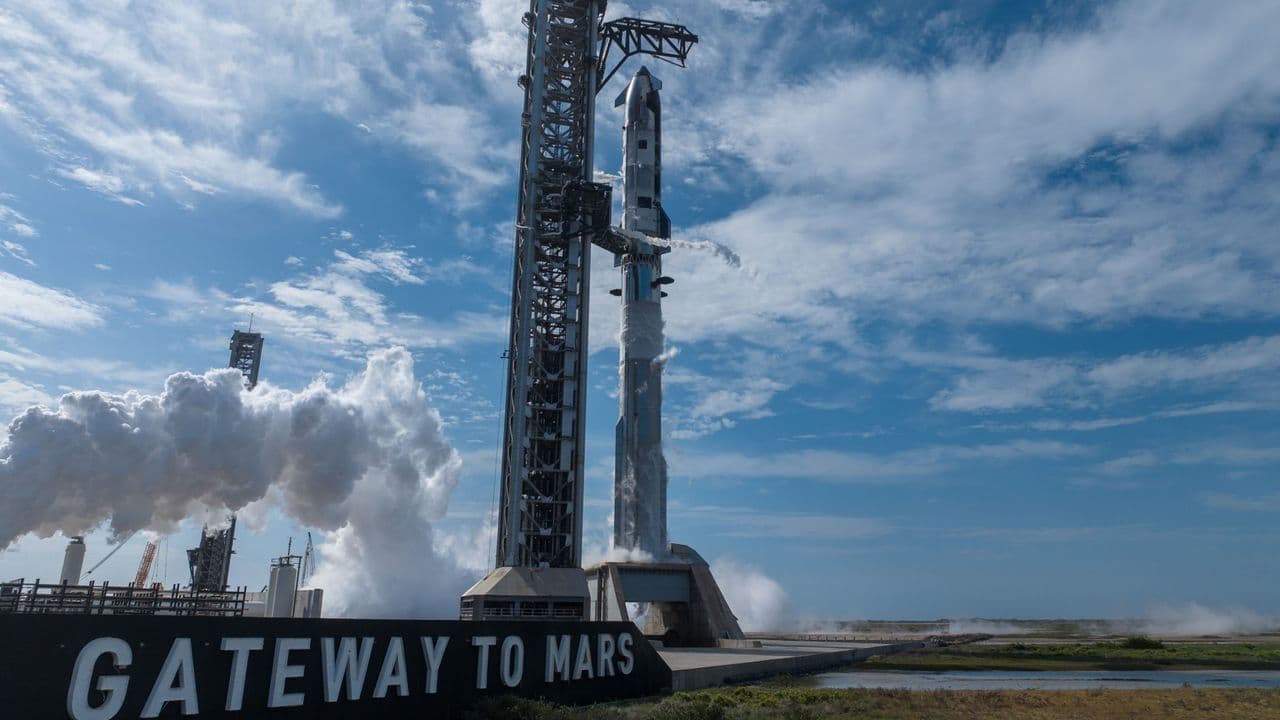
Watch live! SpaceX launches Starship V3 megarocket for first time - YouTube Watch On SpaceX's new "V3" Starship megarocket will fly for the first time ever on Thursday (May 21), and you can watch the highly anticipated action live.Starship Version 3 — the biggest and most powerful iteration of the vehicle yet — is scheduled to debut Thursday with a suborbital test flight that lifts off from SpaceX's Starbase site in South Texas.Launch will occur during a 90-minute window that opens at 6:30 p.m. EDT (2230 GMT; 5:30 p.m. local Texas time). You can watch it live here at Space.com courtesy of SpaceX, or directly via the company's website; coverage will start about 45 minutes before liftoff.Though this will the first flight for V3, it will be the 12th overall for Starship. The giant rocket first launched in April 2023 on a suborbital test mission that ended in an explosion not long after liftoff.SpaceX has made considerable progress since then. For example, the most recent two Starship missions — Flight 10 and Flight 11, which launched in August and October of last year, respectively — were completely successful, according to the company.On both flights, Starship's Super Heavy booster steered itself to a splashdown in the Gulf of Mexico. The rocket's upper stage, known as "Ship," successfully deployed payloads (eight dummy Starlink satellites in each case) and made a splashdown of its own in the Indian Ocean off the coast of Western Australia.The goals are broadly the same for Flight 12, with a few twists. For instance, this time, Ship will aim to deploy 20 dummy Starlink craft as well as two "specially modified" real Starlink satellites."The two modified satellites will test hardware planned for Starlink V3 and will attempt to scan Starship's heat shield and transmit imagery down to operators to test methods of analyzing Starship's heat shield readiness for return to launch site on future missions," SpaceX wrote in a Flight 12 mission description.The entire suborbital test will take a little over an hour, if all goes to plan. Super Heavy's splashdown will occur about seven minutes after liftoff, with Ship following suit 58 minutes later.There's a lot riding on Flight 12, and not just because it will be the first Starship launch in more than seven months. SpaceX is developing the giant vehicle to help humanity settle the moon and Mars, among other tasks, and V3 is the first Starship iteration capable of making such trips.So SpaceX is doubtless keen to see how the vehicle flies. And so is NASA, which picked Starship to be one of the two crewed landers for its Artemis program of moon exploration.If all goes well with Flight 12 and subsequent test missions, Starship could launch on the Artemis 3 docking test in Earth orbit late next year, and then land astronauts near the lunar south pole on Artemis 4 in 2028. Or, those honors could go to Blue Origin's Blue Moon, the other private lander in the Artemis stable.
Discussion (0)