
Loading dispatches...
← Return to Newsroomgeneral
Knives out in TMC: Leaders, MLAs call out factionalism, Mamatas bid to not quit
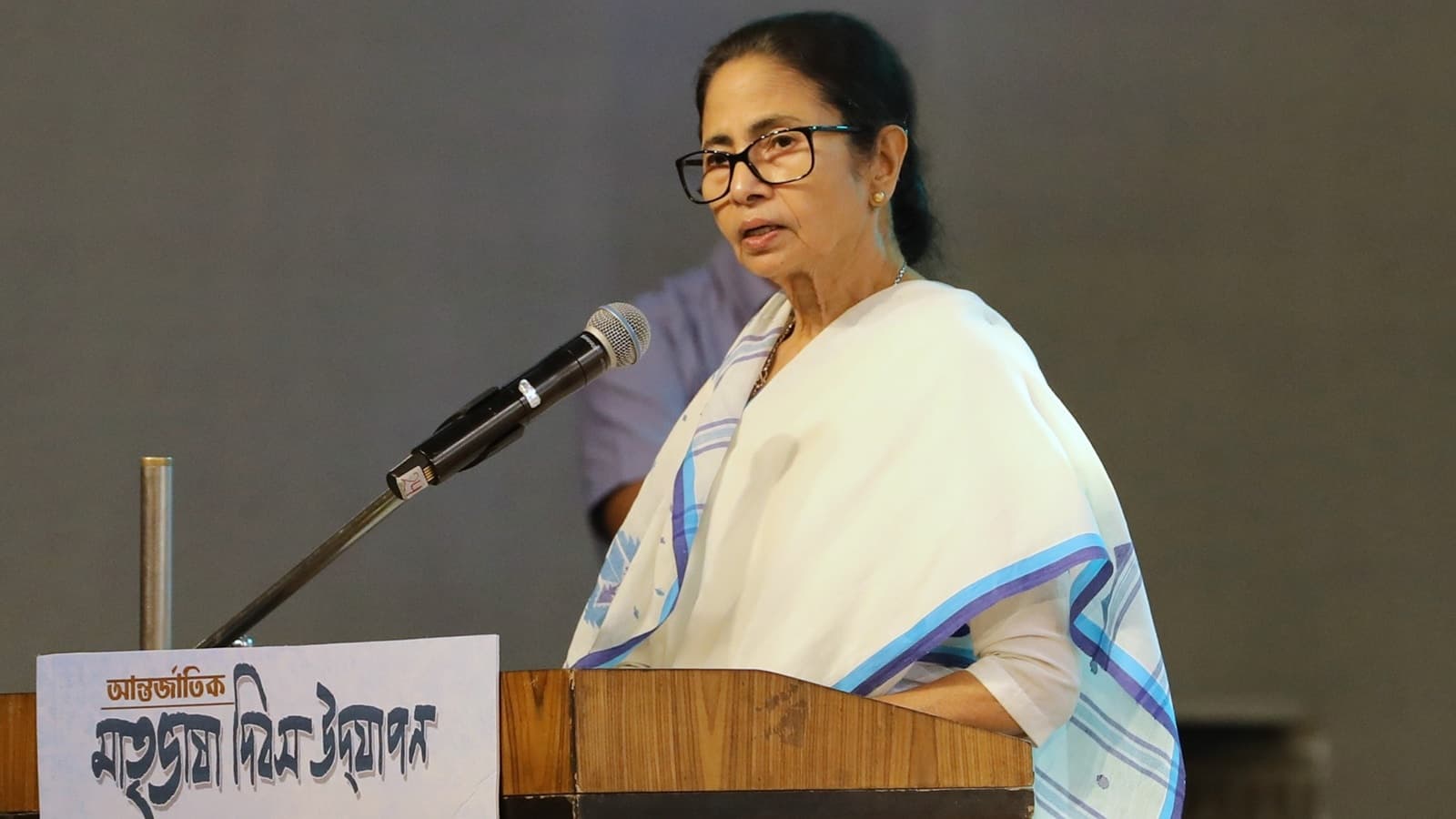
It’s now out in the open. Trinamool Congress (TMC) leaders and legislators who have been toeing the party’s line publicly for all these years have now started speaking out on what is wrong in the party, after its humiliating defeat at the hands of BJP in the Assembly elections.After former Minister of State for Sports and cricketer Manoj Tiwary fired the first salvo, calling the Mamata Banerjee government “corrupt” that “deserved to be cast away”, other TMC leaders like MP and actor Dev have started speaking out against the party leadership, with some even blaming general secretary and Mamata’s nephew, Abhishek Banerjee, for the electoral debacle.“Lobbies, lobbies and lobbies. The party is infected with lobby and factionalism,” said TMC MLA Niamot Sheikh, who won from Hariharpara in Murshidabad district. Sheikh, who had attended Wednesday’s meeting of TMC Legislature Party meeting at party supremo Mamata Banerjee’s Kalighat residence, said the leadership allowed factionalism in the party, which ultimately led to the defeat. “There are so many factions of the party in Murshidabad itself. I have repeatedly warned the party higher-ups regarding this. I was ignored. They thought it was better not to pay heed to me. The top leadership thought that more the factions, more the competition and better the position. If one raised questions, they would back the other lobby. It is a fact that when one becomes the party’s candidate in the polls, the other lobbies will not work for him,” Sheikh told The Indian Express over the phone without naming anyone in particular. “Then there was technology,” Sheikh said, adding that party leadership placed a lot of emphasis on technology like social media campaigns etc. “They undermined the human factor,” he added. Sheikh, who defeated Humayun Kabir’s nominee by over 12,000 votes, said suspending him just before the elections was not a wise call. Kabir was suspended from TMC after he went ahead with his plan to build a Babri-like mosque in Murshidabad district. Kabir formed the Aam Janata Unnayan Party (AUJP), and went on to win two seats from where he contested. “I don’t know whose lobby brainwashed our supreme leader (Mamata Banerjee) against Humayun Kabir. They brainwashed her against Humayun and he got suspended. Humayun did what he could, and floated a new party. In Murshidabad, like in other areas, Muslim vote got divided,” he added. Akhruzzaman, the TMC MLA from Raghunathganj in Murshidabad district, also blamed the division in Muslim votes behind the party’s defeat in the minority-dominated areas. “Muslims voted for everyone else but the TMC and BJP. We used to get all the Muslims votes. The votes were divided. I know the reasons but I cannot tell you,” said Akhruzzaman, who defeated Congress candidate Nasir Saikh by over 40,000 votes. Another TMC MLA from Murshidabad district, speaking on the condition of anonymity, said, “Our Muslim vote bank cracked, while the Hindu votes consolidated towards the BJP”, adding that the party has changed a lot in the past few years. “Our voices never reached the top. The party was dependent on a professional agency (I-PAC) which acted as middlemen,” the leader said, disagreeing with Mamata’s decision to not accept the defeat and refusing to resign as the chief minister. “I believe we should accept defeat, and start rebuilding the party. Not accepting defeat is further tarnishing our image among the people,” the TMC MLA said. TMC MLA from Bagnan in Howrah district, Arunabha Sen, was also critical of Mamata’s decision to not resign. The four-time MLA, Sen, said, “Mamata Banerjee is a big name. She can only say what decision she took and why. But as an insignificant MLA of the party, I can only say that had I been the chief minister, I would have resigned after such a defeat of the party in the election.” “It is true that we faced hostility during counting. Even after that, I stayed at the counting centre. I have faith that people voted for me, and I will win,
Uttar Pradesh’s newly approved ‘One District, One Cuisine Scheme’ has identified 208 signature dishes across the state. Except, one glaring omission has raised eyebrows — there is not a single meat dish on the list.Lucknow, for instance, has been assigned rewari, chaat, malai makkhan and “mango produce”. While the Moradabad division features dal dishes and handi halwa. Well-known specialties such as Galauti Kabab and Moradabadi Biryani from the two regions are absent.The scheme was first launched by Union Home Minister Amit Shah in Lucknow on January 24 during UP Day and the inauguration of Prerna Sthal, and formally approved by the state Cabinet on May 4. Sources said the Cabinet note includes 208 cuisines, mapped across 18 divisions and 75 districts. Food critics, however, have questioned the exclusion of iconic dishes such as the Galauti Kabab, widely regarded as a signature dish of Awadhi cuisine. Writer Himanshu Bajpai from Lucknow, who performs Dastangoi across the world, said the omission was surprising. “I am a vegetarian, but when a list of popular cuisines is prepared, the non-inclusion of Galauti Kabab, known worldwide for its ‘melt-in-the-mouth’ texture, comes as a surprise.” He also called for clarity on the selection process. “If the aim is to promote lesser-known dishes, that is understandable. But if there is any bias in food selection, it should be explained.” When asked about the selection criteria, Cabinet Minister Rakesh Sachan told The Indian Express that “it is a flexible list which can be upgraded based on public opinion and suggestions”.Story continues below this ad “The list is flexible. The scheme has been approved by the Cabinet, but the list of cuisines can be changed any time based on local recommendations and public demand, with approval from the Chief Minister. It does not require Cabinet approval,” he said. He added that a district-level committee was formed in all 75 districts, chaired by District Magistrates and including teachers, professors, and local experts, and they made these recommendations. “Surveys were also conducted… It is based on these recommendations that this list was decided, the task was not easy,” Sachan said. On the absence of non-vegetarian dishes, he said, “It is not intentional. If recommended in the future, they can be added. The idea is not to promote individual popular items but dishes that benefit a larger population through packaging, sales, and promotion.” Incentives under the scheme The government, meanwhile, is preparing incentives to support identified cuisines and their makers.Story continues below this ad Sources said the government will provide a 25% subsidy for setting up new units (up to Rs 20 lakh) and assistance in packaging, marketing, and branding. For instance, if a halwai wants to participate in a “haat” or an exhibition, then the government would offer support up to Rs 75,000 for national events and up to Rs 4 lakh for international events. According to sources, the government is also planning a food conclave in Lucknow, where local halwais and culinary experts will be invited to promote these cuisines. However, it is still unclear whether non-vegetarian cooks will be included. Regional food mapping As per the list, each of Uttar Pradesh’s 18 divisions has been mapped with signature foods ranging from sweets and snacks to staple dishes.Story continues below this ad The Agra division is represented by its globally known petha, dal moth and gajak Mathura is identified with peda and makhan mishri. Eastern Uttar Pradesh features rustic and traditional food such as litti-chokha in Gorakhpur, thekua in Basti, and sattu-based dishes in allia. The Varanasi division highlights cultural staples like Banarasi paan, thandai, and tiranga barfi. Western districts such as Meerut and Muzaffarnagar are noted for gajak, rewari, and jaggery-based products. The list also underlines region-specific specialties such as dal bafla in Jhansi; bedami puri in Prayagraj; and

Discussion (0)