
Loading dispatches...
← Return to NewsroomScience
This year's 'Masters of the Universe' movie wasn't Hollywood's first attempt at capturing the power of He-Man; they tried back in 1987, and failed then too
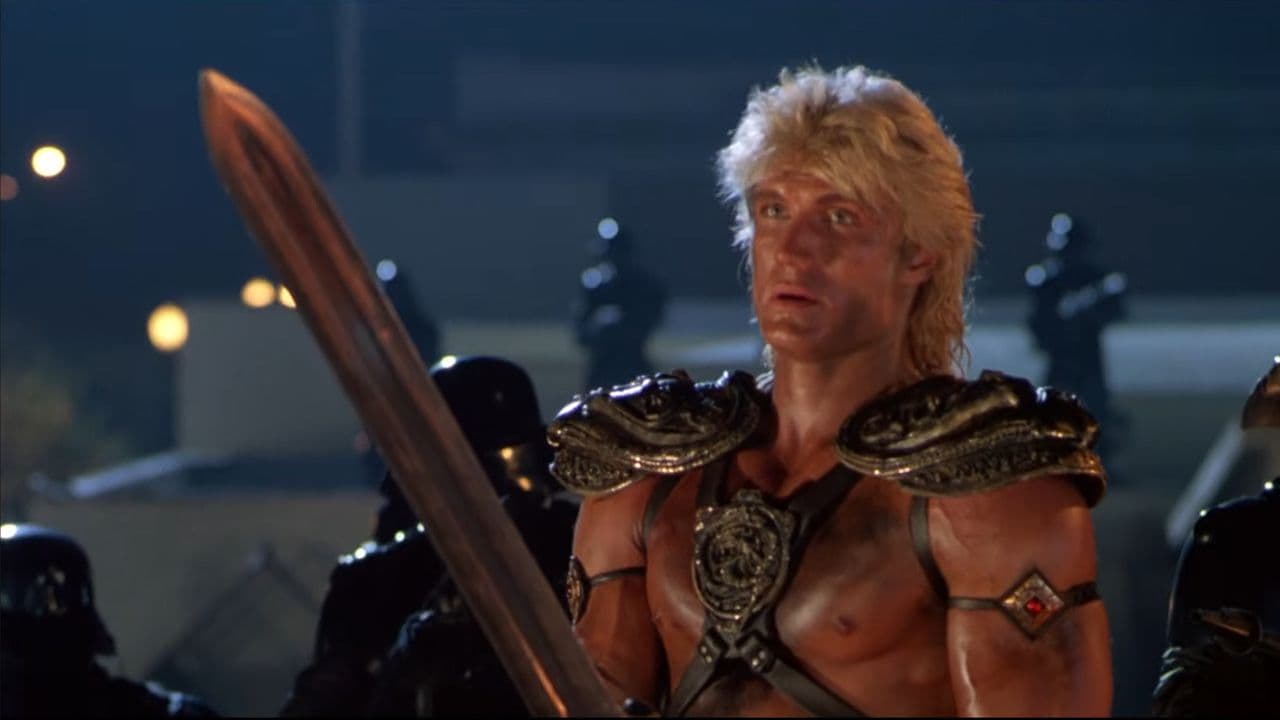
(Picture the scene. The year is 1987. You've got the action figures and the Castle Grayskull playset, you've watched every episode of the cartoon again and again, and you can recite He-Man's opening credits voiceover by heart. He has the power!Then someone tells you there's a live-action film adaptation coming out.You persuade your parents to take you to the theater, pick up a great big bucket of popcorn, and get ready to be transported to the familiar surroundings of Eternia. And then…Well, it's fair to say this is not the "Masters of the Universe" you know and love. Sure, leading man Dolph Lundgren is big, but why does he look and dress nothing like He-Man? Who's that Gwildor guy, and what the hell happened to Orko, BattleCat and Prince Adam? Why do He-Man and Skeletor spend so much of the movie on planet Earth? And when are we going to hear that famous theme tune? (Spoiler: you won't.) ( But disappointing a pre-teen fanbase was the least of "Masters of the Universe"'s worries. Sales of Mattel's previously all-conquering toyline were way past their peak, while the appetite for films trying to capture "Star Wars"' unique blend of sci-fi and fantasy had all but disappeared. Perhaps more importantly, "MOTU" 1987 had been bankrolled by an ambitious but eccentric studio, whose efforts to break into the mainstream had left it in a financial state so perilous that not even the most powerful man in the universe could save it."Masters of the Universe" was one of the undoubted pop culture success stories of the 1980s. Although Mattel had made the mistake of turning down the licence to make "Star Wars" toys, the toy giant responded in spectacular style by launching a fantasy behemoth of its own in 1982. He-Man, Skeletor and their Eternian colleagues would soon become household names, largely thanks to the advertising power of an immensely popular cartoon series.Decades before "Transformers", "The Lego Movie" and "Barbie" made big money at the box office, producer Edward Pressman had seen the potential in taking a toy franchise to the big screen. There had been early interest in "He-Man" from major studios (including Warner Bros), but — largely thanks to delays caused by management changes at Mattel — interest had waned by the time Cannon Films stepped in to foot the bill. Masters of the Universe (1987) ORIGINAL TRAILER [HD 1080p] - YouTube Watch On Throughout the '80s, Cannon had become more renowned for the quantity of its output than the quality, as a pair of ambitious Israeli cousins, Menahem Golan and Yoram Globus, invested in unashamed B-movies like "Enter the Ninja", Charles Bronson's "Death Wish" sequels, and Chuck Norris vehicle "The Delta Force". The studio had around 40 movies in production at the time "Masters of the Universe" got the green light, but was keen to make a move on tentpole blockbuster territory. As well as financing the disastrous "Superman IV: The Quest for Peace", Cannon had also paid Sylvester Stallone a record-breaking fee to headline arm-wrestling drama "Over the Top". Both flopped at the box office.Despite being "a little bit reluctant because it was [based on] a toy line", Stallone's "Rocky IV" co-star Dolph Lundgren signed up to play the mighty He-Man. The Swedish actor looked more like the lead singer of a hair metal band than the sword-wielding hero of the cartoons, though his impressive physique (coupled with He-Man's scanty wardrobe) ensured it was hard to find a convincing stunt double.Director Gary Goddard also became concerned that his leading man (topping the bill for the first time) wasn't delivering dialogue as he wanted, and subtly chopped some of Lundgren's
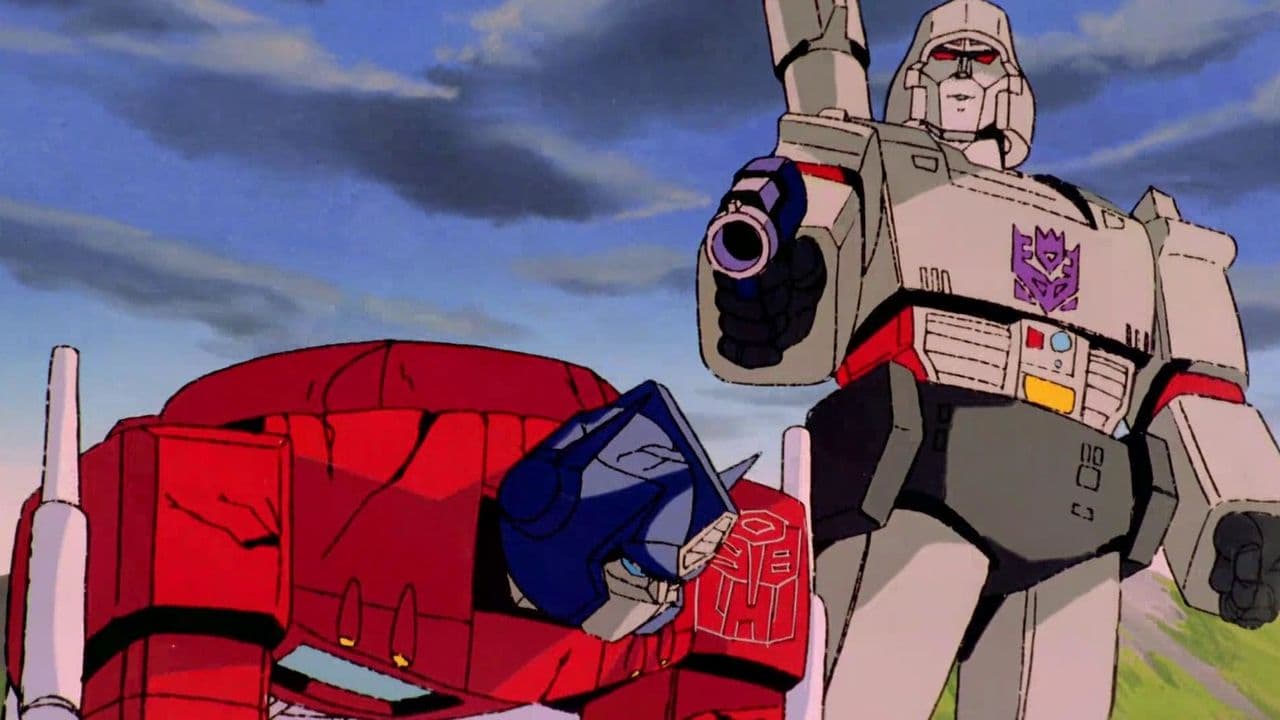
( If tears were shed then, however, spare a thought for the kids who'd queued to watch "Transformers: The Movie" back in 1986, only to see many of their heroes expiring in the cartoon spin-off's opening act.If you can have a bloodbath of sentient machines, this was it, as robots in disguise met their maker at an alarming rate. Ironhide? Dead. Ratchet? No more. Starscream? Pushing up mechanical daisies. Not even the iconic Optimus Prime was spared, as the noble leader of the Autobots met a brutal end at the hands of his nemesis, Decepticon leader Megatron.This may seem like a recipe for traumatizing the film's target audience — and for many of "Transformers: The Movie"'s young viewers, it was a genuinely disturbing experience. But toy manufacturer Hasbro had ulterior motives for killing their darlings. ( But, the theory went, the kids who'd been watching since the series debuted in 1984 would now be familiar/bored with the original line-up, and already have the relevant robots in disguise in their toyboxes. By instigating an on-screen cull, Hasbro believed they'd be able to make way for new characters, and keep their young fans coming back for more."They created the story using characters that could best be merchandised for the movie," director Nelson Shin (who, in a previous life, had helped to animate the lightsabers in the original "Star Wars") told SFX magazine in 2011. "Only with that consideration could I have freedom to change the storyline. What I tried to focus on was animation-izing the story. For example, when Optimus Prime died, I changed his color from red and blue into gray in order to show that the spirit was gone from his body." (com — many of the production team had little idea of the emotional carnage they were about to unleash."We didn't know that [Optimus Prime] was an icon," story consultant Flint Dille admitted in an interview on the "Transformers: The Movie" DVD. "It was a toy show. We just thought we were killing off the old product line to replace it with new products."Kids were crying in the theaters," he continued. "We heard about people leaving the movie. We were getting a lot of nasty notes about it. There was some kid who locked himself in his bedroom for two weeks." ( But for all its flaws, "Transformers: The Movie"'s storytelling was arguably bolder than any other Hollywood animation of the era.It was also an impressive technical feat. Although the visuals are a visible step-up from the TV version, Shin (who'd been supervising producer on the cartoon from day one) and his team had to work to extremely tight deadlines to meet the film's release date:"Time constraints and the sheer amount of work needed were the two biggest challenges, since everything had to be hand-drawn by people!" ( The Decepticons have taken control of the Transformer homeworld of Cybertron, while human Autobot chum Spike Witwicky (a kid in the TV show) is now grown up with a son of his own. When the villains attack the Autob
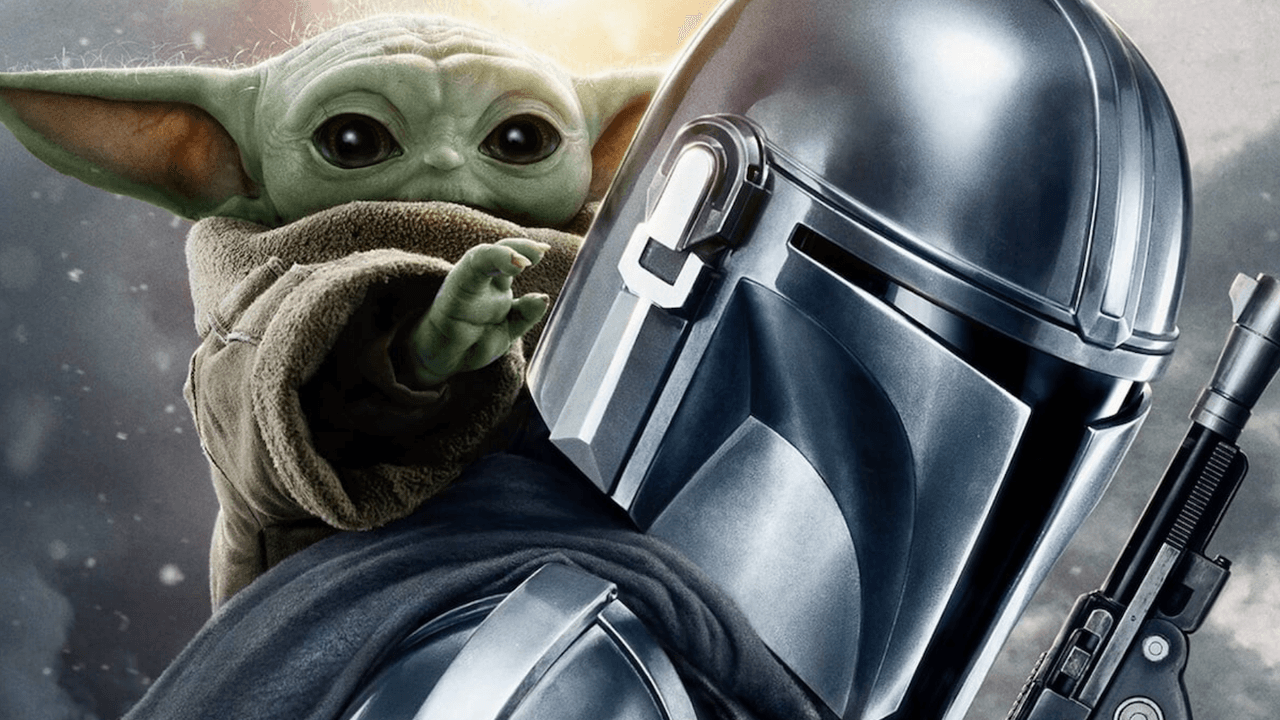
( It remains uncertain if this is the last ride for the "Star Wars" version of Adam Sandler's "Big Daddy" in space, but even if it isn't, it might very well be a case of milking a thala-siren dry here.In this new movie, the Galactic Empire is no more. Emperor Palpatine has been sent to the great big Sith graveyard in the dumpster — until future movies retcon this plot point — and it's a better tomorrow. Despite the cause for celebration, that doesn't mean all is well in the New Republic, as there are still a few bad seeds running amok and practicing basic thuganomics. So the Mandalorian bounty hunter and his big-eared sidekick get roped into fighting the good fight. ( The finale provides the perfect conclusion to the story, as Djarin adopts Grogu and they move into a cosy cabin on Nevarro. After all they have been through, this is the happily ever after they both deserve. But it isn't. “It only felt like the ending of a particular chapter," Pascal told Empire, while new "Star Wars" head honcho Dave Filoni touted "The Mandalorian and Grogu" as the beginning of a new era.Perhaps it is. Perhaps it isn't. There hasn't been a "Star Wars" film in theatres since 2019's divisive "The Rise of Skywalker", and "The Mandalorian and Grogu" appeared to be a safe bet for the franchise's triumphant return to cinema. However, it doesn't seem like an overwhelming victory lap by any stretch of the imagination.At the time of writing, the movie's main trailer has roughly 11 million views on YouTube. Compare this to other upcoming U.S. summer blockbusters like "Spider-Man: Brand New Day" (31 million), "The Odyssey (41 million), and "Supergirl" (25 million), and it's clear that "The Mandalorian and Grogu" doesn't exactly have people clicking to see what it's all about or dying to revisit a galaxy far, far away.This is "Star Wars"; just the fact that this film belongs to this prestigious universe should have people running — not walking — to theaters. Yet this doesn't have that big event feeling. It's muted by current-day standards.Under the trailer, a user comments, "Wow, I wish I felt anything." That's the larger issue rather than the concerning marketing statistics. Those who have seen the promotional material aren't exactly glowing in praise for Djarin and Baby Yoda's latest adventure. To be fair, it's a stale trailer, recycling the same tired jokes and cutesy interactions between the pair from before. Nothing is original here. It's a yawn crusted in CGI. Worse, it comes across as more "Star Wars" for the sake of it — a problem the franchise has faced too often in recent times.Cycle back to season 3 for a moment. While "The Mandalorian" finale wraps up the show's storyline in a neat bow, the season isn't fondly remembered as the best. A quick glance at the Rotten Tomatoes scores and reviews demonstrates a consensus that the show ran out of steam and drifted away from what made it fresh and appealing in the first place.Sure, there might be a temptation to right the wrongs and give it another shot, but it's often best to leave well enough alone in these circumstances. Maybe revisit the property in 10 or 15 years and tug firmly on those nostalgia strings to squeeze out whatever sentiment might still be there. Anything less is playing with fire. Yet, whether it was through the original plans for a fourth season or movie, Disney and Lucasfilm refused to be done here, which could be to their own detriment. ( The actor has experienced an extraordinary rise to fame, with "The Mandalorian" playin
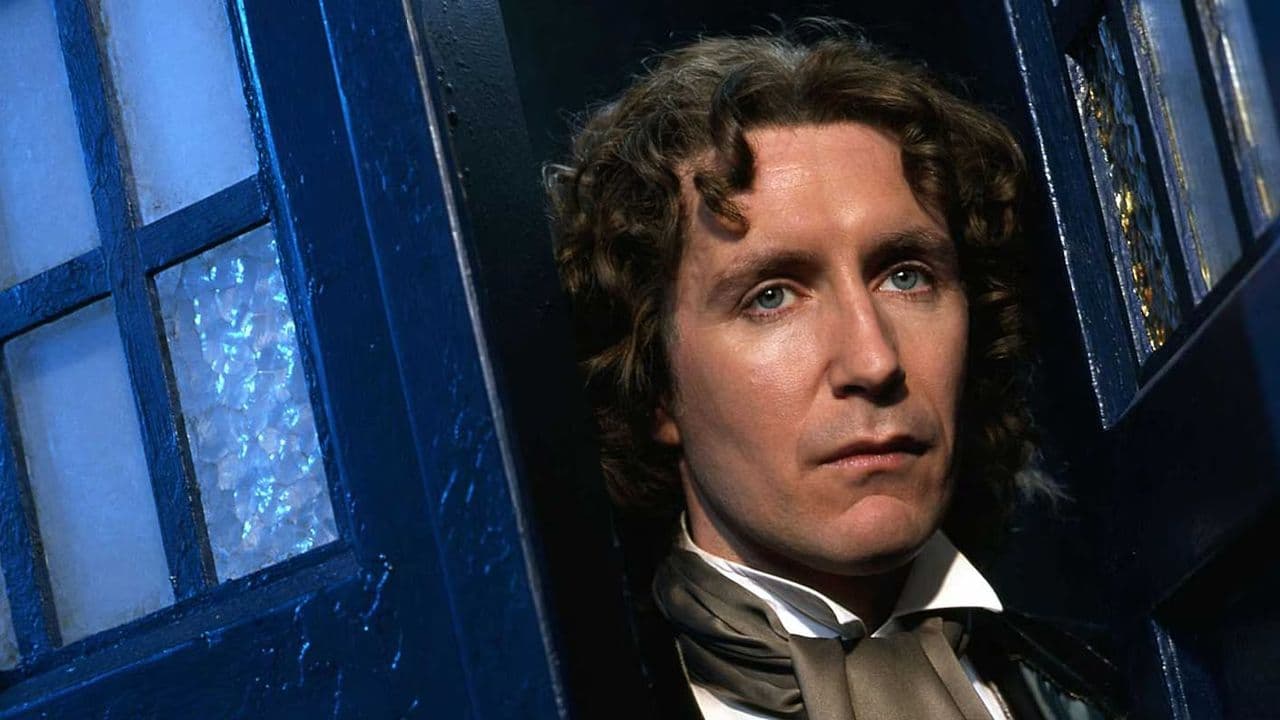
(" and the UK was instantly hooked. Gallifrey's most famous export subsequently became a fixture in UK TV schedules for the first time in 16 years.But Russell T Davies' acclaimed reboot wasn't the first effort to return the legendary Time Lord to primetime. Nine years earlier, in May 1996, an unlikely alliance of broadcasters and TV executives from both sides of the Atlantic — including, for a moment, Steven Spielberg — briefly brought "Doctor Who" back to earth.Their TV movie was pitched as a "backdoor pilot", a one-off that could have paved the way for a new big-budget series. It famously failed in its objective, but — while it's no classic — its legacy has lived far beyond that original 86-minute broadcast. Aside, of course, from a famously controversial aside about the Doctor being half human. (But — perhaps appropriately for a show whose main character has the ability to regenerate — "Doctor Who" refused to die. Books, comics, fanzines, and conventions kept the flame alive, while some at the BBC (particularly within its commercial arm, then known as BBC Enterprises) recognized the brand's money-making potential.There was even talk of a standalone theatrical movie — one iteration, titled "Last of the Time Lords" (a name later recycled by Davies for the season 3 finale), considered Donald Sutherland for the lead role. ( But Philip Segal, a young Hollywood TV executive who'd grown up in the UK and was a massive "Who" fan, sensed an opportunity, and — despite the BBC retaining the rights — tried to engineer a comeback.Numerous scripts and ideas were batted around as Segal touted the Time Lord around Hollywood for over half a decade. The BBC favored the return of ever-popular Fourth Doctor Tom Baker (generally regarded as the best Doctor ever) in the lead role, while some treatments featured the Time Lord on a quest to find his lost father. Steven Spielberg's Amblin Entertainment was involved for a while — a development that generated mass excitement in the UK press — before ultimately passing on the opportunity.After numerous false starts, the project eventually became a co-production between BBC Television, BBC Worldwide (the rebranded BBC Enterprises), Universal Television, and the TV movie division of the Fox Network. Rather than a series, it would be a standalone TV movie with a considerably larger budget than "Doctor Who" had ever had before. A side deal was also bolted on so that — should the broadcast be successful in the States — it could also function as a "backdoor pilot" for a full-on, US-funded TV series. ( For example, while Segal was keen to maintain continuity with the original series, Fox wasn't keen on the idea of a regeneration. The BBC was also sceptical about bringing Sylvester McCoy back as the Seventh Doctor, reasoning that his TARDIS tenure was one of the least popular in the show's history. (History has since been much kinder to McCoy's portrayal.)"There were so many cooks there that it was impossible to bring it all together," said writer Matthew Jacobs in "The Seven-Year Hitch" documentary released in 2010. "The trick is trying to keep your head while everyone about you is losing theirs. They're
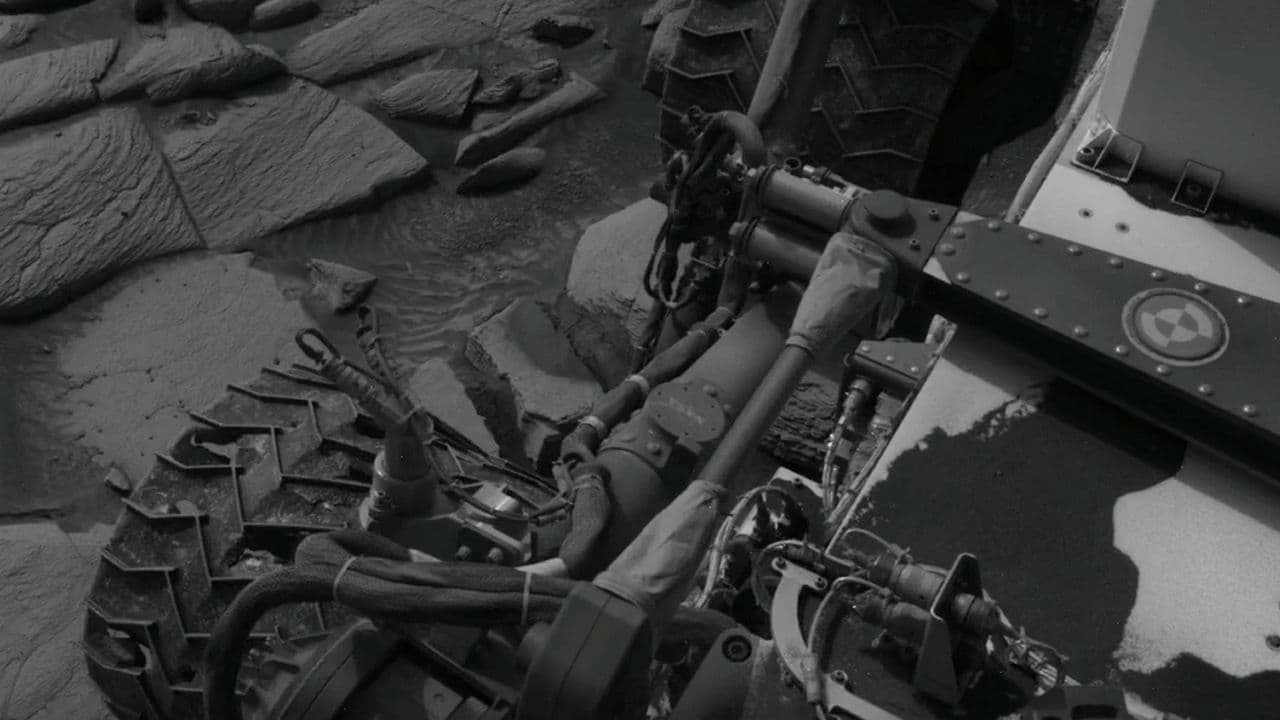
A new time-lapse video from NASA's Curiosity rover reveals years of punishing Martian travel, as its wheels churn steadily across the Red Planet's rugged terrain. A still image from a video released by NASA/JPL documenting six years of Curiosity rover's wheels while driving on Mars. ( It typically points behind the rover during drives, helping mission teams identify interesting rocks and terrain features after Curiosity passes them. But by stitching together thousands of routine images, engineers created a continuous record of motion and environmental change, offering a rare, long-term perspective on what it takes to explore another world.Now, scientists can even use the footage to study how sand accumulates and shifts across the rover's deck, distinguishing material moved by the wheels from that carried by Martian winds — subtle clues about seasonal patterns in the planet's thin atmosphere.The video also highlights a more hard-won reality of Mars exploration: wear and tear. Curiosity's six wheels, each about 20 inches (50 centimeters) in diameter, were designed to handle sharp and uneven ground. Yet the Martian surface has proven harsher than expected. Not long after landing in 2012, engineers began noticing damage to the thin aluminum wheels, including punctures and tears caused by jagged rocks. An image of one of Curiosity's wheels, taken on Sept. 22, 2024. ( Close-up photos reveal dents, holes and large gashes, some cutting through the wheel skin. Photos released in 2024 showed fresh scars alongside older ones, underscoring the cumulative effects of more than a decade on Mars. Despite this, the rover remains fully mobile — a testament to both its design and careful driving strategies developed by mission engineers.Keeping Curiosity on a safe and sustainable course includes plotting routes that avoid particularly hazardous terrain whenever possible. Lessons learned from the rover's wheel damage have not only helped guide Curiosity's mission but have also shaped the design of newer Mars rovers, including Perseverance rover, whose wheels were reinforced to better withstand the planet's unforgiving surface. NASA's Mars Perseverance rover acquired this image using its onboard Left Navigation Camera (Navcam). The camera is located high on the rover's mast and aids in driving. This image was acquired on Feb. 22, 2021 (Sol 2) at the local mean solar time of 15:46:50. ( Since its landing, Curiosity has traveled more than 20 miles (32 kilometers) across Gale Crater, climbing the lower slopes of Mount Sharp and traversing layers of rock that record billions of years of Martian history. The battered, dust-coated wheels seen turning in the video are physical evidence of that journey — each rotation marking another step in a mission that has far exceeded its original two-year lifespan.That longevity has paid off scientifically. Curiosity has fundamentally reshaped our understanding of Mars, confirming that ancient environments in Gale Crater could have supported microbial life. The rover has identified evidence of long-lived lakes, measured key chemical ingredients and, in recent years, detected increasingly complex organic molecules preserved in Martian rocks.The new time-lapse video offers a mesmerizing record of endurance and discovery — a reminder that even the simplest perspective, a camera aimed at a set of worn wheels, can capture the scale of a robotic mission that continues to push the boundaries of exploration on another planet. Samantha Mathewson joined Space.com as an intern in the summer of 2016. She received a B.A. in Journalism and Environmental Science at the University of New Haven, in Connecticut. Previ
( Strangely, though, the origin story for the God of Thunder doesn't receive the plaudits it merits; instead, it's lost to the annals of time and has become a footnote in comic book movie history.When it comes to choosing a "Thor" film to watch, the original movie is often swept aside for the chuckles of 2017's "Thor: Ragnarok", or the cackles of 2022's "Thor: Love and Thunder". (Obviously, no one picks 2013's "The Dark World"; we pretend that one doesn't exist, and for good reason).Article continues below ( He's arrogant and entitled, believing he is owed his father Odin's (Anthony Hopkins) position as the ruler of the realm of Asgard. After one mistake too many and a little Machiavellian interference courtesy of his brother Loki (Tom Hiddleston), Thor is stripped of his divine powers and banished to Earth, sentenced to live among the rest of us unworthy mortals.The journey of his arc is obvious here. He needs to humble himself to prove he's worthy to be a leader and the rightful wielder of Mjolnir, and it's through his interactions with humans like Jane Foster (Natalie Portman), Darcy Lewis (Kat Dennings), and Erik Selvig (Stellan Skarsgård) that he learns about the importance of nobility and sacrifice. It isn't a moment too soon, either, since Loki gets up to his old tricks after finding out he's adopted.A reborn Thor, along with his Asgardian pals who rally behind him, put a stop to the God of Mischief's nefarious plans. Mature and more thoughtful than before, Thor admits he isn't ready to become king – an act that convinces Odin that his boy has finally become a man. ( Unlike other superheroes who are bitten by radioactive spiders or take Super Soldier serum like it's anabolic steroids, the God of Thunder is already born powerful. There is no path to him gaining his abilities, then finding a greater purpose to attach himself to. This film strips an almighty hero of his gifts and forces him to find what really matters most in life: character. All the power in the world doesn't matter if your heart and head aren't right — and this is something that Thor comes to understand.Bringing his experience of all things William Shakespeare, Branagh also elevates the stakes through the crafty addition of family drama. Like Shakespeare in space, the Odinsons have many problems and underlying tension between them. There's everything from resentment to jealousy, favouritism, and deceit swirling around in a boiling-hot cauldron where fair is foul and foul is fair.There's a gut-punching element of tragedy, too, as Loki kills his real father, Laufey (Colm Feore), then appears to plummet to his own death in the final act. However, the latter is revealed to be a ruse on the part of the trickster god. ( Yes, there's action, romance, and the typical MCU superhero shenanigans every fan expects, but the film has as much soul and curiosity about its characters and world as your average A24 production.It's a sweeping story that takes audiences from the celestial planes to Earth, questioning divine authority and exploring the human experience. Unlike most Marvel movies that have the complexity of a shopping list, this film is refreshingly deeper and boasts rare transformative arcs for various characters — and not just the lead.The real tragedy here is to see Thor's fall from grace in the MCU. Oscillating between a bumbling brute and an ironic ignoramus, Marvel Studios sees the God
Discussion (0)