
Loading dispatches...
← Return to NewsroomScience
'PROMISE' me the moon? NASA wants to send spare nuclear-powered Mars rover to the lunar surface
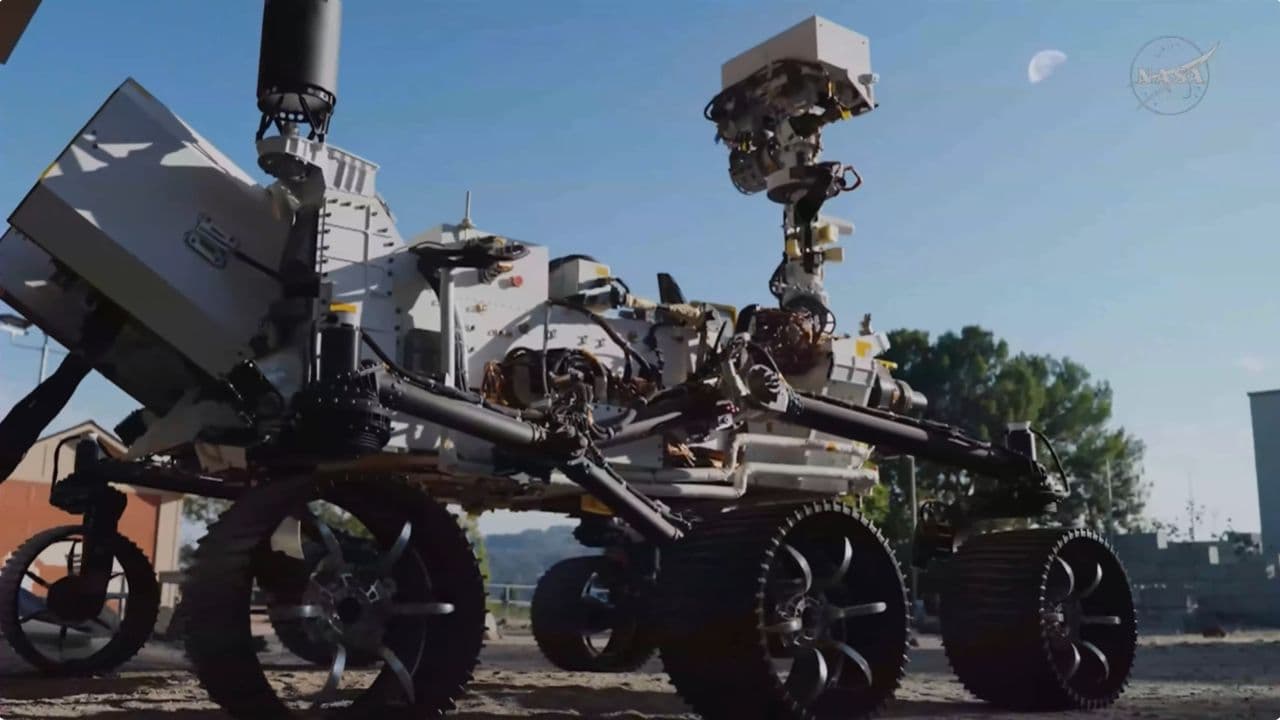
NASA's PROMISE test rover rolls out under the moon at the Jet Propulsion Laboratory in California. (During the second monthly update that NASA has provided for its moon base plans, the agency named Astrobotic, Firefly Aerospace and Intuitive Machines as the providers of four robotic landers that will deliver scientific payloads to the surface of the moon, as NASA tests and expands the technologies needed for a permanent human outpost."This is this drawing on the playbook that worked very well for NASA during the 1960s," NASA Administrator Jared Isaacman said during the livestreamed update, explaining the experiential approach to a crewed lunar return. "We didn't just jump right to Apollo 11."Isaacman also announced the potential repurposing of an engineering development model built to mirror the agency's Perseverance and Curiosity rovers on Mars. "There is another," Isaacman said, quoting Yoda's line from "Star Wars: The Empire Strikes Back."That test rover is called PROMISE, short for "Polar Rover for Observation, Mapping, and In-Situ Exploration" (though it was formerly known as Optimism). PROMISE was developed at NASA's Jet Propulsion Laboratory (JPL) in Southern California, where it has been used as a test platform for fixes or commands that engineers want to try on the ground before permanently sending them to Perseverance and Curiosity. Now, NASA wants to send PROMISE on a mission of its own.Though sending PROMISE to the moon would leave Perseverance and Curiosity — both of which remain active on Mars — without an Earth-based testbed, Isaacman thinks it would be worth it."We've had years now of experience operating the two rovers on the surface of Mars, and we've got this hardware that the taxpayers have invested a lot in," he said. "So the question was posed: 'What if we send it to the moon?'"With a little refurbishment, PROMISE would help advance NASA's lunar plans, Isaacman added. Like Perseverance and Curiosity, the test rover is powered by a radioisotope thermoelectric generator (RTG), which converts heat from naturally decaying radioactive material into electricity. So it wouldn't require sunlight to operate — a real benefit on the moon, where most locations experience long stretches of darkness. (NASA plans to build its Artemis base near the moon's south pole, which is thought to harbor an abundance of water ice and also has a relatively complex lighting environment.)The other robots currently in the works to launch on future missions to the moon, including the landers announced during today's update, are all solar powered. Through 2029, NASA hopes to launch up to 20 such missions as part of the CLPS (Commercial Lunar Payload Services) initiative to support the first phase of the agency's moon base plans, and the landers announced today will be some of the first in that lineup.Already expected this year was Blue Origin's Blue Moon Mark 1 cargo lander. It's slated to launch on the company's New Glenn rocket, which exploded last month during an engine test. That anomaly has complicated the Blue Moon timeline, though Blue Origin CEO Dave Limp has voiced confidence that New Glenn will launch again this year.Two lunar deliveries were awarded to Astrobotic's Griffin 1 lander, one of which will fly Astrolab's FLIP rover the surface of the moon in the second half of 2026. Contracts to Firefly and Intuitive Machines call for the use of their Blue Ghost and Nova C landers, respectively, on CLPS missions in the next few years. Three artist renderings depict commercial lunar landers from Astrobotic, Intuitive Machines, and Firefly on the moon. NASA announced June 30 that the landers will deliver more NASA science investigations and technology demonstrations to the lunar surface for NASA’s Moon Base Prog
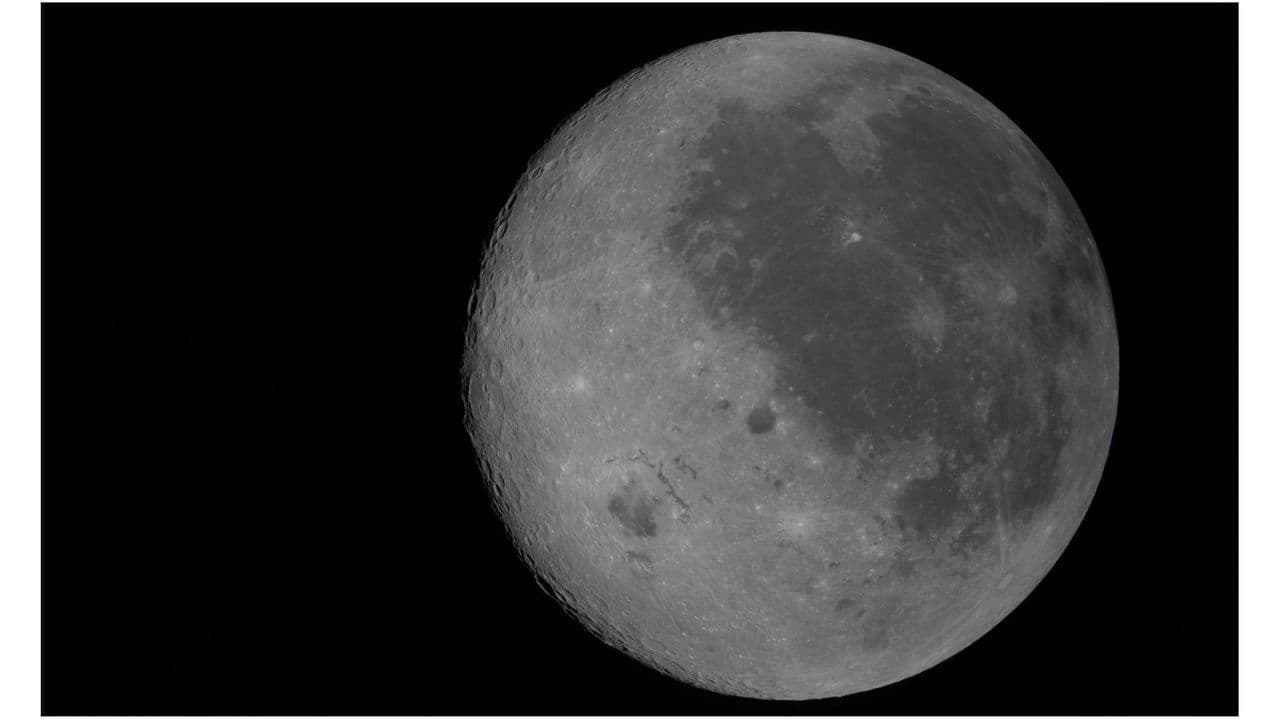
This image of the moon was taken by the Artemis 2 mission during its lunar flyby on April 6, 2026. ( One hand is set to London time, the other to Bristol's — ten minutes behind. The lag is because the sun reaches its peak over the second city a little bit after the first.Of course, when it comes to scheduling anything with bounds beyond one city, having two poses an issue. This is why, in 1840, the British company Great Western Railway imposed what it called "Railway Time" across its whole network of trains, establishing Greenwich Mean Time as the first standardized time. And it's still the time zone used in the U.K. today. However, when several towns refused to adopt the time established by the Royal Observatory in Greenwich, the solution was to use two minute hands instead of one. And so the three-handed clock came to be.That compromise could soon repeat itself in a less likely location: the moon.The U.S. and China, the two largest space powers, disagree on what time it is on the moon. That's a problem because experts say satellites from one country will be unable to coordinate with spacecraft from the other during future space missions — which could risk accidents.The White House has tasked NASA with establishing Coordinated Lunar Time (LTC) as a universal time on the moon, which would set the standard for NASA's LunaNet satellite system. But China has other ideas.China's Chang'e Program, named after the Goddess who flew from the Earth to the moon in Chinese folklore, is the only space program with active lunar relay satellites, Queqiao-1 and Queqiao-2. These relay satellites are the first basis of a moon-wide GPS system meant for future space missions could rely on, meaning they compete with NASA's LunaNet — and because of the way GPS works, these satellites will need a standardized time situation. China is also the only space power to have landed spacecraft on the far side of the moon, where radio signals from Earth are blocked, proving it can coordinate landings without relying on commands from home.In other words, while the U.S. surpasses China in terms of total space missions, the relay satellites could give China the edge when it comes to establishing the first lunar GPS system for future moon landings. China also hasn't agreed to use LTC for this system, raising the prospect that timekeeping standards could diverge.Moon Race 2.0 Last year, experts warned U.S. Senators that China is set to win the moon race — the 21st century race to secure lunar resources establish a human presence on the moon — unless space operations receive more funding. Scientists further pointed out funding issues that could impact U.S. leadership in the lunar arena and wavering political commitment to Gateway, the space station intended to serve the Artemis moon program.Private space-faring companies are also looking to governments to set international standards before spending money on expensive equipment. If China sets the standards before the US, private companies might gear with investments for Chinese customers, giving the country the edge over competitors."If everybody has their own standards, the complication increases for the user and manufacturers," says Bijunath Patla, a theoretical physicist at the National Institute of Standards and Technology (NIST). "So there is a chance of making some mistakes, errors, and interchanging, and then having a mishap."GPS works by having satellites broadcast time signals. If the clocks on the satellites disagree, even by a microsecond, the GPS positioning can shift by hundreds of meters. In an emergency landing, that difference could prove expensive, or even fatal in the case of a human spaceflight mission. A visualization showing some of the main tenets of NASA's Artemis moon program. (
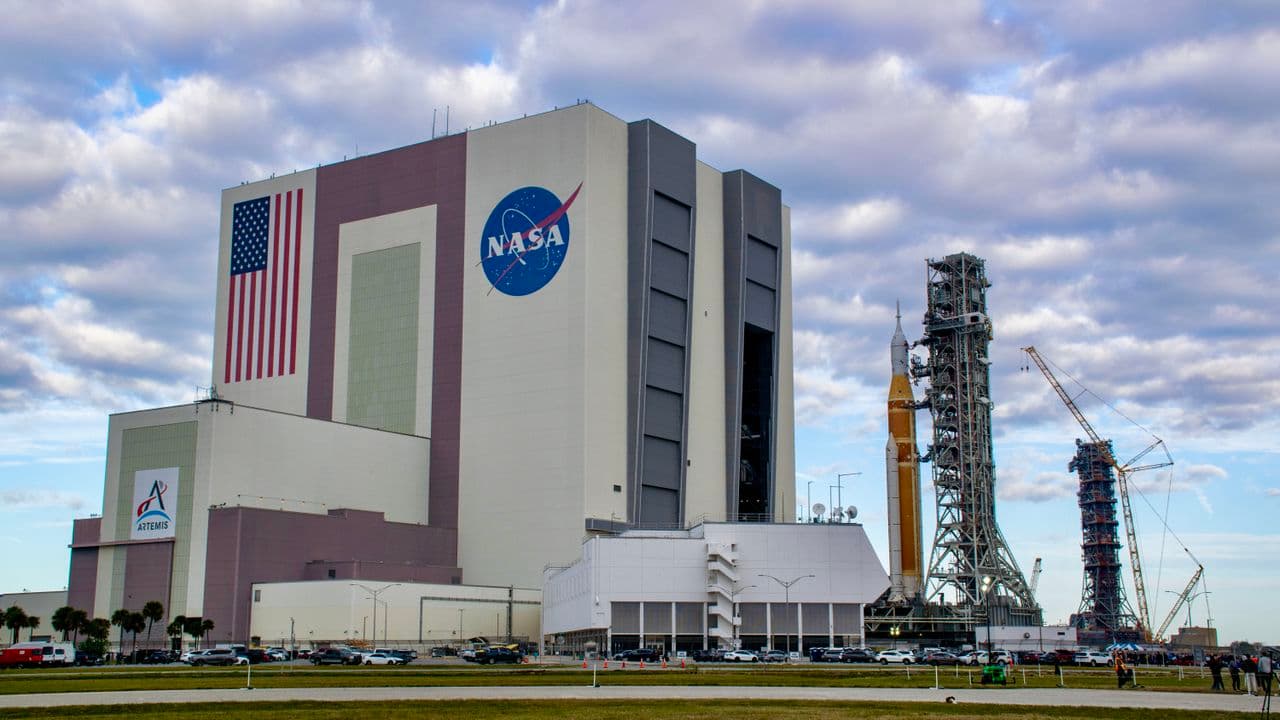
NASA's Artemis 2 Space Launch System rocket rolls out of the Vehicle Assembly Building at the Kennedy Space Center, in Florida, Jan. 17, 2026. (com / Josh Dinner) NASA's plan to return astronauts to the moon and bolster a rapidly growing commercial space industry is facing an infrastructure obstacle.A new report from NASA's Office of Inspector General (OIG) warns that launch facilities at the Kennedy Space Center (KSC) in Florida and Wallops Flight Facility in Virginia are approaching capacity as demand accelerates across the agency and the private sector. Support infrastructure — such as roads, electricity, and gas and fuel pipelines that laid the foundation for KSC's network of launch pads built to support the Apollo program in the 1960s — are being increasingly stretched by the demands of NASA's Artemis missions, SpaceX, Blue Origin, United Launch Alliance (ULA) and other users."Based on current launch projections, Kennedy and Wallops are expected to operate near capacity in the 2028 to 2029 time frame," states the report, which was released on Monday (June 22). Though it credits NASA for already taking steps to address these issues, agency officials estimate it will take at least $1 billion to complete all the necessary upgrades, of which only $250 million was provided as part of NASA's funds allocated in last year's 2025 H.R.1 reconciliation bill.On Florida's Space Coast, the assessment encompasses launch facilities at KSC as well as Cape Canaveral Space Force Station (CCSFS), which saw an increase of NASA-supported launches from 31 in 2020 to 109 in 2025, according to the report. Wallops, where there are fewer and smaller launch pads, doesn't traditionally see as many missions compared to KSC. But the Virginia site has experienced an even sharper jump, percentage-wise, over the same timeframe — from three launches in 2020 to 17 in 2025 (a 467% rise). By 2030, NASA expects traffic at both sites to increase by another 150% or so. And NASA officials told auditors that raw launch counts don't fully capture the strain on infrastructure, because launch campaigns require days or weeks of support activity before liftoff.The report outlines launch infrastructure shortcomings at both facilities, but notes that Wallops' challenges have been partially mitigated by recent upgrades across its seven active launch sites. Wallops generally hosts small and medium-lift launch vehicles, like Northrop Grumman’s Antares rocket and Rocket Lab's Electron, but has taken steps to support Rocket Lab's upcoming Neutron, as well as Firefly Aerospace's Alpha rocket, which is expected to launch from the site sometime this year.The major launch pads in question at KSC and CCSFS include Launch Complex-39A (LC-39A) and LC-39B, used by SpaceX and NASA, respectively; Space Launch Complex-40 (SLC-40), also used by SpaceX; SLC-41, used by ULA's Atlas and Vulcan rockets; and SLC-36, used by Blue Origin's New Glenn rocket.SpaceX has transitioned to launching its Falcon 9 rocket primarily from SLC-40 and has reserved LC-39A for Falcon Heavy launches while construction of the first Florida launch tower for its Starship rocket is underway at the same pad. SpaceX hopes to start launching Starship from this pad before the end of 2026.The company also has plans for a second Space Coast pad for Starship, at SLC-37. Once Starship, which is still under development at SpaceX's Starbase, Texas, facility, becomes fully operational, the company expects up to 44 launches a year from KSC, with an additional 76 launches per year projected from SLC-37 at CCSFS. That equals about one Starship launch every eight days for LC-39A, but a higher cadence will be needed to successfully support NASA's Artemis program. Major launch pads on Florida's Space Coast. (

The Artemis 2 astronauts forged a very strong bond during their time in training and in space. (That's the view of Victor Glover, the NASA astronaut who served as pilot on the Artemis 2 mission around the moon's far side this past April."When you look back on the Apollo missions, there was a lot more competition back in the office. Everybody wanted to be the first, and then everybody wanted to be the next," Glover told Angels Broadcast Television on June 12, shortly before he threw out the first pitch before a baseball game between the Los Angeles Angels and the Tampa Bay Rays."I think our office learned a lot from them," he added. "There are some good things about that. It makes you work really hard, but it also can create some unnecessary conflict. And so my office really wants to support everybody — wants you to be the guy that does it, and somebody just gets picked to do it, and that's OK."Glover and his Artemis 2 crewmates — NASA's Reid Wiseman and Christina Koch and Jeremy Hansen of the Canadian Space Agency — did indeed seem to forge a very strong bond during their training and their time in space.For example, shortly before Artemis 2's April 1 launch, Glover, Koch and Hansen came up with a plan to name a crater on the moon after Wiseman's wife Carroll, who died of cancer in 2020."They said the three of them had talked, and they would like to do this," Wiseman said on April 6, the day Artemis 2 looped around the moon and got farther from Earth than any crewed mission ever had. "That was an emotional moment for me. And I just thought that was just a total treasure, that they had thought through this, and they had offered this."Wiseman, Artemis 2's commander, said he broke down when Hansen radioed mission control with the naming request. In fact, all four astronauts were overcome with emotion at that moment."That was, I think, where the four of us were the most forged, the most bonded, and we came out of that really focused on that day ahead," Wiseman said. This image taken by Buzz Aldrin of the Apollo 11 landing site is the only good picture of mission commander Neil Armstrong on the lunar surface. (For example, multiple people, including Apollo 17 astronaut Gene Cernan, have said that Buzz Aldrin lobbied to be the first person to set foot on the moon, an honor that eventually went to Apollo 11 crewmate Neil Armstrong. (Aldrin has disputed this version of events, saying he didn't want to be the first-ever moonwalker.)There are other big differences between Artemis and Apollo, of course. Apollo was designed to get people to the moon before the Soviet Union could do so, a goal that was regarded as a national security imperative because it would demonstrate American technological supremacy. As a result of this need for speed, Apollo did not build anything permanent on the moon, leaving behind only flags, footprints and defunct spacecraft.Artemis, on the other hand, aims to establish a permanent and sustainable presence on Earth's nearest neighbor. If all goes to plan, NASA will build one or more moon bases near the lunar south pole, then use the skills and knowledge gained from this endeavor to get astronauts even farther afield — to Mars. Michael Wall is the Spaceflight and Tech Editor for Space.com and joined the team in 2010. He primarily covers human and robotic spaceflight, military space, and exoplanets, but has been known to dabble in the space art beat. His book about the search for alien life, "Out There," was published on Nov. 13, 2018. Before becoming a science writer, Michael worked as a herpetologist and wildlife biologist. He has a Ph.D. in evolutionary biology from the University of Sydney, A
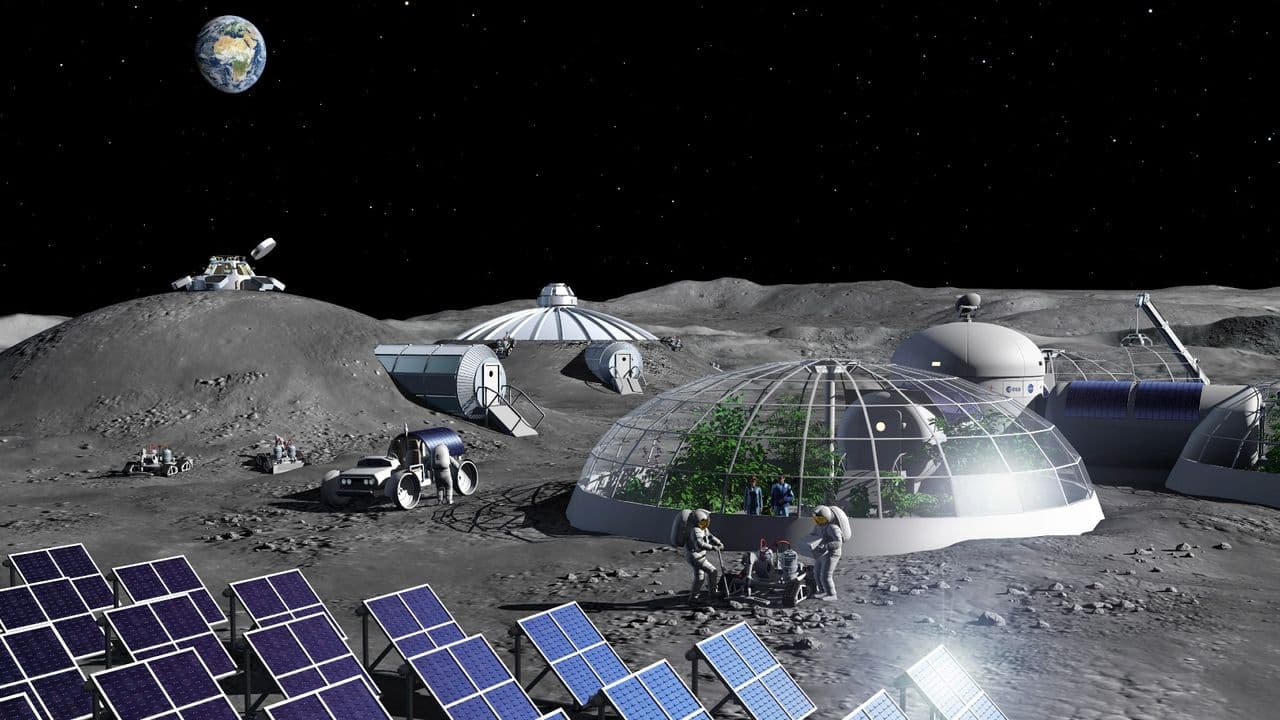
A notional illustration of a moon base. (But now, as humanity prepares to put in place a "sustained presence" on the moon, how do we guarantee the safety and integrity of structures built in an environment for which no such tradition exists?At the 26th Space Resources Roundtable held June 2-5 on the campus of the Colorado School of Mines, one expert says what's needed is a lunar building code, the development of specific design criteria for the moon.What's shaking? Both NASA and China's space agency are planning to build habitats, landing pads, equipment shelters, and tall towers on the moon. But all that construction could be off to a shaky start, suggests Nerma Caluk, an engineer and lunar specialist for Skidmore, Owings & Merrill, an architecture and structural engineering firm in San Francisco, California.Caluk said there's a need to leverage terrestrial building experiences."On Earth, structural systems rely on strong gravitational acceleration to resist seismic lateral forces through both foundation friction and overturning stability. However, on the moon, the gravitational field strength is reduced to just one-sixth of Earth's surface gravity," Caluk told Space.com.Because seismic inertial forces are governed purely by a structure's mass rather than its weight, the lateral demand on a structure remains fully active while its gravitational restoring capacity is substantially diminished, Caluk added."Low-profile surface structures risk translational sliding across poorly characterized regolith interfaces, while taller vertical structures face significant overturning vulnerability, as the moon provides only a fraction of the gravitational restoring moment available in a terrestrial seismic environment," said Caluk.Here on Earth, structural engineers routinely design typical building systems to yield, crack, and sustain permanent inelastic deformation during a design-level seismic event.They intentionally leverage "inelastic energy dissipation" as the primary mechanism for managing seismic demand, Caluk said. But this design philosophy is fundamentally incompatible with a crewed lunar environment, she said.Take for example a hatch distortion or pressure seal misalignment. They constitute a mission-critical failure, and any structural breach risks catastrophic depressurization, said Caluk. An artist's rendering of a NASA Artemis moon base with development underway. (The group's technical committee on space engineering and construction has crafted "Infrastructure Engineering, Design, Analysis, and Construction (LIEDAC) guidelines" for the moon, Caluk said, to tackle seismic issues imposed by moonquakes.The LIEDAC guidelines, Caluk said, characterize the unique lunar hazard environment, classify operational consequences through a risk-categorization hierarchy, and establish target performance objectives "so that safe commercial development can proceed on a defensible technical basis."Inherent uncertaintiesCaluk also outlined a "Response Spectrum Analysis" supported by NASA Small Business Technology Transfer funding that looked at the inherent uncertainties of the lunar subsurface.The output of the analysis has developed criteria emphasizing the necessity of a local geotechnical site investigation for all structures, regardless of their seismic design category."These investigations are critical for identifying and mitigating risks such as seismic slope stability, seismically induced total and differential settlement, and other geotechnical hazards that may be triggered or amplified by moonquake groun
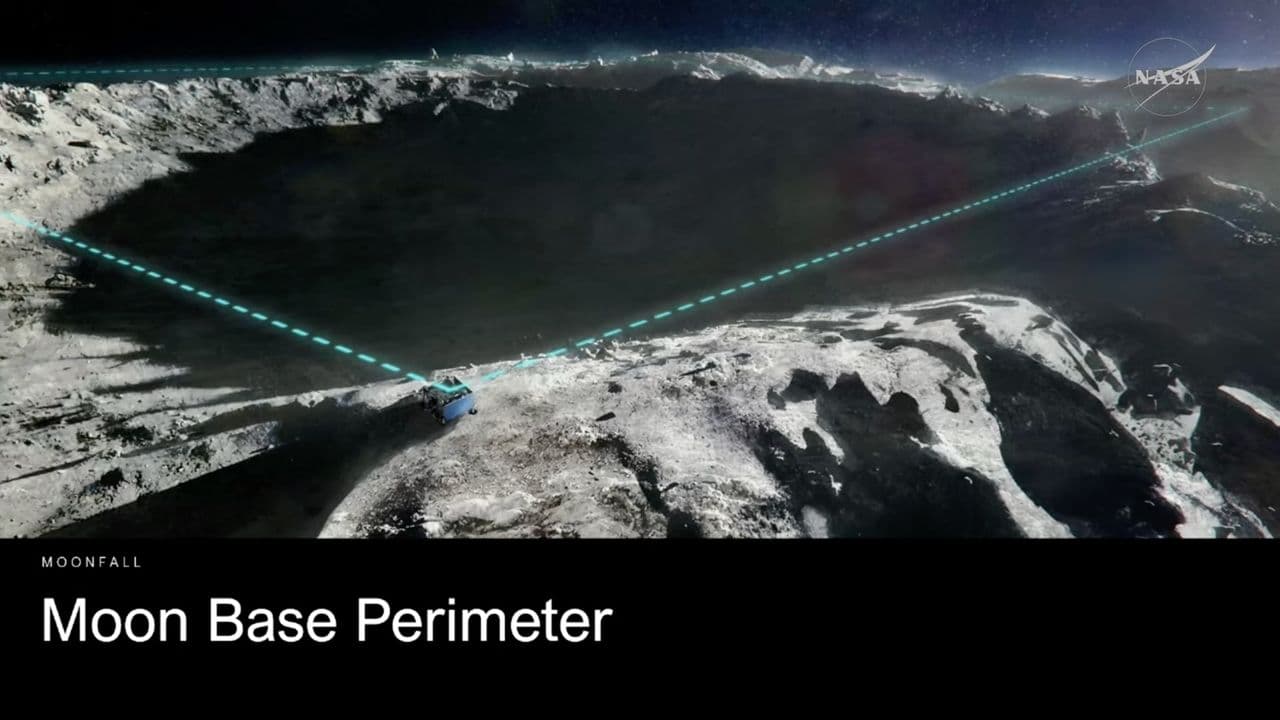
NASA is definitely thinking big on the moon.The U.S. space agency plans to build a crewed lunar base over the next decade or so via its Artemis program — and we just got a sense of that project's impressive scope."We envision the moon base to be hundreds of square miles, with different assets all building up to the objective of permanent lunar presence on the moon," Carlos García-Galán, the manager of NASA's Moon Base program at the agency's headquarters in Washington, D.C., said during a press conference Tuesday (May 26). This NASA chart outlines the three major steps of NASA's Moon Base program from 2026 through 2032, starting with unpressurized rovers and sorties, and ending with a permanent lunar base. ( This precious resource has been accumulating for billions of years on the permanently shadowed floors of craters in the region, scientists say.NASA didn't go into the moon base-planning process with a big footprint as a priority. Rather, it emerged naturally, as all of the envisioned elements started coming together in planners' heads."There's no one spot that covers all the science, all the technology, all the habitation needs of the surface, and even within the local area, you have to consider the terrain," NASA's Nujoud Merancy, chief architect of the Moon Base program, said during today's briefing. Artist's impression of a NASA MoonFall drone helping to mark the perimeter of the agency's planned lunar base. ( "Power systems — nuclear systems — need to be a kilometer or more away for the radiation protection, so all of these things, when you start putting them together, end up sprawling a little bit more like a city as you start building it out."And scientists and mission planners still don't know a lot about the lunar south pole, which is another reason for a settlement there to cover a lot of ground, according to García-Galán."We're going to want to explore different sites to really maximize the mix of scientific objectives and viability of a permanent presence," he said.NASA plans to reduce the uncertainty via the use of MoonFall drones — small, hopping robots that will scout out the south polar region ahead of moon base construction. The first MoonFall batch, a set of three or four spacecraft, will launch to the moon in 2028 aboard a lander built by Firefly Aerospace, NASA announced today. (Firefly nabbed a $75 million contract for the mission, the company said.)Those drones, or others like it, could also help mark the moon base's borders, said García-Galán."We're going to be able to basically put them at the corners of the areas where we think we have either key scientific objectives or we want to build up the moon base," he said.China plans to build a base on the moon in the coming years as well (its first astronaut landing is aimed for 2030), and U.S. officials have repeatedly stressed the importance of getting the American one up and running first. The U.S. wants to be the one establishing norms of responsible behavior on Earth's nearest neighbor, the argument goes.So, during today's press conference, Ars Technica's Eric Berger asked García-Galán and NASA Administrator Jared Isaacman, who also participated in the event, if the MoonFall drones could help delineate a keep-out zone of sorts."I think it's important for us to get there first," Isaacman said. "I think the idea that there are areas of great interest on the lunar surface — we do want to get there and explore them, and we also obviously want to be very mindful of the Outer Space Treaty, so that we are respectful of other nations that are putting assets on the on the lunar surface. We would expect that to be reciprocal." From left to right: Models of the Blue Origin Blue Moon Mark 1 lander,

( The Artemis 2 mission just blasted four astronauts in a loop around the moon, taking humanity one step closer to once again setting foot on our natural satellite.But, ironically, NASA's achievement doesn't exist in a vacuum, and it’s time for a reality check. As rocket launches become more common, and the goal shifts away from exploration for the good of humanity towards exploitation for the profit of billionaires, interest and excitement around spaceflight is waning.That's the cold future that the upcoming space game "Lunar Strike" presents. Cognition, the developers behind the game, gave us a sneak peek into the lore and backstory of their upcoming narrative-driven adventure, which sees you step into the boots of a junior archivist sent to document humanity's final lunar settlement. ( Global warming led to international tensions, and a mixture of religious fanaticism and failures in governance gave way to nuclear annihilation. Suffice to say, this string of disasters left humanity risk-averse. As an in-universe essay notes, "humanity recoiled and retrenched and withdrew and atrophied".It's a strangely pragmatic look forward that we rarely see in games. Sure, sci-fi can be bleak — there's no end to the cosmic horrors and savage alien races that game developers can conjure up — but that almost always comes as a result of humanity's success in space. We get to reach for the stars, develop faster-than-light travel, and explore the cosmos … and then run into extraterrestrial nasties.Despite being set on the moon, Lunar Strike offers problems entirely of our own Earthly creation, and the only solutions are those within our current understanding of science. Given that it's set nearly 100 years in the future, we've made some progress, though, including a lunar base at the moon's south pole. ( "It offers access to some of the moon's oldest terrain, as well as cold, shadowed regions that may contain water and other compounds," Artemis lunar science lead Sarah Noble said in a 2024 press release.With a century to build on our real plans, this settlement will be much more than a few prefabricated habitats, though, with the developers striving to make it feel like a real, lived-in space. We often romanticize our future amongst the stars, but Lunar Strike aims to put the reality of that struggle at the forefront. As humanity's interest in lunar exploration has faded, the moon base has succumbed to the ravages of time. Parts have to be repaired and reused. Maintenance and vigilance are a daily reality for the residents. Some people spend their entire lives on the moon; some people are born on the moon, spending their entire lives inside pressurised corridors, under artificial lights.It's a far cry from the pomp and circumstance of the Artemis 2 mission and NASA's dreams for sustained, peaceful lunar habitation under the Artemis Accords. A world where our past accomplishments and discoveries are being forgotten, cast aside as survival and pragmatism become the priority. But out of this bleak future, a small light emerges in the form of the ARCK project. ( As the developer puts it, "Its mission is to collect and preserve scientific research, technical documentation, cultural records, and traces of everyday human life - not as a retrospective archive, but as a living system that must be maintained, curated, and defended."And that's whe

NASA's Artemis 3 mission will practice rendezvous and docking operations in Earth orbit, paving the way for a planned moon landing on Artemis 4. (The agency dropped a few details on Wednesday (May 13) about Artemis 3, a crewed mission that will test rendezvous and docking operations with one or more lunar landers close to home."While this is a mission to Earth orbit, it is an important stepping stone to successfully landing on the moon with Artemis 4," Jeremy Parsons, Moon to Mars acting assistant deputy administrator at NASA’s Exploration Systems Development Mission Directorate in Washington, D.C., said in a statement on Wednesday. "Artemis 3 is one of the most highly complex missions NASA has undertaken."We already knew the broad outlines of Artemis 3: It will use NASA's Space Launch System (SLS) rocket to send four astronauts to orbit aboard the Orion spacecraft. Orion will then rendezvous and dock with one or both of the Artemis program's privately developed lunar landers — SpaceX's Starship and Blue Origin's Blue Moon.This architecture was announced in late February. It's a big departure from the original Artemis 3 plan, which would have used one of the landers to put astronauts down near the moon's south pole.NASA is still working to define the details of Artemis 3, but the agency has made some progress, as Wednesday's announcement shows. For example, NASA revealed that the astronauts will spend more time aboard Orion on Artemis 3 than they did on Artemis 2, "further advancing the evaluation of life support systems."Artemis 2, which sent four astronauts on an epic journey around the moon, lasted about 10 days, launching this past April 1 and splashing down on April 10. Wednesday's statement does not give an estimate for how long Artemis 3 will last.NASA also revealed on Wednesday that the Artemis 3 SLS will employ a dummy "spacer" rather than a functional upper stage."The spacer will maintain the same overall dimensions and interface connection points as the upper stage between the Orion stage adapter and launch vehicle stage adapter," NASA officials wrote in the statement, noting that spacer "design and fabrication activities" are underway at Marshall Space Flight Center in Alabama.This development makes a certain amount of cost-saving sense. The SLS upper stage (known as the interim cryogenic propulsion stage, or ICPS), propels Orion out of Earth orbit and toward the moon. And Artemis 3 isn't going to the moon."After the rocket delivers Orion to orbit, the spacecraft's European-built service module will provide propulsion to circularize Orion's orbit around the planet in low Earth orbit," NASA officials wrote. "This orbit increases overall mission success by allowing more launch opportunities for each element as compared to a lunar mission — SLS carrying Orion and its crew, SpaceX's Starship human landing system pathfinder, and Blue Origin's Blue Moon Mark 2 human landing system pathfinder."There's also a bit of news here: Most of us had assumed that Artemis 3 will head to low Earth orbit (as opposed to more distant paths around our planet), but NASA had not explicitly confirmed that until now. The Artemis 3 Orion service module is pictured ahead of acoustic testing in NASA's Kennedy Space Center Operations and Checkout Facility on May 7, 2026. ("We still don't know which lander will fly on the mission, Starship or Blue Moon (or perhaps both). There are plenty of other specifics that still need to be worked out as well, including Artemis 3's duration, which astronauts will fly on it, what science experiments they might conduct and how the mission will test the new Artemis spacesuits, which are being bui
The Blue Moon lander training mockup stands inside Space Vehicle Mockup Facility in Building 9 at NASA's Johnson Space Center. (com / Josh Dinner) NASA's Orion space capsule training simulator is located inside Building 9 at the Johnson Space Center in Houston. It's a full-scale, high-fidelity model of the real thing, and where the Artemis 2 astronauts spent more than a year preparing for their recent mission around the moon.For a long time, the Orion simulator sat alone in its own corner, away from the group of International Space Station training modules lined up inside the Space Vehicle Mockup Facility (SVMF). But now, Orion has a neighbor.With Blue Origin's mockup now assembled at JSC, astronauts can now seamlessly transition from training inside Orion to training in Blue Moon as they prepare for the Artemis missions ahead. The next mission, Artemis 3, is dependent on at least one lunar lander being ready to fly before the mission can launch.Blue Moon is one of two lunar landers NASA has chosen through the agency's Human Landing System (HLS) contracts, the other being SpaceX's Starship, and is a critical component of NASA's Artemis program that aims to establish a permanent presence on the moon's surface. Comparison of the Apollo Lunar Module, Blue Origin's Blue Moon, and SpaceX's Starship. ( Astronauts wearing Artemis spacesuit prototypes from Axiom Space have had the opportunity to test some of Starship's early cabin designs, as well as the spacecraft's elevator that will be used to lower crews down the roughly 170 feet (52 meters) from Starship's cabin section to its base, but those tests have so far been limited to SpaceX's own facilities.For comparison, the Blue Moon MK 2 will be about 52 feet (16 meters) tall, with the crew cabin located near the base. The full-scale prototype of the crew cabin of Blue Origin’s Blue Moon Mark 2 crew lander is over 15 feet (5 meters) tall. Read how we will be using this crew cabin for simulations to prepare for future Artemis missions >> https://t.co/Lo5tcckxUT pic.twitter.com/2OvYoXqyRZMay 8, 2026Artemis 3 is scheduled for late 2027, according to NASA Administrator Jared Isaacman, who based the timetable on Blue Origin's and SpaceX's estimations of the earliest completion for their respective landers. NASA has indicated a willingness to fly with either or both vehicles, depending on their readiness.The mission will fly four astronauts aboard Orion into low Earth orbit, where the spacecraft will rendezvous with the lunar lander vehicles to practice docking procedures and verify their life support and communications systems. Artemis 3 astronauts may also have the chance to don Axiom's new spacesuits, but those have also faced significant delays.If Artemis 3 goes according to plan, and the landers and spacesuits are ready in time, NASA is targeting 2028 for a moon landing on Artemis 4, and possibly again on Artemis 5 that same year. But the landers have a long way to go before NASA will qualify either to deliver astronauts to the lunar surface.The Artemis moon landers will need to touch down safely on the moon, as well as deliver crews back to lunar orbit for transfer back aboard Orion. That's different from how Apollo astronauts performed lunar landings, flying aboard a two-stage vehicle that left half a spacecraft behind on the surface in order to shed the necessary weight to make it back to


Discussion (0)