
Loading dispatches...
← Return to NewsroomPolitics
Field supervision, correcting ‘discrepancies’ are normal practice in statistical exercise, says RG&CCI Director
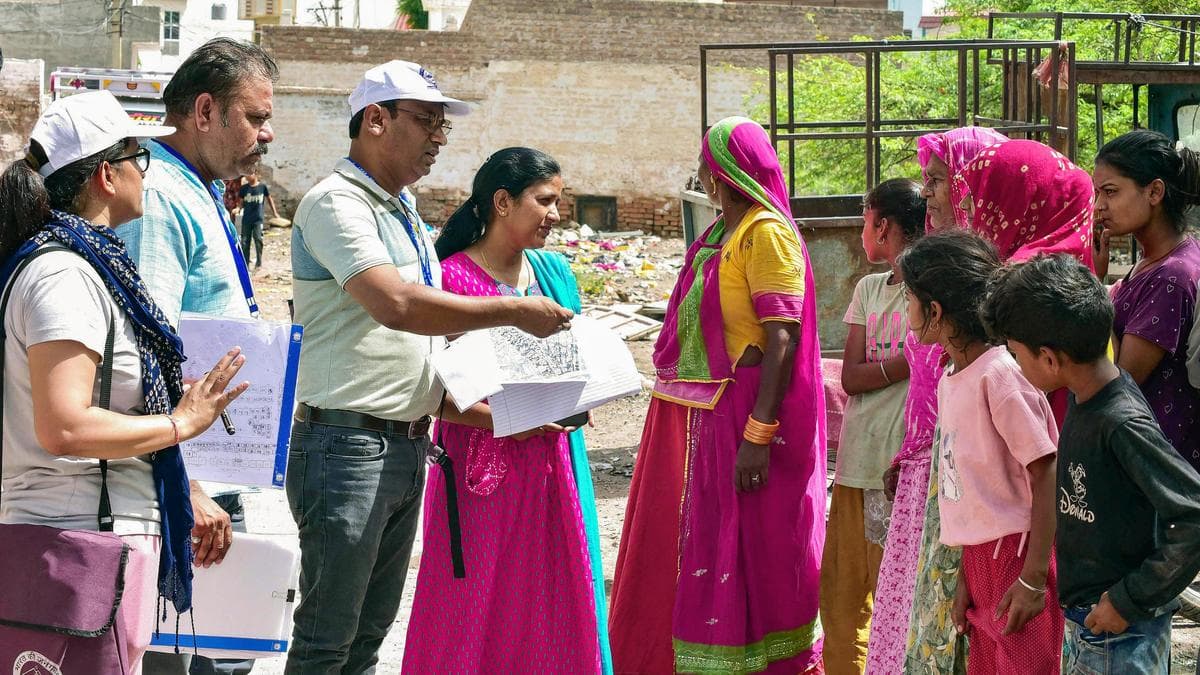
Government employees conduct a door-to-door survey for Census 2027. File | Swadha Dev Singh, Director, RG&CCI, said in an e-mail that primarily, the enumerators collect data through house-to-house visits. “Supervisors and other senior Census functionaries conduct field inspections to see that enumerators have properly understood the concepts and correctly recorded data from the respondents. In case of any discrepancy, it is pointed out to enumerator for suitable modification. This is a normal practice in any administrative statistical exercise, which is followed in Census operations as well,” she said in response to a story published on June 4 — “Re-check ordered over ‘discrepancies’ in Census 2027 data”.Ms. Singh added that “there have been some attempts to misrepresent this normal exercise as data tampering, which is regrettable and factually inaccurate”.The Hindu spoke with enumerators in Uttar Pradesh and Rajasthan who said that they were being asked to revisit households and correct the data “discrepancies”, particularly on issues such as open defecation and household access to electricity or cooking gas connections.This is the first digital Census and enumerators, mostly government school teachers, are keying in the data through mobile Apps on their personal phones. The process can be monitored in real time by their superior officers.On May 25, CG Box, a Raipur-based digital media platform, published a report, which said that school teachers in Chhattisgarh were being asked to edit the entries on open defecation and LPG connection after they had completed the survey of a household. Devesh Tiwari, who runs CG Box, said that several teachers had approached him stating they were being asked to edit the entries at their own end, even though the option is available with the supervisor and charge officers. Published - June 05, 2026 10:23 pm IST

The first phase of the Census 2027, which is to be conducted in two phases, would be held from July 17 to August 31, said Villupuram District Collector Sheik Abdul Rahman on Friday.According to the Collector, preparatory work for Census 2027 is currently under way in the district. As part of the first phase, the House Listing and Housing Census will be conducted from July 17 to August 31. The Census 2027 in the State will be carried out entirely through modern digital technology, using online data entry and uploading systems.The self-enumeration feature, which is also being introduced for the first time, would enable the households to have the option to submit information via a web-portal, which would then be validated during house-to-house visit by the enumerators.In the second phase, population enumeration would be carried out by the enumerators. Published - May 22, 2026 08:55 pm IST
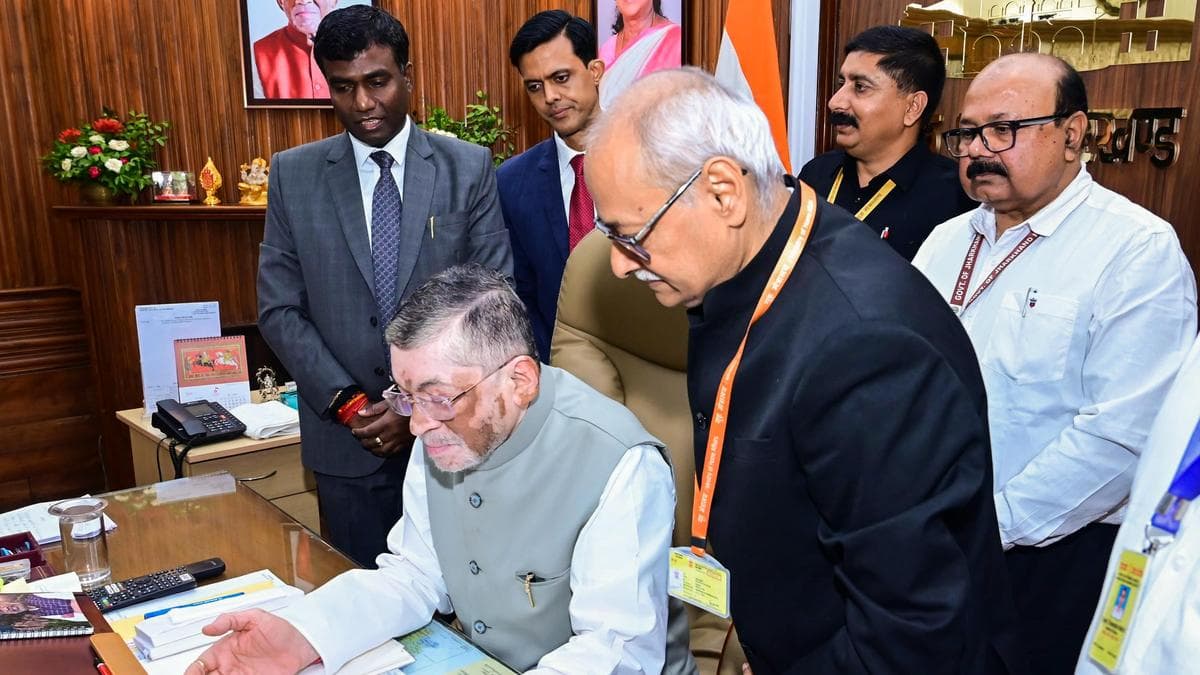
Jharkhand Governor Santosh Kumar Gangwar participates in the Census 2027 self-enumeration drive, in Ranchi. File | The exercise will run till June 14, 2026, during which trained enumerators will undertake house-to-house visits, he said.“The 2027 Census exercise in the State is being carried out across 24 districts, 51 urban local bodies, and 264 blocks, covering a total of 32,459 villages,” a statement from Jharkhand's Directorate of Census Operations (DCO) said.“Around 76,000 government officers and employees, including 1,276 field trainers, 61,042 enumerators, and 10,386 supervisors, have been deployed in the State,” it stated.“For the first two-three days, the enumerators and supervisors will prepare a layout map of their designated areas and houses. After that, they will begin the work of field enumeration,” Jharkhand's Directorate of Census Operations Director Prabhat Kumar told PTI.The first phase of the enumeration exercise will cover as many as 33 questions related to the condition of houses, family details, facilities available to the family, and assets owned by them.Before the field visits, a self-enumeration exercise, allowing people to provide their household details digitally, was carried out between May 1 and May 15.“Till May 15, 1,88,743 families in the State have completed self-enumeration. Among the 24 districts, the top three positions are held by Ranchi with 50,569 families, East Singhbhum with 20,384 families and Hazaribagh with 11,914 families,” the release stated.“Basic information such as materials used in flooring, walls and roof of the house, ownership status, number of rooms, number of married couples, water and energy sources, toilet access, fuel used for cooking, and assets like a radio, television, internet facility, mobile phone, two-wheeler, and car used by the family will be collected during the exercise,” it added.“The second phase of the census will be carried out from February 9 to February 28, 2027,” Mr. Kumar said.“The population enumeration will provide statistics on various demographic, socio-cultural, and economic parameters of each family member,” another official said. Published - May 16, 2026 01:23 pm IST
In one of the first such instances, the Haryana administration has recommended the registration of a first information report (FIR) against two government school staff for alleged negligence in Census-related work and for obstructing government duties. The Census Act allows for up to three years’ imprisonment for such offences.The criminal action comes even as Census enumerators, mostly government school teachers, complained of hostile behaviour and denial of entry by residents of highrise apartment buildings and residents welfare associations (RWAs).On Thursday (May 7, 2026), Gurugram Municipal Corporation Joint Commissioner and Census Nodal Officer Punit Kumar said that Census enumerators had been denied entry to several housing societies despite showing their identity cards. He said he has informed all RWAs and managements of housing societies that the government has deputed officers and enumerators for Census work and directed that they be allowed to carry out their work.“Several enumerators had this complaint that gated societies were not letting them enter to do the Census related field work. Following this, I have written to all RWAs that they should be allowed entry in the societies, after verifying the identity cards and authorisation letter. The Census work is being carried out in public interest,” Mr. Kumar told The Hindu.Awareness campaignsCensus officials are conducting public outreach campaigns on social media to inform people that their data will be kept confidential and no resident will lose access to government schemes based on the enumeration data.Registrar General of India Mritunjay Kumar Narayan flagged off six awareness vans on Thursday as part of the Census 2027 public outreach campaign in Delhi for the ongoing first phase of Census 2027, i.e., the Houselisting and Housing Census (HLO). These vans will travel across Delhi, carrying messages on Census participation, the self-enumeration facility, key features of Census 2027, and the importance of public cooperation with enumerators during field visits, a government statement said.The campaign aims to ensure wider dissemination of information, enhance public awareness, and facilitate the smooth conduct of Census operations in the National Capital Territory.Penalty for obstructionMr. Narayan wrote to States on March 17 informing them that any Census official who refuses to perform their duty or damages and destroys any Census document will face up to three years of imprisonment.Mr. Kumar said that under Section 11 of the Census Act, 1948, if any person shows negligence in the work assigned to them, refuses to perform the work, or obstructs the work of a census officer, there is a provision for punishment of up to three years’ imprisonment.He said that a supervisor appointed for Census work had reported that staff from the GMPS School, Garhi Harsaru, and OMP School, Sector-1, Manesar were appointed as enumerators. “Despite being informed several times, both individuals are being negligent in their duties and are refusing to carry out Census work. Their duty has been assigned within the jurisdiction of the Municipal Corporation, and due to their conduct, an important task like the census is being obstructed. There are others also who are refusing to do the work, action will be initiated against them too,” Mr. Kumar said.First phase ongoingThe first phase of the Census began on April 1 and will conclude by September 30 across the country. Around 30 lakh enumerators are to be engaged. About 92 lakh households have successfully completed self-enumeration across 23 States and Union Territories through the official portal so far, the statement added.This is the first digital Census and the first to enumerate caste and allow self enumeration. The last Population Census was conducted in 2011. Caste will be counted in the second phase in February 2027, except in Ladakh and the snow-bound areas of Jammu and Kashmir, Uttarakhand and Himachal Pradesh, where both the phas

Discussion (0)