
Loading dispatches...
← Return to NewsroomPolitics
NIT-C report on Brahmpuram legacy waste likely on May 11

The kochi Corporation has so far spent ₹118.30 crore on biomining. | The agency, initially engaged by the previous Left Democratic Front (LDF) council, was reappointed by the newly elected United Democratic Front (UDF) governing committee earlier this year. In its earlier assessment during the LDF tenure, the NIT-C had found an additional 1.46 lakh tonnes of legacy waste over and above the 7 lakh tonnes initially calculated for biomining.The NIT-C was re-engaged after the Opposition LDF contested Mayor V.K. Minimol’s statement in January, following her visit to Brahmapuram, that 2.50 lakh tonnes of waste remained to be bio-mined. The Opposition alleged that the figure included scientifically capped waste, which does not require biomining, and questioned how the estimate was reached when officials had confirmed that only 1.43 lakh tonnes remained.Since being reappointed, the NIT-C has conducted a drone survey of the legacy waste site. “We are expecting the report on Monday. It will be placed before the council meeting scheduled for May 15,” said Ms. Minimol.Just before the Assembly election notification, the UDF-led Corporation council granted Bhumi Green Energy an extension to complete biomining of the remaining waste. The council claimed it had managed to reduce the per-tonne rate of biomining by ₹18 from the previously fixed ₹1,690 through intense negotiations, saving the Corporation around ₹60 lakh.The Opposition LDF, however, alleged that norms were violated by assigning work without tender and council approval. It contested the extension agreement reached even before receiving the NIT-C’s report. LDF parliamentary party leader V.A. Sreejith warned of stiff protest when the Mayor’s advance approval comes before the council for ratification.Ms. Minimol defended the extension, citing April-May as the most suitable period for biomining, since the tonnage of waste would increase during the monsoon. She added that the Corporation would pay the bill for the additional 1.46 lakh tonnes bio-mined by the company after securing council approval through a supplementary agenda.Biomining, originally scheduled for completion within 16 months, had earlier been given a nine-month extension due to weather-related challenges and financial constraints. The Corporation has so far spent ₹118.30 crore on biomining. Published - May 09, 2026 07:57 pm IST
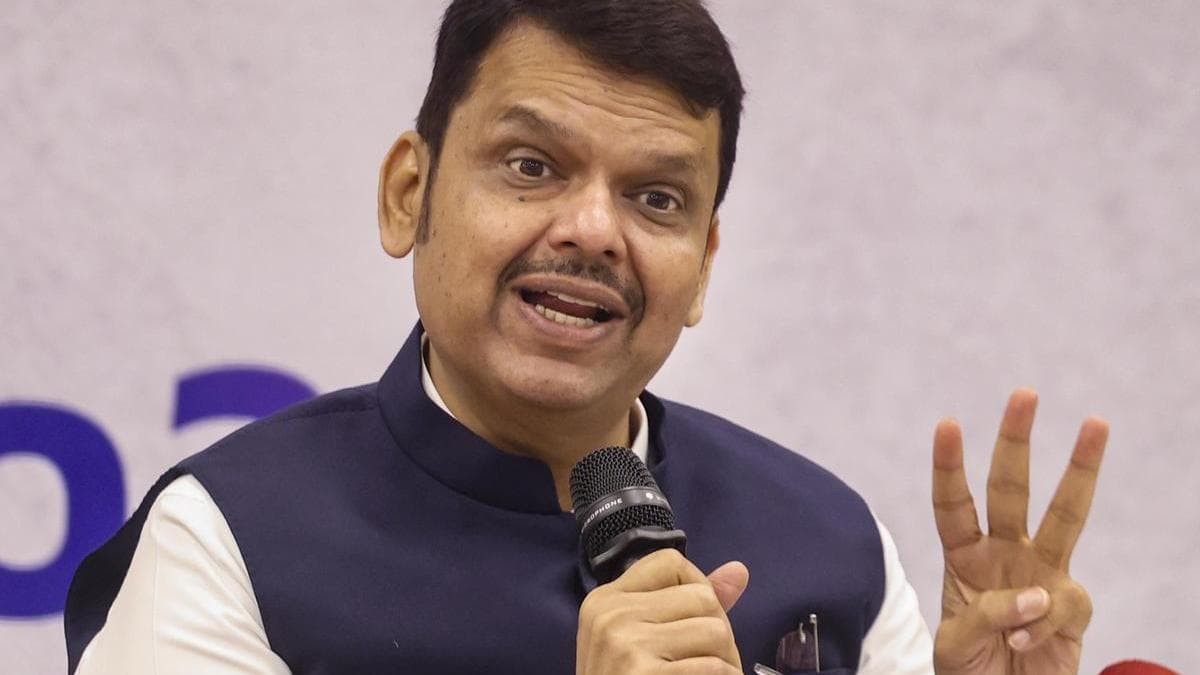
Maharashtra Chief Minister Devendra Fadnavis. | 0 and prioritise measures to improve groundwater levels.Chief Minister Devendra Fadnavis reviewed the functioning of the Soil and Water Conservation Department and directed officials to submit plans under the Jalyukt Shivar Abhiyan 2.0 before May 15. Also Read : High heat: On India and warming“The administration should consider the urgency of repair works in the villages and [they are] to be executed immediately. The work should be accelerated by giving revised plans to the districts, whereas the work in the villages under Jalyukt Shivar should be prioritised,” Mr. Fadnavis said.He also referred to meetings with Union Ministers to secure increased funds under the Pradhan Mantri Krishi Sinchai Yojana.According to the Soil and Water Conservation Department, 1,44,697 works have been approved under the Jalyukt Shivar Abhiyan 2.0, of which 1,10,120 have been completed. The remaining works are in progress and are planned to be completed at the earliest.During the meeting, Soil and Water Conservation Minister Sanjay Rathod, Secretary of the Soil and Water Conservation Department Jitendra Papalkar, Principal Secretary to the Chief Minister Dr. Shrikar Pardeshi, Water Adviser to the Chief Minister Shriram Vedire, Officer on Special Duty Priya Khan, Soil and Water Conservation Commissioner Anjali Ramesh, and Maharashtra Water Conservation Corporation Managing Director Vijay Devraj were present. Also Read : District cooling as a game-changing climate solutionMr. Rathod said, “The work will now accelerate with our blueprint. The guidelines have also been prepared to ensure that the works are completed as per the original plan. However, permissions are required to remove encroachments at the Malgujari lakes.”The work to conduct on-site verification of soil and water conservation projects is under way. So far, out of 15,15,000 works, 12,27,000 structures have been verified on-site. As many as 477.73 lakh cubic metres of silt have been removed from 1,435 reservoirs. As a result, water storage of 30,835 has been restored and 73,417 acres of land has become fertile. Also Read : Most models predict El Nino may last until January 2027: IMDMr. Rathod said district-wise desilting work had been planned to be completed by June 15, according to the Soil and Water Conservation Department.Under the Pradhan Mantri Krishi Sinchai Yojana, 22,000 works have been completed and geo-tagged. Further, 57 Amrit Sarovars are being constructed under the watershed development component, and 31 of them are planned to be completed by June 15.He also said that under the department’s five-year master plan, 1,21,583 works have been proposed across 27,942 micro-watersheds in the State.According to the Chief Minister’s Office, the Centre’s Viksit Bharat Guarantee for Rozgar and Ajeevika Mission (VB-GRAM) scheme should be utilised for carrying out these works. It also said bamboo plantation should be considered along drains during nala deepening works to prevent silt accumulation.The government has also directed officials to complete repair works of the Malgujari lakes in Vidarbha by June. Published - May 09, 2026 03:14 pm IST
Mountains of construction and demolition waste rise beside Hyderabad’s IT corridor near IKEA in Gachibowli, where officials estimate nearly 15 lakh tonnes of debris has accumulated over the years. Photo: Special Arrangement On the road leading to Hyderabad’s gleaming IT corridor near IKEA in Gachibowli, the skyline abruptly changes. Glass office towers and premium commercial complexes give way to mountains of debris. Piles of broken concrete, soil and construction waste now rise to the height of six- to seven-storey buildings, forming what has easily become one of the city’s largest urban dumping crises.For thousands who pass through the stretch every day, the heaps have become part of the landscape. But officials now estimate that nearly 15 lakh tonnes of construction and demolition (C&D) waste may have accumulated in the area over the years, so much that even under ideal conditions, clearing it could take more than a year.The problem is no longer just about waste. It has evolved into a complicated question involving logistics, cost, environmental sustainability, accountability and an unresolved land dispute that continues to delay long-term action.Cyberabad Municipal Corporation (CMC) Commissioner G. Srijana said authorities are currently weighing two broad approaches to tackle the issue, each carrying its own operational and financial challenges. A massive heap of construction and demolition waste stands amid commercial towers near Hyderabad’s IT corridor in Gachibowli, highlighting the scale of the city’s growing urban waste challenge. Photo: Special Arrangement One option is to process the debris directly at the site. Construction waste, if systematically handled, can be converted into reusable materials such as manufactured sand and other aggregates that can be fed back into the construction ecosystem. “This approach is environmentally sustainable and reduces the need to identify fresh dumping locations elsewhere in the city,” she said.However, the process is slow. Given the volume of waste already accumulated, on-site processing would require sustained operations over several years along with significant infrastructure and machinery support.The second option is to remove the debris entirely from the location. On paper, that appears to be the faster solution. In practice, it presents a logistical challenge of an entirely different scale. “Transporting thousands of tonnes of debris every day would require a constant movement of heavy vehicles through one of Hyderabad’s busiest traffic corridors,” said Ms. Srijana adding that transportation operations are restricted by road conditions, congestion and limited operational windows, making round-the-clock clearance virtually impossible. Cyberabad Municipal Corporation (CMC) Commissioner G. Srijana inspecting the debris site in Gachibowli. Photo: Special Arrangement “We estimate that addressing the issue could require an expenditure ranging between ₹70 crore and ₹90 crore. What looks like a dumping ground is actually a highly complex urban management issue involving environmental concerns, infrastructure limitations and legal complications,” she added.Beneath the visible crisis lies an even more complicated dispute. The land on which the debris has accumulated remains under litigation between government authorities and private parties, leaving ownership unclear and restricting the scope of decisive intervention. Ms. Srijana said that while assessments and planning exercises are underway, a comprehensive and permanent solution cannot be implemented until the ownership dispute is resolved through the courts. Published - May 09, 2026 12:56 pm IST


Discussion (0)